Baby Crossed Eyes at 2 Months: When to See a Doctor
Medically reviewed by Dr. Ahmad Raza, MD (Pediatrics) — ChildBloom Medical Review Panel. Last updated: August 03, 2026.
Editorial & affiliate disclosure: our guidance is written and reviewed by clinicians. ChildBloom may earn a commission from qualifying purchases made through links on this page, which never changes what our pediatric reviewers recommend.
If you are searching for answers about baby crossed eyes at 2 months, you are in the right place. This pediatrician-reviewed guide explains what is normal, what the likely causes are, the red flags that mean you should call your doctor, and what you can safely do at home — all based on current AAP, CDC and NIH guidance on baby crossed eyes at 2 months.
Short answer: Occasional eye crossing or drifting is normal up to about 4 months as babies learn to coordinate their eye muscles. At 2 months, brief inward or outward eye movements a few times a day are usually fine. See a pediatrician promptly if one eye consistently turns in or out, if crossing lasts more than a few seconds at a time, if the baby cannot track a face or toy across the midline, or if the eyes look uneven in the flash of any photo. True strabismus in infants needs early evaluation because visual pathways develop fastest in the first year.
Why babies’ eyes cross in the first place
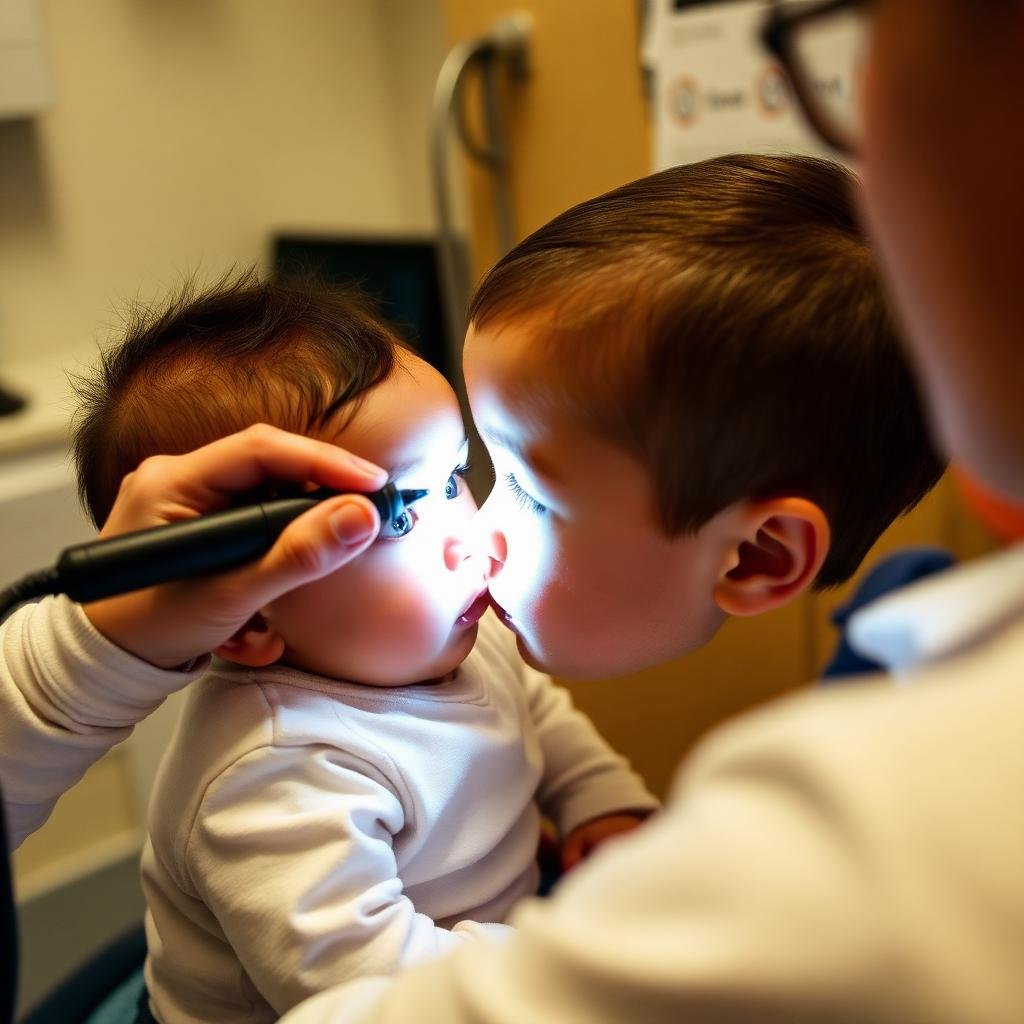
Babies are born with underdeveloped eye-muscle control and binocular vision. Three systems have to mature together:
- Eye muscle strength and coordination (six muscles per eye)
- Binocular fusion (the brain combining two images into one)
- Focusing (accommodation) — babies are farsighted at birth
Until these mature, eyes may briefly drift inward (pseudo-strabismus or true intermittent esotropia) or outward. The window for this to be considered normal:
| Age | Normal eye behavior |
|---|---|
| Birth – 6 weeks | Frequent brief drifting, poor tracking |
| 6 weeks – 3 months | Increasing tracking; crossing becomes less frequent |
| 3 – 4 months | Eyes should look straight most of the time |
| >4 months | Any persistent crossing or drifting is abnormal — see a pediatrician |
Pseudo-strabismus vs. true strabismus
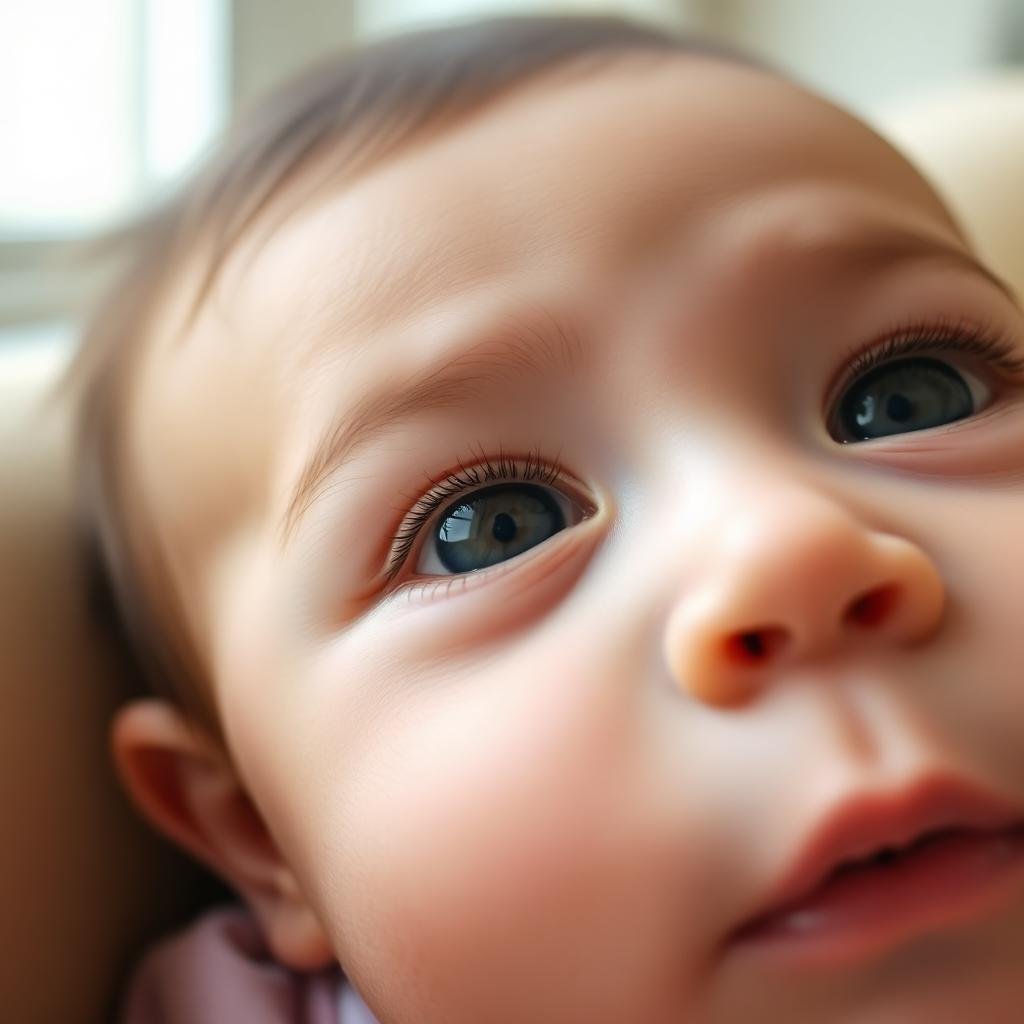
Most 2-month-olds who “look crossed” actually have pseudo-strabismus — an optical illusion caused by:
- A wide, flat nasal bridge hiding the white part of the eye near the nose
- Prominent epicanthal folds (skin folds at the inner corner of the eye)
- A narrower distance between the eyes
The eyes are actually straight; they only look crossed. The classic test: shine a small light at both eyes from about 12 inches away. In pseudo-strabismus, the light reflects at the same spot on both pupils. In true strabismus, one reflection is off-center.
Any pediatrician can do this Hirschberg corneal light reflex test in 30 seconds at a well visit.
Normal vs. concerning at 2 months
| What you see | Likely meaning |
|---|---|
| Brief inward drift when the baby is tired or looking at something close | Normal |
| One eye occasionally wanders outward while sleepy | Normal |
| Eyes appear crossed only in photos with a flash and one head angle | Often pseudo-strabismus |
| One eye consistently turns in or out | Concerning — evaluate |
| Crossing lasting more than a few seconds at a time | Concerning — evaluate |
| Baby not tracking a face across the midline by 8 weeks | Concerning — evaluate |
| White or yellow reflection in the pupil in photos | ER-urgent — possible cataract or retinoblastoma |
| Sudden onset of crossing after previously being straight | Same-day call |
| Head tilt combined with eye crossing | Evaluate — possible fourth-nerve palsy |
The red reflex test (do this tonight)
Take flash photos of the baby’s face from about 3 feet away in a dim room with red-eye reduction off.
- Both pupils glow red or orange → normal
- One pupil glows red, the other white/yellow/gray → possible cataract, retinal problem, or retinoblastoma — see an ophthalmologist urgently
- Both pupils look white → same — urgent evaluation
The AAP recommends every well visit include a red reflex check. Parents who catch a “white pupil in a photo” catch some of the most treatable childhood eye conditions early.
The 6 red flags
Call the pediatrician (and expect a referral to pediatric ophthalmology) for:
- Persistent crossing after 4 months of age
- One eye that consistently turns in, out, up, or down at any age
- White or yellow pupil reflex in photos or in person (urgent)
- Not tracking a face or high-contrast toy across the midline by 3 months
- Head tilt or face turn to see (compensating for muscle imbalance)
- Excessive tearing, light sensitivity, or an unusually large eye (possible congenital glaucoma)
Also urgent: sudden new eye crossing in a baby who was previously straight, especially with vomiting, sleepiness, or a bulging fontanelle — evaluate for increased intracranial pressure. See baby soft spot pulsing rapidly.
Why early evaluation matters
The visual cortex develops most rapidly in the first year. If one eye is misaligned, the brain suppresses its input to avoid double vision, and vision in that eye can permanently fall behind — amblyopia (“lazy eye”). Treatment before age 7 works well; after that, it is harder. The best outcomes come from catching strabismus in the first 6–12 months.
What the pediatrician / ophthalmologist will do
- Corneal light reflex (Hirschberg test)
- Cover / uncover test to detect intermittent deviations
- Red reflex with an ophthalmoscope
- Tracking of a light or toy across midline and vertically
- Dilated eye exam if strabismus is confirmed
Treatments depending on cause:
- Glasses for accommodative esotropia (crossing driven by farsightedness)
- Patching or atropine drops for amblyopia in the stronger eye
- Eye muscle surgery for constant or large-angle strabismus
- Prisms for select intermittent forms
Common myths
Myth: “They’ll grow out of it.”
Fact: True strabismus does not resolve on its own after 4 months. Waiting risks permanent vision loss in the deviated eye.
Myth: “Babies who cross their eyes are just being cute.”
Fact: Brief drifting under 4 months, yes. Consistent crossing at any age, no — it needs a look.
Myth: “Screen time causes crossing.”
Fact: No causal link, but the AAP recommends minimizing screen use under 18 months for other developmental reasons.
Myth: “Eye exercises fix strabismus in babies.”
Fact: Home exercises do not correct infant strabismus. Only appropriate medical or surgical management does.
Special situations
- Preemies: higher risk of strabismus and retinopathy of prematurity. Follow the ophthalmology screening schedule from the NICU.
- Family history of strabismus, amblyopia, or childhood cataracts: tell the pediatrician early.
- Down syndrome or other developmental conditions: earlier ophthalmology referral is standard.
- After illness with fever and vomiting: sudden new crossing is a red flag, not “just from being tired.”
When to Call Your Pediatrician
Same-day for:
– Sudden new eye crossing
– White or yellow pupil in any photo
– One eye that consistently turns in, out, up, or down
– Persistent head tilt to see
– Excess tearing, light sensitivity, or one eye that looks larger
Routine visit for:
– Occasional brief crossing that is not going away by 4 months
– Family history of childhood eye problems you have not yet discussed
ER for sudden crossing plus vomiting, sleepiness, or a bulging fontanelle.
When to See a Pediatric Ophthalmologist
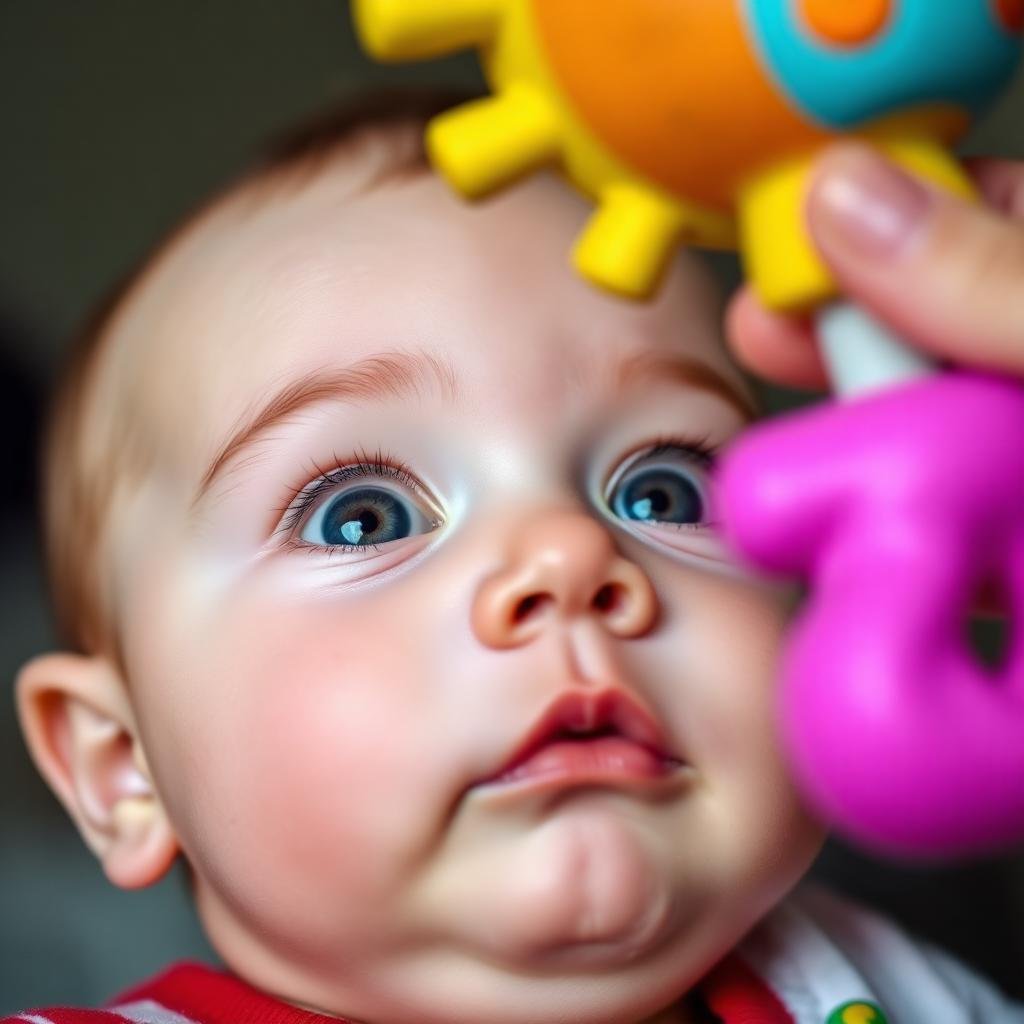
While intermittent crossed eyes in newborns is often normal, your pediatrician may refer your baby to a pediatric ophthalmologist for a comprehensive evaluation in certain situations. Persistent crossing after 4 months of age, eyes that are misaligned at all times rather than intermittently, a family history of strabismus or amblyopia, and significant differences in vision between the two eyes all warrant specialist evaluation. The pediatric ophthalmologist will perform a complete eye examination including a dilated fundus exam to check the health of the retina and optic nerve, a cover test to measure the degree of misalignment, and a refraction test to determine if your baby needs glasses. Early intervention is key to successful treatment of strabismus. Treatment options include glasses to correct refractive errors, patching the stronger eye to strengthen the weaker eye, eye drops, and in some cases, surgery to realign the eye muscles. The younger the child when treatment starts, the better the outcome, because the brain is still developing the neural pathways for binocular vision.
When to See a Pediatric Ophthalmologist
While intermittent crossed eyes in newborns is often normal, your pediatrician may refer your baby to a pediatric ophthalmologist for a comprehensive evaluation in certain situations. Persistent crossing after 4 months of age, eyes that are misaligned at all times rather than intermittently, a family history of strabismus or amblyopia, and significant differences in vision between the two eyes all warrant specialist evaluation. The pediatric ophthalmologist will perform a complete eye examination including a dilated fundus exam to check the health of the retina and optic nerve, a cover test to measure the degree of misalignment, and a refraction test to determine if your baby needs glasses. Early intervention is key to successful treatment of strabismus. Treatment options include glasses to correct refractive errors, patching the stronger eye to strengthen the weaker eye, eye drops, and in some cases, surgery to realign the eye muscles. The younger the child when treatment starts, the better the outcome, because the brain is still developing the neural pathways for binocular vision.
Frequently Asked Questions
These answers are general educational guidance and not a substitute for evaluation by your baby’s physician.
Is it normal for a 2-month-old’s eyes to cross sometimes?
Yes. Brief inward or outward drifting a few times a day is normal up to about 4 months as eye muscles and binocular vision mature. Consistent crossing or one eye that always turns in or out is not normal at any age.
When should baby’s eyes look straight all the time?
By about 4 months. If crossing persists after 4 months or is constant at any age, see a pediatrician for a referral to pediatric ophthalmology.
What is pseudo-strabismus?
An optical illusion where a wide nasal bridge or epicanthal folds hide the white part of the eye and make eyes look crossed when they are actually straight. A quick pediatrician exam distinguishes it from true strabismus.
Can crossed eyes cause permanent vision loss?
Yes, if untreated. The brain suppresses input from a misaligned eye, leading to amblyopia. Treatment before age 7 works well; earlier is better.
Should I be worried if only one eye drifts?
One eye that consistently drifts in any direction is more concerning than symmetric brief drifting. Have it checked.
What should I do if I see a white spot in the pupil in photos?
Take the photo to a pediatrician or ophthalmologist urgently. A white or yellow pupil reflex can indicate cataract, retinal disease, or retinoblastoma.
Can farsightedness cause crossing in babies?
Yes — accommodative esotropia. Glasses often correct it in older infants and toddlers.
Do premature babies have a higher risk of eye crossing?
Yes. Preemies are followed by pediatric ophthalmology for retinopathy of prematurity and strabismus.
Does breastfeeding or formula affect eye alignment?
No. Nutrition does not cause strabismus, though DHA supports overall visual development.
At what age can strabismus be surgically corrected?
Surgery can be done as early as 6–12 months for large, constant deviations. Timing depends on the specific type. Pediatric ophthalmology guides the decision.
Medically reviewed by Dr. Zeeshan Salam, MD — Pediatrician & Neonatologist. Reviewed July 2026. About the author.
Internal links: Health & Safety pillar · Baby Soft Spot Pulsing Rapidly · Best Baby Thermometer for Newborns · When to Worry About Baby Fever · Baby Wake Windows Chart
Citations: AAP HealthyChildren – Eye Alignment in Babies · AAPOS – Strabismus · Cleveland Clinic – Strabismus in Children · NIH – Amblyopia Overview · PMC – Early Detection of Infantile Strabismus
📖 More from the Pediatrician’s Corner Hub: your complete pediatrician-reviewed guide to your baby’s first year — milestones, feeding, sleep, vaccines, common illnesses, and more
📖 More from the Health & Safety Hub: your A-Z pediatrician guide to baby health, common illnesses, fevers, rashes, allergies, safety
Baby Crossed Eyes at 2 Months: quick pediatrician summary
Most of the time this is a normal newborn or infant variation that settles on its own, and the job of a parent is to know the small number of red flags that change the plan. Watch feeding, breathing, alertness and wet diapers — those four tell you more than the symptom itself. Call your pediatrician the same day for fever in a baby under 3 months, laboured or fast breathing, refusal to feed, fewer wet diapers, unusual floppiness or sleepiness, or a symptom that is clearly getting worse rather than better.
Common mistakes parents make
- Treating a single measurement or one bad day as a trend instead of watching the pattern over several days.
- Trying several remedies at once, so it becomes impossible to tell what helped.
- Waiting for a convenient time to call when a red flag is already present — feeding, breathing and alertness changes are always worth a same-day call.
- Following advice from an unsourced social post rather than your own pediatrician, who knows your child’s history and growth curve.
Related guides from our pediatric team
- Baby Eyes Crossed Sometimes: Is It Normal or a Sign of Strabismus?
- Baby Not Smiling at 2 Months: When to Worry and What to Look For
- Baby Bath Safety: 3–12 Months Guide
- Baby Fever Temperature Guide: 3–12 Months
- More expert answers in Pediatrician’s Corner
References and further reading
- AAP HealthyChildren: symptoms & when to call the doctor
- CDC child health & development
- NIH MedlinePlus infant and newborn care
Medical disclaimer
This article is for general education and is not a substitute for individual medical advice, diagnosis or treatment. Every child is different — talk to your own pediatrician about your baby, and seek urgent care for breathing difficulty, poor feeding, dehydration, unusual sleepiness, fever in an infant under 3 months, or any sudden change in your child’s condition.