How Much Formula Should a Newborn Drink? A Pediatrician’s Weight-Based Chart
Medically reviewed by Dr. Ahmad Raza, MD (Pediatrics) — ChildBloom Medical Review Panel. Last updated: September 27, 2026.
Editorial & affiliate disclosure: our guidance is written and reviewed by clinicians. ChildBloom may earn a commission from qualifying purchases made through links on this page, which never changes what our pediatric reviewers recommend. As an Amazon Associate, we earn from qualifying purchases.
A pediatrician provides a precise, weight-based formula feeding chart for newborns. Learn exactly how much to feed, how often, and the signs of overfeeding and underfeeding.
📋 TL;DR — if you read nothing else
Short answer: Most newborns need about 2.5 ounces of formula per pound of body weight per day, spread across 8–12 feeds — a 7-pound baby needs roughly 17.5 ounces daily. Feed on demand, watch hunger cues, and track wet diapers and weight gain rather than chasing a fixed ounces-per-feed number.
- Stomach capacity grows fast: about a teaspoon on day 1, 1–1.5 ounces by week 1, 2–3 ounces by month 1, every 2–3 hours.
- Enough means output: 6+ wet diapers by day 5, back to birth weight by 2 weeks, then 20–30 grams gained per day.
- Overfeeding signs: pushing the bottle away, turning the head, spitting up after every feed — follow cues, not a required amount.
- No water until about 6 months: giving young infants water can cause dangerous hyponatremia (water intoxication).
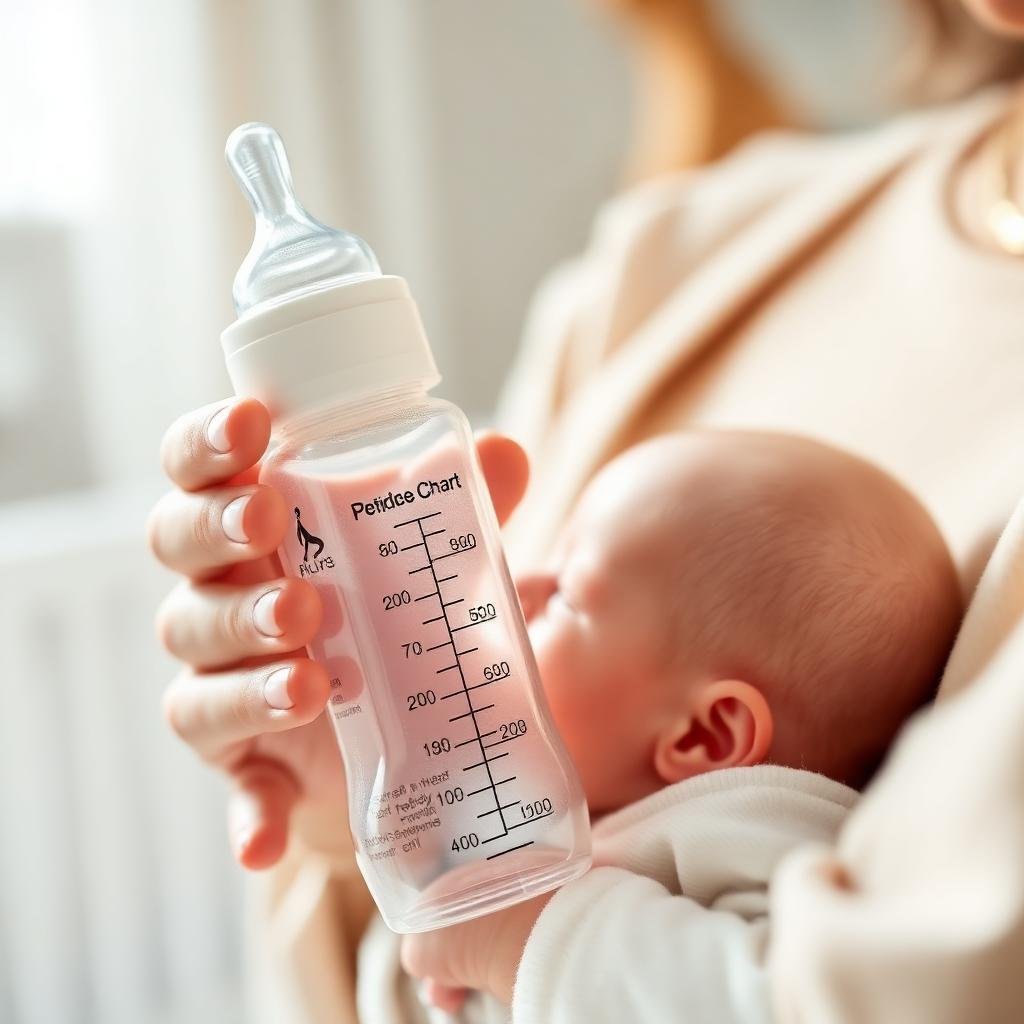
As a pediatrician, I understand how concerning these moments can be for parents. My goal is to provide you with evidence-based guidance that helps you make informed decisions for your child, while also knowing exactly when to seek medical attention. This guide draws on current AAP recommendations and clinical experience to give you the clarity you need.
Whether you’re exclusively formula-feeding or supplementing with breast milk, figuring out how much formula your newborn needs can feel confusing. Here’s a pediatrician-reviewed guide to help you feed with confidence.
Start with the ounce-per-pound rule — about 2.5 ounces per pound of body weight per day across 8–12 feeds — then adjust to your baby’s hunger and fullness cues. Newborn stomachs hold only tiny amounts at first (a teaspoon on day 1), so small, frequent feeds are normal. Track 6+ wet diapers daily by day 5 and steady weight gain; those numbers, not a rigid chart, tell you your baby is getting enough.
How Much Formula at Each Stage
Newborn stomachs are tiny — about the size of a cherry on day 1. Here’s how needs grow:
- Day 1-2: 5-7 ml (1-1.5 teaspoons) per feeding — your baby’s stomach can only hold a small amount
- Day 3-7: 22-28 ml (0.75-1 oz) per feeding — stomach is now the size of a walnut
- Week 2: 44-59 ml (1.5-2 oz) per feeding
- Month 1: 60-90 ml (2-3 oz) per feeding, every 2-3 hours
Signs Your Baby is Getting Enough
- Wet diapers: 6+ wet diapers per day by day 5 of life; 6-8 is typical by 2 weeks
- Dirty diapers: At least 1-2 dirty diapers per day in the first month; by 1 month, some babies stool only every 2-3 days (that’s normal)
- Weight: Should regain birth weight by 2 weeks; gaining 20-30g/day after that
- Appearance: Baby looks rounded and hydrated, not gaunt or loose-skinned
- Alertness: Satisfied between feedings, not constantly fussy from hunger
Overfeeding: Is It Possible?
Unlike breast milk, where babies control flow, bottle-fed babies can be encouraged to finish a bottle even when full. Watch for:
- Spitting up excessively after every feed
- Baby pushing the bottle away
- Turning head away from the bottle
- Milk coming out of mouth when the bottle is offered
Follow your baby’s hunger cues rather than forcing them to finish a “required” amount. Every baby is different.
Night Feedings
Newborns need to eat every 2-3 hours, including at night. Do not try to stretch nighttime feeding intervals in the first month — this can lead to dehydration and poor weight gain. By 1 month, some babies may go 3-4 hours between feeds at night, but this varies.
Water and Formula
Do not give water to newborns — breast milk or formula provides all the hydration they need. Giving water to young infants can cause hyponatremia (water intoxication), which is dangerous. Water introduction typically starts around 6 months when solid foods are introduced.
Choosing a Formula
- Standard formulas: Based on cow’s milk protein (Enfamil, Similac, generic store brands) — appropriate for most healthy term infants
- Sensitive/partially hydrolyzed: For babies with minor gas or fussiness
- Soy-based: For babies with cow’s milk protein allergy or families who prefer vegan
- Extensively hydrolyzed: For babies with confirmed cow’s milk protein allergy
- Elemental/amino acid-based: For severe allergies; available by prescription
Do not use homemade formula — it lacks critical nutrients and has caused severe electrolyte imbalances in infants.
When to Call the Pediatrician
- Vomiting everything back up after every feed
- No wet diapers for 6+ hours
- Baby appears lethargic or unresponsive
- Blood in stool
- Persistent diarrhea (more than 8-10 watery stools per day)
- Failure to gain weight or gain weight appropriately
Trust your instincts — if something feels wrong, call your pediatrician. That’s what we’re here for.
Understanding Your Baby’s Feeding Patterns
Every baby has a unique feeding rhythm, but understanding general patterns can help parents feel more confident. Newborns typically feed every 2-3 hours, while older babies may stretch to 3-4 hours between feeds. Cluster feeding, where a baby feeds very frequently over a few hours, is normal and often signals a growth spurt.
Reading Hunger Cues
Babies communicate hunger through a progression of cues. Early cues include smacking lips, rooting, and bringing hands to mouth. Mid-stage cues involve increased alertness and fidgeting. Late cues include crying, which is a sign of distress rather than a reliable first indicator of hunger. Responding to early cues leads to calmer, more effective feeds.
Growth Spurts and Feeding Changes
Growth spurts typically occur around 2-3 weeks, 6 weeks, 3 months, and 6 months. During these periods, your baby may seem constantly hungry and feed more frequently. This increased demand helps boost milk supply for breastfeeding mothers and is temporary, usually lasting 24-48 hours.
Optimizing Your Feeding Routine
Establishing a Feeding Schedule
While on-demand feeding is recommended for newborns, a loose schedule naturally emerges as your baby grows. Newborns typically feed every 1.5-3 hours, with one slightly longer stretch at night. By 3 months, many babies stretch to 3-4 hours between feeds. By 6 months with solids introduced, most babies have 4-5 milk feeds plus 2-3 solid meals per day. Pay attention to your baby’s natural rhythm rather than forcing a rigid schedule.
Managing Common Feeding Challenges
Feeding challenges are common and usually manageable at home. If your baby consistently refuses feeds, seems uncomfortable during or after eating, or is not gaining weight appropriately, consult your pediatrician. Keep a feeding log for a few days if you are concerned — it can reveal patterns and provide useful information for your pediatrician. Remember that your baby’s appetite naturally varies from day to day, just like an adult’s.
Clinical Pearl: The Microbiome and Infant Feeding
The gut microbiome — the community of bacteria living in your baby’s digestive tract — plays a far more important role in infant health than was understood even a decade ago. Research has shown that the mode of delivery (vaginal vs. cesarean), the method of feeding (breast milk vs. formula), and the timing of solid food introduction all shape the developing microbiome in ways that influence not just digestion but immune function, allergy risk, and even neurodevelopment. Breast milk contains prebiotic oligosaccharides — complex sugars that humans cannot digest but that feed beneficial Bifidobacteria in the infant gut — which is one mechanism by which breastfeeding is thought to confer long-term health benefits. For formula-fed infants, choosing a formula with added prebiotics or probiotics is a reasonable option, though the evidence for clinical benefit is still evolving. As always, discuss any feeding concerns with your pediatrician, who can help you make decisions tailored to your baby’s specific needs.
Frequently Asked Questions
How much formula should a newborn drink per feed? The general rule is 2.5 oz of formula per pound of body weight per day, divided across 8–12 feeds. A 7-lb newborn needs ~17.5 oz daily, or roughly 2 oz every 3 hours. Never exceed 32 oz in 24 hours regardless of age.
How often should I feed a formula-fed newborn? Every 3–4 hours in the first month, or 8–10 feeds per 24 hours. Formula digests slower than breast milk, so formula-fed babies naturally stretch feeds sooner. Wake a newborn to feed if they sleep past 4 hours until they’ve regained birth weight.
How do I know if baby is getting enough formula? Track output and weight: 6+ wet diapers and 3+ soft stools daily by day 5, steady weight gain of 5–7 oz per week for the first 3 months, and calm alertness between feeds. Constant fussiness after full bottles or fewer than 6 wet diapers means call the pediatrician.
What are signs of overfeeding formula? Spit-up after every feed, gagging, arching away from the bottle, and gassy discomfort within an hour. Paced bottle-feeding — holding the bottle horizontal and pausing every 30 seconds — prevents overfeeding better than switching brands or formulas.
When do formula feeds increase in volume? Ounces per feed climb steadily: 2 oz at week 1, 3 oz by week 4, 4 oz by month 2, and 5–6 oz by month 4. After 6 months solids replace some formula and daily volume plateaus around 24–32 oz, dropping toward 16–24 oz by 12 months.
The Bottom Line
How Much Formula Should Newborn Drink is a common concern for parents, and most of the time it resolves with simple home care and patience. As a pediatrician, I encourage parents to trust their instincts, stay informed with evidence-based resources, and maintain open communication with their healthcare provider. You know your child best — if something does not feel right, speak up. Every question you ask is valid, and every concern you raise helps us provide better care for your little one.
References
- CDC infant and toddler nutrition
- FDA: infant formula guidance for parents
- AAP policy: breastfeeding and use of human milk (cited by name; link not accessible)
🩺 Doctor’s Take
If you remember one thing: use the ounce-per-pound rule as your starting point, then let output be your scoreboard — 6+ wet diapers by day 5, birth weight regained by 2 weeks, steady gain after that. Small stomachs need small, frequent feeds, and no water until solids begin around 6 months. When the numbers move the wrong way, call your pediatrician.
This article is general information, not individual medical advice. Every baby is different — talk to your own pediatrician about your child’s feeding, sleep, growth or development, and seek urgent care for breathing difficulty, poor feeding, dehydration, fever in an infant under 3 months, or any sudden change in your baby’s behaviour. When in doubt, call your doctor.
Medical review
Reviewed by Dr. Ahmad Raza, MD, Pediatrics. Last reviewed September 27, 2026. This article provides general education and does not replace individualized advice from your child’s pediatrician. Learn about our physicians on the About page.




7 Comments