Room Sharing vs Separate Nursery: AAP Safety Explained
Quick answer
For room sharing baby safety, the AAP advises keeping your baby in your room on a separate surface for at least 6 months because it lowers SIDS risk. Room sharing is not bed sharing. A separate nursery is fine after that window if safe-sleep rules are followed. The safest setup is nearby, flat, and empty.
For the full picture, read our pillar guide on Safe Sleep Checklist: Room Sharing, Firm Mattresses & SIDS Preventi.
Why it happens
What the AAP actually recommends
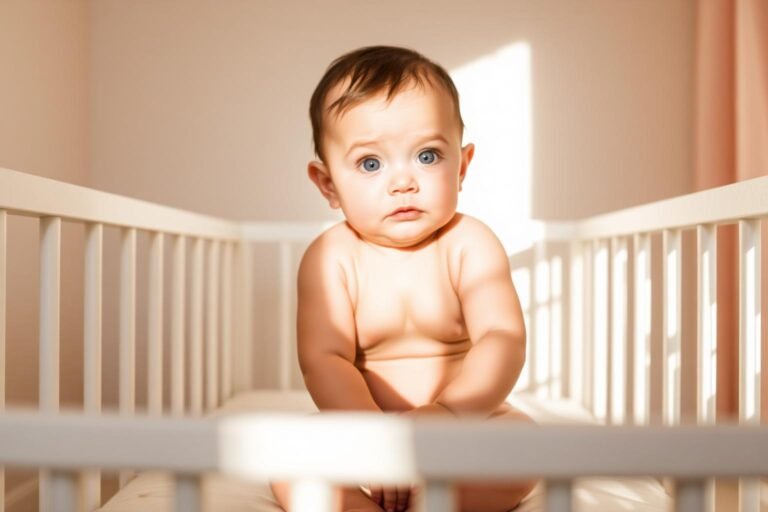
The American Academy of Pediatrics advises that infants sleep in the same room as their parents, on a separate surface such as a bassinet or crib, for at least the first six months and ideally for the full first year. This is “room sharing,” and the evidence behind it is strong: babies who room-share in this way have a meaningfully lower rate of SIDS than babies who sleep in a separate room early on. The key word is separate surface. The baby is close enough to hear and respond, but not on the same mattress.
Why proximity lowers risk
When the baby is in the same room, parents notice distress faster, and the baby’s sleep is shaped by the parent’s presence and sounds. Shared air, movement, and the small stirrings of a nearby adult seem to steady an infant’s still-maturing breathing control during the risky early months. Room sharing also makes night feeding easier, which supports breastfeeding — and breastfeeding itself is linked to lower SIDS risk. None of this requires the baby to be in your bed.
The difference between room sharing and bed sharing
Room sharing = same room, different surface. Bed sharing = same surface. These are not the same, and only the first is recommended. Bed sharing raises the risk of SIDS and accidental suffocation, especially on soft mattresses, with parents who smoke, when the baby is under four months, or when a parent is very tired or has used alcohol or sedating medicine. The AAP advises against bed sharing. Room sharing gives the protection without the danger.
The circadian and feeding connection
A newborn’s day-night clock is not set. Having the baby in the room helps you respond to early hunger cues before a full cry, which keeps feeds calmer and supports steady weight gain. Steady weight gain matters because poor growth is one of the risk factors the safe-sleep guidelines aim to protect against. Room sharing is therefore not only about SIDS; it supports the whole early feeding and growth picture.
Why 6 to 12 months
The highest-risk window for SIDS is under six months, with most cases in the first four. Risk drops sharply after that but is not zero for the full first year. That is why the guidance says “at least 6 months, ideally 12.” Past 12 months, the baby’s sleep control is more mature and a separate nursery is reasonable if the safe-sleep rules stay in place.
Step-by-step plan: setting up safe room sharing
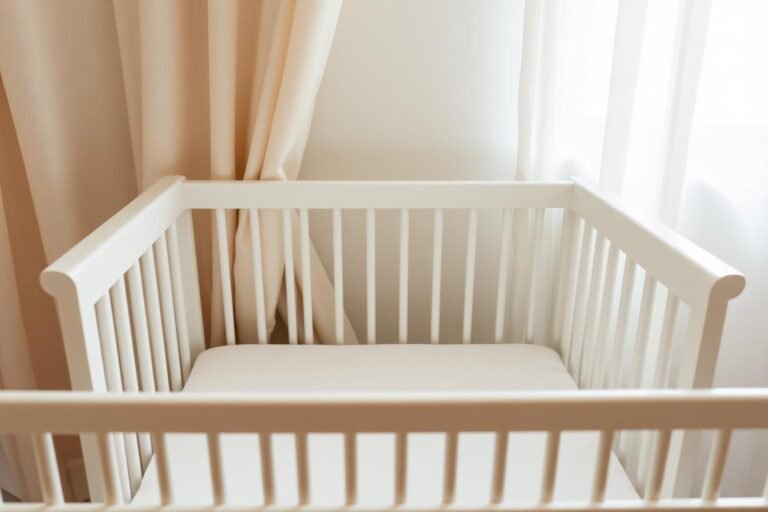
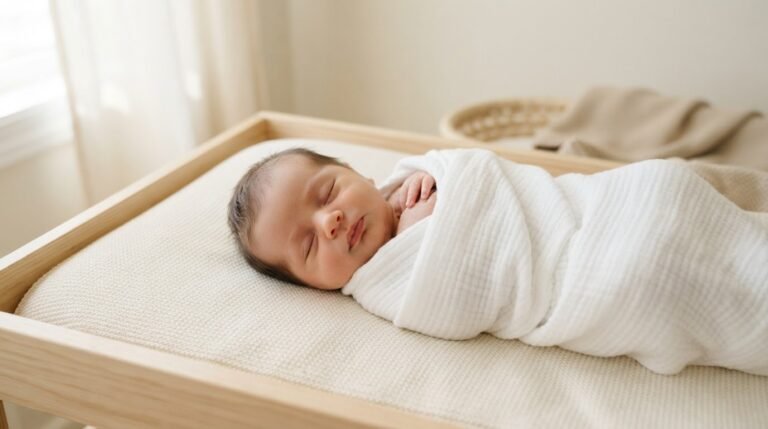
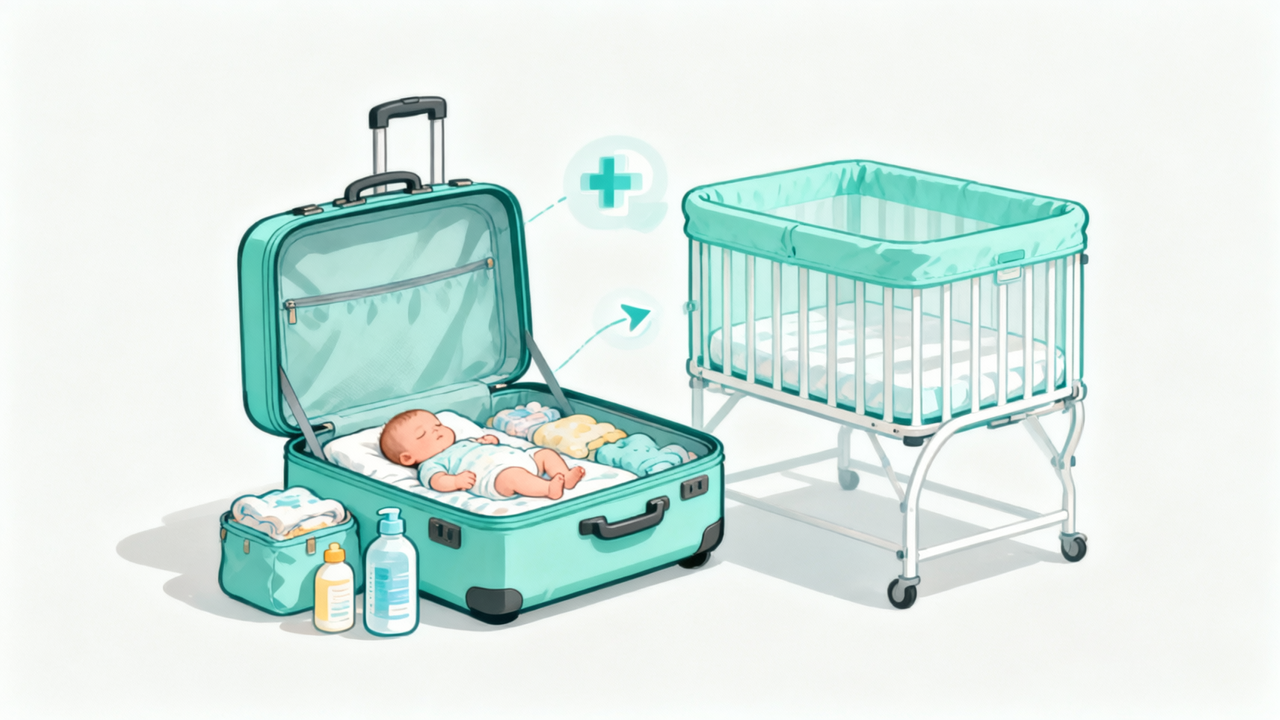
- Choose a separate sleep surface. A bassinet, portable crib, or full crib that meets current safety standards, placed beside or near your bed.
- Keep it empty. Firm mattress, tight-fitting sheet, nothing else — no bumpers, pillows, blankets, or toys.
- Place baby on the back for every sleep.
- Keep adult bedding away. Do not let covers, pillows, or the parent’s body come over the baby’s sleep space.
- Use a white-noise machine if it helps the whole room sleep, kept low and away from the baby’s head.
- Plan the exit. Decide together when you will move the baby to a nursery, aiming for the 6–12 month window.
- Keep a monitor in the nursery later, but remember a monitor is not a substitute for safe sleep — it watches, it does not protect.
Age-specific guidance
0–3 months. Highest SIDS risk. Room share without exception unless a pediatrician says otherwise for a medical reason. Respond to feeds before a full cry to protect weight gain.
3–6 months. Keep room sharing. The baby may start rolling; stop swaddling and use a sleep sack. The proximity still helps you catch rolling and any distress.
6–12 months. You can begin planning the move to a nursery, ideally closer to 12 months. If the baby sleeps long stretches and the room is safe, many families move around this time. Follow the same flat, empty, back-to-sleep rules in the new room.
Sample room-sharing setup by month
| Age | Recommended sleep location | Key action |
|---|---|---|
| —– | —————————- | ———— |
| 0–6 months | Parents’ room, separate surface | Room share; back to sleep; empty surface |
| 6–12 months | Parents’ room, separate surface (ideal) or safe nursery | Plan move; keep safe sleep |
| 12+ months | Separate nursery is fine | Monitor optional; safe sleep stays |
Decision checklist: is your setup safe?
- [ ] Baby on a separate surface in your room (not your bed) → Safe room sharing.
- [ ] Back to sleep, firm flat mattress, tight sheet only → Safe.
- [ ] No bumpers, pillows, blankets, toys in the space → Safe.
- [ ] Adult bedding cannot reach the baby → Safe.
- [ ] Baby on soft adult bed or sofa with a parent → Unsafe, change now.
- [ ] You smoke or the baby is under 4 months and bed-sharing → Stop bed sharing, call pediatrician for advice.
Safety reminders
- Always place your baby on the back for every sleep.
- Use a firm, flat sleep surface — crib or bassinet with a tight-fitting sheet.
- Keep the sleep space empty: no pillows, bumpers, loose blankets, stuffed toys, or positioners.
- Do not bed-share, especially on soft surfaces, if you smoke, or if the baby is under four months.
- Avoid overheating; a light sleep sack is safer than loose blankets.
- Keep the room smoke-free before and after birth.
- A baby lounger, nest, or pod is not a safe sleep surface and must not be used for sleep, even in your room.
When to Call Your Pediatrician
Safe-sleep questions are always worth a conversation. Call or ask at a visit if:
- You are unsure about your setup — a quick check prevents mistakes.
- Your baby shows poor weight gain or weak feeding.
- You see breathing changes: long pauses, gasping, grunting, blue lips.
- There is a fever in any infant under three months.
- A high-pitched or weak cry appears.
- Signs of dehydration: under six wet diapers in 24 hours after the first week, no tears, sunken soft spot.
- You bed-shared and are worried about safety — your pediatrician can help you plan a safer arrangement.
Practical summary
Room-sharing works best when the baby’s sleep space stays separate, bare, and flat, and when the adults’ space stays calm. A floor or side crib in the parents’ room meets the guidance for the first six to twelve months. Move the baby to their own room only when it is safe, the baby is at the weight or rolling limit, and the new room can keep the same sleep rules. Keep the decision about safety and fit for your home, not about what others expect.
FAQ
When should I move my baby to a separate nursery?
The AAP suggests room sharing for at least 6 months and ideally 12 months. After that, a separate nursery is fine as long as it follows the same safe-sleep rules: back to sleep, firm flat surface, and nothing else in the crib.
Is a baby monitor enough instead of room sharing?
No. A monitor watches; it does not lower SIDS risk the way proximity does. Use a monitor later if you like, but it is not a substitute for the first 6–12 months of room sharing on a separate surface.
Does room sharing baby sleep mean I can’t bed share at all?
Room sharing means a separate surface in your room. The AAP advises against bed sharing because it raises SIDS and suffocation risk. If you are considering it, discuss your specific situation with your pediatrician first.
What if room sharing is truly impossible in my home?
If space, a parent’s sleep disorder, or another serious issue makes room sharing unsafe or unworkable, a separate safe nursery is better than an unsafe shared bed. Talk with your pediatrician to build the safest plan you can.
Can I use a bassinet next to the bed for the whole first year?
Only if the bassinet still meets the baby’s size and weight limits. Most bassinets are outgrown by weight or rolling (around 4–6 months). After that, move to a crib in your room, then later to a nursery.
Common myths about room sharing
- ”Room sharing means bed sharing.” No — separate surface, same room.
- ”The baby will never learn to sleep alone.” Most babies move to a nursery fine after 6–12 months.
- ”A monitor replaces room sharing.” A monitor watches; it does not lower SIDS risk the way proximity does.
- ”Room sharing causes bad habits.” Done on a separate surface with safe rules, it supports good sleep.
- ”You must room share for the whole first year no matter what.” The guideline is flexible; if it is truly unsafe or unworkable, a safe nursery is the better choice.
Room sharing and breastfeeding
Room sharing makes night feeding easier because the baby is close. Easier feeding supports longer breastfeeding, and breastfeeding is linked to lower SIDS risk. A bassinet beside the bed lets you feed and return the baby without fully waking. This practical upside is part of why the guidance supports room sharing for most families.
Related reading: Newborn Won’t Sleep in Bassinet? 7 Fixes That Actually Work.
Making the corner work in a small room
Use a bassinet rather than a full crib at first to save space. Keep the area clear of adult clutter and bedding. A small white-noise machine helps if a parent snores. If the room is truly too small for a safe separate surface, a separate safe nursery is the next best choice — discuss the setup with your pediatrician.
Moving to the nursery: a gentle plan
Around 6–12 months, begin with naps in the nursery, then one night, then all nights. Keep the same sleep sack, sound, and routine. A baby who already self-settles adapts fast. Keep a monitor if you like, but the safe setup does the protecting, not the screen.
When a nursery is needed sooner
If a parent has a sleep disorder made worse by the baby’s sounds, if space is unsafe, or if room sharing harms the family’s wellbeing, a separate safe nursery is better than an unsafe shared bed. The guideline is flexible: the goal is safe sleep, and your pediatrician can help weigh the trade-offs for your home.
The evidence behind the 6–12 month window
Most SIDS cases happen in the first four to six months, when a baby’s breathing control during sleep is still maturing. Risk falls sharply after that but is not zero across the full first year. That is the plain reason the AAP says “at least 6 months, ideally 12.” The recommendation is not about convenience; it tracks the biology of the risk. Knowing the why helps families hold the line during a tired, noisy stretch of early parenthood, because the payoff is measured in reduced risk, not in a quieter night.
Room sharing and parental mental health
Room sharing can be hard. A parent with a sleep disorder, a partner who works nights, or a home where the baby’s sounds keep everyone awake may find the arrangement costly. The guidance leaves room for this: a separate safe nursery is better than an unsafe or unsustainable shared bed. If room sharing is harming the family’s wellbeing, talk with your pediatrician about the safest possible nursery plan. Safe sleep and a functioning household are both goals, and good advice weighs both.
Setting sleep boundaries while room sharing
Being in the same room does not mean the baby controls the night. Keep a clear routine, a consistent bedtime, and a calm response to night waking. Use a soft light only when needed, and keep play out of the night. Boundaries actually help the baby feel secure and make the later move to a nursery easier. Many parents worry that closeness creates clinginess; in the first year, responsive closeness builds trust, and a predictable routine builds independence.
Will they ever sleep in their own room?
Yes. The vast majority of babies move to a nursery without trouble once the 6–12 month window passes and the safe-sleep rules stay in place. Start with naps, keep the routine, and the change is routine rather than a crisis. By the time a toddler understands “your room,” the habit is set. The first year of room sharing is a season, not a life sentence, and it ends smoothly for most families.
Talking to grandparents and caregivers about room sharing
Well-meaning relatives may say they raised babies in a separate room or in their bed, and that “everyone turned out fine.” Safe-sleep guidance has improved with the evidence, and the current standard is room sharing on a separate surface for 6–12 months. Share the reason calmly: it lowers SIDS risk during the highest-risk window. If a grandparent cares for the baby, set up the same safe space at their home — a portable crib in their room — so the rule holds wherever the baby sleeps. Consistency across caregivers is what makes the guidance work.
See also: Baby Rolls in Sleep and Gets Stuck.
Room sharing in a hot climate
In warm homes, overheating is a real risk, and room sharing can feel stuffy. Dress the baby in light breathable layers or just a diaper plus a light sleep sack, keep the room at a comfortable temperature, and use a fan for air flow (not pointed at the baby). Avoid thick blankets and padded bumpers. A cooler, well-ventilated room with a bare sleep surface is safer than a warm one with extra bedding. If the parents’ room is the hottest in the house, a safe nursery with a fan may actually be the better choice — ask your pediatrician.
A simple room-sharing setup checklist
Run through this list each month so the safe setup does not slip. The baby is on a separate surface beside the bed. The mattress is firm with one tight-fitting sheet. The baby sleeps on the back. There are no pillows, bumpers, or blankets within reach. Adult bedding is kept away from the baby’s face. The room is smoke-free. A monitor, if used, is working.
If every box is ticked, you are following the guidance as written. If even one box is not, fix it that same night — do not wait for the weekend or a shopping trip. The slow creep of clutter, a pillow moved “just closer,” or a blanket added for warmth are the usual ways a safe room drifts off course.
A monthly check makes the safe setup automatic rather than something you have to recall at 3 a.m. when you are tired. It takes one minute and removes doubt.
- Preemie Safe Sleep
- Bassinet to Crib Transition
- Unsafe Baby Sleep Products
- American Academy of Pediatrics — A Parent’s Guide to Safe Sleep
- NICHD Safe to Sleep — Safe Sleep Environment
- CDC — About Sudden Unexpected Infant Death
- World Health Organization — Newborn Care
About the author
Dr. Michael Anderson, MD (Pediatrics) is a board-certified pediatrician on the ChildBloom medical panel, focusing on infant sleep, safe sleep environments, and responsive routines. This article was medically reviewed and approved by Dr. Ahmad Raza, MD (Pediatrics) against current AAP safe-sleep guidance. Read our editorial and review standards.
This guide is general education, not a diagnosis. If you are worried about your baby’s breathing, feeding, growth, or sleep, contact your pediatrician. For any breathing emergency, call emergency services immediately.
Room sharing with baby: frequently asked questions
Common room sharing with baby questions include: How long should room sharing with baby continue? The AAP recommends at least six months, ideally twelve months. Will room sharing with baby disrupt parental sleep? Studies show that room sharing with baby actually improves parental responsiveness without significantly reducing sleep quality when a separate sleep surface is used. Can room sharing with baby coexist with sleep training? Yes, most sleep training methods work effectively in a shared room setup. Setting up safe room sharing with baby starts with placing a crib, bassinet, or playard next to your bed, at least two feet from the wall, away from windows, cords, and heaters. The AAP recommends room sharing with baby for at least six months because proximity allows faster response to breathing or feeding needs.
Room sharing with baby: making it work long-term
Long-term room sharing with baby requires thoughtful setup to protect both infant safety and parental sleep quality. Use a white noise machine to mask the baby’s sounds and reduce false wakings. Position the crib as far from your bed as the room allows while still maintaining the AAP-recommended proximity. Room sharing with baby becomes easier after the first few weeks once both parent and infant adjust to the shared space. If room sharing with baby is affecting your sleep significantly, talk to your pediatrician about strategies that maintain safety while improving rest for the whole family. Many families find that room sharing with baby for the recommended six months builds a strong foundation for independent sleep later.
Related ChildBloom Guides
- Start here: Safe Sleep Checklist: Room Sharing, Firm Mattresses & SIDS Preventi
- Is a Baby Lounger Safe for Sleep
- Crib Bumpers & Weighted Sacks
- Safe Sleep for Preterm Babies
- Baby Choking Hazards: Prevention and Safer Mealtimes
- Bassinet Weight and Rolling Limits
- Browse all Sleep & Nursery guides
References & Medical Sources
- NICHD Safe to Sleep: safe sleep environment
- AAP parent guide to safe sleep
- CPSC safe sleep and crib product rules
- CDC data on SUID and SIDS
Reviewed by the ChildBloom pediatric panel. Learn about our physicians on the About page. This article is educational and does not replace your child’s clinician.