Baby Cries in Sleep but Is Calm When Awake
Baby cries in sleep: the quick answer
When a baby cries in sleep but is calm when awake, the sound is usually normal sleep cycling. Brief cries are common in active (REM) sleep and an immature nervous system. If your baby settles within a minute or two, you usually do not need to intervene — pause and watch first.
For the full picture, read our pillar guide on Evidence-Based Baby Sleep Solutions.
Why baby cries in sleep happens — the sleep science
Infant sleep cycles are shorter than adult cycles
A newborn’s sleep cycle lasts about 50 to 60 minutes, compared with about 90 minutes for an adult. Babies also spend a much larger share of sleep in active (REM) sleep — roughly half of total sleep in the first few months, falling to about a quarter by the first birthday. Active sleep is the stage where the brain is busy sorting and storing the day’s experiences. During it, the body is not fully still. You may see twitching, irregular breathing, grimaces, grunts, and short cries. None of these mean the baby is in pain or has woken for good.
Sleep pressure and the developing circadian rhythm
Two systems control when a baby sleeps. The first is sleep pressure, the natural build-up of a chemical called adenosine in the brain the longer a person is awake. The second is the circadian rhythm, the internal body clock that runs on roughly a 24-hour loop and is guided by light, darkness, feeding times, and melatonin. In newborns these two systems are not yet linked well. A baby under about three months does not make much melatonin of their own, and the clock has not settled, so sleep is scattered across day and night. As the brain matures, the cycles link up, the share of active sleep drops, and the phase of crying-in-sleep quiets down.
The immature nervous system and the startle reflex
A young baby’s brain is still learning to damp down reflexes. The Moro, or startle, reflex can fire from a loud sound, a sudden movement, or even the baby’s own limb jerk. It looks like a fling of the arms and a short cry. The reflex fades around four to six months. Until then, it adds to the night sounds. The crying you hear is often the reflex’s vocal edge, not distress. This is one of the clearest reasons a baby cries in sleep yet is perfectly calm the moment they are awake and settled.
Sleep associations and partial waking
As babies pass through the light part of each cycle, they briefly surface toward wakefulness. An adult rolls over and goes back down without noticing. A baby may do the same but make a sound first. If a parent always feeds, rocks, or picks the baby up at the first peep, the baby can learn to expect that help to fall back asleep. That is a sleep association. It is not dangerous, but it can turn a normal 10-second cry into a full waking that needs you. The goal is to let the baby practice the skill of returning to sleep on their own when they are simply cycling.
Active sleep versus awake distress
The single most useful skill is telling a sleep sound from a real wake. A sleep cry is short, varies in pitch, may stop on its own, and the eyes stay closed. A distress cry is louder, steadier, rises in urgency, and the baby’s body is active — eyes open, legs kicking, back arching. Learning this difference protects both your sleep and the baby’s. Most of the time, what you hear is just noise from a busy, growing brain.
What active sleep actually looks like
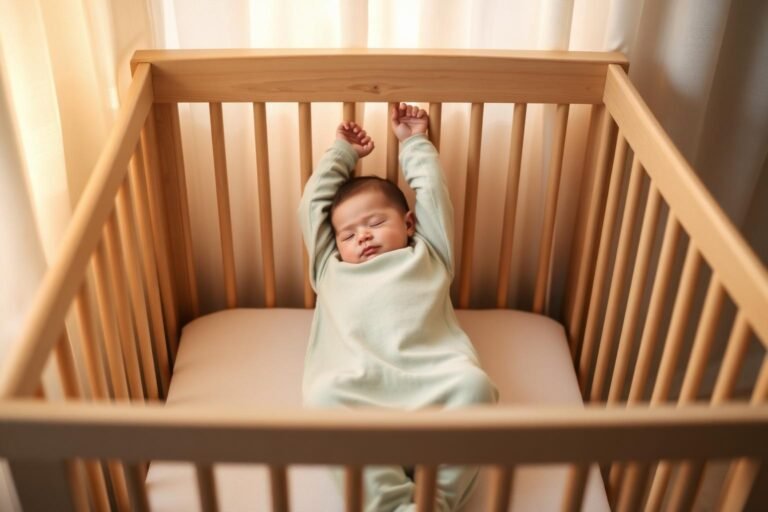
Parents are often surprised by how dramatic active sleep can be. A baby may smile, suck, flap their hands, breathe fast for a few seconds then slow, and let out a cry that sounds exactly like a hunger cry — and then, 20 seconds later, be deeply asleep again. This is normal. The brain is rehearsing movements and processing the world. The cry is a byproduct of that rehearsal, not a request for help.
Step-by-step plan: what to do when you hear crying in sleep
- Freeze and listen for 30 to 60 seconds. Do not open the door or lift the baby right away. Most sleep cries stop inside a minute.
- Decide awake versus asleep. Look for closed eyes and a body that is not fully tense. If the baby is still cycling, leave them.
- Use a dim, calm response only if truly awake. If the cry grows and the baby is clearly up, go in. Keep the light low, your voice soft, and your touch brief.
- Offer the least help needed. Try a hand on the chest, a shush, or a resettling sound before a feed. This teaches self-settling without leaving the baby to cry in true distress.
- Keep the sleep space the same all night. Same bassinet or crib, same room, same safe setup. Change confuses the cycle.
- Write down patterns for one week. Note the time of night, how long the cry lasted, and whether the baby settled alone. A pattern shows you if something changed (illness, travel, a developmental leap).
- Protect your own rest. A parent who is awake and anxious is more likely to intervene too fast. Share night duty if you can.
Age-specific guidance
Newborns (0–3 months). Expect the most noise. Active sleep is at its peak. Sleep pressure builds fast, so naps are short and frequent. Pause longer — up to 60–90 seconds — before entering, because newborns drift in and out of active sleep constantly. A cry that stops on its own is almost always normal cycling.
3–6 months. Cycles lengthen and melatonin rises. The startle reflex is fading. You can begin to wait a full 60 seconds and offer less help each time the baby surfaces. This is a good window to build a consistent, calming bedtime routine that signals sleep is coming.
6–12 months. Active sleep is a smaller share. Many babies sleep longer stretches. If crying in sleep appears suddenly at this age after months of quiet, look for a new cause: teething, a cold, a schedule shift, or a sleep regression. The same pause-and-watch rule applies, but a sudden change deserves a closer look.
Sample night plan by age
| Age | Typical longest sleep stretch | How often crying-in-sleep occurs | What to do |
|---|---|---|---|
| —– | —————————— | ———————————- | ———— |
| 0–3 months | 2–4 hours | Often, several times a night | Pause 60–90 sec; feed only if truly awake and due |
| 3–6 months | 4–6 hours | A few times a night | Pause 60 sec; offer calm, not always a feed |
| 6–12 months | 6–10 hours | Rare, brief | Pause 30–60 sec; check for new cause if sudden |
Decision checklist: wait or go in?
- [ ] Eyes closed and cry under ~60 seconds → Wait and watch.
- [ ] Cry stops on its own → Back to sleep, no action.
- [ ] Cry grows, eyes open, body active → Go in, calm response.
- [ ] Fever, weak cry, color change, trouble breathing → Medical call, not a sleep question.
- [ ] Crying happens only at the light part of the cycle and baby resettles → Normal cycling.
- [ ] Same pattern night after night with good daytime mood → Reassuring, keep routine.
Safety reminders
Safe sleep rules apply every night, including the nights your baby makes sleep sounds.
- Always place your baby on the back for every sleep, naps and nights.
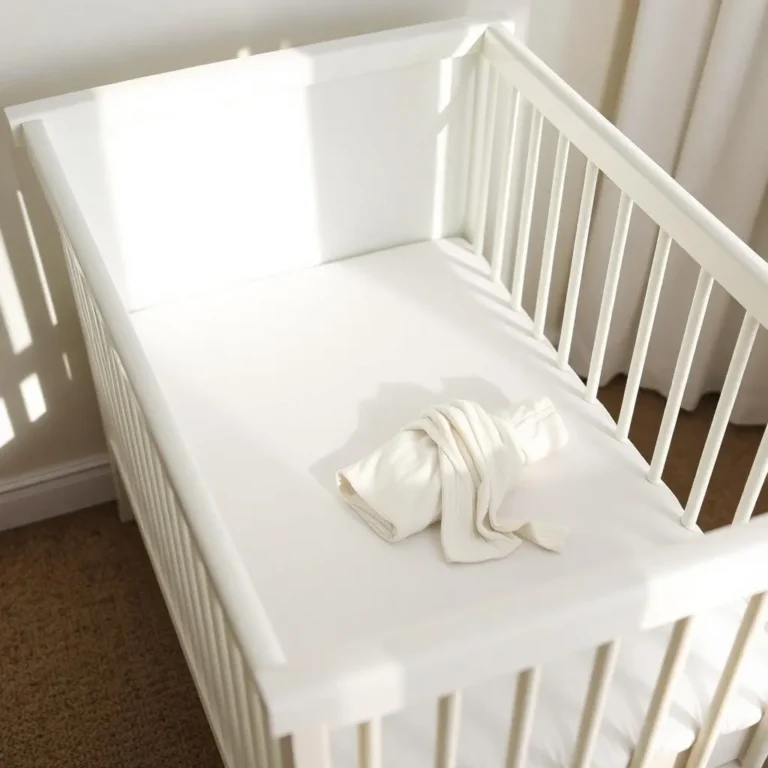
- Use a firm, flat sleep surface — a crib or bassinet with a tight-fitting sheet.
- Keep the sleep space empty: no pillows, no bumpers, no loose blankets, no stuffed toys, no positioners.
- Do not bed-share on a soft surface such as a sofa, armchair, or an adult mattress with soft bedding. Bed-sharing raises the risk of SIDS and accidental suffocation.
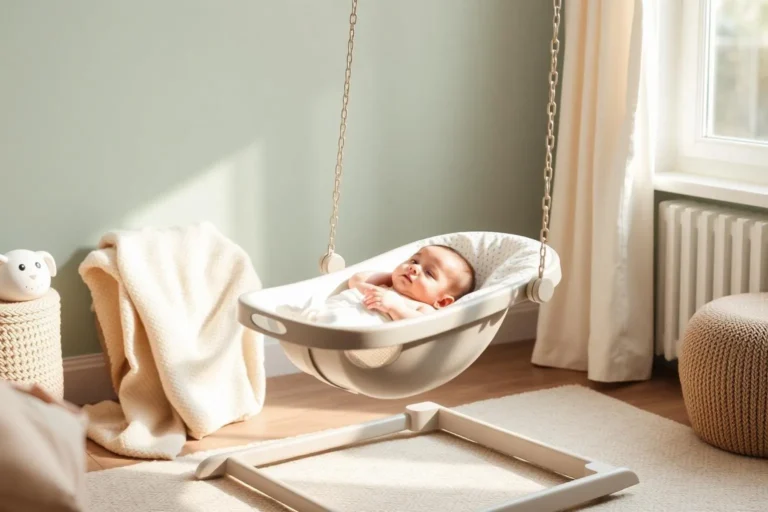
- A baby lounger, pod, or nest is not a safe sleep surface and should never be used for sleep.
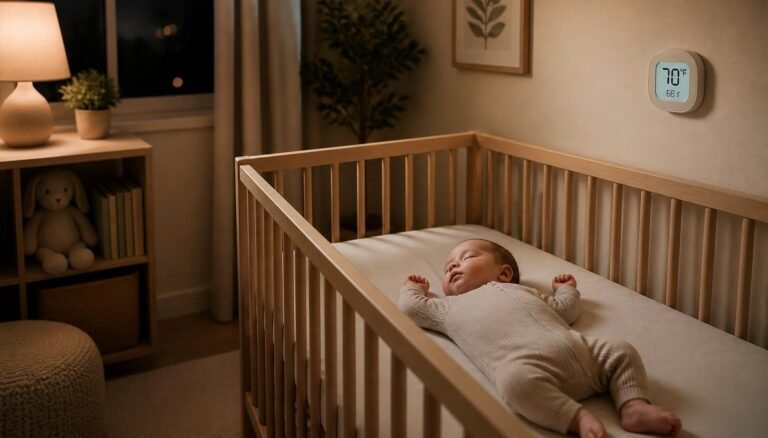
- Keep the room at a comfortable temperature and avoid overheating; a light sleep sack is safer than loose blankets.
- If your baby falls asleep in a swing, car seat, or carrier, move them to the flat sleep surface as soon as you can.
When to Call Your Pediatrician
Most sleep crying is normal, but some signs mean you should call your pediatrician:
- Poor weight gain or a baby who is not feeding well during the day along with night crying.
- Fever in any infant under three months, or any fever with changed behavior.
- Breathing changes: pauses longer than 20 seconds, gasping, grunting with every breath, or blue lips.
- A high-pitched, weak, or “cat-like” cry that is new and different from the usual.
- Signs of dehydration: fewer wet diapers (under six in 24 hours after the first week), no tears, a sunken soft spot.
- Crying that is constant and cannot be soothed for hours and is not relieved by feeding or holding.
- A sudden change in the pattern after months of quiet sleep.
FAQ
Is it normal that my baby cries in sleep but is calm when awake?
Baby cries in sleep is usually normal sleep cycling. During active (REM) sleep the immature nervous system produces twitches, grunts, and short cries. If your baby settles within a minute or two and is content when fully awake, it is almost always part of healthy development and not a sign of pain.
Should I always pick my baby up when they cry in sleep?
No. Pause 30 to 60 seconds first. In most cases the cry stops and the baby slips back into deep sleep. Picking them up too fast can fully wake them and start a habit of needing you to return to sleep.
Is crying in sleep a sign of colic?
Colic is defined by long periods of crying while the baby is awake, usually in the evening, for three or more hours a day, three days a week, for three weeks. Brief cries during sleep are not colic. If you suspect colic, review it with your pediatrician.
Related reading: Baby Wakes Every Hour: Is It Hunger, Habit, or Discomfort.
Could these cries be nightmares or night terrors?
True nightmares are rare before 12 months because dreaming in that form needs more developed memory. Night terrors also tend to start later and look very different — a sudden scream with the eyes open but the child not truly awake. Most infant sleep crying is simple cycling.
When should the sleep crying get quieter?
It normally lessens as active sleep drops and the startle reflex fades, usually between four and six months. If it stays just as frequent or gets worse after that, look for a new trigger or check with your pediatrician.
Does white noise make sleep crying worse?
No. Soft white noise or a steady shush can mask household sounds that might startle a light-sleeping baby. Keep it low (below the level of a normal conversation) and place the machine away from the baby’s head. It does not stop normal active-sleep sounds, but it can reduce full wakings from outside noise.
Common myths about crying in sleep
A few false beliefs make parents intervene too fast or worry too much.
- ”A crying baby in sleep is always hungry.” Not true. Most sleep cries are simple cycling, not feeding cues. Offering a feed at every peep can create a habit where none existed.
- ”I must stop the cry or the baby is in pain.” Active-sleep sounds are normal and the baby is not awake. Rushing in can fully wake them and start a cycle of needing you.
- ”White noise causes the crying.” White noise does not cause sleep sounds; if anything, it can mask outside noise that would fully wake a light sleeper.
- ”Crying in sleep means bad dreams.” Dreams in the adult sense need more developed memory and are rare under 12 months. The sounds are brain rehearsal, not fear.
- ”A quiet baby is a healthy baby.” Some babies are simply noisier sleepers than others. Noise alone, with good awake mood, is not a red flag.
A simple sleep-sound diary
For one week, note the time of each night cry, how long it lasted, whether the baby’s eyes were open, and whether they settled alone. After seven days a pattern appears. You will likely see the cries cluster at the light part of cycles and stop on their own. A diary also helps your pediatrician if you ever need to call, because it shows frequency and context instead of a vague “they cry a lot.” Bring the notes to the visit; concrete detail leads to better advice.
How to comfort without creating a habit
When your baby is truly awake and distressed, comfort is right and kind. The skill is to offer the least help needed: a hand on the chest, a soft shush, a brief pick-up, then back to the crib awake but calm. This meets the need without teaching that only a parent can produce sleep. Over weeks, the baby learns to link cycles on their own, and the night gets quieter. If you always pick up at the first sound, you remove the chance to practice that skill.
What active sleep sounds like, night after night
Parents are often surprised that active sleep can look dramatic: a baby may smile, suck, flap the hands, breathe fast for a few seconds then slow, and let out a cry that sounds exactly like a hunger cry — and then, 20 seconds later, be deeply asleep again. This is normal brain rehearsal. The cry is a byproduct, not a request for help. Knowing this in advance stops the reflexive dash to the crib that turns a non-event into a full waking.
See also: Baby Crying in Sleep But Not Awake at Night.
Why the “pause before entering” rule works
The pause works because of how a baby moves through a sleep cycle. At the light edge of every cycle, the brain surfaces slightly, and a sound or a limb jerk may escape. If a parent arrives instantly, the baby’s brain registers a new presence and fully wakes to engage. If instead you wait 30 to 60 seconds, the brain often slides back down into deep sleep on its own. You are not ignoring the baby; you are giving their immature sleep system the few seconds it needs to do its job. Over many nights, this teaches the difference between a sleep sound and a real wake, and it protects both your rest and theirs. A useful habit is to glance at a monitor or listen at the door before opening it, then count slowly to sixty. In most cases the cry has already stopped.
Reading daytime signals that predict night crying
The way a baby behaves during the day often explains the night. A baby who is overtired from skipped naps fights sleep harder and cycles more noisily. A baby who is underfed during the day may wake truly hungry more often. A baby who gets good daytime play, tummy time, and calm awake windows tends to cycle more quietly at night. Watching the day gives you clues before the night starts: protect naps, offer full feeds, and end the day with a predictable wind-down. If the night crying is new and the day looks normal, the cause is more likely a cycle blip or a mild illness than a habit.
Comfort objects and the four-month mark
Around four months, many babies become more aware of where and how they fall asleep. This is the age when a small lovey or a worn shirt might start to help — but loveys belong outside the sleep space until the baby is past the infant safety window, and a worn shirt should sit near, not in, the crib. The safer “object” at this age is the routine itself: the same song, the same sack, the same order. That predictability is what the baby learns to expect at the light part of the cycle, and it replaces the need for you to be present at every surfacing.
- Baby Wakes Hourly at Night
- When Baby Rolls in Sleep
- Contact Naps: Are They Safe?
- American Academy of Pediatrics — A Parent’s Guide to Safe Sleep
- NICHD Safe to Sleep — Safe Sleep Environment
- CDC — About Sudden Unexpected Infant Death
- World Health Organization — Newborn Care
About the author
Dr. Michael Anderson, MD (Pediatrics) is a board-certified pediatrician on the ChildBloom medical panel, focusing on infant sleep, safe sleep environments, and responsive routines. This article was medically reviewed and approved by Dr. Ahmad Raza, MD (Pediatrics) against current AAP safe-sleep guidance. Read our editorial and review standards.
This guide is general education, not a diagnosis. If you are worried about your baby’s breathing, feeding, growth, or sleep, contact your pediatrician. For any breathing emergency, call emergency services immediately.
Related ChildBloom Guides
- Start here: Evidence-Based Baby Sleep Solutions
- Safe Sleep During a Power Outage or Heat Wave
- 8-Month Split Nights: What Causes Them and What Helps
- Night Feeding and Sleep
- Baby Wakes Every Hour but Is Not Hungry
- Baby Wakes at 5 a.m. Every Day
- Browse all Sleep & Nursery guides
References & Medical Sources
- AAP guidance on getting your baby to sleep
- AAP healthy sleep hours by age
- NICHD Safe to Sleep: safe sleep environment
- NICHD infant sleep research overview
Reviewed by the ChildBloom pediatric panel. Learn about our physicians on the About page. This article is educational and does not replace your child’s clinician.