
4-Month Sleep Regression: Signs, Timeline & How to Survive It (2026) — A Pediatrician’s Guide
Medically reviewed by Dr. Ahmad Raza, MD (Pediatrics) — ChildBloom Medical Review Panel. Last updated: August 4, 2026.
For the full picture, read our pillar guide on Sleep Regressions by Age.
Editorial & affiliate disclosure: our guidance is written and reviewed by clinicians. ChildBloom may earn a commission from qualifying purchases made through links on this page, which never changes what our pediatric reviewers recommend.
Looking for clear answers about 4-month sleep regression? This pediatrician-reviewed guide covers what matters, what to skip, the safety checks that count, and exactly when to involve your doctor — based on current AAP, CDC and CPSC guidance on 4-month sleep regression.
Quick pediatrician summary: 4-month sleep regression
Short answer: A pediatrician explains 4-month sleep regression: safe-sleep rules, what genuinely helps tonight, product checks and when to get help.
4-Month Sleep Regression: Signs, Timeline & How to Survive It (2026) — A Pediatrician’s Guide
The 4-month sleep regression is a permanent, neurological reorganization of your baby’s sleep architecture — not a phase they “grow out of.” Between roughly 3 and 5 months, infants transition from newborn sleep to adult-like sleep cycles. Frequent night wakings, short naps, and early-morning wake-ups are normal signals that this transition is happening on schedule.
As an Amazon Associate, we earn from qualifying purchases.
Recommended for safe sleep
Choose a breathable wearable sleep sack (Halo, Kyte Baby, Woolino), a white-noise machine (Hatch Rest, Dohm), or blackout curtains. Always follow the manufacturer’s stated weight and age limits, and pair any product with the AAP back-to-sleep guidelines.
Recommended for safe sleep
Choose a breathable wearable sleep sack (Halo, Kyte Baby, Woolino), a white-noise machine (Hatch Rest, Dohm), or blackout curtains. Always follow the manufacturer’s stated weight and age limits, and pair any product with the AAP back-to-sleep guidelines.
Quick answer (for the tired parent scrolling at 3 a.m.)
- What it is: a one-time, permanent maturation of sleep cycles into distinct light and deep stages.
- When it starts: most often between 12 and 17 weeks (chronological age), earlier in babies born close to term and later in preemies (use adjusted age).
- How long it lasts: the acute disruption typically lasts 2 to 6 weeks. Sleep habits formed during this window can last much longer — for better or worse.
- What actually helps: a consistent bedtime routine, age-appropriate wake windows (75–120 minutes at this age), a dark and cool sleep environment (68–72°F / 20–22°C), and gradually reducing sleep associations that require your active input.
- When to call your pediatrician: feeding refusal, dehydration signs, high-pitched or inconsolable crying, breathing pauses, or regression that lasts more than 6 weeks with no improvement.
Table of contents
- What the 4-month sleep regression actually is
- The neuroscience: why sleep changes at 4 months
- Signs and symptoms checklist
- Timeline: when it starts, peaks, and ends
- Wake windows and total sleep needs at 3–5 months
- The 7-step survival plan
- Sleep associations: the invisible driver
- Feeding, growth spurts, and the regression
- Nap disruption: the short-nap trap
- Common mistakes that make it worse
- Red flags — when to call your pediatrician
- 4-month regression vs other regressions
- Frequently asked questions
- About the author
What the 4-month sleep regression actually is
The phrase “sleep regression” is misleading. Nothing is regressing — your baby’s brain is progressing. Around 3 to 5 months, the diffuse, two-stage newborn sleep pattern (active sleep and quiet sleep) matures into the four-stage cycle adults use: N1, N2, N3 (deep sleep), and REM.
Newborns spend roughly 50% of sleep in active (REM-like) sleep and transition between stages smoothly. By 4 months, they cycle through lighter and deeper stages every 45–60 minutes, with brief arousals between cycles — just like adults. The difference is that adults roll over, adjust the pillow, and return to sleep without conscious memory. A 4-month-old wakes fully, notices that everything has changed since they fell asleep (the breast, the rocking, the pacifier are gone), and calls for help.
This is why the 4-month regression is called a permanent change. Sleep cycles never revert. The disruption ends when your baby learns to bridge cycles independently.
The American Academy of Pediatrics (AAP) recognizes this developmental window as normal and emphasizes safe sleep practices throughout, including firm flat mattresses, no loose bedding, and back-sleeping until 12 months. Source: AAP Safe Sleep Recommendations.
The neuroscience: why sleep changes at 4 months
Three things are happening at once inside your baby’s brain:
1. Circadian rhythm consolidation. Melatonin production, which was inconsistent in the newborn period, becomes rhythmic around 8–12 weeks. By 4 months, most babies produce a clear evening melatonin surge, making bedtimes earlier and more predictable — but also making late bedtimes catastrophic, because a missed melatonin window triggers cortisol (the “second wind”).
2. Sleep architecture maturation. Non-REM sleep subdivides into three distinct stages. The transition points between stages become vulnerabilities where full wakings can occur, especially if a baby has never fallen asleep in the crib without help.
3. Cognitive leaps. At 4 months, infants are developing object permanence precursors, tracking objects more accurately, and beginning to roll. Brains that are learning new skills rehearse them during light sleep, which fragments naps.
Research from the National Institutes of Health confirms that by 4 months, the majority of infants have the neurological capacity to sleep in longer consolidated stretches — but capacity is not the same as skill. Source: NIH — Infant Sleep Development.
Signs and symptoms checklist
You are almost certainly in the 4-month regression if your previously predictable 3–5 month old suddenly shows three or more of these:
- Waking every 1–2 hours at night after previously sleeping 4–8 hour stretches
- Naps shortening to 20–45 minutes (one full sleep cycle)
- Fighting sleep at bedtime that used to be easy
- Early morning wake-ups between 4:00 and 5:30 a.m.
- Wanting to feed at every waking, even when not truly hungry
- Increased fussiness, drooling, and hand-to-mouth activity
- Rolling attempts or new motor skills practiced during sleep
- Refusing the swaddle if still used
If your baby has never slept in long stretches, this is not a regression — it’s a first exposure to the new sleep pattern. The plan below still applies.
Timeline: when it starts, peaks, and ends
| Week | What’s happening |
|---|---|
| 12–14 weeks | Early signs: naps shorten, night wakings creep up. Many parents miss this stage. |
| 14–17 weeks | Peak disruption. Frequent night wakings, catnaps, bedtime battles. Parents are exhausted. |
| 17–20 weeks | Improvement begins if sleep habits are supportive. Without changes, patterns can persist. |
| 20+ weeks | Most babies with healthy sleep habits are consolidating sleep again. If not, evaluate associations, schedule, and environment. |
For preemies, use adjusted age (chronological age minus weeks premature). A baby born at 34 weeks will typically hit the regression around 18–21 weeks chronological.
Wake windows and total sleep needs at 3–5 months
The single biggest driver of persistent sleep problems after 4 months is being chronically overtired. At this age, most babies do best with 75–120 minute wake windows — with the shortest window first thing in the morning and the longest before bedtime.
| Age | Wake window | Total daytime sleep | Total nighttime sleep | Naps/day |
|---|---|---|---|---|
| 3 months | 60–90 min | 4–5 hours | 10–11 hours | 4–5 |
| 4 months | 75–105 min | 3.5–4.5 hours | 10–12 hours | 3–4 |
| 5 months | 90–120 min | 3–4 hours | 11–12 hours | 3 |
An overtired 4-month-old produces cortisol and adrenaline that block the melatonin needed to fall and stay asleep. This is why “keeping baby up longer to tire them out” usually backfires within 24–48 hours.
The 7-step survival plan
This is the exact sequence I give parents in clinic. Do them in order — skipping steps is why most plans fail.
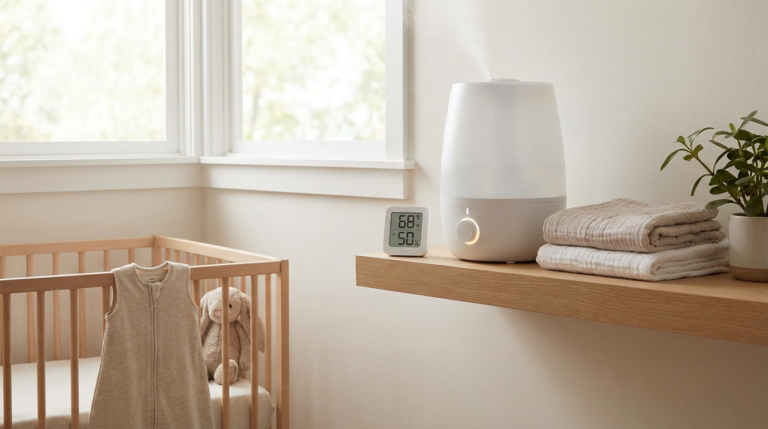
Step 1 — Fix the sleep environment first. Blackout the room to true darkness (test: hold your hand in front of your face — you shouldn’t see it). Add continuous white noise at 50–65 decibels, no louder than a shower, placed at least 7 feet from the crib. Keep room temperature at 68–72°F (20–22°C).
Step 2 — Anchor the wake-up time. Choose a morning wake time between 6:00 and 7:30 a.m. and hold it within 30 minutes every day. This sets the circadian clock for everything else.
Step 3 — Use age-appropriate wake windows. Watch the clock more than the sleep cues at this age — cues become unreliable when a baby is overtired.
Step 4 — Build a 20–30 minute bedtime routine. Bath (optional), feed with lights dim, book or lullaby, into the crib drowsy but awake. Same order every night. Predictability is the sleep signal.
Step 5 — Transition out of the swaddle. Once any rolling attempts appear, swaddling is a suffocation risk. Move to a sleep sack. A brief adjustment period (3–5 nights) is normal.
Step 6 — Reduce active sleep associations gradually. If your baby only falls asleep while being fed, rocked, or held, they will need that same input at every cycle transition. Begin putting them down slightly less asleep than usual, gradually week by week.
Step 7 — Give the plan 10–14 days before judging it. Sleep changes are non-linear. Nights 3–5 are often the hardest; improvement usually begins by night 7.
Related reading: 6-Month Sleep Regression.
Sleep associations: the invisible driver
A sleep association is the last condition present when your baby falls asleep. If that condition is missing when they wake between cycles, they will fully rouse and cry.
Parent-dependent associations (require your presence): nursing to sleep, bottle to sleep, rocking, bouncing, contact napping, pacifier reinsertion.
Independent associations (available in the crib): sleep sack, white noise, dark room, thumb, lovey (safe only from 12 months per AAP).
You do not need to eliminate all parent-dependent associations. You need to shift enough of them so that at least one full sleep cycle transition happens independently. Most parents find that changing the very last step — putting baby down awake instead of asleep — is enough to break the wake-and-cry loop.
Feeding, growth spurts, and the regression
A common misdiagnosis: parents assume frequent wakings mean hunger and add more feeds, which then reinforces night waking as a feeding cue.
At 4 months, a healthy full-term breastfed baby typically needs 1–2 night feeds; a formula-fed baby may consolidate to 1 or 0. Some are still ready for more; every baby is different.
Signs a waking is truly hunger:
– Full feed with strong sucking and swallowing (not a 2-minute snack)
– Consistent waking at the same time each night
– Weight gain slowing on growth curve
Signs a waking is a sleep association, not hunger:
– Baby takes 30–60 seconds at the breast/bottle and falls back asleep
– Wakings are frequent and irregular
– Baby refuses feeds during the day but wants them all night (“reverse cycling”)
If your baby has crossed 15 pounds and is meeting weight-gain milestones, discuss reducing night feeds with your pediatrician. Do not night-wean without medical guidance if there are any growth concerns.
Nap disruption: the short-nap trap
Naps regress before nights and recover last. A 30–45 minute nap is one complete sleep cycle — the baby is waking at the natural cycle transition and cannot bridge to a second cycle.
Do not immediately go in. Give 5–10 minutes to see if they resettle. If they do not, treat it as a completed nap and shorten the next wake window accordingly to avoid overtiredness.
At 4 months, aim for a rhythm of 3–4 naps: two longer (60–90 minutes) and one to two shorter “bridge” naps. Do not chase specific nap lengths — chase total daytime sleep of about 3.5–4.5 hours.
Common mistakes that make it worse
- Keeping baby awake longer to “tire them out.” Overtiredness fragments sleep further.
- Turning on lights or engaging at every wake. Keep night interventions dark, quiet, and brief.
- Introducing solids to fix sleep. Current evidence does not support this before 4–6 months as a sleep solution and it does not consistently improve night sleep. Source: AAP — Starting Solid Foods.
- Room-sharing your baby into a stimulating environment. AAP recommends room-sharing without bed-sharing for the first 6–12 months, but keep the environment dark and quiet.
- Switching plans every 2–3 nights. Consistency beats optimality.
Red flags — when to call your pediatrician
Call your pediatrician the same day for any of the following:
- Fewer than 6 wet diapers in 24 hours
- Refusing feeds for more than 6–8 hours or losing weight
- Fever ≥100.4°F (38°C) in an infant under 3 months, or ≥102°F (38.9°C) at any age
- High-pitched, weak, or completely inconsolable crying
- Breathing pauses longer than 20 seconds, blue color around lips, or noisy labored breathing
- Excessive sleepiness — very difficult to wake for feeds
- Regression that has lasted more than 6 weeks with no signs of improvement despite consistent routine changes
Seek emergency care for unresponsiveness, seizure-like movements, or persistent color change. Source: Cleveland Clinic — Infant Warning Signs.
4-month regression vs other regressions
Understanding which regression you are facing changes the response.
| Regression | When | Cause | Duration | Permanent change? |
|---|---|---|---|---|
| 4-month | 3–5 months | Sleep architecture matures | 2–6 weeks | Yes |
| 6-month | 5.5–7 months | Object permanence, motor skills | 1–3 weeks | No |
| 8/9/10-month | 8–10 months | Separation anxiety, crawling | 2–6 weeks | No |
| 12-month | 11–13 months | Nap transition (2 to 1) | 2–4 weeks | Sometimes |
| 18-month | 17–20 months | Autonomy, language | 2–4 weeks | No |
| 2-year | 23–26 months | Cognitive leap, fears | 2–6 weeks | No |
Only the 4-month regression is neurologically permanent. That is why the habits built during it matter so much.
See also: 4-Month Regression vs Hunger.
Frequently asked questions
Is the 4-month sleep regression real?
Yes. It reflects a documented, permanent change in infant sleep cycle architecture between approximately 3 and 5 months of age. It is not a myth or a phase.
How long does the 4-month sleep regression last?
The acute disruption typically lasts 2 to 6 weeks. Sleep habits established during this window — good or bad — can persist far longer.
Can I sleep train during the 4-month regression?
Formal cry-based sleep training is generally recommended after 4 months of adjusted age, once the regression has begun. Gentle strategies — consistent routine, drowsy-but-awake placement, environmental optimization — can and should start earlier.
Will feeding more solve the wakings?
Usually no. Most 4-month wakings are association-based, not hunger-based. Adding feeds often reinforces wake-to-feed cycling.
Should I drop the swaddle?
Yes, as soon as your baby shows any rolling attempts. Move to a sleep sack. Continuing to swaddle a rolling baby is a suffocation risk.
Is white noise safe for babies?
Yes, when kept at 50–65 decibels (about the volume of a soft shower) and placed at least 7 feet from the crib. Continuous, low-pitched white noise is preferred.
My baby was sleeping 8 hours and now wakes every 90 minutes — is something wrong?
This is the classic 4-month regression pattern. Rule out illness (fever, congestion, ear pulling with fussiness), then implement the survival plan. If nothing improves in 2 weeks, see your pediatrician.
Does the 4-month regression happen to every baby?
The neurological change happens in every baby. Whether it causes noticeable disruption depends on prior sleep habits and current sleep associations. Some parents barely notice it; others feel it acutely.
About the author
Dr. Zeeshan Salam, MD is a board-certified pediatrician and neonatologist. He provides evidence-based, AAP-aligned guidance to help parents make confident decisions about their child’s health and development. Learn more on the About page.
Medically reviewed: July 18, 2026
Last updated: July 18, 2026
Sources and further reading
- American Academy of Pediatrics — Safe Sleep Recommendations
- National Institutes of Health — Infant Sleep Development
- AAP HealthyChildren.org — Starting Solid Foods
- Cleveland Clinic — Common Newborn Conditions
Overnight wakings sometimes trace back to skin discomfort — a persistent yeast rash or an itchy inflammatory rash keeps babies from settling. If sleep isn’t improving and you’re noticing skin changes:
- yeast diaper rash: identification & treatment guide
- when to worry about a rash on your child
Frequently asked questions about 4-month sleep regression
Where should my baby sleep for 4-month sleep regression?
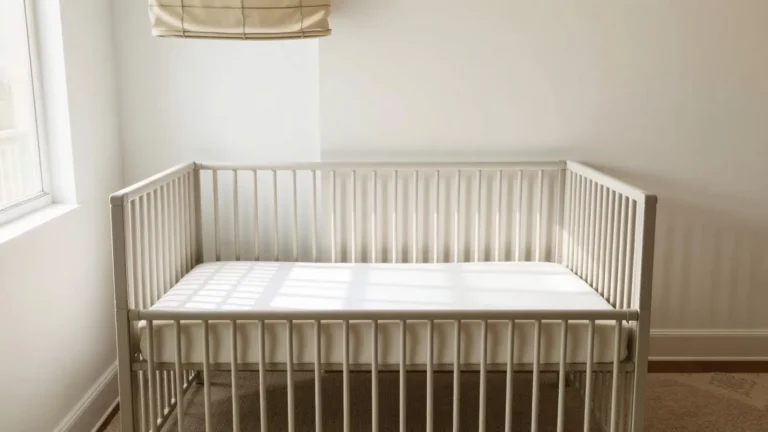
Alone, on the back, on a firm flat mattress in a crib, bassinet or play yard that meets current CPSC standards, in your room for at least the first six months. Keep pillows, blankets, bumpers and toys out of the sleep space.
Is 4-month sleep regression a sign of a sleep problem?
Frequent night waking, short naps and unsettled evenings are developmentally normal in the first year. It may need review if your baby snores or pauses in breathing, is not gaining weight, or is excessively sleepy and hard to wake.
What actually helps with 4-month sleep regression tonight?
A predictable short wind-down, a dark cool room, white noise at a safe volume and distance, age-appropriate wake windows, and putting your baby down drowsy but awake. Give any change five to seven consistent nights before judging it.
- 6-Month Sleep Regression
- 9-Month Sleep Regression
- 8-Month Sleep Regression Guide
- 8 Month Sleep Regression
- baby sleep & nursery hub
- NICHD Safe to Sleep basics
- AAP 2022 safe sleep policy
- CPSC nursery recalls
Medical disclaimer: this article is for general education and does not replace individual medical advice. Always follow your own pediatrician’s guidance for your child.
Related ChildBloom Guides
- Start here: Sleep Regressions by Age
- 9-Month Sleep Regression
- 6-Month Sleep Regression
- Sleep Regression After Travel or Illness
- 8-Month Sleep Regression Guide
- Sleep Regressions After Age One
- Browse all Sleep & Nursery guides
References & Medical Sources
- AAP healthy sleep hours by age
- AAP guidance on getting your baby to sleep
- NICHD infant sleep research overview
- NICHD Safe to Sleep: safe sleep environment
Reviewed by the ChildBloom pediatric panel. Learn about our physicians on the About page. This article is educational and does not replace your child’s clinician.




One Comment