Baby Refuses Solids but Drinks Milk
Medically reviewed by Dr. Ahmad Raza, MD (Pediatrics) — ChildBloom Medical Review Panel. Last updated: September 27, 2026.
Written by Dr. Ahmad Raza, MD (Pediatrics) and the ChildBloom Pediatric Panel.

Milk stays the main meal while your baby works out solids: skip pre-meal top-ups, offer small iron-rich tastes when alert, model eating, repeat without pressure — then watch growth and red flags.
📋 TL;DR — if you read nothing else
- Milk stays the main meal: until about 12 months it remains the main nutrition source; solids are practice, not replacement.
- Fix timing first. Skip bottles or nursing right before meals; offer solids during alert windows instead.
- Keep it pressure-free: small iron-rich tastes, shared plates, short meals — no forcing, no cutting milk, no withholding it after refusal.
- Call the clinician if refusal passes 2 weeks with slower growth, wet diapers drop, or swallowing looks effortful.
Quick answer: Keep milk and formula as the main nutrition source while using gentle strategies: skip pre-meal top-ups, offer small iron-rich tastes during calm alert moments, model eating, repeat low-pressure offers — then watch growth, swallowing, hydration, and illness red flags and ask your clinician if concerned.
Why This Happens
Between about 6 and 12 months, breast milk or formula remains the primary nutrition source. A baby who drinks a lot of milk around mealtime may simply not be hungry enough for new textures. This is usually a timing and exposure issue — not stubbornness — and it often improves with responsive, patient changes to the routine.
Important principle: don’t force solids, abruptly cut milk, or withhold milk after a refused meal — use flexible, low-pressure adjustments so your baby’s hunger cues guide progress.
Responsive Strategies to Try
- Check for pre-meal top-ups: offer solids during naturally alert windows rather than right after a full feed — avoid routinely giving a bottle or nursing right before.
- Offer small tastes and practice bites (1–2 teaspoons to start) — the early goal is exposure and oral-motor practice, not calories.
- Prioritize iron-rich options (below) at each meal — small amounts then matter nutritionally.
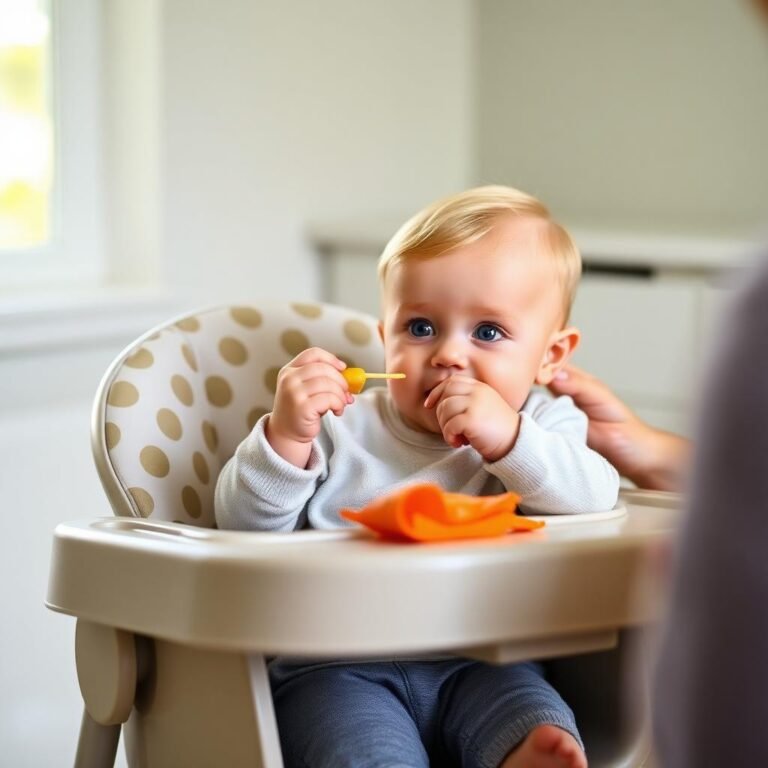
- Model and share: eat at the same time so your baby sees you enjoy food, and offer the same food from your plate.
- Keep it low-pressure: place food nearby, name it, praise exploration, stop if your baby gets upset.
- Rotate approaches: spoon-feeding, mashed textures, and safe finger foods combine per interest and skills. Keep meals short (5–20 minutes); stop at fullness cues.
For starting-solids fundamentals see our introducing solids guide.
Iron-Rich First-Food Ideas (Easy, Baby-Safe Options)
- Iron-fortified infant cereal thinned with breast milk or formula (easy iron boost) — see the iron-rich foods guide.
- Pureed or very finely shredded cooked meats (beef, lamb, dark chicken).
- Mashed lentils or beans mixed with a vitamin C food to help absorption.
- Mashed tofu or mashed egg yolk (if already introduced and tolerated).
Note: milk has limited iron after 4–6 months, so complementary iron sources matter (NIH Office of Dietary Supplements iron fact sheet, cited by name). See our iron-rich foods guide.
Sample Flexible Routines (Not Rules)
Examples only — adjust for your baby’s sleep, hunger, and family schedule.
- Option A (three small opportunities): morning — 1–2 tastes 30–90 minutes after a milk feed; midday — family lunch with a small serving; late afternoon — a small iron-rich bite; milk feeds in between.
- Option B (two solid meals): mid-morning and early evening as short, low-pressure meals; milk on demand otherwise.
For age-specific rhythms see the 6-month feeding schedule and 9-month feeding schedule.
Safer Textures and Choking Prevention
Offer developmentally appropriate textures and always supervise. Avoid whole grapes, raw vegetable chunks, whole nuts, and thick nut-butter spoonfuls (CDC choking guidance in References); safety basics are in our baby-led-weaning safety guide.
Quick Decision Framework
| Situation | Try this (responsive steps) | When to call clinician / urgent care |
|---|---|---|
| Baby drinks lots of milk, refuses solids at mealtimes | Stop pre-meal top-ups, offer small iron-rich tastes during alert times, model eating, repeat offers without pressure | If refusal persists >2 weeks AND growth slows or other red flags appear |
| Baby accepts some bites but not enough calories | Keep milk as the main source, increase frequency of small exposures, include iron-rich foods | If weight gain falters or wet diapers drop below usual |
| Baby gags or coughs occasionally while learning textures | Use safer textures, supervise closely, offer smaller bites | If coughing or airway trouble persists, noisy breathing, or swallowing difficulty |
When to Call the Pediatrician — Red Flags
Contact your baby’s clinician promptly if any of these occur:
- Poor weight gain, weight loss, or falling off the growth curve.
- Refusal of all solids for more than 2 weeks despite routine changes and repeated exposures.
- Signs of swallowing problems: coughing or gagging with most feeds, food pooling in the mouth, wet or gurgly voice after feeds, or frequent spit-up with difficulty.
- Signs of iron deficiency: pale skin, low energy, poor muscle tone, or delayed milestones — discuss screening.
- Babies born premature or with medical conditions may need tailored pacing — ask your clinician.
Seek urgent care or emergency services (call your local emergency number) if your baby has few wet diapers for many hours, is very lethargic or hard to wake, is vomiting persistently, or shows breathing trouble. For choking emergencies and certified first-aid steps, see the British Red Cross first-aid guidance.
Practical Tips for Persistence and Progress
- Expect gradual change: some babies need many exposures to accept a new food. Track which times of day your baby is most receptive.
- Keep mealtimes calm. Neutral encouragement helps more than coaxing, punishment, or food rewards.
- If you’re worried about iron or growth, your clinician can arrange screening (blood tests) and personalized advice.
For the texture debate see our baby-led weaning versus purees guide and best first foods.
👩⚕️ Doctor’s Take
Milk refusal is my most common feeding visit, and the fix is almost always the clock, not the child. If there is a full bottle or long nurse in the 30 minutes before the meal, the high chair is doomed — move solids into the alert window and the same food gets tried. I want two teaspoons, not two servings; exposure is the product. Keep the milk where it is — cutting it to make room backfires. The two numbers I track: wet diapers and the growth curve. Two weeks of refusal with flat growth, a wet or gurgly voice with feeds, or pale tired days deserve a call — iron screening is a finger stick. None of this is your cooking; it is scheduling and repetition.
References and further reading
- CDC — When, What, and How to Introduce Solid Foods.
- CDC — Choking Hazards for Infants and Toddlers.
- AAP / HealthyChildren — When to Introduce Egg, Peanut Butter, and Other Common Food Allergens.
- NIH Office of Dietary Supplements — Iron Fact Sheet for Health Professionals (cited by name).
- British Red Cross — First Aid for a Choking Baby.
This article is for general information only and is not a substitute for professional medical advice, diagnosis, or treatment. Always consult your own pediatrician about your child’s individual health needs. If you believe your child is having a medical emergency, call your local emergency number immediately.
Medical review
Reviewed by Dr. Ahmad Raza, MD, Pediatrics. Last reviewed September 27, 2026. This page was reviewed for feeding-advice accuracy against current CDC solids and choking guidance (both re-verified this date), the AAP allergen page (live), responsive-feeding framing, and the red-flag thresholds. The NIH ODS iron fact sheet is cited by name only (site returns 403). It is educational information and does not replace individualized advice from a qualified clinician.
Learn about our physicians on the About page.