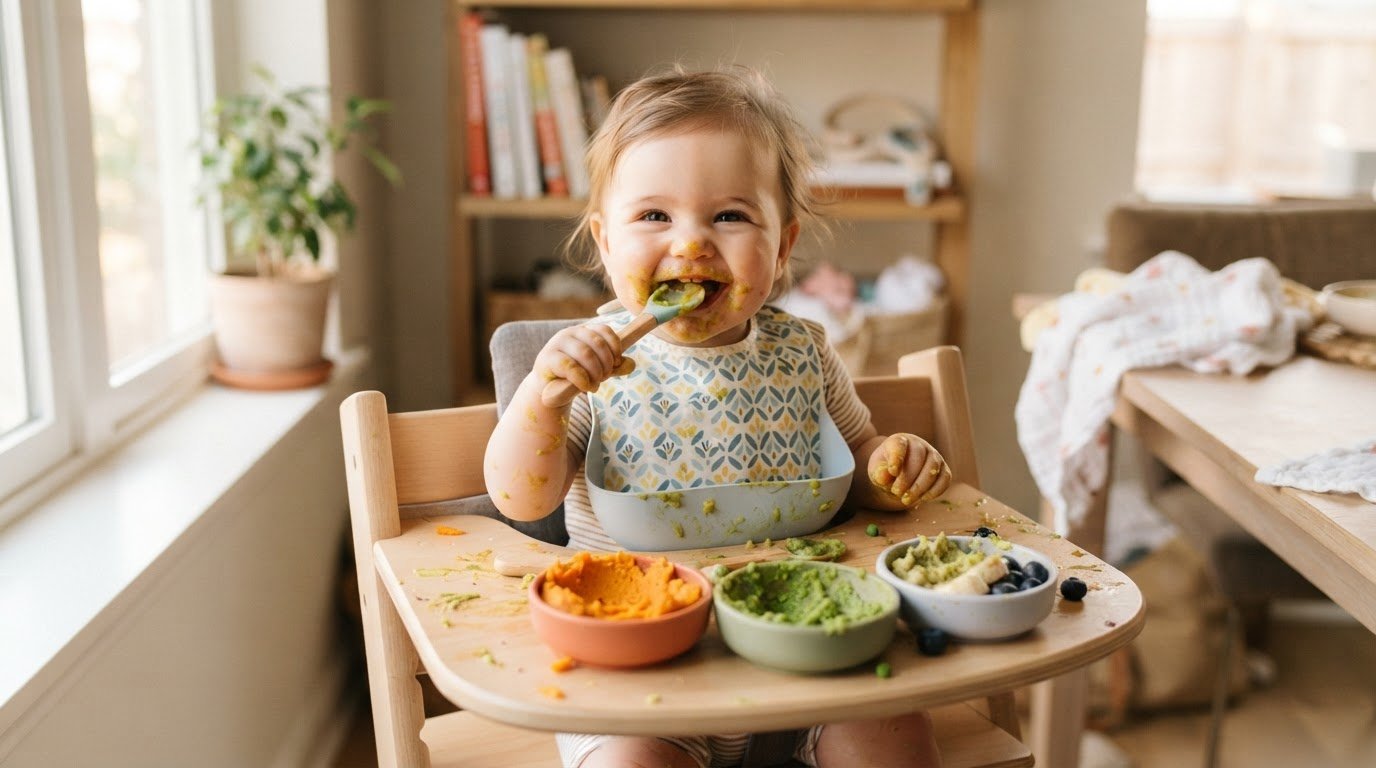
When to Start Baby Solid Foods: Complete 2026 Guide
A Major Shift in Infant Nourishment
Pinpointing when to start baby solid foods marks a major milestone in a child’s opening year. This change goes far deeper than simply modifying their daily menu. It signals a major leap in digestive maturity, immune tolerance, and physical coordination.
This guide offers clear, evidence-based tips to help parents navigate this step with absolute assurance. You will gain a firm grasp on physical readiness, safety protocols, and dietary needs. Every suggestion matches the clinical guidelines set by major pediatric authorities across the globe.
Clinical Timelines: When to Start Baby Solid Foods
An infant’s digestive tract matures at a rapid pace during the first few months. Offering solid foods too early can strain delicate kidneys and a developing gut microbiome. The American Academy of Pediatrics recommends waiting until your baby is about six months old before offering complementary foods.
Global health consensus highlights that exclusive breast milk or formula provides complete nourishment for the first half-year. Before this mark, a baby’s gut lacks key enzymes, like pancreatic amylase, needed to break down complex starches. The American Academy of Pediatrics shares clear biological markers regarding when to start baby solid foods to make sure their system is ready.
Starting solids before four months increases the risk of early childhood obesity and gut discomfort. Conversely, waiting too long, such as past seven or eight months, risks nutritional gaps, especially in iron and zinc. Spotting the exact developmental window supports healthy growth and sensory learning.
For a complete list of recommended starter meals, check out our easy first-food recipes.
Key Physical Signs of Readiness
Age alone does not dictate readiness. Babies grow at highly unique speeds, making physical milestones the safest markers to watch. Your little one must show clear motor control before trying anything beyond breast milk or formula.
Head and Neck Control
First, your baby must show great head and neck control. Keeping the head steady and upright in a highchair is mandatory for safe swallowing. Lacking this muscle control significantly raises the risk of choking during meals.
Sitting with Minimal Support
Second, the baby needs to sit upright with very little help. This posture lets gravity help guide food down the esophagus. It also lets them lean forward when hungry or lean back to signal they are full.
Having the right setup is highly important, so feel free to explore our best baby feeding gear guide.
Loss of the Extrusion Reflex
Third, the tongue-thrust reflex must fade. This automatic response causes young babies to push any solid object out of their mouth with their tongue to prevent choking. Parents often watch for physical cues to decide when to start baby solid foods, such as the natural end of this reflex.
Once this reflex recedes, the baby can easily push food from the front of the mouth to the back to swallow.
Grasping and Coordination
Fourth, the child needs to grasp objects and bring them to their mouth. This motion, known as the palmar grasp, shows the brain development required to handle food. Showing interest in family meals, like watching parents eat or reaching for plates, serves as a reliable sign.
The Clinical Consensus on When to Start Baby Solid Foods
Major health organizations agree on the safest timeline for expanding a baby’s diet. The European Society for Paediatric Gastroenterology, Hepatology and Nutrition recommends starting complementary foods between four and six months. They advise strongly against starting solids before seventeen weeks of life.
The Canadian Paediatric Society shares this view, suggesting a main focus on iron-rich foods right from the start. Both groups stress that breast milk or formula remains the chief source of nutrition for the first twelve months. Solids are meant to round out, not replace, these liquid meals in the beginning.
Delaying solid foods past six months can cause sensory aversion to textures. Babies who do not try textured foods by nine months might struggle with solid meals later in childhood. Keeping to this window supports physical development and healthy eating habits.
Two Main Pathways: Purees versus Baby-Led Weaning
Parents usually pick one of two paths when starting solids, though blending both works wonderfully. The traditional route relies on smooth purees spoon-fed by a parent. This approach makes it easy to track how much they eat and offers a smooth step up from a liquid-only diet.
Baby-led weaning skips purees entirely, offering soft, finger-sized pieces of whole food directly to the baby. This style encourages self-regulation, letting the child decide how much and how fast to eat. It also sharpens fine motor skills and coordination.
Whichever path you choose, safe preparation is the top priority. Parents must adapt food textures to match the baby’s chewing skills. Both methods require constant supervision during meals to keep things safe and positive.
Nutritional Priorities for the First Foods
Infants enter the world with natural iron stores built up during pregnancy. These stores start to run low around six months, particularly for breastfed babies. This drop in iron is a major reason why six months is the ideal time when to start baby solid foods.
Because of this, the initial foods you offer must be packed with easy-to-absorb iron. Iron is vital for brain growth, cognitive skills, and red blood cell production. Zinc is another key mineral that needs an early introduction to boost immunity and cell growth.
Excellent options for first foods include pureed beef, poultry, lentils, and iron-fortified single-grain cereals. Mixing these with breast milk or formula helps ease the transition with a familiar taste. Offering a broad range of vegetables and fruits early on helps shape healthy food preferences later in life.
A Step-by-Step Guide to the First Feeding Sessions
Schedule your first sessions when your baby is alert, healthy, and not starving. A calm, low-stress room helps build a positive connection with solid foods. A mid-morning try, about one hour after a milk feed, often works beautifully.
Start with a tiny amount of food, like one or two teaspoons of puree or a single piece of soft finger food. Use a soft, silicone-tipped spoon made for tiny mouths to protect sensitive gums. Place a little dab on their lips so they can taste it first.
Expect your baby to spit out those first bites as they get used to new textures and the feel of a spoon. This reflex is normal and does not mean they hate the food. Patience and repetition are key during these early learning moments.
Introducing Common Allergenic Foods Safely
Past pediatric advice suggested holding off on highly allergenic foods to avoid reactions. Modern clinical trials completely changed this approach by proving early introduction actually lowers the risk of developing food allergies.
Doctors emphasize that knowing when to start baby solid foods directly affects the schedule for early allergen exposure. You can introduce common allergens once your baby tolerates a few basic, low-risk foods. These top allergens include peanuts, eggs, dairy, soy, wheat, tree nuts, fish, shellfish, and sesame.
Introduce just one common allergen at a time, keeping everything else the same for three to five days. This pause helps you pinpoint the exact cause if a reaction happens. Offer the new food at home during the day so you can keep a close eye on them for a few hours.
Key Safety Rules and Foods to Avoid
Some foods carry severe health risks and must stay off the menu during the first year. Infant botulism is a rare but highly dangerous illness caused by toxins from soil bacteria. Honey can carry these spores and should never be given to babies under twelve months old.
Do not offer cow milk as a main drink before your baby turns one. Its high protein and mineral levels can overwork small kidneys and cause tiny amounts of intestinal bleeding. Tiny amounts of plain, whole-fat yogurt or cheese are fine because the culturing process breaks down those proteins.
Avoid added sugars and salty foods to protect young organs and prevent a preference for junk food. Steer clear of round, firm, or sticky items that present major choking hazards. This includes whole grapes, hot dogs, hard candies, raw carrots, and thick globs of nut butter.
| Food Category | Specific Food | Primary Risk / Reason to Avoid |
|---|---|---|
| Sweeteners | Honey | Infant botulism risk under 12 months |
| Dairy | Cow milk (as beverage) | Strains kidneys, causes intestinal micro-bleeding |
| Choking Hazards | Whole grapes, raw carrots, hard candies | Airway obstruction due to size and texture |
| Additives | Added sugars and high sodium | Strains developing organs, shapes unhealthy preferences |
Recognizing and Responding to Allergic Reactions
Watch your baby closely for any signs of a reaction during and after meals. Mild symptoms include hives, localized rashes, or redness around the mouth. Sudden vomiting or diarrhea can also point to a food sensitivity.
Severe allergic reactions, known as anaphylaxis, require immediate emergency medical help. Look out for swelling of the lips, tongue, or throat, alongside wheezing, trouble breathing, or pale skin. Keeping emergency numbers handy provides vital peace of mind.
If you suspect an allergy, cut that food out completely and call your pediatrician. Never try that food again without medical clearance. Many mild childhood food allergies can be monitored and eventually outgrown.
Maintaining Proper Hydration and Milk Intake
Breast milk or formula must remain the main source of nutrition throughout the first year. Solid foods should complement liquid meals, not replace them. Your baby will slowly drink less milk as they eat a wider variety of solids.
You can offer tiny sips of water with meals starting at six months. Keep water under four to eight ounces daily so they do not fill up on it instead of milk. Use an open cup or a straw cup to help them practice mature drinking skills.
Fruit juice is unnecessary and should be skipped entirely during the first year. Juice serves up high sugar without the helpful fiber found in whole fruit. Whole, pureed, or mashed fruit is always the better choice.
Transitioning Textures for Motor Skill Development
Moving to thicker food textures is key to building jaw muscles, chewing skills, and speech pathways. Babies who only eat smooth purees for too long may reject chunkier foods later. Slowly increase texture complexity every few weeks based on how they handle it.
Shift from smooth purees to thick, mashed foods with tiny lumps around seven or eight months. Introduce soft, dissolvable finger foods, like ripe banana slices or cooked sweet potato cubes, by eight months. This progression helps them practice the pincer grasp using their thumb and index finger.
By ten to twelve months, most babies can eat finely chopped versions of your family meals. Make sure all food is cooked until very soft and cut into tiny pieces to prevent choking. Eating together builds social skills and models healthy eating habits.
Creating a Positive Eating Environment
The behavioral side of mealtime matters just as much as what goes on the plate. Building a calm, pressure-free table helps prevent power struggles. Always respect your baby’s signs of fullness, like turning away, shutting their mouth, or pushing the spoon aside.
Never force a baby to finish a plate, as this disrupts their natural ability to stop when full. Messy eating is a normal, healthy part of learning. Let them touch, smash, and play with their food to build sensory curiosity.
Cut out distractions during meals by turning off TVs, tablets, and phones. Sit together at the table to show them how you eat and interact. Regular mealtime routines build a sense of security and make dining fun.
Useful Tips for a Smooth Shift
Moving to solid foods takes plenty of patience, attention, and a focus on safety. By paying attention to developmental readiness and rich nutrients, you build a strong foundation for future health. The following summary highlights key practices for this milestone.
- Focus on developmental signs of readiness over exact chronological age to keep things safe.
- Start with iron-rich foods to build back natural iron stores that drop around six months.
- Introduce common allergens early and one by one to watch for reactions.
- Steer clear of choking hazards, honey, cow milk, and added sugars during the first year.
- Keep breast milk or formula as the main source of nutrition during infancy.
Watching developmental milestones is your absolute best guide for when to start baby solid foods. This exciting shift is a slow journey of discovery for both parent and child. With a mindful, evidence-based approach, this step becomes a joyful path toward lifelong wellness.



5 Comments