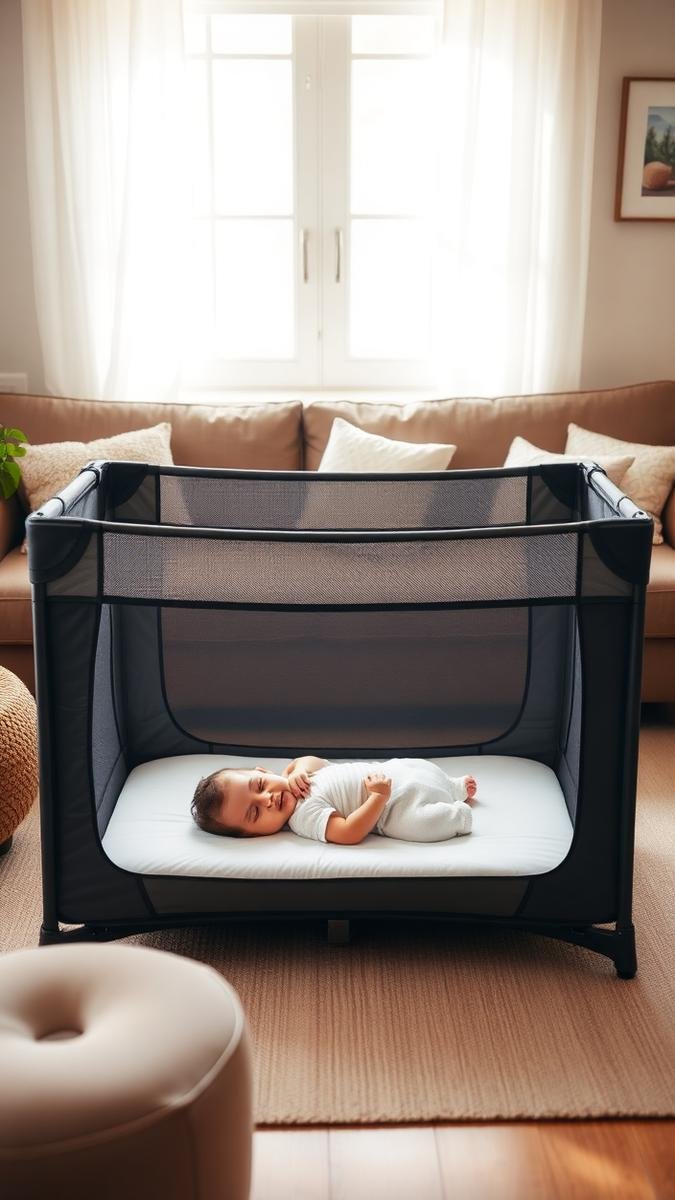
Is a Portable Crib Safe for Baby Sleep? A Pediatrician’s 2026 Guide
Why Portable Crib Safety Matters More Than You Think
As a pediatrician, I see many families who treat portable cribs as a secondary option — something lighter and less regulated than a full-sized crib. The reality is that your baby’s sleep environment is equally dangerous regardless of whether the surface is a $900 stationary crib or a $60 travel play yard. In the United States, approximately 3,500 infants die each year from sleep-related causes, according to the CDC’s SUID data. Many of these deaths are preventable and occur in sleep environments that parents genuinely believed were safe.
Portable cribs — including play yards like the classic Pack ‘n Play, travel bassinets, and compact bedside sleepers — can absolutely be safe for baby sleep. The key word is ‘can.’ Whether they actually are depends entirely on whether they meet current federal safety standards and how they are used.
2026 AAP Safe Sleep Guidelines: What’s Changed
The American Academy of Pediatrics updated its safe sleep recommendations, building on the 2022 overhaul that was based on analysis of 159 scientific studies. The 2025–2026 guidance continues to emphasize the ABCs of safe sleep: Alone, on their Back, in a Crib (or approved sleep surface). For the full walkthrough, see our guide to the ABCs of SIDS prevention.
Key points from the updated 2026 AAP and CDC guidance:
- Always place your baby on their back for every sleep — both naps and nighttime — until 12 months of age.
- Use only a firm, flat, non-inclined sleep surface. Any surface inclined more than 10 degrees from horizontal is considered unsafe for infant sleep (see why sleep positioners are unsafe).
- The sleep surface — whether a crib, bassinet, portable crib, or play yard — must conform to Consumer Product Safety Commission (CPSC) safety standards.
- Room-sharing (but not bed-sharing) is recommended for at least the first 6 months, and ideally for the first year. This practice alone can reduce SIDS risk by up to 50%. Our co-sleeping vs room-sharing guide explains the difference.
- The crib should contain only a firm mattress and a tight-fitting sheet. Nothing else.
- Weighted swaddles, sleep sacks with added weight, crib bumpers, pillows, and loose blankets are all prohibited. The Safe Sleep for Babies Act of 2021 bans the manufacture and sale of inclined sleepers and crib bumpers.
What Qualifies as a Safe Portable Crib in 2026?
Following the CPSC infant sleep products rule that took effect in 2022, any infant sleep product — including those marketed for sleep or depicting images of sleeping infants — must meet existing federal safety standards for cribs, bassinets, portable cribs, or play yards. This rule explicitly bans products like inclined sleep products, cardboard baby boxes, in-bed sleepers, baby nests and pods, hammocks, and compact travel bassinets that don’t meet these standards.
When evaluating a portable crib for safety, check for these features:
- JPMA (Juvenile Products Manufacturers Association) certification seal — confirms third-party safety testing.
- Firm, flat mattress that fits snugly with no gaps larger than two fingers between the mattress edge and the side of the crib.
- Mesh or ventilated sides that allow airflow and visibility.
- Stable, locked frame that cannot collapse under the baby’s weight.
- CPSC registration card — register your product so you receive recall notices.
- Not listed on the CPSC recall database before first use.
Shopping for a full-sized option too? Compare our pediatrician-reviewed crib picks.
Play Yards vs. Travel Bassinets vs. Compact Bedside Sleepers
Parents often ask me which type of portable sleep surface is safest. Here is a practical breakdown:
Play Yards (Pack ‘n Play style)
These are generally the safest portable option because they are widely regulated, have firm mattress pads designed for them, and provide substantial space. They are appropriate from birth and can serve as a primary sleep surface for many months. Always use only the mattress pad that came with the play yard — aftermarket mattress inserts are not safety-tested for the specific dimensions.
Travel Bassinets
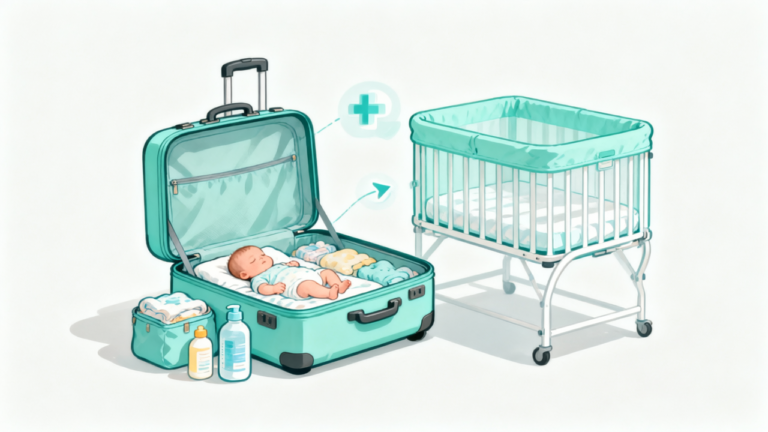
Lightweight travel bassinets are appropriate only if they meet the 2022 CPSC rule. Some compact travel bassinets on the market — particularly those sold prior to 2022 — may not meet current standards. Verify compliance before use, especially with secondhand items.
Bedside Sleepers and Co-Sleepers
Bedside sleepers that attach to the adult bed must meet federal bassinet/bedside sleeper standards. Products categorized as ‘in-bed sleepers’ or ‘co-sleepers’ that are designed to rest on an adult mattress are not AAP-recommended. The risk of the infant rolling or slipping into an unsafe position on the adult mattress remains even with these products in place.
Common Mistakes Parents Make With Portable Cribs
In pediatric practice, these are the errors seen most frequently:
- Using the portable crib with a blanket, pillow, or positioning wedge ‘just for a short nap.’ There is no safe threshold for having soft objects in the sleep space. Every sleep counts.
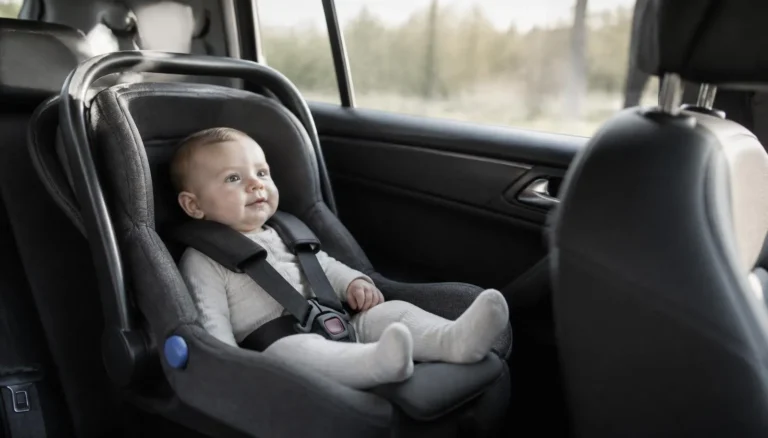
- Placing a car seat or bouncy seat inside the play yard so the baby can nap in an inclined position. This practice is explicitly unsafe — the same applies to letting a baby sleep in a swing.
- Using an older portable crib passed down from relatives. Cribs made before 2011 do not meet current federal crib safety standards and should not be used.
- Failing to assemble the portable crib correctly. Always follow manufacturer instructions and verify that the locking mechanisms are fully engaged.
- Adding an extra mattress or padding because the included mattress feels thin. The firm, minimal mattress is intentional — it prevents suffocation.
Temperature and Clothing: Keeping Baby Safe and Comfortable
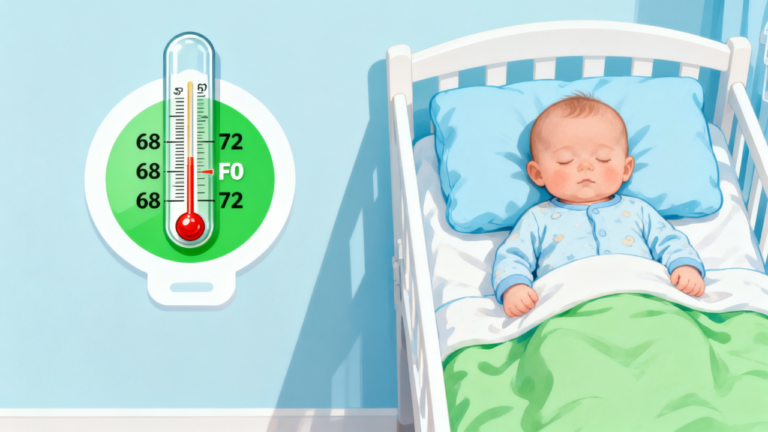
A common concern is that the firm, uncluttered crib will leave the baby cold. The AAP guidance is clear: instead of loose blankets, dress your baby in a sleep sack or wearable blanket appropriate for the room temperature. This keeps your baby warm without adding suffocation risk. See our baby room temperature chart by age for exact ranges, and our swaddling safety guide for when to stop swaddling.
The AAP specifically warns against weighted sleep products. Any sleep sack or swaddle with added weight can restrict chest expansion and breathing in infants and should be avoided.
As a rule of thumb, dress your baby in no more than one additional layer than you would be comfortable wearing in the same room. For most indoor environments, a onesie plus a sleep sack is appropriate.
When to Replace Your Portable Crib
Replace or stop using your portable crib if:
- It appears on the CPSC recall list.
- Any part is missing, broken, or cannot be fully assembled as designed.
- The mattress has become worn, compressed, or shows signs of mold.
- Your baby has reached the weight or height limit specified by the manufacturer.
- Your baby can pull to stand and may be able to climb out — at this point transition to a floor mattress or toddler bed.
The Bottom Line: Portable Cribs Can Be Just As Safe as Full-Sized Cribs
A CPSC-compliant portable crib, used correctly with nothing inside it but a firm mattress and a fitted sheet, and with your baby placed on their back, is a fully safe sleep option for your infant. The portability is a bonus — these products let parents maintain the AAP-recommended room-sharing setup even during travel, visits to grandparents, or in smaller homes where a full crib may not fit every room.
If you have any questions about a specific product, I recommend checking cpsc.gov before purchase and discussing your baby’s specific sleep setup at your next well-baby visit.
Related pediatrician-reviewed reading
- Safe Sleep for Newborns: The ABCs of SIDS Prevention
- Best Crib for Newborns 2026: Safe, Pediatrician-Reviewed Picks
- Co-Sleeping vs Room-Sharing: The Safety Guide Every Parent Needs
- Baby Room Temperature: What’s Safe and What’s Dangerous
- Baby Sleep Schedule by Age: What to Expect From Newborn to 12 Months
- Best Baby Monitor 2026: Pediatrician-Approved Guide
Sources and further reading
- American Academy of Pediatrics. AAP Updates Safe Sleep Recommendations (2022); full policy: Moon RY et al., Pediatrics 2022;150(1):e2022057990, doi:10.1542/peds.2022-057990.
- U.S. Consumer Product Safety Commission. Federal Infant Sleep Products Safety Standard Takes Effect and CPSC Recalls.
- Centers for Disease Control and Prevention. Data and Statistics for SUID and SIDS.
- NIH / NICHD. Safe to Sleep® campaign.
- Juvenile Products Manufacturers Association. JPMA certification program.
Medical disclaimer: this article is for general education and does not replace individual medical advice. Always follow your own pediatrician’s guidance for your child.

9 Comments