11-Month Feeding Schedule: Flexible Guide
11-month feeding schedule with flexible meals, milk feeds, textures, iron-rich foods, and responsive guidance for families.
Breast pumps, bottles, sterilizers, high chairs and evidence-based feeding guidance from a practicing pediatrician.

11-month feeding schedule with flexible meals, milk feeds, textures, iron-rich foods, and responsive guidance for families.

Baby refuses solids but drinks milk? Learn responsive feeding strategies, iron-food ideas, and red flags that need pediatric advice.

Baby-led weaning food sizes by stage: safer shapes, textures, and examples for 6–12 months, with choking-prevention guidance.

Introducing peanut and egg to baby: timing, safe forms, high-risk guidance, reaction signs, and when to call a pediatrician.

If you are looking for iron-rich foods for baby, start around 6 months with iron-fortified infant cereal, smooth meats, beans, lentils, tofu, eggs, and other soft foods. Pair plant sources with vitamin C foods when practical. Breast milk or iron-fortified formula remains the main source of nutrition during the first year. Food texture and choking…

Learn how to tell baby gagging vs choking, what signs require immediate help, how to prevent choking, and when to call your pediatrician.

A flexible 10-month feeding schedule with milk, meals, snacks, iron-rich foods, water guidance, safe textures, and pediatrician red flags.

8-month-old won’t eat solids? Get safe feeding tips, iron-rich food ideas, choking guidance, and signs to call your pediatrician.

Switching from formula to whole milk at 12 months: learn cup tips, iron-rich food guidance, and when to call your pediatrician.

Find the best formula for gassy baby digestion. Compare top pediatrician-recommended options, key ingredients, and gentle milk blends for quick relief.

Learn exactly when to start baby solid foods with our clinical guide. Discover key developmental signs, safety rules, and top first-food recipes for 2026.

Learn the difference between baby spit up and reflux. Understand what’s normal, warning signs, and when to call your pediatrician.
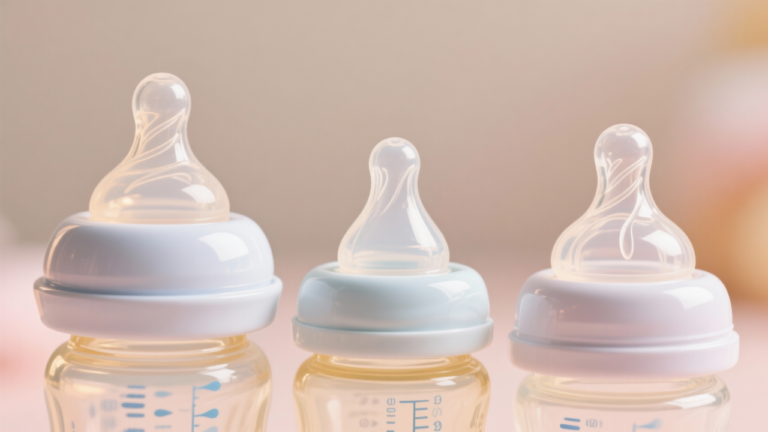
Discover how bottle nipple shape impacts newborn latch, milk flow, and breastfeeding transition. Expert guide to choosing the right nipple.
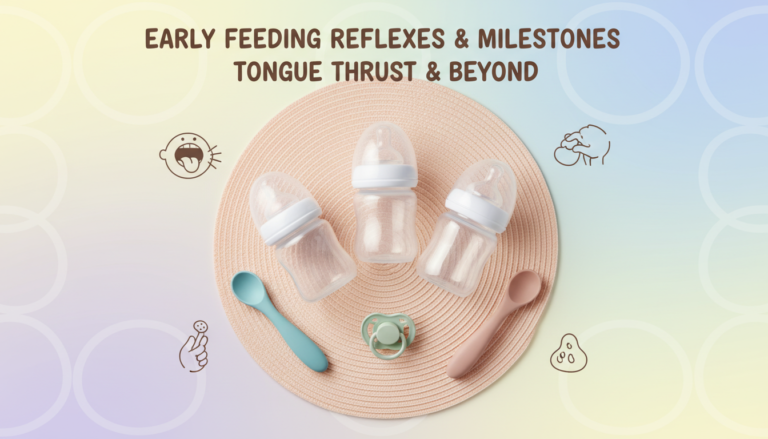
Tongue thrust is a normal reflex that protects your baby from choking. It usually fades by 4 to 6 months. Here is the timeline, how to feed around it, and when persistence past 8 to 10 months needs a check.

Bottle refusal is almost always a phase with a reason behind it: nipple flow, milk temperature, timing, or a three-month strike. The seven-step protocol, what to avoid, and the signs that need a call.

Curdled spit-up looks alarming and is almost always normal. The five likely causes ranked by frequency, the home steps that reduce it, and the red flags that cannot wait.

Hiccups after feeding are almost always normal. Learn how the mechanism works, how to tell hiccups apart from reflux, what actually helps, and the rare red flags that mean it is time to call your pediatrician.

Arching and screaming during feeding almost always means feeding hurts. The five possible causes ranked by likelihood, a step-by-step check for tonight, and the red flags that cannot wait.

Baby feeding poorly without fever – learn causes, feeding techniques, and when to call your pediatrician.

Breastfeeding baby with a rash? Learn how cow’s milk protein intolerance (CMPI) from mom’s diet causes eczema, blood in stool, and how to fix it.

Pediatrician-reviewed breast pumps for working moms — top picks compared on noise, battery and insurance eligibility, plus flange fit, cleaning and PUMP Act guidance for 2026.

Practical picky eating toddler strategies backed by pediatric guidance. Learn repeat exposure, family meals, and when to call your pediatrician. Read the full parent guide.

Picky eating prevention for babies 6–12 months: how many food exposures are needed, texture timing by age, and family-meal tips to raise an adventurous eater.

Spot newborn hunger and fullness cues early with this guide. Learn early signs, late cues, and fullness signals to feed your baby well and avoid overfeeding.

Newborn feeding schedule by week: how many feeds, ounces & hours between meals your baby needs in months 1–3, plus signs they feed well. Read our guide.
We use cookies to improve your experience on our site. By using our site, you consent to cookies.
Manage your cookie preferences below:
Essential cookies enable basic functions and are necessary for the proper function of the website.
These cookies are needed for adding comments on this website.
Statistics cookies collect information anonymously. This information helps us understand how visitors use our website.
Google Analytics is a powerful tool that tracks and analyzes website traffic for informed marketing decisions.
Service URL: policies.google.com (opens in a new window)