Best Open-Ended Toys by Developmental Stage
Best Open-Ended Toys by Developmental Stage
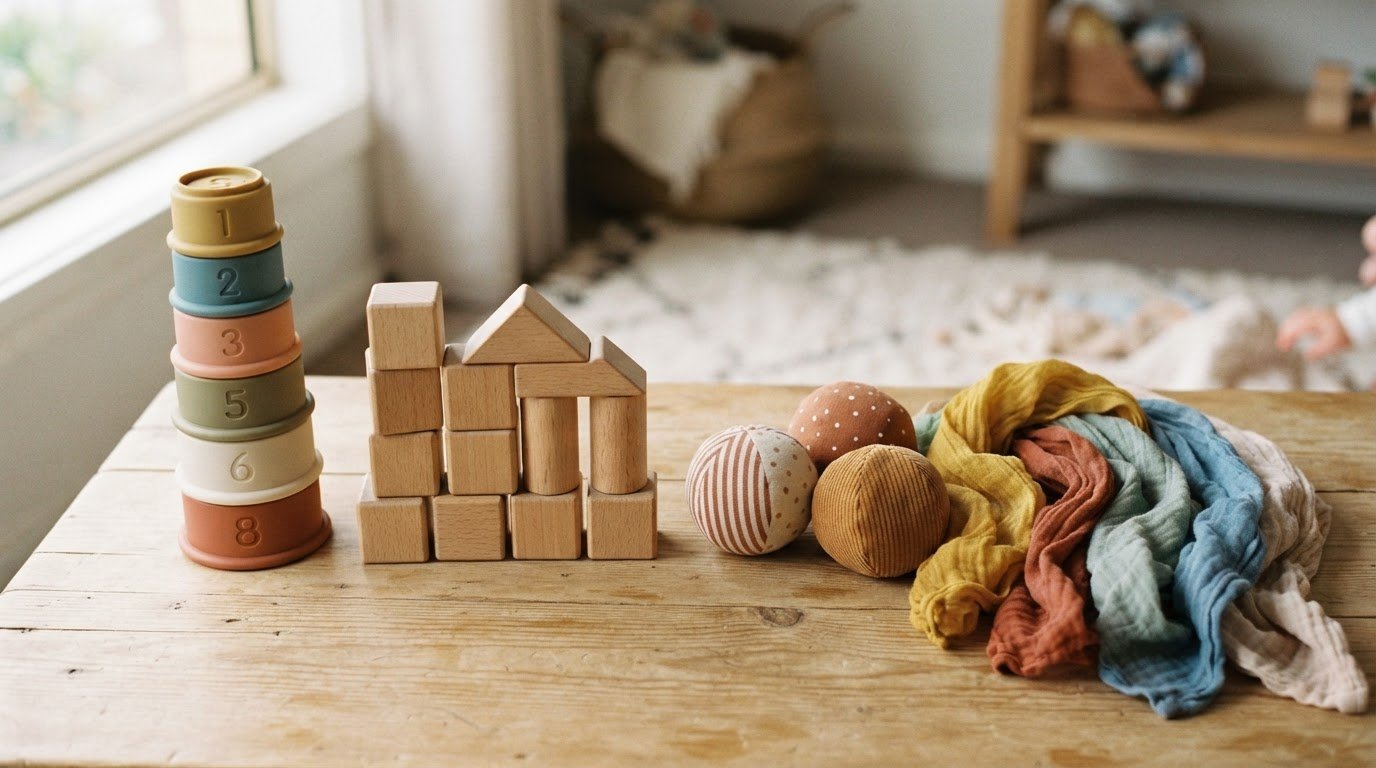
The best open-ended toys are simple objects that can be used in more than one way: stacking cups, large blocks, soft balls, scarves, containers, chunky puzzles, pretend-play props, and books. Choose toys by the child’s current abilities and safety needs, then allow the child to decide how to use them. Open-ended toys do not need to be expensive or electronic. For babies, prioritize large, washable, graspable objects. For toddlers, add filling, dumping, building, carrying, sorting, and pretend play. Inspect toys for broken parts, batteries, magnets, water beads, and choking hazards. This guide explains how to make the idea practical, how to adapt it to the child in front of you, and when to ask for professional advice.
Key Takeaways
– The best open-ended toys are simple objects that can be used in more than one way: stacking cups, large blocks, soft balls, scarves, containers, chunky puzzles, pretend-play props, and books. Choose toys by the child’s current abilities and safety needs, then allow the child to decide how to use them.
– Choose simple, supervised activities that match the child’s current abilities rather than forcing an advanced skill.
– Watch comfort, symmetry, engagement, and progress; these are more useful than comparison with another child.
– Contact the pediatrician for regression, sudden weakness, pain, persistent asymmetry, unusual stiffness or floppiness, or stalled progress.
The short answer
The best open-ended toys are simple objects that can be used in more than one way: stacking cups, large blocks, soft balls, scarves, containers, chunky puzzles, pretend-play props, and books. Choose toys by the child’s current abilities and safety needs, then allow the child to decide how to use them. Open-ended toys do not need to be expensive or electronic. For babies, prioritize large, washable, graspable objects. For toddlers, add filling, dumping, building, carrying, sorting, and pretend play. Inspect toys for broken parts, batteries, magnets, water beads, and choking hazards. A practical plan starts with a safe environment, one small challenge, and time for the child to respond. The adult’s role is to notice, invite, protect, and adapt—not to make the child perform.
Why this topic matters
Development is not a single ladder. Children gain skills through different sequences, and the same activity may be easy for one child and demanding for another. The CDC describes milestones as skills most children can do by a certain age, not as a diagnosis or a competition.1 WHO motor-development standards also describe windows rather than one compulsory date.8 Use age ranges as prompts for observation and conversation with a clinician.
Focus on participation. Can the child look, listen, reach, grasp, release, shift weight, communicate interest, and recover after effort? A child may be building important foundations even when the headline milestone has not appeared. Describe what the child actually does and how it changes from week to week.
| What to observe | Encouraging pattern | Call the clinician when… |
|---|
|—|—|—|
| Engagement | Child looks, reaches, vocalizes, or repeats an action | Child is difficult to engage or seems in pain |
| Variety | Child explores more than one position or strategy | One posture or side dominates persistently |
| Comfort | Child can pause and recover | Activity causes pain, color change, or breathing trouble |
| Progress | New attempts appear over time | Skills stop, regress, or disappear |
| Safety | Adult can control the environment | Hazards, small parts, heat, water, or heights are present |
How to set up the activity
Choose a time when the child is rested, fed, and alert. Clear a firm floor or a stable seated area. Keep the adult close enough to intervene. Start with a familiar activity, then add only one small challenge: a toy slightly farther away, a new texture, a second container, a low step, or a different sound. Give the child time to respond before helping.
Use large, intact objects with no loose pieces, accessible batteries, strong magnets, water beads, sharp edges, toxic finishes, or detachable cords. Babies explore by mouthing, and toddlers may carry objects quickly. Age labels help but do not replace supervision. Inspect homemade sensory materials every time.
For sleep, use a firm, flat, empty sleep surface and place infants on their backs.4 Developmental supports, pillows, wedges, loungers, and positioners belong nowhere in an infant sleep space unless specifically prescribed and used under professional guidance.
A responsive play progression
Begin by watching. The child’s gaze, hand opening, body movement, sounds, and facial expressions reveal what is interesting and what is too difficult. Join without taking over. Copy a sound, pass a toy back, pause for a response, or place an object where the child can choose whether to reach.
Make the first version easy. A success gives the child information about how the body and object work together. Once the child repeats it, vary one feature. Move the toy to the other side, use a different texture, add a container, or invite a new direction. If frustration rises, reduce the challenge or return to a familiar game.
Do not force a posture, pull a child by the arms, repeatedly correct the body, or use equipment to manufacture a milestone. Self-initiated movement and responsive interaction provide better information than performance under pressure. If a physical therapist has prescribed activities, follow that plan instead of adding generic exercises.
Developmentally appropriate safety
Anchoring furniture is essential for toddlers. Keep cords, hot drinks, cleaning products, medications, pools, buckets, stairs, windows, and small objects out of reach. For outdoor activities, add sun and heat protection, shade, water supervision, traffic awareness, and inspection of the ground. For sensory activities, avoid raw ingredients that can cause choking, allergic exposure, or contamination.
Avoid wheeled infant walkers. The AAP identifies injury hazards and does not consider them necessary for learning to walk.7 Use supervised floor play, stable furniture, and developmentally appropriate push toys instead. Do not leave a child on counters, tables, beds, sofas, or adult climbing equipment.
When to contact the pediatrician
Contact the pediatrician if a child loses a skill, stops using a limb, shows persistent one-sided movement, seems unusually stiff or floppy, cannot participate because of pain, or makes no meaningful progress. The AAP recommends developmental surveillance at health visits and screening at recommended ages, with additional evaluation when concerns arise.3 Early-intervention programs can often assess functional needs before a final diagnosis is known.6
Record the change in plain language and bring short natural videos. Note birth history, corrected age if premature, illness, pain, sleep, feeding, vision, hearing, and what happens in more than one setting. Seek urgent care for sudden weakness, seizure, severe pain, significant injury, breathing difficulty, or acute illness.
Frequently asked questions
Do I need expensive equipment?
Usually not. A safe floor, a few large intact objects, books, caregiver interaction, and time are enough for rich play. Equipment should solve a specific safety or access problem, not promise faster development.
How long should an activity last?
There is no universal quota. Several brief sessions are usually more successful than one long session. Stop for tiredness, hunger, distress, pain, or loss of control.
Should I correct an unusual movement?
Offer variety rather than constant correction. Place objects on both sides and change your own position. Ask the clinician about persistent asymmetry, pain, stiffness, weakness, or regression.
Is screen-free play realistic every day?
Yes, when expectations are modest. Toddlers need interaction and movement, not a new craft every hour. Reading, carrying laundry, sorting safe household objects, singing, and pretend play count.
Can I use food for sensory play?
Food play can create choking, allergy, and hygiene concerns. Non-food sensory activities are often easier to control. Never use small loose materials with babies, and supervise all sensory exploration.
What if my child refuses the activity?
Respect the signal. Change the position, lower the challenge, offer a familiar object, or try later. Refusal can reflect fatigue, discomfort, overstimulation, or a task that is too hard.
Conclusion
The best play supports curiosity, communication, movement, and problem-solving without turning development into a test. Keep activities simple, accessible, and safe. Watch for progress and participation, not just an age label. Share persistent concerns with the pediatrician, and act promptly when a skill is lost or a child has sudden weakness, pain, injury, seizure, breathing trouble, or acute illness.
References
CDC developmental milestone guidance — https://www.cdc.gov/act-early/milestones/9-months.html
WHO motor-development milestones — https://www.who.int/tools/child-growth-standards/standards/motor-development-milestones
AAP developmental surveillance and screening — https://www.aap.org/en/patient-care/developmental-surveillance-and-screening-patient-care/
AAP safe sleep guidance — https://www.aap.org/en/patient-care/safe-sleep/
AAP HealthyChildren media guidance — https://www.healthychildren.org/English/family-life/Media/Pages/Where-We-Stand-TV-Viewing-Guidelines.aspx
CDC early intervention resources — https://www.cdc.gov/act-early/early-intervention/index.html
AAP prevention of walker-related injuries — https://publications.aap.org/pediatrics/article/142/4/e20181491/37381/Prevention-of-Walker-Related-Injuries-in-Infants
WHO windows of motor development — https://www.who.int/tools/child-growth-standards/standards/motor-development-milestones
AAP toys and play guidance — https://www.aap.org/en/patient-care/early-childhood/early-childhood-health-and-development/toys-and-play/
Medical note: This article is educational and does not replace individualized medical advice. Contact your child’s clinician for concerns about development. Seek urgent care for sudden weakness, severe pain, seizure, breathing difficulty, significant injury, or acute illness.
<!– [IMAGE] Add a licensed, locally stored hero image with descriptive alt text. –>
<!– [CHART] Add an educational activity or safety progression; do not present it as a deadline. –>
<!– [VIDEO] Add a hospital or pediatric-therapy demonstration after editorial review. –>
Topic-specific guidance
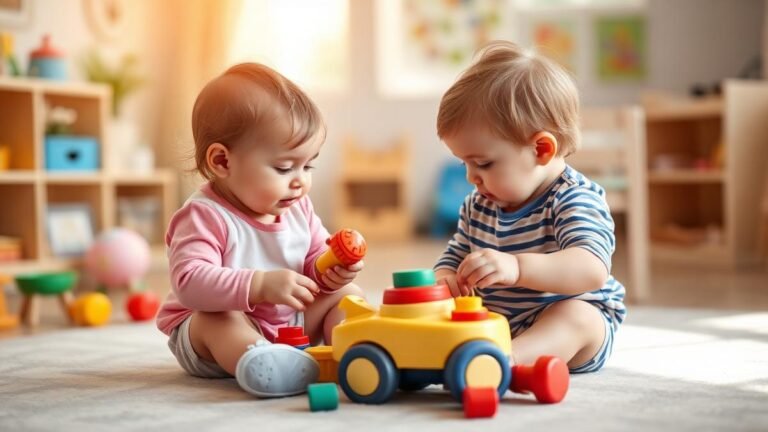
Open-ended toys do not need to be expensive or electronic. For babies, prioritize large, washable, graspable objects. For toddlers, add filling, dumping, building, carrying, sorting, and pretend play. Inspect toys for broken parts, batteries, magnets, water beads, and choking hazards. Start with the easiest version. If the child succeeds, repeat it and then vary one element. If the child becomes frustrated, return to a familiar position or activity. Do not use force, restraint, or repeated correction.
For this topic, watch the difference between a preference and a barrier. A preference changes with the toy, position, mood, or opportunity. A barrier persists across settings, limits participation, causes pain, affects one side, or is accompanied by loss of a skill. A short video can help the pediatrician see the pattern, but it should show natural play rather than repeated prompting.
A sample routine
Offer one brief activity after a diaper change or rest period, when the child is alert. Later, repeat a related idea with a different object or caregiver position. Add ordinary routines such as reading, singing, carrying a safe object, looking outside, or helping with a simple household task. Play is not only a purchased activity; it is the child’s active participation in daily life.
Adaptations when the first idea does not work
If the child cannot reach, move the object closer. If the texture is disliked, offer it through a cloth or switch to a familiar material. If the space is small, clear one safe lane instead of attempting a large obstacle course. If the child tires quickly, use shorter sessions. If a posture causes discomfort, stop and ask the clinician for alternatives.
Parent checklist
Before starting, ask: Is the child awake and supervised? Is the object too small to swallow? Can furniture tip? Is the surface stable? Can the child stop or return to a comfortable position? Am I allowing the child to initiate? Is there a medical concern that needs professional review rather than a home experiment?
The central principle is opportunity without pressure. Children learn through repeated experiences with caregivers who follow their cues. A different movement or play style can still be effective, and a familiar activity can be adapted many ways. Keep the environment safe, observe carefully, and ask the pediatrician when concern persists.
The central principle is opportunity without pressure. Children learn through repeated experiences with caregivers who follow their cues. A different movement or play style can still be effective, and a familiar activity can be adapted many ways. Keep the environment safe, observe carefully, and ask the pediatrician when concern persists.
The central principle is opportunity without pressure. Children learn through repeated experiences with caregivers who follow their cues. A different movement or play style can still be effective, and a familiar activity can be adapted many ways. Keep the environment safe, observe carefully, and ask the pediatrician when concern persists.
The central principle is opportunity without pressure. Children learn through repeated experiences with caregivers who follow their cues. A different movement or play style can still be effective, and a familiar activity can be adapted many ways. Keep the environment safe, observe carefully, and ask the pediatrician when concern persists.
The central principle is opportunity without pressure. Children learn through repeated experiences with caregivers who follow their cues. A different movement or play style can still be effective, and a familiar activity can be adapted many ways. Keep the environment safe, observe carefully, and ask the pediatrician when concern persists.
The central principle is opportunity without pressure. Children learn through repeated experiences with caregivers who follow their cues. A different movement or play style can still be effective, and a familiar activity can be adapted many ways. Keep the environment safe, observe carefully, and ask the pediatrician when concern persists.
The central principle is opportunity without pressure. Children learn through repeated experiences with caregivers who follow their cues. A different movement or play style can still be effective, and a familiar activity can be adapted many ways. Keep the environment safe, observe carefully, and ask the pediatrician when concern persists.
The central principle is opportunity without pressure. Children learn through repeated experiences with caregivers who follow their cues. A different movement or play style can still be effective, and a familiar activity can be adapted many ways. Keep the environment safe, observe carefully, and ask the pediatrician when concern persists.
The central principle is opportunity without pressure. Children learn through repeated experiences with caregivers who follow their cues. A different movement or play style can still be effective, and a familiar activity can be adapted many ways. Keep the environment safe, observe carefully, and ask the pediatrician when concern persists.
The central principle is opportunity without pressure. Children learn through repeated experiences with caregivers who follow their cues. A different movement or play style can still be effective, and a familiar activity can be adapted many ways. Keep the environment safe, observe carefully, and ask the pediatrician when concern persists.
The central principle is opportunity without pressure. Children learn through repeated experiences with caregivers who follow their cues. A different movement or play style can still be effective, and a familiar activity can be adapted many ways. Keep the environment safe, observe carefully, and ask the pediatrician when concern persists.
The central principle is opportunity without pressure. Children learn through repeated experiences with caregivers who follow their cues. A different movement or play style can still be effective, and a familiar activity can be adapted many ways. Keep the environment safe, observe carefully, and ask the pediatrician when concern persists.
*Medically reviewed by Dr. Ahmed Raza, MD, FAAP (Pediatric Emergency Medicine, ChildBloom Medical Review Board) on 2026-08-30.*
About the author: Dr. Sophia Martinez, MD, PhD is a developmental pediatrician specializing in developmental milestones, sensory processing, and neurodevelopmental screening. She reviews ChildBloom’s movement and milestone content against AAP, CDC, and WHO guidance. Meet the panel →