Baby Neck Rash Home Remedies: Causes, Treatment, and Prevention
Why Babies Get Neck Rashes (And Why It Keeps Coming Back)
Baby neck rash is one of the most common skin complaints pediatricians see in infants, particularly in the first 6 months. The anatomy is partly to blame: newborns and young infants have short, chubby necks with multiple skin folds that are designed, essentially, to trap moisture. Add saliva from feeding and early drooling, milk that trickles down during feeding, sweat, and the friction of skin rubbing on skin — and you have the perfect conditions for rash development.
The good news is that most baby neck rashes are benign and respond well to home care. The key is correctly identifying which type of rash you are dealing with, because the treatment approach differs. For a broader overview, see our triage guide to common rashes in babies and when to worry.
The Most Common Types of Baby Neck Rash
1. Intertrigo (Skin Fold Rash)
Intertrigo is the most common cause of neck rash in babies, particularly in chubby infants under 6 months. It appears as a red, raw, sometimes weepy rash that is worst inside the skin folds rather than on the exposed surface. The cause is simple: moisture (from drool, milk, or sweat) becomes trapped in the neck folds, breaks down the skin’s protective barrier, and allows friction to create an inflammatory response.
Intertrigo tends to improve naturally as babies gain neck strength and begin spending more time with their head up, which airs out the skin folds. Supervised tummy time builds that neck strength. Until then, consistent management is needed.
2. Drool Rash (Irritant Contact Dermatitis)
As babies enter the 2–4 month range and begin producing more saliva — particularly in anticipation of teething — drool frequently accumulates in the neck folds and around the chin. The enzymes and acidity in saliva irritate sensitive infant skin on contact. Drool rash typically appears as small, slightly raised red bumps or general redness in the areas where saliva consistently pools.
This type tends to flare during heavy drooling periods and improve during drier phases. Frequent milk dribble can add to it — see baby spitting up: normal reflux or when to call the doctor.
3. Heat Rash (Miliaria)
Heat rash occurs when sweat ducts become blocked during hot or humid conditions, or when a baby is overdressed. It appears as tiny red bumps or clear fluid-filled blisters that can appear on the neck, back, or chest. Babies cannot regulate body temperature effectively, making them more susceptible to heat rash than adults. Check our baby room temperature guide for safe indoor conditions.
4. Yeast (Candidal) Infection
In cases of persistent intertrigo that does not respond to standard moisture management, a yeast (Candida) infection should be considered. Yeast thrives in warm, moist skin environments. A yeast neck rash typically appears brighter red than regular intertrigo, may have small satellite spots at the margins, and often involves a stinging sensation that makes the baby visibly uncomfortable when the area is touched.
5. Eczema (Atopic Dermatitis)
Eczema affects at least 10% of infants according to HealthyChildren.org data. While eczema most commonly presents on the cheeks and outer arms, it can appear in the neck folds. Eczematous skin is dry, itchy, and may appear cracked rather than the weepy or wet appearance of intertrigo. Eczema is often linked to family history and requires longer-term skin barrier management. See also our newborn rashes and skin conditions field guide.
Home Remedies That Work
1. Keep the Area Clean and Dry
This is the cornerstone of neck rash treatment. After every feed and after periods of heavy drooling, gently wipe inside the neck folds with a soft, damp cloth. Use plain warm water, or a gentle fragrance-free pH-neutral baby wash. Pat dry — never rub. Any moisture left in the skin fold will worsen the rash. (Bath routine questions? See newborn bath safety.)
Check the neck folds several times per day, particularly after feeds and naps, as moisture accumulates rapidly and silently.
2. Zinc Oxide Barrier Cream
Apply a thin layer of zinc oxide barrier cream (the same cream used for nappy rash) to the affected folds after cleaning and drying. Zinc oxide creates a physical barrier between the sensitive skin and the moisture and friction that cause the rash. It also has mild anti-inflammatory and antimicrobial properties. Apply on clean, dry skin for best effect.
Petroleum jelly is an alternative if zinc oxide is not available. Both create a waterproof barrier that prevents further moisture from contacting the skin.
3. Air Exposure
When safe and practical, allow the affected skin folds to be exposed to open air. You can do this during supervised awake time by gently opening the neck folds and letting them breathe. Even 10–15 minutes of air exposure per day can significantly speed healing of intertrigo.
4. Adjust Clothing
Choose soft, breathable cotton fabrics with relaxed necklines. Synthetic fabrics and tight-fitting necklines increase friction and trap heat against irritated skin. In warm weather, minimal clothing during at-home time reduces overall neck moisture accumulation.
5. Use a Drool Bib
Absorbent cotton drool bibs worn during feeding and periods of heavy drooling intercept saliva and milk before they reach the neck folds. Change the bib frequently — a soaked bib held against the neck is as problematic as drool itself.
6. Oatmeal Bath
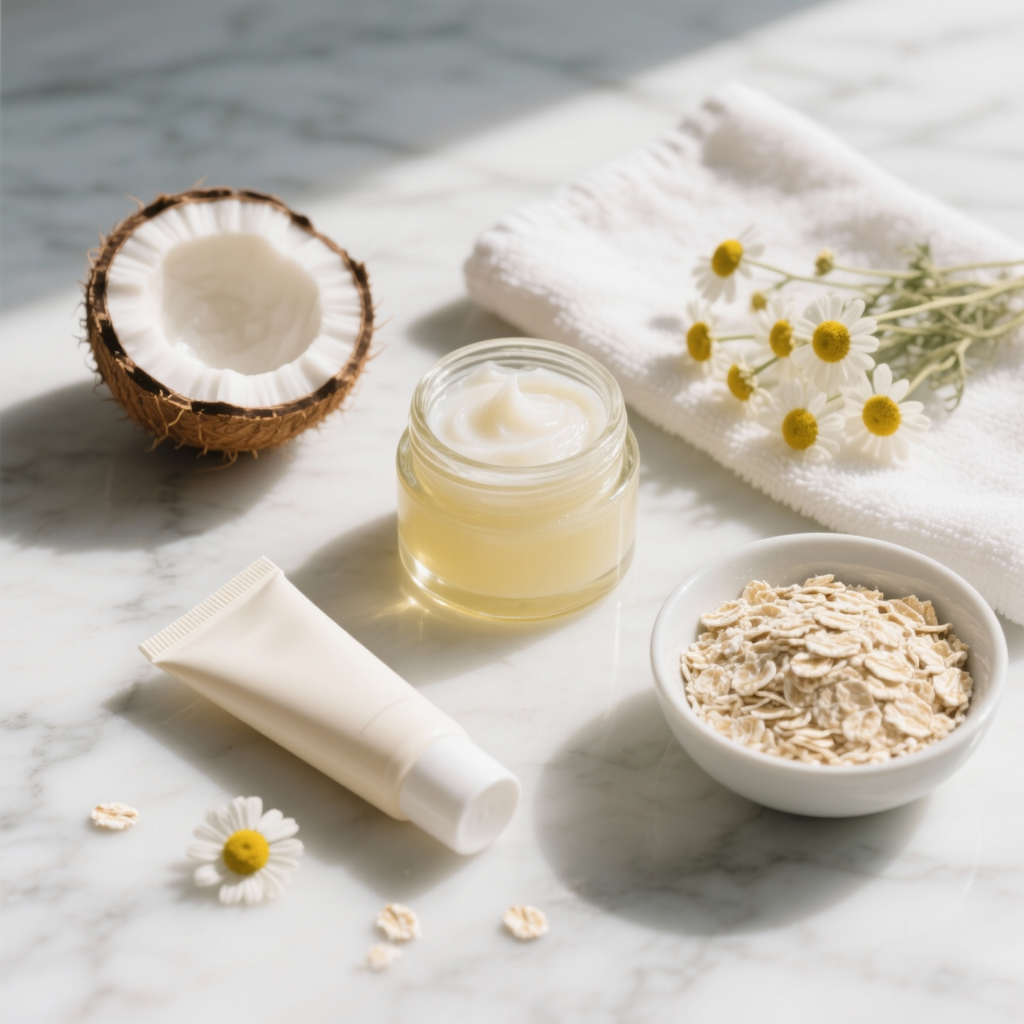
Colloidal oatmeal added to bathwater has well-documented anti-inflammatory and skin-soothing properties. Grind plain, unflavored rolled oats into a fine powder and sprinkle a tablespoon into lukewarm bathwater. Let your baby soak for 10 minutes. This is particularly effective for rashes with an eczematous component.
Important: never use baby powder or talcum powder in the neck area. The particles are easily inhaled by infants and pose a serious respiratory risk. This practice is not safe regardless of any perceived drying benefit.
When Standard Home Care Is Not Enough
See your pediatrician if:
- The rash is very bright red, has satellite spots at the margins, or seems to cause the baby significant pain — these suggest yeast infection requiring antifungal treatment.
- The rash is spreading beyond the neck, or appears on the scalp, eyebrows, or behind the ears — this pattern suggests seborrhoeic dermatitis (see our baby hair care and cradle cap guide).
- There is visible oozing, crusting, or broken skin that is not improving after 5–7 days of consistent home care — infection must be excluded.
- The baby has a fever in association with the rash (read baby fever: when to worry).
- The rash appears to be causing the baby significant distress beyond mild irritability.
For confirmed yeast infection, your pediatrician will prescribe a topical antifungal cream (such as clotrimazole or nystatin). For inflamed eczema not responding to moisturiser, a brief course of 1% hydrocortisone cream may be recommended — this should only be used on an infant’s skin under direct pediatric guidance.
Preventing Neck Rash From Recurring
Once the rash has cleared, these habits prevent recurrence:
- Wipe neck folds after every feed and after baths.
- Apply a thin barrier cream prophylactically during heavy drooling phases.
- Keep necklines loose and fabrics breathable.
- Use drool bibs proactively during teething phases.
- Dress your baby in no more than one additional layer than an adult would wear comfortably in the same room — overheating is a significant contributor to neck rash.
- Incorporate air time into the daily routine.
Related pediatrician-reviewed reading
- Common Rashes in Babies and When to Worry
- Newborn Rashes: A Visual Identification Guide
- Baby Hair Care: When to Wash, Which Shampoo to Use, and What to Avoid
- Newborn Bath Safety: Water Temperature, Drowning Prevention, and Technique
- Baby Sunscreen: When to Apply, What to Use
Sources and further reading
- American Academy of Pediatrics / HealthyChildren.org. Skin Conditions and Bathing & Skin Care.
- American Academy of Pediatrics / HealthyChildren.org. Diapers & Clothing (barrier creams and skin care).
- American Academy of Pediatrics / HealthyChildren.org. Symptom Checker.
Medical disclaimer: this article is for general education and does not replace individual medical advice. Always follow your own pediatrician’s guidance for your child.






2 Comments