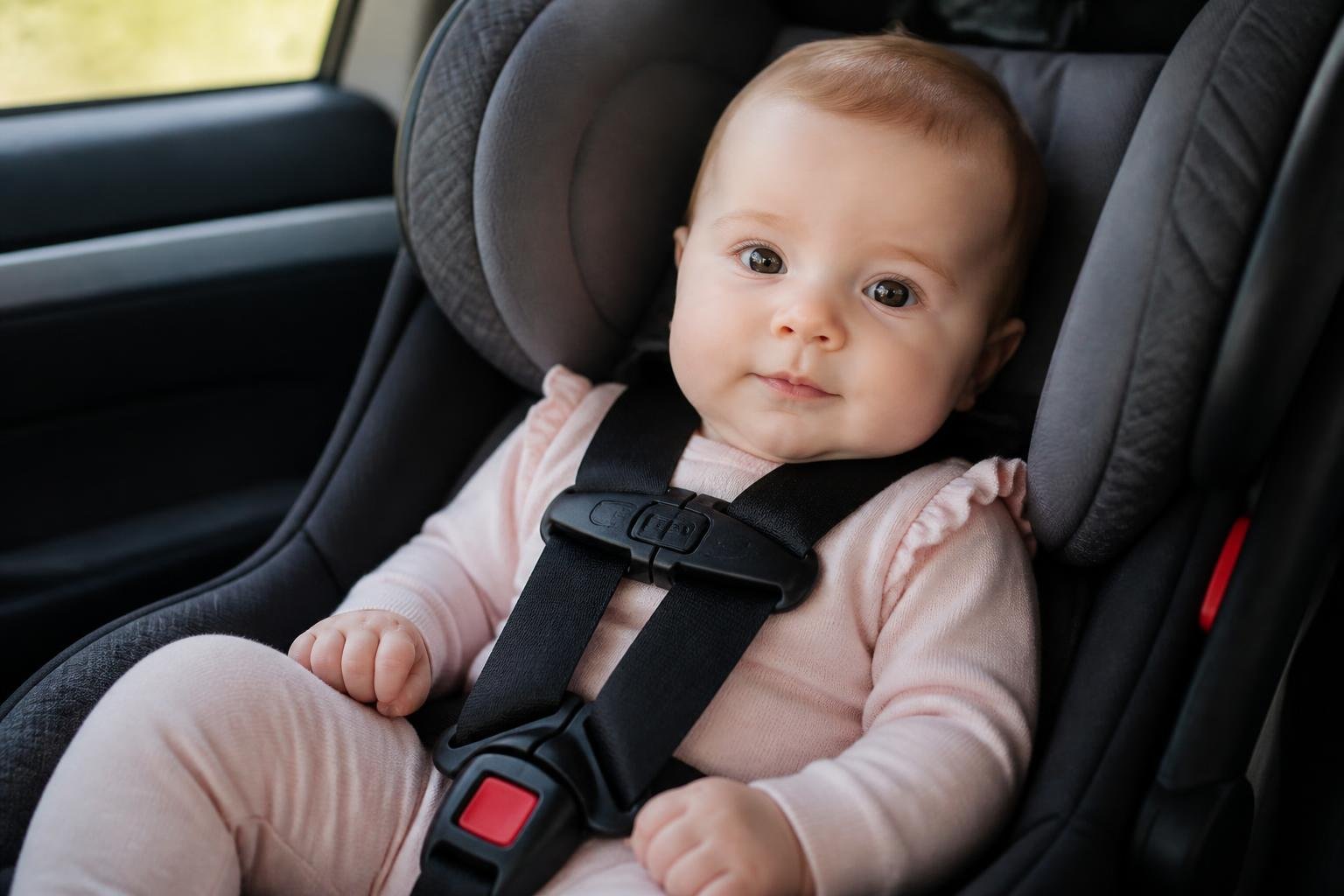
Car Seat Safety: Correct Angle, Harness Tightness & Common Mistakes
Medically reviewed by Dr. Ahmad Raza, MD (Pediatrics) — ChildBloom Medical Review Panel. Last updated: August 4, 2026.
Editorial & affiliate disclosure: our guidance is written and reviewed by clinicians. ChildBloom may earn a commission from qualifying purchases made through links on this page, which never changes what our pediatric reviewers recommend.
Looking for clear answers about car seat safety? This pediatrician-reviewed guide covers what matters, what to skip, the safety checks that count, and exactly when to involve your doctor — based on current AAP, CDC and CPSC guidance on car seat safety.
Quick pediatrician summary: car seat safety
Short answer: A pediatrician explains car seat safety: what is normal, the real risks, red flags to watch for and exactly when to call your doctor.
When it comes to car seat, parents need clear, evidence-based guidance. Written by the ChildBloom Pediatric Panel, FAAP | Medically reviewed | Last updated July 2025
As a pediatrician, I understand how concerning these moments can be for parents. My goal is to provide you with evidence-based guidance that helps you make informed decisions for your child, while also knowing exactly when to seek medical attention. This guide draws on current AAP recommendations and clinical experience to give you the clarity you need.
Car seats save lives. But only when they are installed correctly and used correctly every time.
The data is sobering: studies consistently show that approximately 46-60% of car seats are installed or used incorrectly. The errors are not trivial — they include loose installation, incorrect recline angle, harness straps that are too loose, and chest clips positioned at the belly instead of the chest.
Part 1: The Recline Angle — Why It Matters
Infants have proportionally large, heavy heads and weak neck muscles. In a rear-facing car seat, the correct recline angle ensures that:
- The baby’s head does not fall forward (which can compress the airway and cause positional asphyxia).
- The baby’s back is flat against the seat back (distributing crash forces across the entire back).
- The harness straps are at the correct angle relative to the baby’s shoulders.
Too upright: The baby’s head falls forward, potentially blocking the airway.
Too reclined: In a crash, the baby can “submarine” (slide out from under the harness).
How to Find the Correct Angle
Every car seat has a built-in angle indicator — a bubble level, a line that should be parallel to the ground, or a ball indicator. Check your car seat’s manual for the specific indicator type and correct position.
Part 2: The Harness — The “Pinch Test”
The Pinch Test
This is the single most important check for harness tightness:
- Buckle and tighten the harness.
- Try to pinch the harness webbing vertically at the baby’s shoulder.
- If you CAN pinch a fold in the webbing: the harness is TOO LOOSE.
- If you CANNOT pinch any excess webbing: the harness is tight enough.
Chest Clip Position
The chest clip should be at ARMPIT LEVEL — centered on the chest.
- Too high (at the neck): Can cause injury.
- Too low (at the belly): The harness straps can spread apart in a crash.
Common Harness Mistakes
- Bulky clothing: A puffy coat creates false tightness. In a crash, the coat compresses, creating slack. Solution: Remove the coat, tighten the harness, then place the coat OVER the harness.
- Twisted straps: Twisted straps do not distribute force evenly.
- Aftermarket products: Aftermarket head supports, padding, and inserts NOT tested with the seat can interfere with performance.
Part 3: Installation — LATCH vs. Seat Belt
LATCH: Use when the combined weight of child AND car seat is within the LATCH weight limit (typically 65 lbs combined).
Seat Belt: Use when child + seat exceeds the LATCH limit, or when the seat belt provides a tighter installation.
Important: Use EITHER LATCH OR the seat belt — NOT both (unless the manufacturer specifically allows both).
The Installation Test
- Grasp the car seat at the belt path.
- Try to move the seat side to side and front to back.
- The seat should NOT move more than 1 inch in any direction.
Part 4: The Most Dangerous Mistakes
- Loose installation — The seat moves more than 1 inch at the belt path.
- Loose harness — Fails the pinch test. Baby can be ejected.
- Rear-facing too short — Turning forward-facing before age 2. Rear-facing is 5 times safer for children under 2.
- Bulky coats under the harness — Creates dangerous slack in a crash.
- Aftermarket products — Unapproved inserts can interfere with crash performance.
- Expired seat — Most seats expire 6-10 years after manufacture.
- Seat that has been in a crash — Must be replaced.
- Incorrect recline angle — Airway compromise or submarining risk.
- Chest clip at wrong height — At the belly instead of the armpits.
- Using the seat in a shopping cart — The seat can tip.
Part 5: Getting Your Seat Checked
The most reliable way to ensure correct installation is to have it checked by a certified Child Passenger Safety Technician (CPST).
- Visit the NHTSA website (nhtsa.gov) and search for car seat inspection stations.
- Many fire departments, police stations, and hospitals offer free car seat inspections.
- The process typically takes 20-30 minutes and is free or very low cost.
Pediatrician’s Take
“The car seat is the single most important safety product you will buy for your baby. But buying the right seat is only half the equation — installing it correctly and using it correctly every time is what actually saves lives. The three things I check first are: recline angle, harness tightness (does it pass the pinch test?), and chest clip position (is it at armpit level?). Keep your baby rear-facing as long as possible — the data is overwhelming.”
Related Articles
- Baby Carrier Ergonomics: Preventing Hip Dysplasia & Back Pain
- Baby-Proofing 101: Hidden Hazards in Every Room
- Essential Baby Safety Gear: A Pediatrician’s Checklist
Recommended Products
Best Infant Car Seats for Safety & Ease of Use — Crash test ratings, installation ease, and value compared. See our top picks →
MEDICAL DISCLAIMER: This article is for informational purposes only and does not constitute medical advice. Always follow the car seat manufacturer’s instructions and your vehicle owner’s manual. Have your car seat installation checked by a certified Child Passenger Safety Technician (CPST).
Frequently Asked Questions
Q: How do I know if my car seat is installed correctly?
A: The seat should not move more than 1 inch at the belt path. The recline angle should match the indicator. The harness should pass the pinch test. Have your installation checked by a certified CPST.
Q: When can my baby face forward?
A: The AAP recommends rear-facing as long as possible — at least until age 2, ideally until the child exceeds the rear-facing limits of their convertible seat. Rear-facing is 5 times safer than forward-facing for children under 2.
Q: What is the pinch test?
A: After buckling and tightening the harness, try to pinch the webbing vertically at the baby’s shoulder. If you can pinch a fold, the harness is too loose. If you cannot pinch any excess, it is tight enough.
Q: Can I use a coat under the car seat harness?
A: No. A puffy coat creates false tightness. In a crash, the coat compresses, creating dangerous slack. Remove the coat, tighten the harness, then place the coat over the baby.
Related Articles
- Baby Carrier Ergonomics: Preventing Hip Dysplasia & Back Pain
- Baby-Proofing 101: Hidden Hazards in Every Room
- Essential Baby Safety Gear: A Pediatrician’s Checklist
Related: Best Safe Teething Relief Products: Pediatrician-Approved Picks
Related: Top 5 Baby Toothbrushes & Finger Brushes for First Teeth: Pediatrician-Reviewed
Related: Best Silicone Teethers by Teething Stage: A Pediatrician’s Guide
Reference: World Health Organization – Maternal & Child Health
Understanding Car Seat: What Parents Need to Know
Car Seat is a topic that comes up frequently in pediatric practice. Here is what the current evidence tells us, and what you should know as a parent.
Related Articles
- Parent Guide: Baby Safety Gear Checklist
- Fever in Babies: When to Call the Doctor
- Baby Carrier Ergonomics: Preventing Hip Dysplasia
- How to Cut Newborn Nails Safely
- Baby-Proofing 101: Hidden Hazards in Every Room
- Best Digital Thermometers for Babies
- Best Ergonomic Baby Carriers
- Best Infant Car Seats for Safety
- Newborn Car Seat Safety: Installation, Harness & the 2-Hour Rule
Clinical Pearl: Safety Testing and Certification Standards
Every baby product sold in the United States must meet specific safety standards set by the Consumer Product Safety Commission (CPSC). However, the level of pre-market testing varies dramatically by product category. Car seats, cribs, and strollers are subject to mandatory federal safety standards with rigorous testing requirements. Other products — including baby carriers, nursing pillows, and diaper bags — may only be subject to voluntary standards, meaning manufacturers choose whether to test them. When evaluating any baby product, look for certification marks from the Juvenile Products Manufacturers Association (JPMA), which indicates the manufacturer has submitted the product for independent safety testing. For secondhand products, check the CPSC website for recall information before purchasing, and never use a car seat that has been in a moderate or severe crash, is missing its manufacturer label and expiration date, or has visible damage to the harness or frame.
Related: Car Seat Safety Rear Facing Infants
📖 More from the Health & Safety Hub: your A-Z pediatrician guide to baby health, common illnesses, fevers, rashes, allergies, safety
Safety Considerations and Red Flags
Parents should be aware of the following safety considerations when managing their child’s health at home:
- Never ignore persistent or worsening symptoms
- Keep emergency numbers (pediatrician, poison control, emergency services) readily accessible
- Follow medication dosing instructions precisely — never estimate or use household spoons
- Trust your gut: if you feel something is seriously wrong, seek medical attention immediately
Essential Safety Practices
Keeping your baby safe is the highest priority of infant care. Many common injuries are preventable with awareness of age-appropriate risks and consistent safety practices.
Safe Sleep Environment
The safest sleep environment is a firm, flat mattress in a crib or bassinet with a tight-fitting sheet and nothing else — no blankets, pillows, bumpers, stuffed animals, or sleep positioners. Room-sharing (baby sleeps in the parent’s room) is recommended for the first 6 months but bed-sharing is not. Always place your baby on their back for every sleep, including naps.
Preventing Falls and Injuries
Never leave a baby unattended on elevated surfaces like changing tables, beds, or sofas — falls can happen in seconds. Install baby gates at the top and bottom of stairs once your baby begins to crawl. Secure heavy furniture, TVs, and bookshelves to walls with anti-tip anchors. Keep window blind cords and curtain pulls out of reach to prevent strangulation.
Emergency Preparedness for Parents
Creating a Family Emergency Plan
Every family should have an emergency plan. Post emergency numbers (pediatrician, poison control, emergency contacts) visibly in your home and save them in your phone. Learn infant CPR and choking rescue — classes are available through the American Red Cross, American Heart Association, and many local hospitals. Keep a well-stocked first aid kit accessible but out of children’s reach. Know your home’s address and the fastest route to your nearest emergency room.
Water Safety
Drowning is the leading cause of injury-related death in children ages 1-4. Never leave a baby or young child unattended near any water source — bathtubs, buckets, kiddie pools, toilets, or swimming pools. Empty all water containers immediately after use. Install four-sided pool fencing with a self-latching gate if you have a pool. Learn CPR specifically for infants and children. Water safety is not seasonal — vigilance is needed year-round, even during bath time.
The Bottom Line
Car Seat Safety Checklist is a common concern for parents, and most of the time it resolves with simple home care and patience. As a pediatrician, I encourage parents to trust their instincts, stay informed with evidence-based resources, and maintain open communication with their healthcare provider. You know your child best — if something does not feel right, speak up. Every question you ask is valid, and every concern you raise helps us provide better care for your little one.
Frequently asked questions about car seat safety
Is car seat safety normal in babies?
Mild, short-lived episodes are common and usually settle with simple home care. It is not normal if your baby is feeding poorly, unusually sleepy, breathing fast, has a fever under 3 months of age, or the problem is getting worse instead of better.
When should I call the doctor about car seat safety?
Call the same day for fever in a baby under 3 months, breathing difficulty, repeated vomiting, dehydration signs such as very few wet diapers, unusual floppiness or a rash that does not fade with pressure. Trust your instinct — if something feels wrong, get your baby seen.
What can I safely do at home for car seat safety?
Focus on comfort, hydration, feeding and rest, and use only medicines and doses your pediatrician has approved for your baby’s age and weight. Avoid honey under 12 months, avoid over-the-counter cough and cold products under 6 years, and never give aspirin.
Common mistakes parents make with car seat safety
- Assuming a higher price means a safer or better-performing option — certification and correct fit matter far more.
- Skipping the instruction manual, weight limits and product registration, which is how recall notices reach you.
- Changing several things at once, so you cannot tell what actually helped your baby.
- Relying on advice from social media instead of your pediatrician when something feels off.
Related pediatrician-reviewed reading
- Car Seat Recline Angle
- Best infant car seat safety
- Baby Health & Safety A-Z
- Essential Baby Safety Gear
- baby health & safety hub
References & further reading
Medical disclaimer: this article is for general education and does not replace individual medical advice. Always follow your own pediatrician’s guidance for your child.





3 Comments