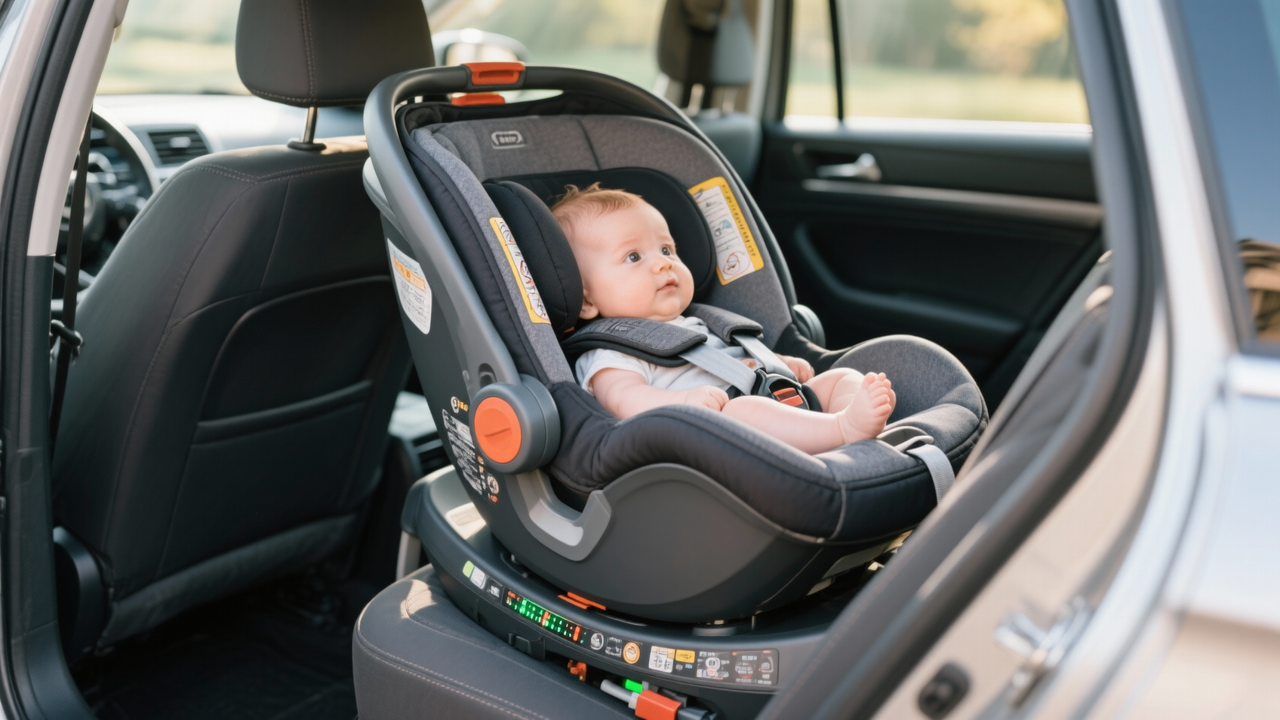
Car Seat Recline Angle: Why It Matters For Newborn Airway Safety
Medically reviewed by Dr. Ahmad Raza, MD (Pediatrics) — ChildBloom Medical Review Panel. Last updated: August 4, 2026.
Editorial & affiliate disclosure: our guidance is written and reviewed by clinicians. ChildBloom may earn a commission from qualifying purchases made through links on this page, which never changes what our pediatric reviewers recommend.
Looking for clear answers about car seat recline angle? This pediatrician-reviewed guide covers what matters, what to skip, the safety checks that count, and exactly when to involve your doctor — based on current AAP, CDC and CPSC guidance on car seat recline angle.
Quick pediatrician summary: car seat recline angle
Short answer: A pediatrician explains car seat recline angle: what is normal, the real risks, red flags to watch for and exactly when to call your doctor.
Every year, thousands of infants are hospitalized for breathing difficulties that occurred while riding in car seats. Many of these incidents are not caused by crashes or mechanical failures but by something far more preventable: an incorrect recline angle. For newborns, whose airways are still developing and whose neck muscles cannot yet support their heads, the angle at which a car seat is positioned can mean the difference between safe transportation and a life-threatening airway obstruction. Understanding why recline angle matters, how to measure it correctly, and how to install your car seat to achieve the proper position is one of the most critical aspects of infant travel safety.
This article provides a comprehensive examination of car seat recline angle, its relationship to newborn airway safety, and the practical steps every parent and caregiver can take to ensure their child rides as safely as possible.
Newborn Airway Anatomy and Vulnerability
To understand why recline angle is so critical, it is necessary to first understand the anatomy of a newborn’s airway. An infant’s respiratory system differs dramatically from that of an older child or adult in several ways that make them uniquely vulnerable to positional breathing problems.
The Flexible Trachea
A newborn’s trachea, or windpipe, is remarkably soft and pliable. The cartilage rings that provide structural support in an adult trachea are still developing in an infant. This flexibility means that the trachea can collapse or become compressed much more easily when the head is positioned in a way that creates pressure on the neck. Even a small amount of forward flexion of the neck can narrow the airway diameter significantly in a newborn.
The Large Head-to-Body Ratio
Newborns have proportionally large, heavy heads relative to their body size. This top-heavy anatomy means that when an infant is placed in a semi-upright position without adequate recline, the weight of the head naturally pulls the chin forward toward the chest. This chin-to-chest position is one of the most dangerous positions for an infant’s airway because it directly compresses the soft trachea and can completely occlude the airway.
Underdeveloped Neck Muscles
Newborns have minimal neck muscle strength and cannot voluntarily lift or reposition their heads. Unlike older children and adults, who instinctively adjust their head position when breathing becomes difficult, a newborn lacks both the muscular ability and the neurological reflexes to correct a compromised head position. This makes them entirely dependent on proper positioning to maintain an open airway.
Narrow Airways
The diameter of a newborn’s airway is extremely small, approximately four to five millimeters at the trachea. Even minor compression or narrowing from positional factors can reduce airflow dramatically. Research has shown that a reduction in airway diameter of just a few millimeters can increase the work of breathing by a factor of four or more in an infant, leading to rapid fatigue and oxygen deprivation.
Immature Respiratory Control
Newborns, particularly those born prematurely, have immature respiratory control centers in the brainstem. This means their automatic breathing responses may not respond as quickly or as effectively to changes in oxygen and carbon dioxide levels. If an infant’s airway becomes partially obstructed due to position, their body may not trigger a sufficiently strong arousal response to wake them or prompt a position change.
Positional Asphyxiation Explained
Positional asphyxiation occurs when the body’s position interferes with the ability to breathe. In the context of car seats, this happens when an infant’s head falls forward, causing the chin to press against the chest and physically block the airway. Unlike choking, which involves a foreign object blocking the airway, positional asphyxiation is caused entirely by the geometry of the body’s position.
How It Happens
When a baby is seated in a car seat that is too upright, gravity pulls the heavy head forward. The chin drops toward the chest, and the soft tissues of the neck compress the trachea. Because the infant lacks the strength to lift their head or turn it to the side, the airway remains compressed. Over the course of minutes, oxygen levels in the blood begin to drop, and carbon dioxide levels rise. The infant may become distressed, but their cries may be weak or absent because the effort of breathing is consuming all available energy. Without intervention, this can progress to loss of consciousness and, in severe cases, death.
The Silent Nature of Positional Asphyxiation
One of the most alarming aspects of positional asphyxiation is how quietly it can occur. Unlike dramatic choking episodes that involve gagging and visible distress, positional asphyxiation can develop gradually and with minimal outward signs. A baby may appear to be sleeping peacefully while their airway is slowly becoming compromised. This is why proper recline angle is not merely a comfort issue but a critical safety requirement.
Time Factors
Research indicates that positional asphyxiation can begin to develop within minutes of an infant being placed in an improperly angled car seat. A study published in the journal Pediatrics found that healthy full-term infants placed in car seats at an overly upright angle showed significant drops in oxygen saturation within twenty minutes. For premature infants or those with underlying health conditions, the timeline can be even shorter.
Recommended Recline Angles for Infant Car Seats
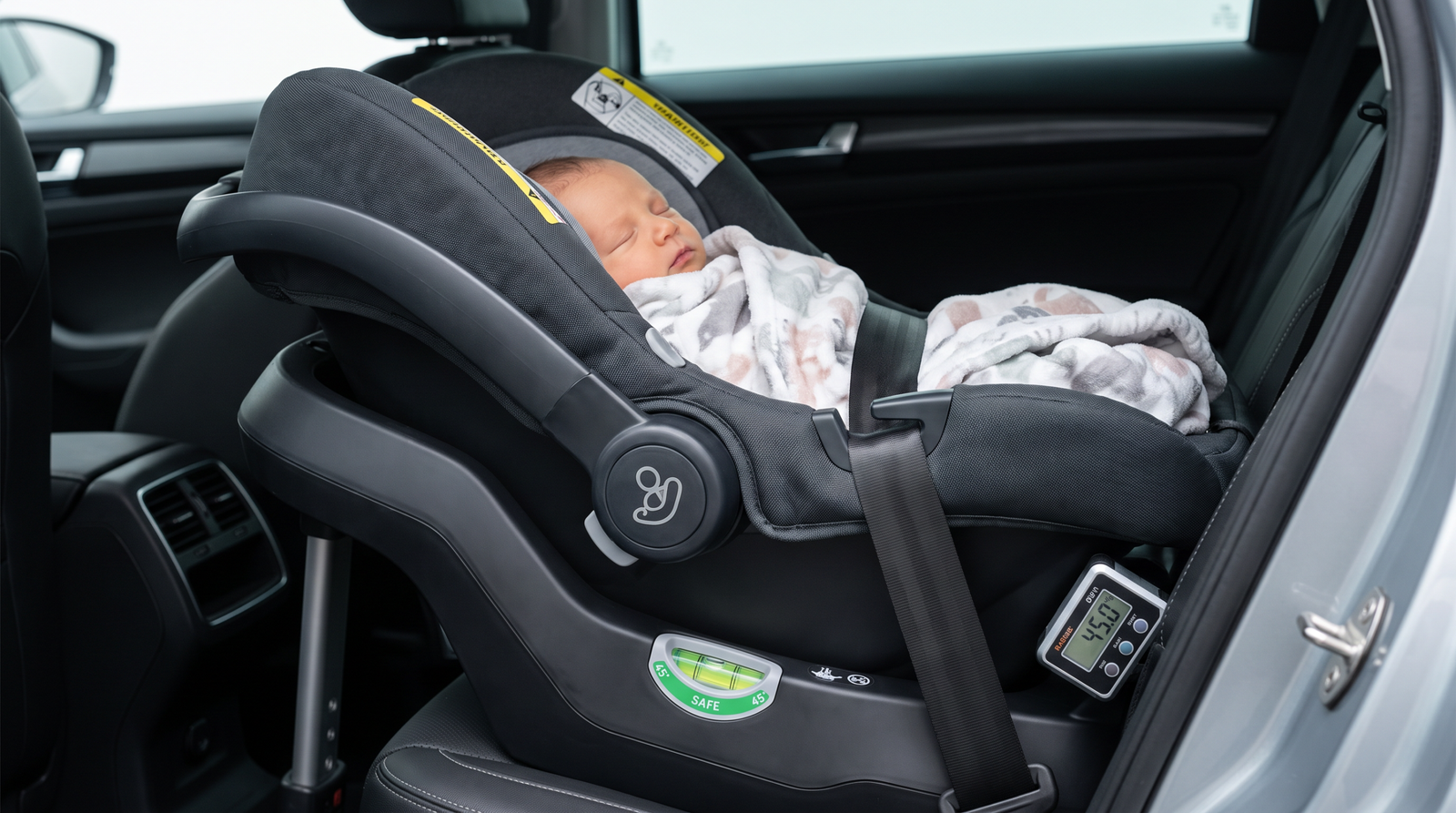
The recommended recline angle for rear-facing infant car seats is approximately 45 degrees from vertical, though this can vary somewhat depending on the specific car seat model and the age and size of the child. This angle is sometimes referred to as the “recline-to-recline” angle or the angle measured from the vertical axis of the car seat to the horizontal plane of the ground.
The 45-Degree Standard
For newborns and young infants who cannot yet hold their heads up independently, a 45-degree recline angle is generally recommended. At this angle, the baby’s back is tilted back enough that gravity pulls the head backward rather than forward, keeping the chin off the chest and the airway open. This angle also distributes the baby’s weight more evenly across the back of the car seat, reducing pressure on any single point of the body.
Allowable Range
Most car seat manufacturers specify an allowable recline angle range rather than a single fixed angle. For rear-facing infant seats, this range typically spans from approximately 30 degrees to 45 degrees from vertical, with 45 degrees being the maximum recline (most tilted back) position. The exact acceptable range will be specified in the car seat’s instruction manual and should be followed precisely.
Some car seats use a color-coded system where a blue zone indicates the acceptable recline range for rear-facing installation and a red zone indicates the range for forward-facing. The angle indicator, discussed in more detail below, shows caregivers whether the seat is within the correct range.
Why Not More Reclined?
While a 45-degree recline protects the airway, reclining the seat beyond the manufacturer’s recommended maximum can create other safety hazards. An excessively reclined car seat may not properly contain the infant in the event of a crash, increasing the risk of the child sliding out from under the harness or being ejected from the seat. It can also alter the crash forces acting on the infant’s spine and head in ways that the seat was not engineered to manage. This is why staying within the manufacturer’s specified range is essential.
How to Measure Recline Angle
Measuring the recline angle of a car seat is a straightforward process that can be done with several different tools. Every caregiver who installs or uses the car seat should know how to verify the angle.
Built-In Angle Indicators
Most modern infant car seats come equipped with built-in angle indicators. These are typically located on the side or base of the car seat and consist of a simple visual guide that shows whether the seat is reclined to the correct angle. The indicator may take the form of a ball-in-level mechanism, a line that must align with the ground, or a color-coded zone that changes appearance based on the angle.
To use a built-in indicator, place the car seat on the vehicle seat and observe the indicator. If the indicator shows that the seat is within the acceptable range, no adjustment is needed. If the indicator shows that the seat is too upright, you will need to add padding or adjust the installation to increase the recline. If the seat is too reclined, you may need to remove padding or adjust the installation.
Using a Smartphone Angle App
Many smartphones have built-in inclinometer or level functions that can be used to measure the recline angle of a car seat. Place the phone on the back of the car seat (not on the vehicle seat) and read the angle displayed. Compare this reading to the manufacturer’s recommended range. Some dedicated angle-measuring apps provide more precise readings and may be helpful for caregivers who want greater accuracy.
Using a Physical Inclinometer
A physical inclinometer or angle finder, available at most hardware stores, can also be used to measure the recline angle. These devices are inexpensive, accurate, and do not require batteries or a smartphone. Place the inclinometer against the back of the car seat shell and read the angle directly.
The Pool Noodle Method as a Measurement Check
While primarily used as an adjustment technique, the pool noodle method can also serve as a rough check for recline angle. If placing a rolled pool noodle or towel under the front edge of the car seat (where the car seat meets the vehicle seat cushion, at the foot end of the vehicle seat) brings the angle into the correct range, it is a strong indicator that the seat was previously too upright.
Angle Indicators on Car Seats: Types and How to Read Them
Car seat manufacturers have developed several types of angle indicators to help caregivers achieve the correct recline position. Understanding how your specific car seat’s indicator works is essential for proper installation.
Ball-Level Indicators
Some car seats feature a small ball-level, similar to a carpenter’s level, built into the side of the seat. The ball should rest within a marked zone when the seat is at the correct angle. If the ball rolls too far forward or too far back, the angle needs adjustment.
Line Indicators
Other car seats use a line or arrow printed on the side of the seat that must be parallel to the ground when the seat is correctly installed. The caregiver looks at the seat from the side and checks whether the line is horizontal. This method requires that the vehicle is parked on a level surface for accurate reading.
Color-Coded Zones
Some manufacturers use color-coded zones on the angle indicator. A green zone indicates the correct range, while red or other colors indicate that adjustment is needed. These are among the easiest indicators to read at a glance.
Angle Adjusters on the Base
Many infant car seats that use a separate base include built-in angle adjusters on the base itself. These may be flip-out feet, recline adjustment knobs, or telescoping components that change the angle of the base relative to the vehicle seat. These adjusters allow fine-tuning of the recline angle without the need for aftermarket padding.
Important Considerations
Regardless of the type of indicator, always consult your car seat’s instruction manual for specific guidance on how to read and use it. Indicators are designed for specific models and may not be interchangeable or comparable across brands. Additionally, always ensure the vehicle is parked on a level surface when checking the angle indicator, as a sloped parking surface can give a false reading.
Dangers of Too Upright vs. Too Reclined
Both extremes of recline angle present distinct dangers, and understanding the risks of each position helps caregivers appreciate why the manufacturer’s specified range exists.
Dangers of Too Upright
When a rear-facing car seat is installed at an angle that is too upright (closer to vertical than recommended), the primary risk is positional asphyxiation as described above. The infant’s head falls forward, the chin compresses the airway, and breathing becomes restricted or impossible. Additional risks of an overly upright position include:
- Increased pressure on the infant’s spine and neck in the event of a frontal crash, which is the most common type of vehicle collision.
- Reduced effectiveness of the car seat’s side-impact protection, as the infant’s head may be positioned outside the optimal protection zone of the seat’s side wings.
- Greater likelihood of the infant sliding down in the seat, which can loosen the harness and compromise its ability to restrain the child during a crash.
Dangers of Too Reclined
When a car seat is reclined beyond the manufacturer’s maximum recommended angle, different risks emerge:
- In a frontal crash, an excessively reclined infant may ride up the back of the seat, potentially sliding under the harness (submarining). This can result in the harness riding up over the infant’s abdomen, causing serious internal injuries.
- The infant may slump to one side, creating a different type of airway obstruction as the head tilts laterally and the airway becomes kinked.
- The structural integrity of the car seat’s crash protection may be compromised, as the seat is engineered to manage forces at specific angles.
- The harness may not fit properly across the infant’s shoulders, reducing its effectiveness in restraining the child.
The key takeaway is that both extremes are dangerous, and the manufacturer’s specified angle range represents the range that has been crash-tested and proven to provide adequate protection while maintaining airway safety.
Age-Specific Angle Requirements
The appropriate recline angle changes as a child grows and develops. What is necessary for a newborn may be inappropriate for a six-month-old, and the angle requirements continue to evolve as the child gains head and neck control.
Newborns to Approximately Two Months
For newborns and very young infants, the maximum recline angle (most tilted back position) specified by the manufacturer should be used. At this age, infants have virtually no head or neck control, and the full recline is necessary to prevent the head from falling forward and obstructing the airway. Many infant car seats are designed to be used at their maximum recline for the smallest babies, with the ability to adjust to a more upright angle as the child grows.
Two to Six Months
As infants begin to develop some head control, typically around two to three months of age, the recline angle can often be adjusted slightly toward a more upright position within the manufacturer’s allowable range. However, the seat should still be reclined enough that the infant’s head does not fall forward when relaxed or sleeping. Since infants in this age range spend a significant amount of time sleeping in the car seat, maintaining adequate recline is still critical.
Six to Twelve Months
By six months, most infants have developed sufficient head and neck control to hold their heads up independently and to reposition their heads if breathing becomes difficult. At this point, many car seats can be adjusted to a more upright rear-facing position within the manufacturer’s specifications. However, the seat should never be made more upright than the manufacturer allows for rear-facing use.
Toddlers and Forward-Facing Transition
When a child transitions to a forward-facing car seat, the angle requirements change entirely. Forward-facing seats are generally installed in a more upright position, and the angle considerations are primarily related to crash force management rather than airway protection. The child’s airway is less vulnerable at this age due to improved neck muscle strength, larger airway diameter, and better respiratory control.
Transition Angles as Baby Grows
The process of adjusting the car seat’s recline angle as a baby grows should be done gradually and in accordance with the manufacturer’s guidelines. Here are key principles for managing this transition:
- Always consult the car seat manual before making angle adjustments. Each seat has specific minimum and maximum angles for each mode of use.
- Use the angle indicator to verify the new position is within the acceptable range.
- Observe the infant after making an adjustment. If the baby’s head falls forward during sleep, the seat may need to be reclined more. If the indicator shows the seat is beyond the maximum recline, it needs to be made more upright.
- Do not rush to make the seat more upright. The transition to a more upright angle should be driven by the child’s developmental milestones, particularly the ability to hold the head up steadily and independently.
- Remember that the angle requirements are based on the child’s size and development, not their age alone. A smaller or less developed infant may need a more reclined position for longer.
Installation Tips to Achieve the Correct Angle
Achieving the correct recline angle during installation can be challenging, particularly in vehicles with steep seat contours. The following tips can help caregivers get the angle right.
Read Both Manuals
Before installing the car seat, read both the car seat instruction manual and the vehicle owner’s manual. The car seat manual will specify the acceptable angle range and describe the angle indicator. The vehicle manual may contain information about the vehicle seat’s contour, the location of the LATCH anchors, and any restrictions on car seat installation in specific seating positions.
Use the Base Adjustments
If the car seat uses a base, take advantage of any built-in angle adjustment features. Many bases have flip-out feet or recline adjustment mechanisms that can change the angle without the need for additional padding. These features are designed and tested by the manufacturer and are the preferred method of achieving the correct angle.
Install on a Level Surface
Whenever possible, perform the initial installation on a level surface. This ensures that the angle indicator gives an accurate reading. After installation, you can verify the angle on the vehicle’s actual seat surface, but starting on a level surface provides a useful baseline.
Check the Angle After Tightening
The act of tightening the LATCH strap or seat belt can sometimes pull the car seat into a different position, changing the angle. Always check the angle indicator after the seat is fully installed and tightened. If the angle has shifted, you may need to readjust.
Press Down Firmly During Installation
When installing the car seat, press down firmly into the vehicle seat cushion while tightening the LATCH strap or seat belt. This compresses the vehicle seat cushion and can help achieve a more consistent angle. After tightening, the cushion will rebound slightly, which can change the angle. Checking after installation accounts for this rebound.
Have a Professional Check the Installation
Many communities offer free car seat inspection stations staffed by certified Child Passenger Safety Technicians. These professionals can verify that the car seat is installed at the correct angle and can provide guidance specific to your car seat and vehicle combination. The National Highway Traffic Safety Administration (NHTSA) maintains a directory of inspection stations on its website.
Common Installation Mistakes That Affect Recline Angle
Even well-intentioned caregivers can make installation mistakes that affect the recline angle. Awareness of these common errors can help prevent them.
Not Using the Angle Indicator
Some caregivers install the car seat without checking the angle indicator, relying instead on visual estimation. This is one of the most common mistakes and can result in a seat that is significantly outside the safe angle range. Always use the indicator.
Ignoring Vehicle Seat Contour
Vehicle seats are not flat. Many have pronounced contours, bolsters, or slopes that can affect the angle of the car seat. Failing to account for the vehicle seat’s shape can result in an incorrect angle even when the car seat appears to be installed correctly.
Over-Tightening the LATCH or Belt
While the car seat must be installed tightly (with no more than one inch of movement at the belt path), over-tightening can distort the angle by pulling the front or back of the seat down into the vehicle cushion unevenly.
Using Unapproved Padding
Placing towels, blankets, or other padding under or behind the car seat without manufacturer approval can alter the angle in unpredictable ways. Only padding methods specifically approved by the car seat manufacturer should be used.
Forgetting to Recheck After Moving the Seat
If the car seat is removed and reinstalled, or if it is moved to a different vehicle, the angle must be rechecked. The new vehicle’s seat contour and cushion firmness may differ from the previous vehicle, resulting in a different angle.
Not Accounting for Multiple Children
When installing multiple car seats in a vehicle, the presence of adjacent seats can affect the angle of each seat. The seats may press against each other, altering their positions. Check the angle of each seat after all seats are installed.
Vehicle Seat Shape Impact on Angle
The shape and firmness of the vehicle seat have a significant impact on the final recline angle of the car seat. Understanding this relationship is key to achieving a correct installation.
Steeply Sloped Vehicle Seats
Some vehicles, particularly sports cars and certain sedans, have vehicle seats that slope sharply toward the back of the vehicle. This slope can cause a car seat installed in the rear-facing position to be pushed into a more upright angle than intended. In these cases, additional recline adjustment or padding may be necessary to achieve the correct angle.
Deeply Contoured Vehicle Seats
Vehicle seats with deep contours or prominent bolsters can prevent the car seat base from sitting flat against the vehicle seat cushion. This can cause the car seat to rock or sit at an inconsistent angle. In some cases, the car seat may need to be positioned in a specific way relative to the contour to achieve a stable, correct-angle installation.
Soft Vehicle Seat Cushions
Soft, deeply cushioned vehicle seats can compress under the weight of the car seat and child, changing the angle over time. A seat that is correctly angled when first installed may become more upright as the vehicle cushion compresses. This is why it is important to check the angle periodically, not just at the time of initial installation.
Firm Vehicle Seat Cushions
Conversely, very firm vehicle seat cushions may not compress enough, causing the car seat to sit at a more reclined angle than intended. In these cases, the angle may need to be adjusted toward a more upright position.
Testing Different Seating Positions
If the correct angle cannot be achieved in one seating position, try another. Many vehicles allow car seat installation in multiple rear seating positions, and the seat contour may differ between positions. The center rear position is generally considered the safest position for a car seat, but if the angle cannot be achieved there, an outboard position may be necessary.
Pool Noodle and Towel Tricks for Angle Adjustment
When built-in angle adjustments are not sufficient to achieve the correct recline angle, many car seat manufacturers permit the use of pool noodles or rolled towels as supplemental positioning aids. These techniques are widely recommended by certified Child Passenger Safety Technicians.
The Pool Noodle Method
The pool noodle method involves placing a standard foam pool noodle in the vehicle seat crease, at the point where the vehicle seat cushion meets the vehicle seat back (the “bight” of the vehicle seat). The noodle is positioned under the car seat, specifically under the foot end of the car seat (the end closest to the front of the vehicle for a rear-facing installation). This elevates the foot end of the car seat, increasing the recline angle.
Steps for the pool noodle method:
- Confirm that your car seat manufacturer permits the use of a pool noodle. Most do, but this should always be verified in the manual.
- Cut the pool noodle to the appropriate length if needed. It should span the width of the car seat base where it contacts the vehicle seat crease.
- Place the pool noodle in the vehicle seat crease, positioned under the foot end of the car seat.
- Install the car seat over the noodle, pressing down firmly to compress the noodle and seat the car seat base securely.
- Tighten the LATCH strap or seat belt.
- Check the angle indicator to verify the correct angle has been achieved.
- Verify that the car seat does not move more than one inch in any direction at the belt path.
The Rolled Towel Method
The rolled towel method works on the same principle as the pool noodle method but uses a tightly rolled towel or washcloth instead. This method may be preferred when a smaller adjustment is needed, as the towel can be rolled to different thicknesses.
Steps for the towel method:
- Confirm that your car seat manufacturer permits the use of a towel for angle adjustment.
- Roll a towel or washcloth tightly into a cylindrical shape.
- Place the rolled towel in the vehicle seat crease under the foot end of the car seat.
- Install the car seat, press down firmly, and tighten the LATCH strap or seat belt.
- Check the angle indicator.
- Verify the installation is secure.
Important Caveats
- Only use pool noodles or towels if the car seat manufacturer explicitly permits this in the instruction manual. Some manufacturers do not allow these methods and instead require the use of their own proprietary angle adjustment accessories.
- Never place padding under the car seat in a way that is not approved by the manufacturer. Unapproved padding can void the car seat’s warranty and compromise its crash performance.
- Pool noodles and towels should only be used in the vehicle seat crease, not under the entire base of the car seat. Placing padding under the full base can create an unstable installation.
- Recheck the angle periodically, as pool noodles can compress over time and towels can shift.
AAP and NHTSA Guidelines on Car Seat Recline Angle
Both the American Academy of Pediatrics (AAP) and the National Highway Traffic Safety Administration (NHTSA) provide guidance on car seat recline angle and infant positioning in car seats.
American Academy of Pediatrics (AAP)
The AAP recommends that all infants ride in rear-facing car seats for as long as possible, up to the height and weight limits of the car seat. The AAP emphasizes that the car seat should be installed at the correct recline angle as specified by the car seat manufacturer to prevent the infant’s head from falling forward and blocking the airway. The AAP’s policy statement on child passenger safety specifically addresses the risk of positional asphyxiation in car seats and advises parents to ensure that the infant’s head is supported and the airway remains open at all times while riding in the car seat.
The AAP also advises against placing infants in car seats for prolonged periods outside of the vehicle. When used as infant carriers or sleepers outside the car, the angle of the car seat may not be appropriate for extended sleeping, and the risk of positional asphyxiation increases when the car seat is placed on the floor or an elevated surface where the angle may differ from the angle in the vehicle.
National Highway Traffic Safety Administration (NHTSA)
NHTSA’s car seat installation instructions emphasize the importance of achieving the correct recline angle for rear-facing car seats. The agency provides guidance on how to use angle indicators and how to adjust the angle using approved methods. NHTSA’s educational materials for caregivers include information on the risks of incorrect recline angle and the importance of checking the angle indicator at every installation.
NHTSA also maintains the Fit Check program, which encourages caregivers to perform a series of checks after installing the car seat, including verifying the recline angle. The agency recommends that caregivers have their car seat installation checked by a certified Child Passenger Safety Technician at least once, particularly for first-time installations.
Consensus Recommendations
The consensus among safety organizations is clear: the recline angle must be within the manufacturer’s specified range, the angle indicator must be checked at every installation, and adjustments must be made using only manufacturer-approved methods. These recommendations are based on extensive crash testing, airway research, and real-world incident analysis.
Real Case Studies and Statistics
The importance of car seat recline angle is underscored by real-world data and documented cases of infant breathing complications related to improper positioning.
Statistical Overview
Research published in the journal Pediatrics has found that a significant percentage of car seats are installed incorrectly, with recline angle errors being among the most common. One frequently cited study found that approximately 70 to 85 percent of car seats are used or installed incorrectly, and incorrect recline angle was identified as a contributing factor in a substantial portion of these cases.
Studies monitoring oxygen saturation levels in infants placed in car seats have found that infants in overly upright positions experienced significantly lower oxygen levels compared to those in correctly angled seats. In some studies, oxygen saturation levels dropped to below 90 percent in infants positioned in car seats that were too upright, a level that is considered clinically concerning.
Documented Cases
Multiple case reports in the medical literature have documented instances of infants experiencing respiratory distress or positional asphyxiation in car seats. These cases often involve car seats that were installed at an overly upright angle or infants who were left in car seats for extended periods without monitoring. In several high-profile cases, infants suffered fatal outcomes after being placed in car seats that were not properly reclined.
A notable case study published in a pediatric journal described an infant who experienced repeated episodes of oxygen desaturation during car travel. Investigation revealed that the car seat was installed at an angle significantly more upright than recommended. After adjusting the recline angle to the correct position, the infant’s oxygen levels remained normal during subsequent car travel.
The Role of Extended Time in Car Seats
Statistics also highlight the importance of limiting the time infants spend in car seats. While proper recline angle reduces the risk of airway obstruction, it does not eliminate it entirely. Safety organizations recommend that infants should not remain in car seats for more than two hours at a time without being removed and repositioned. For long car trips, regular stops should be planned to remove the infant from the car seat, allow them to move freely, and ensure their airway is clear.
Improving the Numbers
Education and awareness campaigns have contributed to improvements in car seat usage over the years, but incorrect installations remain a persistent problem. Continued emphasis on the importance of recline angle, combined with improvements in car seat design such as more intuitive angle indicators and built-in angle adjustment mechanisms, is helping to reduce the rate of incorrect installations. However, every caregiver must take personal responsibility for verifying the angle at every installation.
Practical Tips and Actionable Advice
Based on the information presented above, here is a consolidated list of practical steps every caregiver should follow to ensure correct car seat recline angle:
Read the car seat manual and the vehicle owner’s manual before installing the car seat. Know the acceptable angle range and how to read the angle indicator.
Always check the angle indicator after installation. Do not rely on visual estimation.
Use built-in angle adjustment features on the car seat base whenever possible before resorting to pool noodles or towels.
If using a pool noodle or towel, confirm that the car seat manufacturer permits this method. Place the noodle or towel only in the vehicle seat crease at the foot end of the car seat.
Check the angle on a level surface during initial installation, then recheck on the vehicle’s actual seat surface.
Recheck the angle every time the car seat is installed, including after moving it to a different vehicle or a different seating position within the same vehicle.
Observe the infant after installation. If the baby’s head falls forward, the seat needs more recline. If the baby is slumping to one side, check for lateral tilt.
Adjust the recline angle as the child grows and develops head and neck control, always staying within the manufacturer’s specified range.
Limit the time the infant spends in the car seat to no more than two hours at a time. Take breaks on long trips to remove the infant and allow free movement.
Have the installation checked by a certified Child Passenger Safety Technician, especially for first-time installations or when switching vehicles.
Never place additional padding, blankets, or inserts under or behind the infant that are not specifically approved by the car seat manufacturer. These can alter the angle and compromise the harness fit.
When in doubt, contact the car seat manufacturer directly. Most manufacturers have customer service lines staffed by trained technicians who can answer specific questions about angle adjustment.
Conclusion
The recline angle of a rear-facing car seat is not a minor detail of installation. It is a fundamental safety parameter that directly affects whether an infant can breathe freely while riding in the vehicle. Newborns and young infants are uniquely vulnerable to positional asphyxiation due to their soft, flexible airways, large heavy heads, underdeveloped neck muscles, and immature respiratory control systems. An incorrect recline angle, even by a few degrees, can compress the airway and restrict breathing in ways that the infant is physically unable to correct.
The recommended 45-degree recline angle for newborns is not arbitrary. It represents the position that has been shown through research and crash testing to maintain an open airway while still providing effective crash protection. Both too upright and too reclined positions carry distinct and serious risks, and the manufacturer’s specified angle range should be followed precisely.
Every caregiver who installs or uses an infant car seat should know how to read the angle indicator, how to measure the angle using supplemental tools if needed, and how to make adjustments using manufacturer-approved methods such as pool noodles or rolled towels. The angle should be checked at every installation, adjusted as the child grows, and verified periodically to account for changes in the vehicle seat cushion over time.
The stakes are high. The difference between a correctly angled car seat and an incorrectly angled one can be measured in oxygen levels, in airway patency, and ultimately in the life of the child. By understanding the science behind recline angle, following established guidelines from the AAP and NHTSA, and taking the time to verify the angle at every installation, caregivers can provide the protection that every infant deserves during every car journey.
Frequently asked questions about car seat recline angle
Is car seat recline angle normal in babies?
Mild, short-lived episodes are common and usually settle with simple home care. It is not normal if your baby is feeding poorly, unusually sleepy, breathing fast, has a fever under 3 months of age, or the problem is getting worse instead of better.
When should I call the doctor about car seat recline angle?
Call the same day for fever in a baby under 3 months, breathing difficulty, repeated vomiting, dehydration signs such as very few wet diapers, unusual floppiness or a rash that does not fade with pressure. Trust your instinct — if something feels wrong, get your baby seen.
What can I safely do at home for car seat recline angle?
Focus on comfort, hydration, feeding and rest, and use only medicines and doses your pediatrician has approved for your baby’s age and weight. Avoid honey under 12 months, avoid over-the-counter cough and cold products under 6 years, and never give aspirin.
Related pediatrician-reviewed reading
- Car Seat Safety
- Best infant car seat safety
- Baby Health & Safety A-Z
- Newborn Allergic Rash
- baby health & safety hub
References & further reading
Medical disclaimer: this article is for general education and does not replace individual medical advice. Always follow your own pediatrician’s guidance for your child.