Baby diarrhea dehydration: Baby Diarrhea: Dehydration Signs, Home Management & When to Go to the ER
Medically reviewed by Dr. Ahmad Raza, MD (Pediatrics) — ChildBloom Medical Review Panel. Last updated: August 4, 2026.
Editorial & affiliate disclosure: our guidance is written and reviewed by clinicians. ChildBloom may earn a commission from qualifying purchases made through links on this page, which never changes what our pediatric reviewers recommend.
Looking for clear answers about baby diarrhea dehydration? This pediatrician-reviewed guide covers what matters, what to skip, the safety checks that count, and exactly when to involve your doctor — based on current AAP, CDC and CPSC guidance on baby diarrhea dehydration.
Quick pediatrician summary: baby diarrhea dehydration
Short answer: A pediatrician explains baby diarrhea dehydration: what is normal, the real risks, red flags to watch for and exactly when to call your doctor.
Written by Dr. Emily Hartwell, MD, FAAP | Medically reviewed March 15, 2026 | Last updated June 2, 2026
Diarrhea in babies scares me more than almost any other common infant symptom — not because the diarrhea itself is usually dangerous, but because babies dehydrate faster than older children or adults. A baby’s total body water percentage is about 75% (compared to 60% in adults), but their absolute fluid volume is tiny. A newborn weighs 3-4 kg. Losing even 200 mL of fluid is proportionally much more significant than the same loss in a 30 kg child or 70 kg adult.
This is why I want every parent to know three things: how to recognize dehydration early, how to manage diarrhea at home, and exactly when to stop managing at home and go to the ER.
PART 1: What Counts as Diarrhea in a Baby
Looking for the best options? Check out Best Travel Crib for Babies: 8 Lightweight, Safe Picks.
Here’s where parents often get confused. Breastfed babies normally have loose, even runny stools. So how do you tell the difference between normal loose breastfed poop and actual diarrhea?
Diarrhea is defined by a CHANGE:
- A sudden increase in FREQUENCY (significantly more stools than usual)
- AND a decrease in CONSISTENCY (watery, explosive, entirely liquid)
- The stool may be entirely liquid — no solid matter at all
- It may be explosive — shooting out with force
- It may soak the entire diaper and leak out
Normal loose breastfed stool vs. diarrhea:
| Feature | Normal Breastfed Stool | Diarrhea |
|---|---|---|
| Consistency | Loose, seedy, mustard-like | Entirely liquid, no seeds/solids |
| Frequency | Consistent pattern for this baby | Sudden increase from baby’s baseline |
| Volume | Small to moderate | Large, soaking diaper completely |
| Character | Somewhat contained in diaper | Explosive, may leak out of diaper |
| Duration | Ongoing pattern | Acute change (new onset) |
| Other symptoms | Baby is well, gaining normally | May have fever, vomiting, irritability |
The key distinction: normal breastfed poop is loose but has some substance (seeds, some body). Diarrhea is entirely liquid — like water or juice. If the stool is so liquid that it soaks INTO the diaper fabric rather than sitting on top of it, that’s diarrhea.
PART 2: The #1 Danger: Dehydration — How to Assess It at Home
Dehydration is the primary danger of infant diarrhea. Here’s how to assess it.
The Dehydration Severity Scale:
Mild Dehydration (3-5% fluid loss):
- Slightly decreased wet diapers
- Baby is alert and acting mostly normal
- Mouth may be slightly dry
- Tears present when crying
- Fontanelle (soft spot) appears normal
- Heart rate: normal to slightly elevated
- Treatment: can usually manage at home with oral rehydration
Moderate Dehydration (6-9% fluid loss):
- Clearly decreased wet diapers (fewer than 4 in 24 hours)
- Baby is irritable or restless
- Dry mouth and lips
- Decreased tears when crying
- Fontanelle slightly sunken
- Eyes may appear slightly sunken
- Heart rate: elevated
- Skin may not spring back immediately when pinched (delayed capillary refill)
- Treatment: oral rehydration if baby will drink; may need medical evaluation
Severe Dehydration (10%+ fluid loss):
- No wet diaper in 6+ hours (or very few in 12 hours)
- Baby is lethargic, difficult to wake, or unusually floppy
- Very dry mouth and lips
- No tears when crying
- Fontanelle clearly sunken
- Eyes sunken
- Cool hands and feet
- Rapid heart rate
- Skin: very slow capillary refill (>3 seconds)
- Mottled or pale skin
- Treatment: EMERGENCY — go to the ER immediately
PART 3: The “Wet Diaper Count” Hydration Check
This is the single most useful home assessment tool for dehydration. I teach this to every parent.
How to do it:
- Track every wet diaper for 24 hours
- Count only wet diapers (not dirty diapers — you need to distinguish urine from stool)
- A “wet” diaper is one that feels noticeably heavier than a dry diaper and has a urine smell
- If you’re unsure, you can place a dry tissue in the diaper — it will feel wet if the baby urinates
Interpreting the count:
| Wet Diapers in 24 Hours | Assessment | Action |
|---|---|---|
| 6 or more | Well hydrated | Continue monitoring |
| 4-5 | Mildly decreased | Increase fluid offering; monitor closely |
| 2-3 | Moderate dehydration | Start ORS; call pediatrician |
| 0-1 | Severe dehydration | Go to ER immediately |
Additional time-based check:
- No wet diaper in 6 hours = concerning — start offering ORS and call pediatrician
- No wet diaper in 8+ hours = urgent — seek medical care
- No wet diaper in 12 hours = emergency — go to the ER
Important: Diarrhea itself doesn’t dehydrate a baby as quickly as vomiting does, because some fluid is still being absorbed in the intestine even during diarrhea. The combination of diarrhea AND vomiting is the highest-risk scenario because fluid is being lost from both ends and nothing is being absorbed.
PART 4: Oral Rehydration Solution (ORS): How to Use It Correctly
Oral rehydration solution is the single most important treatment for infant diarrhea with dehydration. It’s a precisely formulated mixture of water, glucose, and electrolytes (sodium, potassium, chloride) that maximizes fluid absorption in the intestine.
Why ORS works:
The intestine absorbs fluid most efficiently when glucose and sodium are present in specific ratios. This is called the sodium-glucose cotransport mechanism. Plain water is absorbed less efficiently. Sugary drinks (juice, sports drinks) can actually make diarrhea worse because excess sugar draws water INTO the intestine (osmotic effect). ORS has the exact right ratio.
Which ORS to use:
- Pedialyte (most widely available in the US)
- Enfamil Electrolit
- Generic store-brand oral rehydration solutions (equally effective if they follow the WHO-style formulation)
Dosing:
For mild to moderate dehydration:
- Give 50 mL per kg of body weight over 4 hours
- Example: a 7 kg baby gets 350 mL over 4 hours (about 87 mL/hour, or roughly 15 mL every 10 minutes)
For ongoing losses:
- After each loose stool: give 10 mL/kg (approximately 50-100 mL for most babies)
- After each episode of vomiting: give 2 mL/kg
How to give it:
- Small, frequent amounts — NOT large volumes at once
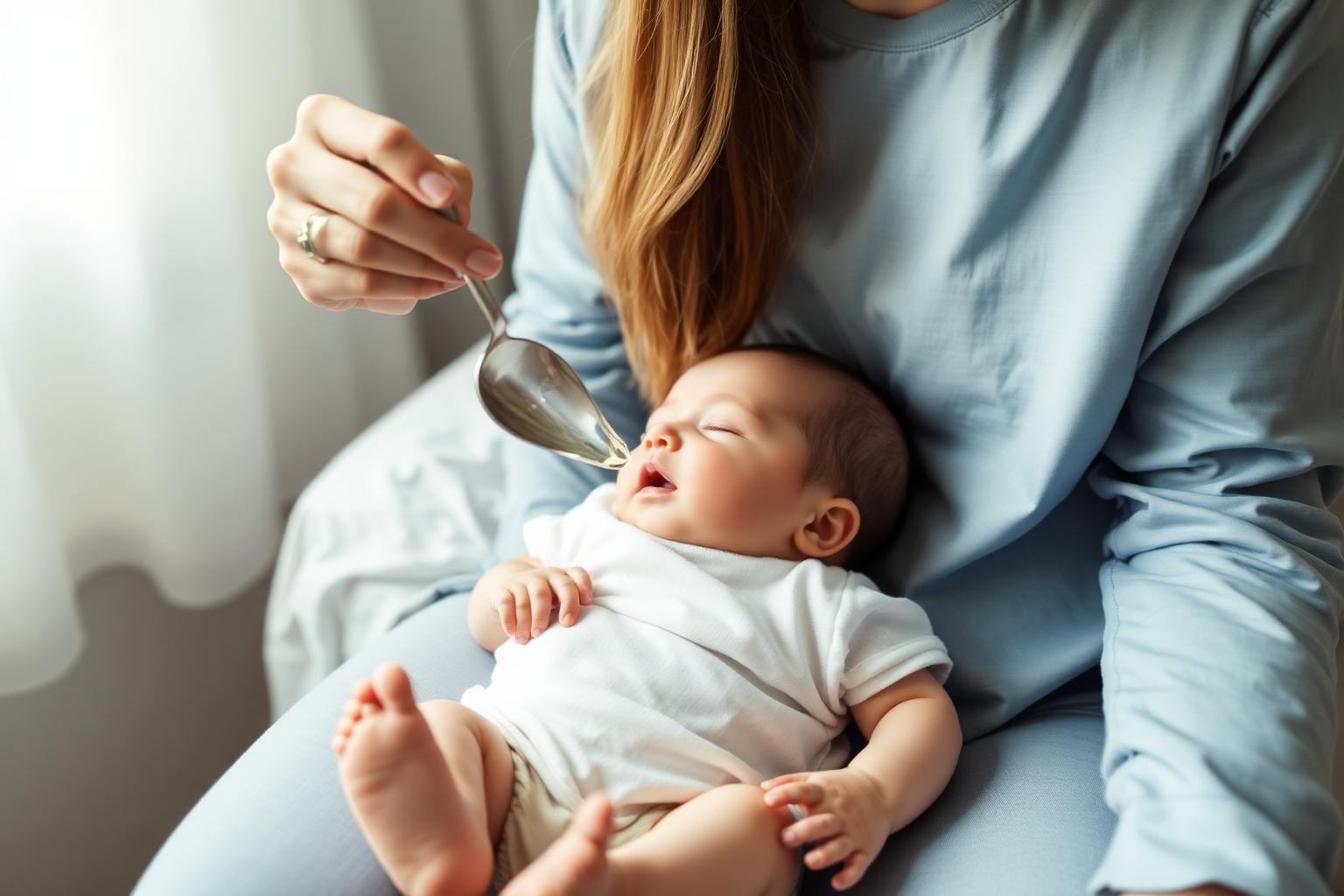
- 5-10 mL (1-2 teaspoons) every 5 minutes using a syringe or spoon
- If baby is vomiting, wait 30 minutes after the last vomit, then restart with very small amounts (5 mL every 10 minutes)
- Gradually increase the amount as tolerated
- If baby is breastfeeding, continue breastfeeding AND give ORS between feeds
If baby vomits the ORS:
- Wait 20-30 minutes
- Restart with smaller amounts (5 mL every 10 minutes instead of 10 mL every 5 minutes)
- Most babies can keep down very small, frequent amounts even if they’re vomiting larger volumes
- If baby cannot keep ANY fluid down for 4+ hours, seek medical care
PART 5: What to Feed a Baby With Diarrhea
For breastfed babies:
- CONTINUE breastfeeding. This is non-negotiable. Breast milk contains antibodies, immune factors, and easily digestible nutrients that help fight infection and maintain nutrition.
- Breastfeed more frequently if baby will take it
- Breast milk is the best “food” for a diarrheal baby
For formula-fed babies:
- CONTINUE formula feeding
- Do NOT dilute formula — this reduces nutrition and can cause electrolyte imbalances
- In most cases, standard formula is fine during diarrhea
- If diarrhea persists beyond 1-2 weeks, temporary lactose-free formula may be recommended (post-infectious lactose intolerance)
For babies on solid foods (6+ months):
- Continue age-appropriate solid foods as tolerated
- The BRAT diet (bananas, rice, applesauce, toast) is OUTDATED. Current AAP and WHO guidance recommends a normal, age-appropriate diet as tolerated.
- The BRAT diet is unnecessarily restrictive and doesn’t provide adequate nutrition for recovery
- Good options: complex carbohydrates (rice, wheat, potatoes, bread), lean meats, yogurt, fruits, vegetables
- Avoid very sugary foods (can worsen osmotic diarrhea)
- Avoid very fatty foods (may be harder to digest during acute illness)
Key principle: Nutrition matters during diarrhea. The intestine heals faster when it’s being fed. Prolonged fasting or overly restricted diets slow recovery.
PART 6: What NOT to Do
No fruit juice:
Juice contains high concentrations of sugar (fructose and sorbitol), which draw water into the intestine through osmosis, making diarrhea WORSE. Apple juice, pear juice, and grape juice are particularly bad for this reason. Despite the old advice to give juice, it is contraindicated during diarrhea.
No sports drinks (Gatorade, Powerade):
Sports drinks have the wrong electrolyte composition for infants. They contain too much sugar and not enough sodium. They can worsen diarrhea and cause dangerous electrolyte imbalances (particularly hyponatremia — low sodium). Use ORS (Pedialyte), not sports drinks.
No anti-diarrhea medications:
Loperamide (Imodium), bismuth subsalicylate (Pepto-Bismol), and other anti-diarrheal medications are DANGEROUS in infants. They slow gut motility, which can:
- Trap infectious organisms in the intestine longer
- Cause toxic megacolon in severe infections
- Cause drowsiness that masks dehydration severity
- Bismuth subsalicylate carries a risk of Reye’s syndrome in children
These medications are never appropriate for infants without explicit pediatrician direction.
No plain water only:
While small amounts of water are fine, replacing lost fluids with ONLY plain water can cause hyponatremia (dangerously low sodium). The body is losing both water AND electrolytes in diarrhea. Plain water replaces the water but not the electrolytes, diluting the blood’s sodium concentration. This is why ORS is critical — it replaces both water and electrolytes in the correct proportions.
No diluted formula:
Diluting formula to “rest the gut” or “make it easier to digest” reduces the calorie and nutrient density, potentially causing hyponatremia and malnutrition. Always mix formula at the correct concentration.
PART 7: Common Causes of Baby Diarrhea
1. Viral gastroenteritis (most common)
- Rotavirus: was the most common cause before the vaccine; now much less common in vaccinated babies
- Norovirus: increasingly common, highly contagious
- Adenovirus (types 40/41): causes prolonged diarrhea (7-14 days)
- Typical course: 3-7 days of diarrhea, sometimes with vomiting and fever
- Treatment: supportive (hydration, continued feeding)
2. Bacterial infection (less common but more serious)
- Salmonella, Shigella, Campylobacter, E. coli (especially E. coli O157:H7)
- Often causes bloody diarrhea, high fever, severe abdominal pain
- May need stool culture and antibiotic treatment (depending on organism)
- Important: do NOT give anti-diarrhea medications if bacterial infection is suspected
3. Food allergy or intolerance
- Cow’s milk protein allergy can cause chronic diarrhea (not acute)
- Temporary lactose intolerance can follow a viral infection (post-infectious lactose intolerance)
- Introduction of new foods can cause temporary loose stools
4. Antibiotic-associated diarrhea
- Antibiotics disrupt the normal gut flora, allowing overgrowth of organisms like C. difficile
- Occurs during or within 2 weeks of antibiotic use
- Usually mild and self-limited, but can be severe with C. difficile
5. Teething
- Teething can cause mildly looser stools due to increased saliva swallowing
- However, teething does NOT cause severe diarrhea, bloody diarrhea, or diarrhea with high fever
- If a teething baby has significant diarrhea, don’t assume it’s just teething — evaluate for other causes
6. Other causes (less common)
- Otitis media (ear infection) — can cause diarrhea in some babies
- Urinary tract infection — may present with gastrointestinal symptoms
- Intussusception — “currant jelly” bloody stools, episodic severe pain
- Malabsorption syndromes — chronic diarrhea with poor weight gain
PART 8: Preventing the Spread
Infant diarrhea is often caused by contagious viruses. Here’s how to prevent spread to other family members and back to your baby:
Hand hygiene:
- Wash hands with soap and water for at least 20 seconds after every diaper change
- Hand sanitizer is less effective against some viruses (norovirus, rotavirus) — soap and water is preferred
- Wash hands before preparing formula or food
- Teach older siblings to wash hands
Surface disinfection:
- Use a bleach-based disinfectant (1/3 cup bleach per gallon of water) for diaper changing areas
- Clean and disinfect toys that the baby mouths
- Wash bedding and clothing that contacts stool in hot water
Daycare exclusion:
- Most daycares require exclusion for diarrheal illness
- Typical exclusion period: until 24 hours after the last episode of diarrhea (for viral illness)
- Some daycares require longer exclusion for bacterial infections
- Check your daycare’s specific policy
Preventing reinfection:
- Dispose of soiled diapers promptly and in sealed containers
- Don’t let the baby crawl on contaminated surfaces
- Clean the baby’s hands frequently (especially before they put hands in their mouth)
PEDIATRICIAN’S TAKE
“Diarrhea in babies is all about hydration management. The diarrhea itself will usually resolve on its own — most viral gastroenteritis runs its course in 3-7 days. The danger is dehydration, and dehydration can sneak up fast in a small baby. That’s why I teach every parent the wet diaper count: if you’re seeing 6+ wet diapers in 24 hours, your baby is hydrated. If it drops below 4, we need to intervene. If it drops below 2, or if there’s no wet diaper in 6 hours, we need to be seen. Oral rehydration solution is your best friend — Pedialyte, given in small, frequent amounts. Keep feeding (breast milk, formula, age-appropriate solids). The BRAT diet is outdated — feed normally as tolerated. And never, ever give anti-diarrhea medication to a baby without explicit medical direction.”
>
— Dr. Emily Hartwell, MD, FAAP
WHEN TO GO TO THE ER — Emergency Red Flags
Go to the ER or call emergency services IMMEDIATELY if your baby has:
- No wet diaper in 6+ hours
- Sunken fontanelle (soft spot)
- No tears when crying
- Lethargy — unusually sleepy, difficult to wake, floppy, or unresponsive
- Blood in stool (especially “currant jelly” appearance)
- Green (bilious) vomiting
- Persistent vomiting that prevents any fluid from staying down for 4+ hours
- High fever: 100.4°F (38°C) or higher in babies under 3 months; 102.2°F (39°C) or higher in babies 3-6 months
- Signs of severe pain: inconsolable crying, drawing legs up, rigid abdomen
- Signs of intussusception: episodic severe crying with legs drawn up, followed by lethargy, with “currant jelly” stool
Call your pediatrician urgently (same day) if:
- Diarrhea lasting more than 3 days without improvement
- Fewer than 4 wet diapers in 24 hours
- Mild dehydration signs (dry mouth, slightly decreased tears)
- Diarrhea with fever in a baby under 6 months
- Diarrhea that started after antibiotic use
- You’re concerned about your baby’s overall condition
RELATED ARTICLES
- The Pediatrician’s Baby Poop & Digestive Health Guide [P]
- Baby Poop Color Guide: What Green, White, Red & Black Stools Really Mean [I1]
- Baby Constipation: How to Identify It, What Causes It & What Actually Helps [I2]
- Breastfed vs. Formula-Fed Baby Poop: What’s Normal for Each [I4]
RECOMMENDED PRODUCTS
- Best Baby Probiotics for Digestion & Colic Relief: Strain-by-Strain Review [C1]
- Best Baby Gas Relief Products: Drops, Gripe Water & Anti-Colic Bottles [C3]
FREQUENTLY ASKED QUESTIONS
Q: How long should baby diarrhea last?
A: Most viral gastroenteritis resolves in 3-7 days. Adenovirus can last up to 14 days. Bacterial infections may last longer and sometimes require antibiotics. If diarrhea persists beyond 7 days, call your pediatrician. If it persists beyond 14 days, it needs evaluation for causes other than simple viral gastroenteritis (post-infectious lactose intolerance, food allergy, malabsorption, etc.).
Q: Can I give my baby Pedialyte?
A: Yes. Pedialyte (or another oral rehydration solution) is the recommended fluid for managing dehydration from diarrhea in babies. Give it in small, frequent amounts: 5-10 mL every 5 minutes, increasing as tolerated. Continue breastfeeding or formula feeding alongside ORS. ORS is for hydration — it’s not a complete nutritional replacement.
Q: Should I stop breastfeeding during diarrhea?
A: Absolutely not. Breastfeeding should continue — and ideally increase in frequency. Breast milk contains antibodies (especially IgA) that fight intestinal infections, immune factors that support gut healing, and easily digestible nutrition. Breast milk is the single best thing you can give a baby with diarrhea, alongside ORS for hydration.
Q: Is the BRAT diet still recommended for babies with diarrhea?
A: No. The BRAT diet (bananas, rice, applesauce, toast) is outdated. Current AAP and WHO guidance recommends continuing a normal, age-appropriate diet as tolerated. The BRAT diet is unnecessarily restrictive and doesn’t provide adequate calories, protein, or fat for recovery. Complex carbohydrates, lean proteins, yogurt, fruits, and vegetables are all appropriate. Avoid very sugary or very fatty foods.
Q: When is diarrhea an emergency for a baby?
A: Diarrhea becomes an emergency when dehydration is severe. Go to the ER if: no wet diaper in 6+ hours, sunken soft spot, no tears when crying, lethargy or difficulty waking, blood in stool, green vomiting, or inability to keep any fluid down for 4+ hours. In babies under 3 months, any significant diarrhea warrants a call to your pediatrician — they dehydrate the fastest.
Q: Can teething cause diarrhea?
A: Teething may cause slightly looser stools due to increased saliva swallowing, but it does NOT cause true diarrhea (watery, explosive, frequent stools). If your teething baby has significant diarrhea, don’t dismiss it as teething — evaluate for infectious or other causes. This is a common misconception that can delay appropriate treatment.
MEDICAL DISCLAIMER
The content in this article is for informational purposes only and does not constitute medical advice, diagnosis, or treatment. Always seek the advice of your pediatrician or qualified healthcare provider with any questions about your baby’s health. Never delay seeking medical advice based on information you have read online. If you think your baby may have a medical emergency, call your doctor or emergency services immediately. Product recommendations are based on available evidence and professional opinion but should not replace individualized medical guidance. Every baby is different, and your pediatrician is the best resource for decisions about your child’s specific needs.
END OF I5
Related Pediatrician-Reviewed Resources
This article is part of ChildBloom’s pediatrician-reviewed Digestive Health series. Continue reading:
- Best Baby Gas Relief Products: Drops, Gripe Water & Anti-Colic Bottles Reviewed by a Pediatrician
- Top 5 Gentle Formulas for Sensitive Tummies: Pediatrician-Reviewed for Gas, Reflux & Constipation
- Best Baby Probiotics for Digestion & Colic Relief: Strain-by-Strain Pediatrician Review
- Breastfed vs. Formula-Fed Baby Poop: What’s Normal for Each & Why They’re So Different
Trusted Authority Sources
Related: Baby Fever When To Go To Er
📖 More from the Health & Safety Hub: your A-Z pediatrician guide to baby health, common illnesses, fevers, rashes, allergies, safety
Frequently asked questions about baby diarrhea dehydration
Is baby diarrhea dehydration normal in babies?
Mild, short-lived episodes are common and usually settle with simple home care. It is not normal if your baby is feeding poorly, unusually sleepy, breathing fast, has a fever under 3 months of age, or the problem is getting worse instead of better.
When should I call the doctor about baby diarrhea dehydration?
Call the same day for fever in a baby under 3 months, breathing difficulty, repeated vomiting, dehydration signs such as very few wet diapers, unusual floppiness or a rash that does not fade with pressure. Trust your instinct — if something feels wrong, get your baby seen.
What can I safely do at home for baby diarrhea dehydration?
Focus on comfort, hydration, feeding and rest, and use only medicines and doses your pediatrician has approved for your baby’s age and weight. Avoid honey under 12 months, avoid over-the-counter cough and cold products under 6 years, and never give aspirin.
Common mistakes parents make with baby diarrhea dehydration
- Assuming a higher price means a safer or better-performing option — certification and correct fit matter far more.
- Skipping the instruction manual, weight limits and product registration, which is how recall notices reach you.
- Changing several things at once, so you cannot tell what actually helped your baby.
- Relying on advice from social media instead of your pediatrician when something feels off.
Related pediatrician-reviewed reading
- Babies and toddlers
- Baby Eye Discharge Home Remedies
- Baby Congested Nose How to Clear at Home
- Baby Illness Warning Signs
- baby health & safety hub
References & further reading
Medical disclaimer: this article is for general education and does not replace individual medical advice. Always follow your own pediatrician’s guidance for your child.


3 Comments