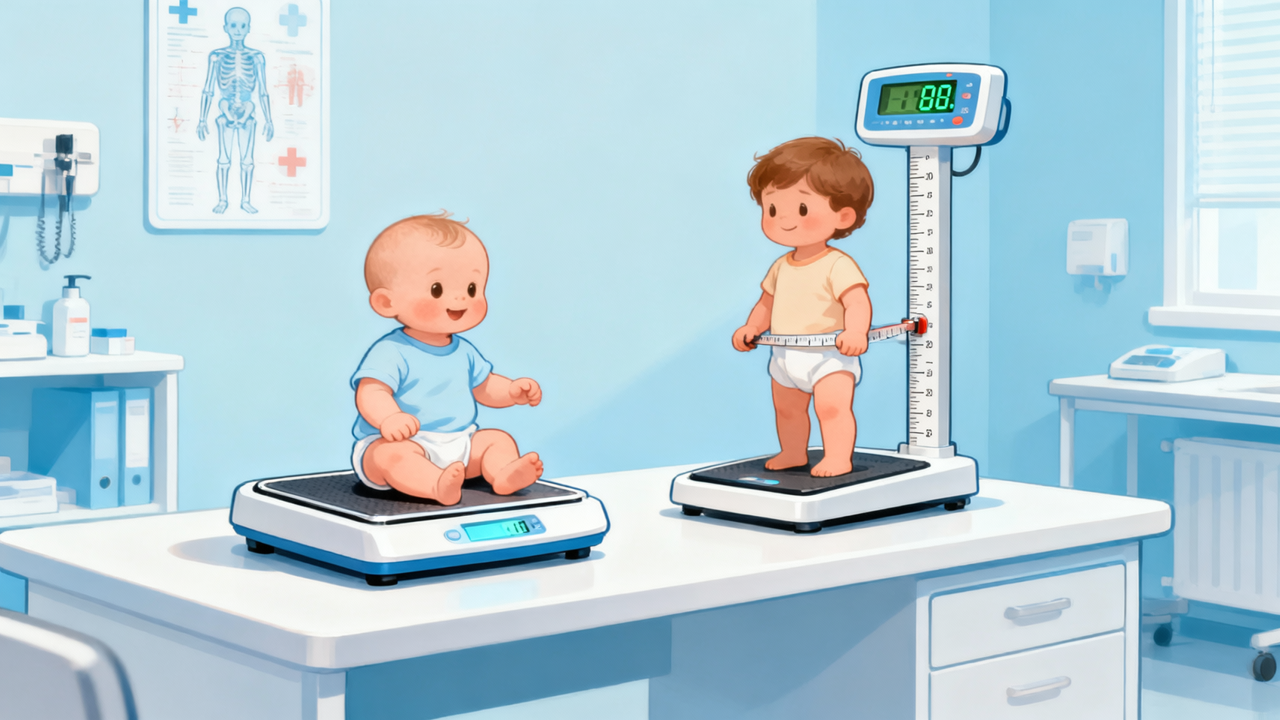
Premature Baby Weight: A Pediatrician’s Guide (2026)
Premature baby weight gain follows a different pattern than full-term babies. Preemies need to catch up on weeks of growth they missed in the womb. For example, a baby born at 32 weeks may weigh 3-4 pounds at birth but should gain about 20-30 grams per day in the NICU. Most preemies double their birth weight by 5-6 months corrected age.
Understanding premature baby weight patterns helps you track your preemie’s progress and know when to seek help. This guide covers growth charts, weight velocity, and month-by-month expectations based on corrected age.
Understanding Premature Baby Weight Patterns
Premature baby weight gain differs from full-term babies because preemies miss critical weeks of fetal growth. In the last trimester, babies gain about 0.5 ounces (14 grams) per day. When born early, they need to catch up on this growth outside the womb.
What Is Normal Premature Baby Weight?
Premature baby weight at birth depends on gestational age:
- 24-28 weeks (micro preemies): 1-2.5 pounds (450-1,100 grams)
- 28-32 weeks (very preterm): 2.5-4 pounds (1,100-1,800 grams)
- 32-36 weeks (moderate to late preterm): 4-5.5 pounds (1,800-2,500 grams)
- 37+ weeks (early term): 5.5+ pounds (2,500+ grams)
However, these are just averages. Your baby’s birth weight also depends on genetics, placental function, and whether they experienced growth restriction in the womb.
Weight Gain Expectations in the NICU
In the NICU, premature baby weight gain is closely monitored. Most preemies should gain:
- 20-30 grams per day (about 0.7-1 ounce) in the weeks after reaching full enteral feeds
- 15-20 grams per day as they approach discharge
- 20-30 grams per kilogram per day is considered adequate weight velocity
Weight velocity is the speed of weight gain over time. It’s a key indicator of whether your preemie is getting enough nutrition to support growth and development.
Tracking Premature Baby Weight on Growth Charts
Pediatricians use specialized growth charts to track premature baby weight. The most common are the Fenton growth charts for preemies and WHO growth charts after discharge.
Fenton Growth Charts for Preemies
The Fenton growth chart is designed specifically for premature babies. It shows expected weight, length, and head circumference from 22 weeks to 50 weeks postmenstrual age.
How to use the Fenton chart:
- Find your baby’s current postmenstrual age (gestational age at birth + chronological age)
- Plot their weight on the chart
- Track the curve over time
For example, a baby born at 28 weeks who is now 8 weeks old has a postmenstrual age of 36 weeks. You’d plot their weight at the 36-week mark on the Fenton chart.
WHO Growth Charts After Discharge
After discharge, most pediatricians switch to WHO growth charts. However, you should use corrected age (not chronological age) until at least 24 months.
How to use corrected age on WHO charts:
- Calculate corrected age: Current age – Weeks born early
- Find that age on the WHO chart x-axis
- Plot weight, length, and head circumference at that point
- Track the curve over time
For example, a baby born at 32 weeks (8 weeks early) who is now 6 months old has a corrected age of 4 months. You’d plot their weight at the 4-month mark on the WHO chart.
The World Health Organization provides growth charts that are the gold standard for tracking infant growth worldwide.
Month-by-Month Premature Baby Weight Expectations
Here’s what to expect for premature baby weight gain at each corrected age stage.
Corrected Age 0–3 Months: Rapid Catch-Up Growth
During this stage, most preemies experience rapid weight gain to catch up on missed growth.
- Weight gain: 20-30 grams per day (0.7-1 ounce)
- Expected weight: Most babies double their birth weight by 5 months corrected
- Feeding: Every 2-3 hours around the clock
At this stage, your baby’s primary job is to grow. They need frequent feeds to support rapid weight gain. If your baby is breastfed, your pediatrician may recommend adding fortifier to breast milk to boost calories.
Corrected Age 4–6 Months: Steady Growth
Weight gain continues but may slow slightly as babies become more active.
- Weight gain: 15-20 grams per day (0.5-0.7 ounces)
- Expected weight: Most babies triple their birth weight by 6 months corrected
- Feeding: Introduction of solid foods around 6 months corrected (not before 4 months corrected)
The American Academy of Pediatrics recommends waiting until at least 4 months corrected age before starting solids. For detailed guidance, see our pediatrician’s guide to starting solids.
Corrected Age 7–12 Months: Gradual Slowdown
Weight gain continues at a slower pace as babies become more mobile.
- Weight gain: 10-15 grams per day (0.35-0.5 ounces)
- Expected weight: Most babies are 2-3 times their birth weight
- Feeding: 3 meals plus 2-3 snacks daily, plus breast milk or formula
During this stage, focus on nutrient-dense foods rather than forcing weight gain. Your pediatrician will track growth on corrected age charts.
Corrected Age 13–24 Months: Approaching Full-Term Peers
Most preemies catch up to full-term peers by 24 months corrected age.
- Weight gain: 5-10 grams per day
- Expected weight: Similar to full-term peers on corrected age charts
- Feeding: Family meals with age-appropriate portions
By 24 months corrected, most pediatricians stop using corrected age for growth tracking. However, extremely preterm children may need additional time.
Factors Affecting Premature Baby Weight Gain
Several factors influence how quickly your preemie gains weight.
Gestational Age at Birth
Babies born earlier have more growth to catch up on. Micro preemies (born before 28 weeks) often take longer to reach full-term weight than late preemies (born at 34-36 weeks).
Medical Complications
Premature babies with medical issues may gain weight more slowly. Common conditions that affect weight gain include:
- Bronchopulmonary dysplasia (BPD): Chronic lung disease increases calorie needs
- Necrotizing enterocolitis (NEC): Intestinal injury affects feeding tolerance
- Congenital heart defects: Increased metabolic demands
- Sepsis or infections: Temporary pause in weight gain during illness
Feeding Difficulties
Preemies often have immature suck-swallow-breathe coordination. This can lead to:
- Poor latch during breastfeeding
- Fatigue during feeds
- Aspiration (food entering the airway)
- Reflux or vomiting
If your baby has feeding difficulties, work with a lactation consultant or feeding therapist. They can help optimize feeding techniques to support weight gain.
Genetic Factors
Your baby’s genetic background also affects growth patterns. If parents were small babies, their preemie may naturally be smaller too. Pediatricians consider family growth patterns when assessing premature baby weight.
When to Worry About Premature Baby Weight
Most preemies follow a predictable growth pattern. But some signs warrant prompt evaluation.
Red Flags for Poor Weight Gain
Contact your pediatrician if your baby:
- Is not gaining at least 20 grams per day in the first 3 months corrected
- Has dropped two major percentile lines on growth charts (for example, from 50th to 10th percentile)
- Shows signs of dehydration (fewer wet diapers, sunken soft spot, no tears when crying)
- Refuses feeds or vomits after most feedings
- Seems lethargic or difficult to wake for feeds
When to Seek Emergency Care
Seek immediate medical attention if your baby:
- Has fewer than 4 wet diapers in 24 hours
- Shows signs of severe dehydration
- Has difficulty breathing or rapid breathing
- Turns blue or gray around the lips
- Is unusually difficult to wake or unresponsive
See our full guide on when to call the doctor for infant emergencies for a complete symptom checklist.
Supporting Healthy Premature Baby Weight Gain
You can support your preemie’s weight gain through proper feeding techniques and nutrition.
Optimizing Breast Milk or Formula
Breast milk is the ideal food for preemies, but it may need fortification to meet their higher calorie needs.
- Breast milk fortifier: Adds protein, calories, and minerals to breast milk
- Preterm formula: Higher calorie formula designed for preemies
- Transition formula: Intermediate calorie formula for babies ready to transition from preterm formula
Your pediatrician will guide you on the best feeding option based on your baby’s needs and growth pattern.
Feeding Techniques for Better Weight Gain
Proper feeding techniques help preemies gain weight more efficiently.
- Paced bottle feeding: Allows baby to control flow and prevents overfeeding
- Skin-to-skin contact: Stimulates feeding cues and supports digestion
- Frequent, smaller feeds: Easier for preemies to tolerate than large volumes
- Upright positioning: Reduces reflux and improves digestion
For more feeding strategies, see our guide on premature baby feeding challenges.
Tracking Weight at Home
Monitor your baby’s weight between pediatrician visits.
- Weigh your baby at the same time each day (preferably before morning feed)
- Use the same scale each time
- Track weight in a journal or app
- Look for consistent upward trends rather than daily fluctuations
Most pediatricians recommend weekly weigh-ins at home during the first few months after NICU discharge.
Frequently Asked Questions About Premature Baby Weight
When do premature babies catch up in weight?
Most preemies catch up to full-term peers by 24 months corrected age. However, babies born before 28 weeks or with medical complications may take longer. Some extremely preterm children remain smaller throughout childhood, though most achieve catch-up growth.
Is it normal for premature babies to lose weight after birth?
Yes. Most babies (full-term and premature) lose 5-10% of their birth weight in the first week of life. Preemies should regain their birth weight by 2-3 weeks of age. If your baby hasn’t regained birth weight by 3 weeks, talk to your pediatrician.
How much should a premature baby weigh at 6 months corrected?
At 6 months corrected, most preemies weigh 2-3 times their birth weight. For example, a baby born at 2 pounds should weigh 4-6 pounds at 6 months corrected. However, there’s wide variation based on gestational age at birth and individual growth patterns.
Should I wake my premature baby to feed?
Yes, especially in the first few months corrected. Preemies need to feed every 2-3 hours around the clock to support rapid weight gain. Wake your baby if they sleep longer than 3-4 hours during the day or 4 hours at night. Your pediatrician will tell you when it’s safe to let your baby set their own feeding schedule.
What if my premature baby isn’t gaining weight?
If your baby isn’t gaining weight as expected, your pediatrician will evaluate for underlying causes. Common solutions include:
- Increasing calorie density of feeds
- Adding fortifier to breast milk
- Switching to higher-calorie formula
- Addressing feeding difficulties with a feeding therapist
- Evaluating for medical conditions affecting growth
Don’t panic, but don’t wait either. Early intervention helps prevent long-term growth problems.
The Bottom Line: Trust the Process
Premature baby weight gain follows its own timeline. Your preemie has already shown incredible strength by getting here.
Use corrected age to set fair expectations for weight gain. Celebrate every ounce your baby gains. When in doubt, talk to your pediatrician. That’s what they’re there for.
With proper nutrition, frequent feeds, and close monitoring, most premature babies achieve healthy weight gain and reach their full growth potential. You’re doing great by seeking information and advocating for your child’s needs.
Track Your Baby’s Weight
Use our corrected age calculator to find your premature baby’s developmental age and track weight milestones accurately.
This article is for informational purposes only and does not replace professional medical advice. Always consult your pediatrician for guidance specific to your child.
About the Author
Dr. Zeeshan Islam, MBBS, MCPS (Pediatrics) is a physician specializing in pediatrics with extensive experience in neonatal and developmental care. Dr. Islam provides evidence-based, accessible guidance for parents of premature infants. Learn more about Dr. Islam →
Medically reviewed: August 2026 | Last updated: August 13, 2026