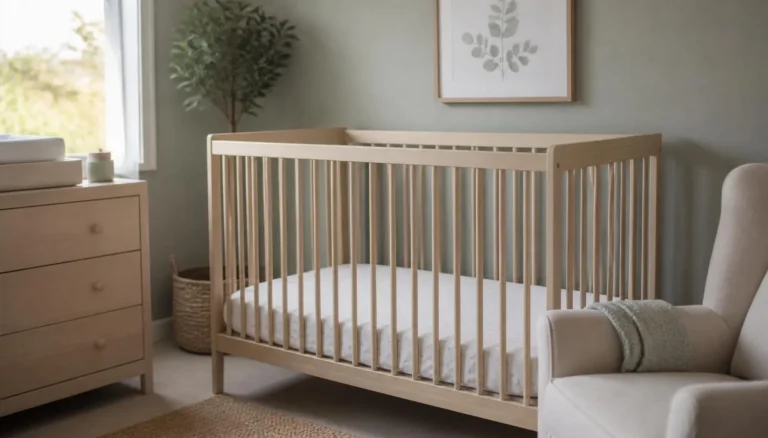
Contact Naps All Day: How to Transition Safely
Quick answer
Contact naps — a baby sleeping on your chest or in your arms — are normal and comforting, especially under 6 months. To transition, start with one crib nap a day, pre-warm the crib, and build a consistent routine. Never rush; protect total sleep while shifting one nap at a time.
For the full picture, read our pillar guide on How Many Naps by Age? Baby Sleep Chart (0–24 Months).
Why it happens
Contact naps feel like a “problem” only because modern homes separate babies from caregivers. Biologically, a baby sleeping on a parent is exactly what evolution designed. Understanding the mechanism helps you transition without fighting your baby’s instincts.
Sleep pressure and the short newborn cycle
Sleep is driven by two forces. The first is sleep pressure — the chemical adenosine that builds the longer we are awake. In babies, sleep pressure rises fast, so after about 60 to 90 minutes of awake time a young baby is ready to sleep again. The second is the circadian rhythm, run by melatonin. Newborns lack a mature clock, so their sleep is governed mostly by sleep pressure and comfort, not by the time of day.
Why contact works: the calming reflex
Being held mimics the womb — warm, enclosed, with the sound of a heartbeat and gentle motion. This activates what doctors call the calming reflex. A baby on your chest has a steadier heart rate, more stable oxygen levels, and often sleeps longer than when placed alone. For a colicky, reflux-prone, or simply sensitive baby, contact naps are the most effective tool you have.
Sleep associations form early
Around 4 to 6 months, babies begin to notice the conditions under which they fall asleep — the arms, the motion, the smell, the sound. When they wake at the end of a sleep cycle (about every 30 to 50 minutes in young babies) and the conditions have changed, they signal for the same condition to return. This is not manipulation; it is how infant sleep works. Contact naps create a strong association, and that association is what you gently reshape during a transition.
Melatonin and the maturing clock
By roughly 3 to 6 months, a baby’s own melatonin production strengthens and day-night patterns emerge. Naps become more predictable, and the baby can learn to link sleep cycles without a parent present. This is why the 4-to-6-month window is the easiest time to introduce one crib nap — the biology is finally on your side.
The real risk is caregiver exhaustion
Contact naps are not “bad” for the baby. The genuine risk is to the caregiver. Holding a baby for every nap, all day, is physically draining and can lead to the dangerous habit of dozing on a couch or recliner. The transition is about sustainability for the family, not about correcting the baby.
Step-by-step plan
This plan protects total sleep while moving one nap at a time from arms to crib. Go slowly; there is no deadline.
1. Choose the easiest nap first
Pick the nap with the highest sleep pressure and the least resistance — often the late-morning nap, when the baby has been awake a while and is reliably tired. Save the trickier naps (the short late-afternoon one) for later.
2. Pre-warm the crib
A cold mattress is a shock after a warm body. Warm the room, or place a heating pad or warm towel on the sheet and remove it just before laying the baby down. The surface should feel neutral, not cold.
3. Keep the environment consistent
Use the same white noise, the same sleep sack, the same dim light, and the same order of events you used during contact naps. Change only one thing at a time: the location from arms to crib.
4. Place drowsy but awake
Lay the baby down when they are sleepy but not fully asleep, then stay nearby with a hand on the chest and a soft “shush.” This teaches the baby to finish the descent into sleep in the crib rather than on you.
5. Extend a short crib nap
If the baby wakes at 30 minutes, wait a moment — they may resettle. If not, offer a calm check-in: a hand on the chest, a shush, then step back. You can pick them up to finish the nap in your arms if needed; the goal is a longer total nap, not perfection.
6. Add a second crib nap only after the first is reliable
Once one crib nap works most days, add a second. Most babies under 6 months still need at least one contact or stroller nap to meet total sleep needs. That is fine.
Age-specific subsections
- 0–3 months: Contact naps are often necessary and expected. Protect your own rest by swapping with a partner. Do not pressure yourself to transition yet.
- 4–6 months: The best window to introduce one crib nap, as melatonin and self-settling skills mature.
- 6–12 months: Most babies can manage two crib naps with consistency, keeping one contact or stroller nap if the family enjoys it.
Sample daily nap plan (6-month-old)
| Nap | Time | Method | Goal |
|---|---|---|---|
| —– | —— | ——– | —— |
| Morning | 9:00 AM | Crib, drowsy but awake | First crib nap |
| Midday | 12:30 PM | Contact or stroller | Protect total sleep |
| Afternoon | 3:30 PM | Crib if tolerated | Second crib attempt |
Decision checklist: is it time to transition?
| Question | If yes |
|---|---|
| ———- | ——– |
| Are you exhausted from holding every nap? | Valid reason to start |
| Is the baby growing and feeding well? | Safe to proceed gradually |
| Can you stay awake during contact naps? | Yes — keep safety first |
| Does the baby resist the crib completely? | Pause; try again in 1–2 weeks |
Safety reminders
- The caregiver must be awake and alert during any contact nap. If you feel yourself dozing, place the baby in the crib or a safe sleep space immediately.
- Never fall asleep with the baby on a couch, recliner, or armchair — these soft surfaces are high suffocation risks.
- Use a firm, flat sleep surface for all independent naps.
- Always place the baby on the back to sleep.
- Keep the sleep space clear: no bumpers, pillows, loose blankets, or positioners.
- A stroller, carrier, or car seat nap is acceptable for transport, but move the baby to a flat surface once you arrive. Do not let a car seat double as routine nap furniture.
- Do not use a swing, lounger, or inclined seat as a nap substitute.
When to Call Your Pediatrician
Contact naps themselves are not a medical concern, but call your pediatrician if:
- The transition causes severe distress for more than two weeks.
- Feeding or weight gain drops during the transition.
- The baby seems to need to be held because of pain, not comfort — reflux, ear infections, or other issues may be the real driver.
- You notice poor weight gain, a high-pitched cry, fever, or breathing changes.
- You are so exhausted you fear you might fall asleep with the baby on an unsafe surface.
The science of why being held calms a baby
Holding a baby is not indulgence; it is physiology. Skin-to-skin and close contact lower the baby’s stress hormones, steady the heart rate and breathing, and support oxygen levels. The caregiver’s heartbeat and warmth mimic the womb, activating what researchers call the calming reflex. For a colicky or reflux-prone infant, this reflex is the most reliable way to settle and extend sleep. Understanding this helps parents stop blaming themselves — the contact nap is working exactly as biology intends. The transition later is about reshaping the association, not undoing something “wrong.”
Common transition mistakes to avoid
Several missteps make the move harder. Going cold-turkey on all naps at once when the baby is sensitive can cause days of overtiredness. Changing too much at once — new room, new sack, new sound, new surface — overloads the baby’s ability to adjust. Using a swing or lounger as a crib substitute teaches another unsafe association. And the most dangerous mistake: dozing with the baby on a couch or recliner because you are exhausted from holding naps. If you are that tired, the safe move is the crib, even if the first few crib naps are short.
Troubleshooting: when the crib nap fails
If the baby wakes at 20–30 minutes and will not resettle, first check the basics: room dark, white noise on, sleep sack on, not overtired or undertired. Try a hand on the chest and a shush, then step back. If that fails, finish the nap in your arms that one time — protecting total sleep matters more than the method. The next day, try again with a slightly earlier start (catch the sleep-pressure peak) and a pre-warmed crib. A pattern of failed crib naps for more than two weeks, especially with weight or feeding changes, deserves a pediatrician call to rule out discomfort.
Reading your baby’s sleepy cues accurately
A smoother transition starts with good timing. Watch for early cues — staring off, rubbing eyes, pulling ears, fussing — and start the nap before overtiredness kicks in, because an overtired baby has a surge of stress hormones that fights sleep. Catching the sleep-pressure peak (often 60–90 minutes after waking for a young baby) means the crib nap has biology on its side. A common error is waiting until crying, which is a late cue and makes settling harder. Accurate cue-reading shortens the whole transition and reduces the drama around the first crib naps.
Related reading: Baby Takes 30-Minute Naps.
When contact napping signals something to address
Sometimes a baby who only sleeps on you is not just preferring closeness — they may be uncomfortable. Reflux, ear discomfort, congestion, or a growth spurt can make the flat crib intolerable while the upright, warm contact position soothes. If contact napping is new and sudden, or comes with arching, crying at the breast or bottle, or poor weight gain, raise it with your pediatrician. Addressing the underlying discomfort often makes the crib more acceptable. Contact napping itself is fine; a sudden change in sleep behavior is worth a look.
Protecting your own rest during the contact-nap phase
The hardest part of all-day contact naps is usually the caregiver, not the baby. Swap shifts with a partner so each gets a continuous block of rest. Use a safe carrier or stroller for some naps so you can move and recover a little autonomy. Lower your own expectations for household tasks — this phase is intense but time-limited. If exhaustion reaches the point where you might fall asleep with the baby on a soft surface, that is a clear signal to prioritize a safe independent nap, even a short one, over another contact session. Your safety and the baby’s safe sleep are linked.
Contact naps across cultures and the big picture
In many parts of the world, babies sleep on or near caregivers for most of the first year, and independent crib sleep is a Western exception rather than the rule. There is no single “right” way; what matters is safety and sustainability for your family. Contact naps are a valid, healthy choice for as long as they work for you. The transition described here exists so that you have an off-ramp when you want one — not because contact napping is harmful. Keep the goal in view: a well-rested baby and a well-rested caregiver, achieved safely.
What “success” looks like
Success is not a baby who never contact naps again. Success is flexibility: your baby can nap in the crib when you need that, and can also nap on you when that is what the day calls for. A baby who can do both is resilient and easy to care for in any setting — at home, at a relative’s house, or while traveling. Hold the transition loosely. If after several weeks you have even one reliable crib nap most days, you have made real progress, and the rest tends to follow as the circadian rhythm matures and self-settling skills grow.
How long should the transition take?
There is no fixed timeline, and comparing your baby to another’s often adds stress. Some babies accept a crib nap within a few days; others take two to three weeks of one-nap-at-a-time practice. A gradual plan naturally spreads the change, so even a slow pace still reaches the goal. Measure success in weeks, not nights, and remember that a contact nap kept for comfort does not undo the crib naps you have already built.
Signs the plan is working
You will know the transition is taking hold when at least one crib nap happens most days without a fight, when the baby settles with a hand on the chest rather than being picked up, and when total daily sleep holds steady. Small steps count. If the baby takes one reliable crib nap and still wants contact for the others, that is real progress, not failure. Keep the routine constant and let the rest follow as the baby’s rhythm matures.
A note on your own rest
Protecting your rest is part of safe sleep. If you are so tired you might doze while holding the baby, that is the moment to choose the crib, even for a short nap. A well-rested caregiver makes safer decisions than an exhausted one, and the baby benefits from your steadiness.
FAQ
Are contact naps bad for my baby?
No. Contact naps are a tool, not a flaw. They are biologically normal and common in many cultures. The only reason to transition is if the arrangement is no longer sustainable for you.
When should I stop contact naps?
Whenever you are ready. There is no deadline and no “bad habit” to break. Many families keep one contact nap well into the first year because they enjoy it.
See also: Nap Transition at 9 Months.
Will my baby ever nap alone?
Yes. With gradual practice and a maturing circadian rhythm, most babies learn to nap in a crib. Some need more time than others, and that is normal.
Do contact naps ruin night sleep?
Not usually. Day and night sleep are linked but separate. A baby who contact naps can still learn independent night sleep later. Focus on safe, adequate total sleep now.
What if my baby only naps in a carrier or stroller?
That counts as a valid contact alternative and is perfectly fine. Outdoor stroller naps can even lengthen sleep and give you mobility. Just move the baby to a flat surface for longer rests when possible.
Quick wins for this week
Choose one nap to move to the crib and keep the rest as contact naps. Most parents find the first morning nap is the easiest because sleep pressure is highest. Pair it with the same routine you use for contact naps so the baby learns the crib is just another sleep place. Give it a week before judging. If the crib nap fails one day, return to contact and try again tomorrow. Consistency over days, not perfection in one day, is what builds the skill.
- Why Your Baby Takes Short Naps
- Hotel Room Baby Sleep
- Bassinet to Crib Transition
- American Academy of Pediatrics — A Parent’s Guide to Safe Sleep
- NICHD Safe to Sleep — Safe Sleep Environment
- CDC — About Sudden Unexpected Infant Death
- World Health Organization — Newborn Care
About the author
Dr. Michael Anderson, MD (Pediatrics) is a board-certified pediatrician on the ChildBloom medical panel, focusing on infant sleep, safe sleep environments, and responsive routines. This article was medically reviewed and approved by Dr. Ahmad Raza, MD (Pediatrics) against current AAP safe-sleep guidance. Read our editorial and review standards.
This guide is general education, not a diagnosis. If you are worried about your baby’s breathing, feeding, growth, or sleep, contact your pediatrician. For any breathing emergency, call emergency services immediately.
Related ChildBloom Guides
- Start here: How Many Naps by Age? Baby Sleep Chart (0–24 Months)
- Dropping the Morning Nap at 10–12 Months
- Infant Nap Transitions: 3 to 2 to 1 Naps (Age-by-Age Guide)
- Baby Short Naps: Why They Happen and How to Fix Them
- Newborn Won’t Sleep in Bassinet? 7 Fixes That Actually Work
- Best Video Baby Monitors for Peace of Mind
- Browse all Sleep & Nursery guides
References & Medical Sources
- AAP healthy sleep hours by age
- AAP guidance on getting your baby to sleep
- AASM pediatric sleep duration consensus
- NICHD Safe to Sleep: safe sleep environment
Reviewed by the ChildBloom pediatric panel. Learn about our physicians on the About page. This article is educational and does not replace your child’s clinician.