7-Month Feeding Schedule: Meals, Milk, and Tips
7-Month Feeding Schedule: Meals, Milk, and Tips
Short answer: A 7-month-old may have two solid-food opportunities each day, with a third added when the baby is ready and interested. Breast milk or iron-fortified infant formula remains the main source of nutrition from 6 to 12 months. Follow hunger and fullness cues, offer iron-rich foods, and never force a baby to eat. 1
A 7-month feeding schedule works best as a flexible routine rather than a strict timetable. Babies vary in appetite, sleep, milk intake, development, and readiness for textures. One baby may enjoy three small solid meals. Another may be comfortable with two. Both patterns can be normal when the baby is growing and feeding comfortably.
This guide is for general education. Babies born prematurely, babies with medical conditions, and babies with feeding or swallowing concerns may need an individualized plan based on corrected age and clinical advice.
How many meals should a 7-month-old eat?
Many 7-month-olds are offered two solid-food opportunities each day. A third opportunity can be added when the baby is alert, interested, and managing the existing meals comfortably. The goal is practice with tastes, textures, and self-feeding—not replacing milk feeds or reaching a fixed portion.
Some babies eat only a few spoonfuls. Others eat more. Appetite can change from meal to meal and day to day. Offer a small amount, watch your baby’s cues, and allow the baby to decide whether to continue. The CDC recommends starting small and gradually introducing solid foods while continuing breast milk or formula. 1
Sample 24-hour routine for a 7-month-old
Use this as an example, not a prescription. Move the times to fit your baby’s sleep, childcare, and usual milk-feeding pattern.
| Approximate time | Feeding opportunity | Examples |
|---|---|---|
| 7:00 a.m. | Breast milk or infant formula | Follow the baby’s usual hunger cues. |
| 8:30 a.m. | Solid meal | Iron-fortified cereal, mashed egg, beans, or soft fruit. |
| 11:00 a.m. | Breast milk or infant formula | Offer the usual milk feed. |
| 1:00 p.m. | Solid meal | Soft lentils, shredded tender meat, mashed vegetables, or tofu. |
| 3:30 p.m. | Breast milk or infant formula | Amount and timing vary by baby. |
| 5:30 p.m. | Optional solid opportunity | Offer only if the baby is interested and comfortable. |
| Bedtime and overnight | Breast milk or infant formula as needed | Night feeds vary; do not force a scheduled number. |
The schedule should organize opportunities, not control intake. Some babies nurse more frequently. Some take bottles at predictable times. A pediatrician can help assess intake when growth, wet diapers, vomiting, or feeding behavior is concerning.
Milk feeds still matter at 7 months
Breast milk and/or infant formula remains the main source of nutrition from 6 through 12 months. Solid foods gradually become more important, but they complement milk feeds rather than replacing them abruptly. 1
There is no single milk volume that fits every 7-month-old. Formula intake varies by baby, and breast milk intake cannot be measured reliably at the breast. Use your baby’s hunger and fullness cues, overall behavior, wet diapers, and growth pattern as part of the assessment. Do not dilute formula or restrict milk to make a baby eat more solids.
If your baby is taking much less milk than usual, has repeated vomiting, has noticeably fewer wet diapers, seems unusually sleepy, or is not gaining weight, contact your pediatrician promptly.
How much solid food should a 7-month-old eat?
Start with a small amount, such as a spoonful or two, and increase gradually as your baby shows interest. Portions are usually much smaller than adult portions. A baby may eat more at breakfast and barely taste dinner. That variation does not automatically indicate a problem.
Responsive feeding means the caregiver decides what safe food to offer and when to offer it, while the baby decides whether to eat and how much. Stop when your baby closes their mouth, turns away, pushes food away, becomes upset, or loses interest. Do not pressure, bribe, distract, or chase a baby for “one more bite.” 2
Iron-rich foods for 7-month-olds
Iron is important for oxygen transport, growth, and neurological development. The NIH lists an iron Recommended Dietary Allowance of 11 mg per day for infants 7–12 months, but an individual infant’s needs and intake should be discussed with a clinician when concerns arise. 3
Offer an iron-rich food regularly in an age-appropriate texture. Examples include:
| Food | Safe serving idea |
|---|---|
| Iron-fortified infant cereal | Mix with breast milk, formula, or water to a suitable consistency. |
| Beef, lamb, chicken, or turkey | Cook thoroughly and serve minced, finely shredded, or mashed. |
| Fish | Serve fully cooked, flaked, and carefully checked for bones. |
| Egg | Serve fully cooked as soft scrambled egg, omelet strips, or mashed egg. |
| Lentils and beans | Cook until soft and mash or partially mash. |
| Tofu | Offer soft tofu mashed or in a developmentally suitable form. |
Vitamin C-containing foods, such as soft-cooked vegetables or mashed fruit, can accompany plant-based iron sources. Do not give iron supplements unless your child’s clinician recommends them.
Safe textures and finger foods at 7 months
Readiness depends on development, not age alone. Many babies can begin exploring thicker mashed foods and soft finger foods when they can sit upright with good head control, bring objects to the mouth, and show coordinated interest in food. 2
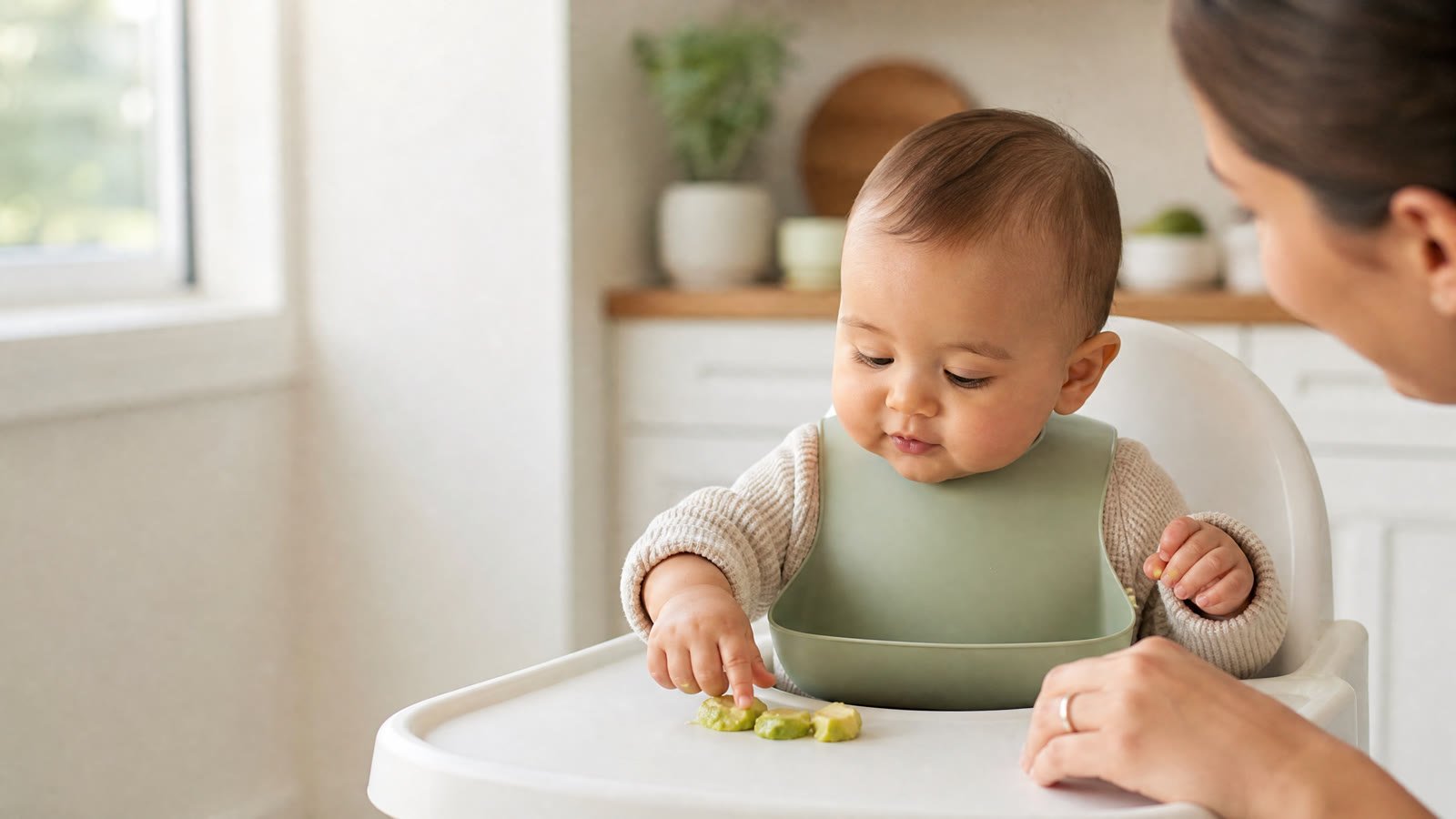
Good options may include soft banana, ripe avocado, soft-cooked vegetables, tender pasta, fully cooked egg, or tender meat prepared so it is soft and easy to manage. Food must be prepared for the baby’s abilities. No food shape or texture eliminates choking risk.
Progress from smooth purée to thicker, mashed, lumpy, and soft finger-food textures at your baby’s pace. Gagging can occur while babies learn. Repeated coughing, choking, vomiting, wet breathing, or distress during meals should be discussed with a pediatrician.
Does a 7-month-old need snacks?
A formal snack schedule is usually not necessary at 7 months. If a baby seems hungry between solid meals, a milk feed may be the most appropriate option. A small solid-food opportunity can also fit into the routine when the baby is ready and the food is safe.
Avoid continuous grazing throughout the day. Predictable opportunities make it easier to notice hunger and fullness cues, while milk feeds remain an important nutritional foundation. 1
Can a 7-month-old drink water?
Once complementary foods begin, small sips of water can be offered in an open, straw, or suitable cup with meals. Breast milk or infant formula should remain the main source of fluids during the first year. Do not replace milk feeds with water, and do not give juice to babies younger than 12 months. 2
Ask your pediatrician about water or electrolyte needs during illness, hot weather, diarrhea, or vomiting. Never dilute infant formula unless specifically instructed by a clinician.
Foods and drinks to avoid
Do not add honey before 12 months. Avoid juice for babies under 12 months, and limit foods with added salt or sugar. Do not use cow’s milk as the main drink before 12 months, although dairy foods such as plain yogurt may fit when safely introduced and tolerated. 2
Avoid choking hazards such as whole grapes, whole nuts, popcorn, hard raw apple or carrot, thick spoonfuls of nut butter, hot-dog rounds, hard candy, large chunks of meat or cheese, and other hard, sticky, or round foods. Prepare food by cooking, mashing, shredding, or cutting it into a developmentally appropriate form. 4
What to do when a baby refuses a meal
Meal refusal is common at 7 months. Stay calm, end the meal when the baby shows clear refusal, and offer milk according to the usual routine. Try the food again another day without pressure. A new food or texture may need repeated, relaxed exposure before it becomes familiar.
Seek advice if your baby refuses all solids for several weeks, gags or vomits with nearly every texture, coughs during feeds, has breathing changes, seems in pain, or cannot manage soft foods. Early assessment can help identify feeding or swallowing problems without assuming a diagnosis.
When to call your pediatrician
Contact your pediatrician if your baby has poor weight gain, weight loss, persistent vomiting, signs of dehydration, repeated coughing or choking during meals, wet or gurgly breathing after feeds, prolonged or exhausting meals, difficulty managing saliva, or ongoing distress around eating.
Ask for individualized guidance if your baby was premature or has reflux with feeding problems, a neurologic or developmental condition, a known allergy, or a history of aspiration. Seek emergency help for inability to breathe, blue or gray coloring, collapse, unresponsiveness, or a severe allergic reaction. Learn infant choking first aid from a certified course. 4
Frequently asked questions
Is two meals enough for a 7-month-old?
Often, yes. Two solid-food opportunities can be appropriate, with a third added when the baby is ready and interested. Milk feeds remain important throughout the first year.
Can I drop a milk feed when my baby starts eating three meals?
Not automatically. Some babies gradually change their milk pattern, while others continue a similar number of milk feeds. Let hunger cues, wet diapers, growth, and your pediatrician’s advice guide changes.
Should I wake my baby for a night feed?
Night feeding needs vary. Do not change night feeds solely because a sample schedule shows a particular pattern. Discuss waking, sleep, and feeding with your pediatrician if growth or intake is a concern.
What if my baby still prefers smooth purée?
Offer gradual changes toward thicker or mashed textures when your baby is ready. Never force lumps. If progress is absent or feeding causes coughing, vomiting, distress, or breathing changes, ask your pediatrician about a feeding evaluation.
Can I introduce common allergens at 7 months?
Many allergenic foods can be introduced in safe, age-appropriate forms once complementary foods begin. Do not delay them solely to prevent allergy. Babies with severe eczema, egg allergy, or another high-risk history may need a clinician-guided plan, especially for peanut introduction. 2
Key takeaways
A 7-month-old may do well with two solid meals and an optional third opportunity as readiness allows. Breast milk or infant formula remains the primary nutrition source. Offer iron-rich foods, safe textures, small amounts of water with meals, and responsive feeding without pressure. Supervise every meal and seek medical advice for repeated coughing, choking, vomiting, breathing changes, poor growth, dehydration, or persistent feeding distress.
Author and medical review
Written by: Dr. Ahmad Raza, MD, Pediatrics
Medically reviewed by: Dr. Ahmad Raza, MD, Pediatrics
Medical review status: Pending final clinician verification of this replacement version.
This article is for general education and does not replace individualized advice from your child’s pediatrician, emergency services, or certified infant first-aid training.
External citations
The article uses the authoritative CDC, AAP, and NIH sources listed below.






One Comment