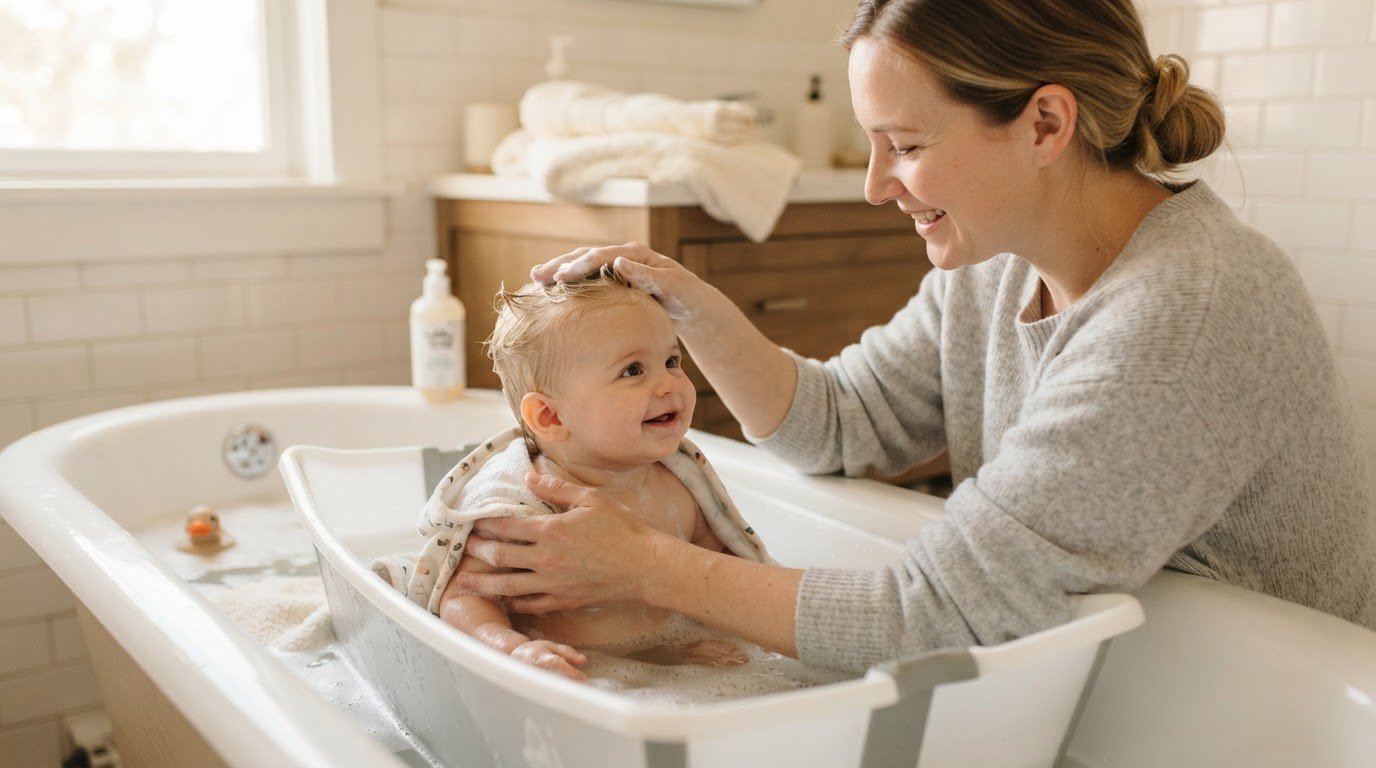
Baby Hair Care: When to Start Washing and Shampoo Guide
Medically reviewed by Dr. Ahmad Raza, MD (Pediatrics) — ChildBloom Medical Review Panel. Last updated: August 4, 2026.
Editorial & affiliate disclosure: our guidance is written and reviewed by clinicians. ChildBloom may earn a commission from qualifying purchases made through links on this page, which never changes what our pediatric reviewers recommend.
Looking for clear answers about baby hair care? This pediatrician-reviewed guide covers what matters, what to skip, the safety checks that count, and exactly when to involve your doctor — based on current AAP, CDC and CPSC guidance on baby hair care.
Quick pediatrician summary: baby hair care
Short answer: A pediatrician explains baby hair care: gentle routines, ingredients to avoid, product picks and the skin signs that need a doctor.
New parents often wonder about the right way to care for their baby’s hair and scalp. Baby hair care when to wash is one of the most common questions pediatricians hear. Should you wash your newborn’s hair every day? When is it safe to use shampoo? What if your baby has cradle cap?
The truth is, a baby’s scalp and hair need gentler care than adult hair. Getting the bath temperature right is equally important for comfort. Babies produce less oil, and their skin is much more sensitive. Over-washing can dry out the scalp, while under-washing can lead to cradle cap or buildup.
This complete guide covers everything you need to know about baby hair care. You will learn when to start washing, how often, which products to choose, and how to handle common scalp issues like cradle cap. Learn about related hygiene in our baby ear wax cleaning guide.
Table of Contents
- When to Start Washing Baby’s Hair
- How Often Should You Wash Baby’s Hair?
- Choosing the Right Shampoo for Babies
- Step-by-Step Guide to Washing Baby’s Hair
- Cradle Cap: Causes, Treatment, and Prevention
- Baby Hair Loss: Is It Normal?
- Tips for Healthy Baby Hair and Scalp
- Common Baby Hair Care Mistakes to Avoid
- Key Takeaways
- Frequently Asked Questions
- Bottom Line
- References
When to Start Washing Baby’s Hair
You can start washing your baby’s hair from birth. However, the approach changes as your baby grows.
Newborns (0–4 weeks):
During the first few weeks, your baby does not need shampoo. Plain warm water is enough to keep the scalp clean. Use a soft, damp washcloth to gently wipe the scalp during sponge baths. The AAP recommends waiting until the umbilical cord stump falls off before giving a full tub bath.
Infants (1–6 months):
Once your baby is in the tub regularly, you can introduce a small amount of baby shampoo. Use it only once or twice a week. On other days, plain water is fine.
Older babies (6–12 months):
As your baby starts eating solid foods, hair washing may become more necessary. Food, drool, and increased activity can make the scalp dirtier. You can increase shampoo use to two to three times a week.
Featured Snippet Answer: You can start washing your baby’s hair from birth using plain warm water. Introduce a gentle baby shampoo around 1 to 2 months of age, using it only once or twice a week. Increase frequency as your baby starts solid foods and becomes more active.
How Often Should You Wash Baby’s Hair?
The frequency of hair washing depends on your baby’s age, hair type, and activity level. Here is a general guideline.
| Age | Recommended Frequency | Notes |
|---|---|---|
| 0–1 month | 1–2 times per week | Use plain water only |
| 1–3 months | 1–2 times per week | Baby shampoo OK if needed |
| 3–6 months | 2 times per week | Increase if scalp gets oily |
| 6–12 months | 2–3 times per week | Solid foods may require more washing |
| 12+ months | 3–4 times per week | Adjust based on activity level |
Signs your baby needs a hair wash:
– Visible dirt or food in the hair
– Oily or greasy scalp
– Cradle cap flakes
– Unpleasant smell from the scalp
Signs you are washing too often:
– Dry, flaky scalp (not cradle cap)
– Redness or irritation
– Hair feels rough or brittle
Every baby is different. Some babies with fine, straight hair may need less frequent washing. Babies with thicker or curlier hair may benefit from slightly more frequent washing with a moisturizing baby shampoo.
Choosing the Right Shampoo for Babies
Not all shampoos are safe for babies. A baby’s skin is thinner and more absorbent than adult skin, so harsh chemicals can cause irritation or allergic reactions.
What to look for in a baby shampoo:
- Tear-free formula — This prevents stinging if shampoo gets in your baby’s eyes.
- pH-balanced — A pH close to 7 matches your baby’s natural skin pH.
- Fragrance-free or lightly scented — Strong fragrances can irritate sensitive skin.
- Hypoallergenic — Reduces the risk of allergic reactions.
- No sulfates, parabens, or phthalates — These chemicals are unnecessary and may irritate baby skin.
- Dermatologist-tested — Products tested by dermatologists are generally safer for babies.
Ingredients to avoid:
- Sodium lauryl sulfate (SLS)
- Formaldehyde-releasing preservatives
- Artificial dyes
- Mineral oil (can clog pores on the scalp)
- Strong fragrances or essential oils
Featured Snippet Answer: Choose a tear-free, pH-balanced, hypoallergenic baby shampoo free from sulfates, parabens, and artificial fragrances. Look for products labeled “dermatologist-tested” and designed specifically for infants.
Step-by-Step Guide to Washing Baby’s Hair
Washing your baby’s hair can feel tricky at first. Follow these steps to make it safe and stress-free.
What You Need:
- Gentle baby shampoo
- Soft washcloth or baby hair brush
- A small cup for rinsing
- Warm water (test on your wrist — it should feel warm, not hot)
- Soft towel
Steps:
- Prepare the room. Make sure the room is warm. Babies lose heat quickly when wet.
- Support your baby’s head. Hold your baby securely with one arm supporting the head and neck.
- Wet the hair. Use a small cup or damp washcloth to gently wet the scalp. Avoid pouring water directly over the face.
- Apply shampoo. Squeeze a small drop (dime-sized) of baby shampoo onto your fingers. Gently massage it into the scalp in circular motions.
- Be gentle around the soft spot. The fontanelle (soft spot) on top of the head is safe to touch. The membrane underneath is strong. Still, use gentle pressure.
- Rinse thoroughly. Use a damp washcloth or small cup of warm water to rinse all shampoo away. Leftover shampoo can irritate the scalp.
- Pat dry. Gently pat the hair and scalp dry with a soft towel. Do not rub vigorously.
- Brush gently. If your baby has hair, use a soft baby brush to gently detangle.
Tip: If your baby dislikes water on their head, try washing their hair while they are lying on a bath support. Use a washcloth instead of pouring water. This gives you more control and keeps water away from their face.
Cradle Cap: Causes, Treatment, and Prevention
Cradle cap (infantile seborrheic dermatitis) is one of the most common scalp conditions in babies. It affects up to 70% of infants in the first few months of life.
What Does Cradle Cap Look Like?
- Yellowish, greasy, crusty patches on the scalp
- Flaky or scaly skin
- Sometimes mild redness underneath
- Usually not itchy or painful
What Causes Cradle Cap?
The exact cause is not fully understood. Experts believe it may be related to:
– Overactive sebaceous (oil) glands stimulated by maternal hormones before birth
– A yeast (Malassezia) that grows in the oily secretion
– It is NOT caused by poor hygiene or allergies.
How to Treat Cradle Cap
- Apply baby oil or coconut oil. Massage a small amount into the scalp 15 minutes before bath time. This softens the scales.
- Brush gently. Use a soft baby brush or fine-toothed comb to loosen the flakes. Brush in one direction gently.
- Wash with baby shampoo. Use a gentle baby shampoo to wash away the loosened scales and oil.
- Repeat daily if needed. Cradle cap may take several days or weeks to fully clear.
When to See a Doctor About Cradle Cap
- Scales spread to the face, neck, or diaper area
- The scalp becomes very red, swollen, or bleeds
- Cradle cap does not improve after a few weeks of home treatment
- Your baby seems uncomfortable or itchy
Your pediatrician may recommend a medicated shampoo or mild topical treatment if cradle cap is severe.
Baby Hair Loss: Is It Normal?
Many parents are surprised when their newborn starts losing hair. This is completely normal and expected.
Why Do Babies Lose Hair?
- Hormonal changes — After birth, the drop in maternal hormones triggers a resting phase in hair growth. This causes hair to shed.
- Friction — Babies spend a lot of time lying on their backs. The rubbing against mattresses and car seats can cause hair loss on the back of the head.
- Telogen effluvium — This is the medical term for the normal hair shedding that happens in the first few months.
When Does Baby Hair Grow Back?
Most babies start growing new hair between 6 and 12 months of age. The new hair may be a different color or texture than the birth hair. This is normal.
When to Talk to Your Pediatrician About Hair Loss
- Patchy bald spots with red, scaly skin (could indicate ringworm)
- Hair loss accompanied by other symptoms like poor weight gain
- No hair growth by 12 months of age
- Hair that seems to be breaking or pulling out easily
Tips for Healthy Baby Hair and Scalp
Follow these practical tips to keep your baby’s hair and scalp healthy.
- Use lukewarm water. Hot water dries out the scalp and can burn sensitive skin.
- Pat dry, don’t rub. Rubbing can irritate the scalp and tangle hair.
- Use a soft baby brush. Brush gently to stimulate the scalp and distribute natural oils.
- Avoid tight hats and headbands. These can cause friction and hair breakage.
- Keep the scalp moisturized. If the scalp seems dry, apply a small amount of baby-safe oil before bath time.
- Protect from the sun. Keep babies under 6 months out of direct sunlight. For older babies, use a wide-brimmed hat.
- Avoid adult hair products. Adult shampoos, conditioners, and styling products contain chemicals that are too harsh for babies.
- Trim only if necessary. There is no medical need to cut a baby’s hair. If you choose to trim it, use baby-safe scissors and be very careful.
Common Baby Hair Care Mistakes to Avoid
Even well-meaning parents can make mistakes with baby hair care. Here are the most common ones.
1. Washing Too Often
Daily shampoo use strips natural oils from the scalp. This leads to dryness, flaking, and irritation. Stick to the recommended frequency for your baby’s age.
2. Using Adult Shampoo
Adult shampoos contain stronger detergents and fragrances. These can irritate a baby’s delicate scalp and cause rashes.
3. Scrubbing the Scalp Too Hard
The scalp needs gentle care. Vigorous scrubbing can damage hair follicles and irritate the skin. Use soft, circular motions with your fingertips.
4. Skipping the Rinse
Leftover shampoo residue can cause itching and flaking. Always rinse thoroughly with clean, warm water.
5. Ignoring Cradle Cap
Some parents try to pick or scratch cradle cap flakes off. This can cause bleeding and infection. Always soften and gently brush flakes away.
6. Using Too Much Product
A little baby shampoo goes a long way. Using too much product makes rinsing difficult and wastes shampoo. A dime-sized amount is enough for most babies.
7. Not Supporting the Head
Always support your baby’s head and neck during hair washing. A slippery, soapy baby can move unexpectedly.
Key Takeaways
- You can start washing your baby’s hair from birth using plain warm water.
- Introduce gentle baby shampoo around 1 to 2 months, using it 1–2 times per week.
- Choose tear-free, pH-balanced, hypoallergenic shampoos free from sulfates and parabens.
- Wash baby’s hair 2–3 times per week by 6 months, increasing as solid foods begin.
- Cradle cap is common, harmless, and treatable with oil, gentle brushing, and baby shampoo.
- Baby hair loss in the first few months is normal and temporary.
- Avoid adult products, over-washing, and harsh scrubbing.
- Always support your baby’s head during hair washing and rinse thoroughly.
Frequently Asked Questions
1. When should I first wash my baby’s hair?
You can start washing your baby’s hair from birth using plain warm water. Introduce a gentle baby shampoo around 1 to 2 months of age. Use shampoo only once or twice a week at first.
2. Can I use regular shampoo on my baby?
No. Regular adult shampoos contain stronger detergents, fragrances, and chemicals that can irritate your baby’s sensitive scalp. Always use a shampoo specifically formulated for babies.
3. How do I wash a baby’s hair if they hate it?
Try using a washcloth instead of pouring water. Keep the room warm. Support your baby’s head well. Some parents find it helpful to wash hair at the end of bath time when the baby is relaxed. You can also use a baby bath visor to keep water off the face.
4. Is cradle cap contagious or dangerous?
No. Cradle cap is not contagious and is not dangerous. It is a common, harmless scalp condition that usually clears on its own within weeks or months. Gentle home treatment can speed up recovery.
5. Why is my baby losing hair?
Baby hair loss in the first few months is normal. It is caused by hormonal changes after birth and friction from lying on surfaces. New hair typically grows back between 6 and 12 months.
6. Should I cut my baby’s hair?
There is no medical need to cut a baby’s hair. Some cultures shave a baby’s head as a tradition. If you choose to trim, use baby-safe scissors and be very careful. Cutting hair does not make it grow thicker.
7. Can I use conditioner on my baby’s hair?
Most babies do not need conditioner. If your baby has longer or thicker hair that tangles easily, you can use a small amount of baby-safe conditioner on the hair ends. Avoid applying conditioner to the scalp.
8. How do I prevent cradle cap?
Cradle cap cannot always be prevented. However, regular gentle washing, keeping the scalp clean and dry, and occasional brushing can reduce the risk. If your baby is prone to cradle cap, apply a small amount of baby oil before baths to keep scales from building up.
9. What if my baby has no hair?
Some babies are born with very little hair, and that is perfectly normal. Hair growth varies widely among babies. Most babies start growing visible hair between 6 and 12 months. If your baby has no hair by 12 months, mention it to your pediatrician.
10. Can I use coconut oil on my baby’s scalp?
Yes. Virgin coconut oil is safe for most babies and can help moisturize the scalp and soften cradle cap scales. Apply a small amount before bath time and wash it out with baby shampoo. Stop use if you notice any irritation.
Bottom Line
Baby hair care does not have to be complicated. The key is gentle, simple routines. Start washing your baby’s hair from birth with warm water. Add a mild baby shampoo around 1 to 2 months, using it just a few times a week. Choose products that are tear-free, fragrance-free, and free from harsh chemicals.
Cradle cap and hair loss are common and usually harmless. Treat cradle cap with oil, gentle brushing, and regular washing. Remember that newborn hair loss is temporary and new hair will grow back.
If you are ever unsure about your baby’s scalp health, consult your pediatrician. A simple check can give you peace of mind and keep your baby comfortable.
References
- American Academy of Pediatrics (AAP). “Bathing Your Newborn.” HealthyChildren.org. https://www.healthychildren.org/English/ages-stages/baby/bathing-skin/Pages/How-to-Bathe-Your-Newborn.aspx
- American Academy of Dermatology (AAD). “Cradle Cap.” https://www.aad.org/public/disease/children/cradle-cap
- National Health Service (NHS). “Cradle Cap.” https://www.nhs.uk/conditions/cradle-cap/
- World Health Organization (WHO). “Infant and Young Child Feeding.” https://www.who.int/news-room/fact-sheets/detail/infant-and-young-child-feeding
- National Institutes of Health (NIH) / MedlinePlus. “Cradle Cap.” https://medlineplus.gov/ency/article/001435.htm
- Krafchik B. “Cradle Cap.” Canadian Medical Association Journal. 2005;173(7):773.
- Cleveland Clinic. “Cradle Cap.” https://my.clevelandclinic.org/health/diseases/14297-cradle-cap
Common mistakes parents make with baby hair care
- Assuming a higher price means a safer or better-performing option — certification and correct fit matter far more.
- Skipping the instruction manual, weight limits and product registration, which is how recall notices reach you.
- Changing several things at once, so you cannot tell what actually helped your baby.
- Relying on advice from social media instead of your pediatrician when something feels off.
Related pediatrician-reviewed reading
- Complete Guide to Baby Skin Care
- Baby Nail Care How to Trim
- Seasonal Baby Care Guide
- The Pediatrician's Guide to Baby Bathing
- baby bath & skincare hub
References & further reading
Medical disclaimer: this article is for general education and does not replace individual medical advice. Always follow your own pediatrician’s guidance for your child.






One Comment