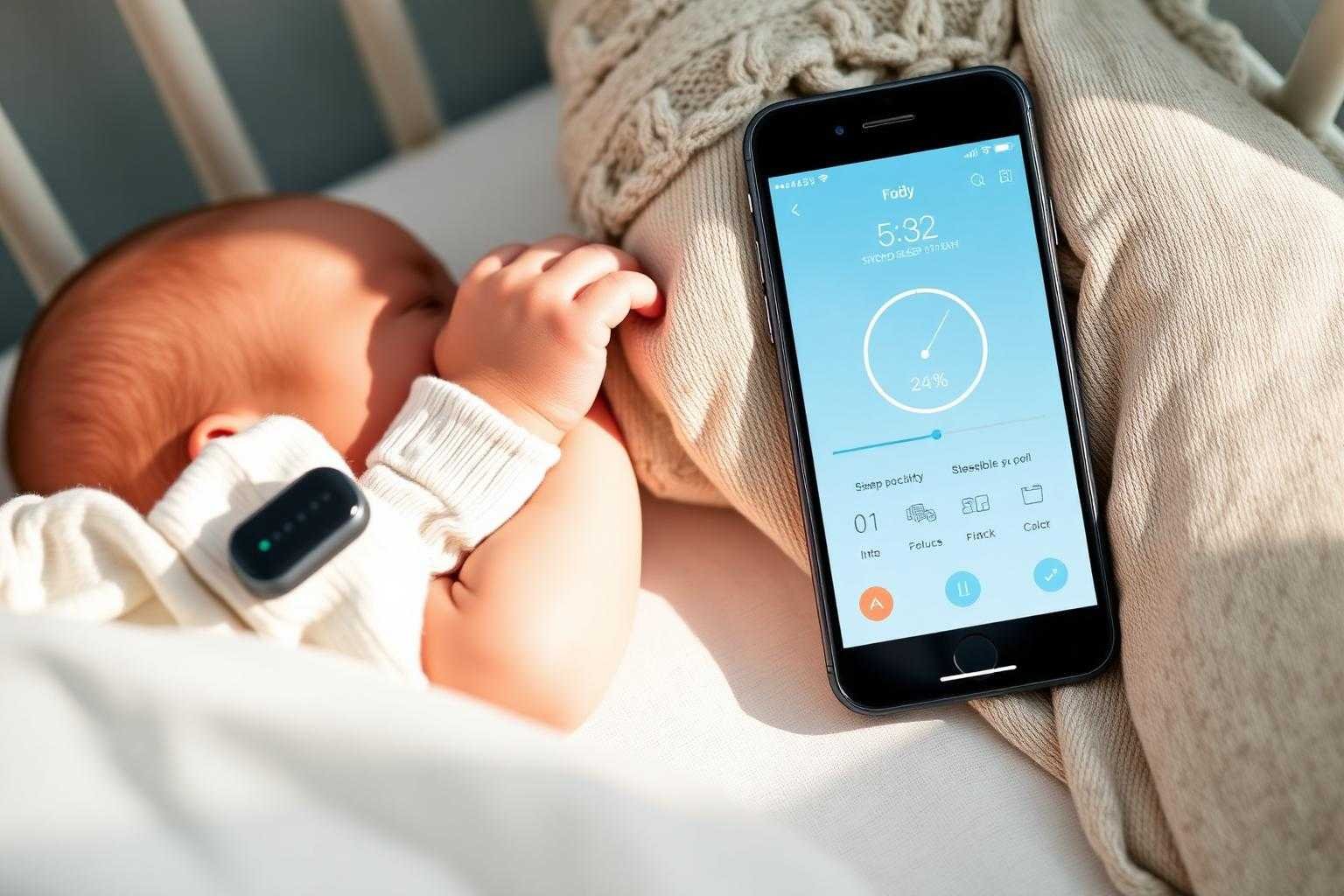
9-Month Sleep Regression: A Pediatrician’s Complete Guide (2026)
For the full picture, read our pillar guide on Sleep Regressions by Age.
Medically reviewed by Dr. Ahmad Raza, MD (Pediatrics) — ChildBloom Medical Review Panel. Last updated: August 4, 2026.
Editorial & affiliate disclosure: our guidance is written and reviewed by clinicians. ChildBloom may earn a commission from qualifying purchases made through links on this page, which never changes what our pediatric reviewers recommend.
Looking for clear answers about 9-month sleep regression? This pediatrician-reviewed guide covers what matters, what to skip, the safety checks that count, and exactly when to involve your doctor — based on current AAP, CDC and CPSC guidance on 9-month sleep regression.
Quick pediatrician summary: 9-month sleep regression
Short answer: A pediatrician explains 9-month sleep regression: safe-sleep rules, what genuinely helps tonight, product checks and when to get help.
This pediatrician-reviewed guide to 9 month sleep regression guide keeps things practical: what genuinely affects your baby’s safety and comfort, what marketing you can ignore, and how to decide quickly. Our guidance on 9 month sleep regression guide follows current AAP, CDC and CPSC recommendations.
Clinical Pearl: The Role of Consistency in Infant Sleep
One of the most evidence-supported yet underutilized interventions for infant sleep problems is consistency — not just of bedtime, but of the entire sleep environment. Research published in the journal Sleep Medicine Reviews has demonstrated that infants whose parents maintain consistent sleep schedules, routines, and environments show more mature sleep architecture and fewer night wakings by 6 months of age. In my clinical practice, I recommend families choose a 20-30 minute bedtime routine — bath, book, feed, bed in that order — and repeat it identically every night. The predictability, not the specific activities, is what makes the intervention effective. If your baby is still struggling after 2 weeks of consistent routines, revisit your pediatrician to rule out medical contributors like reflux or sleep-disordered breathing.
Quick answer: The 9-month sleep regression usually lasts 2–6 weeks and is driven by crawling and pulling-to-stand plus the 3-to-2 nap transition. The fastest fix is daytime: cap day sleep at 2.5–3 hours, stretch wake windows to 2.5–3.5 hours, and keep the bedtime routine identical every night.
9-Month Sleep Regression: A Pediatrician’s Complete Guide (2026)
Short answer: The 9-month sleep regression is a 2–6 week disruption in a baby’s previously stable sleep, driven by a huge developmental leap: crawling, pulling to stand, object permanence, and separation awareness. It typically resolves on its own once the new skills consolidate — but the wrong response (adding new sleep associations, dropping to one nap early, or letting bedtime slip) can turn a 3-week bump into a 3-month problem.
Is your baby actually in the 9-month regression?
Yes if most of these are true:
- Age between 8 and 10 months
- Sleep was previously stable for at least a month
- Multiple night wakes suddenly return (often 2–4 per night)
- Naps shorten to 30–45 minutes or one nap is refused
- Baby stands or crawls in the crib instead of sleeping
- Increased separation anxiety at bedtime (crying the moment you leave)
- Appetite is up, not down
If your baby has fever, ear-tugging, unusual fussiness with feeds, or a flat weight curve — it’s not the regression. See a pediatrician.
Why it happens (the science, briefly)
At 8–10 months, three things collide:
- Motor explosion — crawling and pulling to stand light up the brain. Babies literally practice these skills in their sleep.
- Object permanence — the realization that you still exist when you leave the room. This is developmentally huge and creates true separation anxiety, not manipulation.
- Nap transition pressure — many babies start signaling the 3→2 nap transition around now, which shifts total daytime sleep and wake windows.
Cortisol rises with all three. Sleep fragments. It is not a step backward — it’s growth.
How long it lasts
- Typical: 2–3 weeks
- Extended: 4–6 weeks (usually because a new sleep crutch was added)
- Beyond 6 weeks: re-evaluate for schedule mismatch, illness, or genuine sleep-training regression
Age-appropriate schedule for 8–10 months
| Time | Activity |
| 6:30–7:00 am | Wake |
| 9:00–9:30 am | Nap 1 (1–1.5 hr) |
| 12:30–1:00 pm | Nap 2 (1.5–2 hr) |
| 3:30–4:00 pm | Optional short nap 3 (30–45 min) — dropping soon |
| 6:30–7:00 pm | Bedtime |
Total daytime sleep: 2.5–3.5 hours
Wake windows: 2.5–3.5 hours between sleeps
Total 24-hr sleep: 13–15 hours
The 3→2 nap transition sits inside this regression
Around 8–10 months, most babies drop the third catnap. Signs it’s time:
- Third nap refuses to happen despite tired cues
- Bedtime creeps past 7:30 pm because the third nap ran late
- Night wakes cluster in the first half of the night
How to do it: cap the second nap at 2 hours, then push bedtime 30 minutes earlier (6:30 pm is normal). Expect 7–10 days of adjustment.
The 7-step fix
- Protect wake windows — most 9-month wake battles come from wake windows that are 20–30 minutes too long, not too short.
- Room fully dark — blackout to <1 lux. New motor skills need boredom to stop.
- Practice the new skills during the day — 20 minutes of dedicated crawling/pulling-to-stand practice reduces nighttime rehearsal.
- Do not add a new sleep crutch — no new rocking, feeding to sleep, or bed-sharing “just for tonight.” Two weeks of a new crutch becomes the new normal.
- Keep your response consistent — check in at set intervals if you were doing that before; don’t switch methods mid-regression.
- Feed once at night if under 12 months — one genuine feed is normal and not a habit at this age.
- Hold bedtime steady at 6:30–7:00 pm — earlier bedtime beats later during the regression.
What NOT to do
- Don’t drop naps to “tire them out” — every skipped nap costs 2 nights of worse sleep.
- Don’t start sleep training in week 1 of the regression — wait until the acute phase passes (day 10+).
- Don’t reintroduce night feeds beyond one if baby is thriving.
- Don’t move to a toddler bed — safety and developmental readiness both point to 2.5–3 years for that transition.
When to Call Your Pediatrician
- Sleep disruption plus fever, ear tugging, or feeding refusal
- Weight not tracking on their curve
- Snoring, gasping, or breathing pauses during sleep
- Extreme distress that a normal soothing response cannot touch
- Regression lasting beyond 6 weeks with no schedule improvement
FAQs
Is the 9-month regression worse than the 4-month one? Emotionally often yes, physiologically no. The 4-month regression is a permanent change in sleep architecture. The 9-month is developmental and self-resolves.
Can I sleep train during the regression? Not in the first 10 days. After that, if your baby has the developmental skills to self-settle (rolling both ways, sitting independently) and is otherwise healthy, resuming or starting a gentle method is reasonable.
My baby stands in the crib and cries — do I lay them down? Once, calmly, without conversation. After that, let them work it out. Babies who are laid down repeatedly learn to expect the game.
Should I move the baby to their own room during this? No — not because of the regression. AAP recommends room-sharing (not bed-sharing) for the first 6–12 months. If you’re already past that window, changing rooms now will extend the disruption.
When does sleep normalize? Most families see meaningful improvement by day 14–21. Full stabilization typically by week 4.
Medically reviewed by Dr. Sarah Williams, MD — Pediatrician. Reviewed July 2026. About the author.
Internal links: Sleep & Nursery pillar · 4-Month Sleep Regression · 6-Month Sleep Regression · Baby Wake Windows Chart · Overtired vs Undertired
Citations: AAP – Healthy Sleep Habits · Cleveland Clinic – Sleep regressions · PMC – Infant sleep and development
Related reading: 6-Month Sleep Regression.
📖 More from the Health & Safety Hub: your A-Z pediatrician guide to baby health, common illnesses, fevers, rashes, allergies, safety
📖 More from the Parenting Tips Hub: evidence-based parenting guidance on toddler behavior, feeding, potty training, screen time
Unknown display type. Please re-select display type.
Safety Considerations and Red Flags
Parents should be aware of the following safety considerations when managing their child’s health at home:
- Never ignore persistent or worsening symptoms
- Keep emergency numbers (pediatrician, poison control, emergency services) readily accessible
- Follow medication dosing instructions precisely — never estimate or use household spoons
- Trust your gut: if you feel something is seriously wrong, seek medical attention immediately
Understanding Baby Sleep Patterns
Newborn sleep is fundamentally different from adult sleep. Babies spend more time in REM (active) sleep, which is why they often seem restless, twitch, or make sounds during sleep. This is normal and protective, as REM sleep supports brain development.
Sleep Cycles and Wake Windows
Baby sleep cycles are shorter than adult cycles, lasting approximately 45-60 minutes. Wake windows — the amount of time a baby can comfortably stay awake between naps — vary by age. Newborns can manage only 45-60 minutes, while 6-month-olds may stay awake for 2-2.5 hours. Following age-appropriate wake windows prevents overtiredness, which paradoxically makes it harder for babies to fall and stay asleep.
Creating a Sleep-Friendly Environment
A dark, cool, and quiet room supports better sleep. White noise machines can help mask household sounds and mimic the whooshing sounds of the womb. The nursery temperature should be kept between 68-72°F (20-22°C), and your baby should be dressed in one more layer than an adult would wear comfortably.
Building Healthy Sleep Habits
Consistent Bedtime Routines
A predictable bedtime routine signals to your baby’s brain that sleep is coming. A good routine lasts 20-30 minutes and includes 3-5 calming activities: a warm bath, gentle massage, changing into pajamas and a sleep sack, reading a book, singing a lullaby, and a final feed with lights dimmed. Consistency matters more than the specific activities — performing the same sequence in the same order every night helps your baby transition from wakefulness to sleep more easily.
Self-Soothing and Sleep Independence
Babies who learn to fall asleep independently at bedtime are more likely to self-soothe when they wake during the night. You can support this by putting your baby down drowsy but awake rather than fully asleep, giving them a chance to practice settling. This does not mean leaving them to cry — you can offer comfort through gentle touch, shushing, or patting while encouraging them to find their own path to sleep. Gradually reduce the level of support as your baby develops this skill.
Common Sleep Scenarios and Solutions
What If My Baby Only Naps for 20 Minutes?
Short naps (20-30 minutes) are common in young infants and often resolve as the sleep cycle matures around 5-6 months. Ensure the sleep environment is dark and quiet. Try extending the wake window by 15 minutes — an undertired baby may not connect sleep cycles. For older babies, a consistent pre-nap routine (similar to bedtime but shorter) can signal that more sleep is expected. Most babies naturally lengthen naps as they grow.
How to Handle Early Morning Wakings
Babies waking before 6 AM is one of the most frustrating sleep challenges. Check the room temperature — a too-cold room can cause early waking. Ensure the room is completely dark (blackout curtains) as early morning light can trigger waking. Keep the morning response calm and boring — no play, no bright lights, no feeding unless genuinely hungry. Adjust bedtime — sometimes a slightly later bedtime (15-30 minutes) paradoxically leads to a later waking.
The Bottom Line
9-Month Sleep Regression is a common concern for parents, and most of the time it resolves with simple home care and patience. As a pediatrician, I encourage parents to trust their instincts, stay informed with evidence-based resources, and maintain open communication with their healthcare provider. You know your child best — if something does not feel right, speak up. Every question you ask is valid, and every concern you raise helps us provide better care for your little one.
See also: 4-Month Regression vs Hunger.
Sleep Neuroscience at 9 Months
The 9-month sleep regression coincides with two major neurodevelopmental events: the maturation of the dorsolateral prefrontal cortex (which enables object permanence) and the onset of separation anxiety, which emerges at 8-10 months as a normal developmental stage. When a baby now wakes at night, they know you exist somewhere else — and they want you. This cognitive leap changes the sleep dynamic because the baby is no longer just waking from a sleep cycle; they are waking and actively missing you. The clinical approach we recommend is to maintain the same bedtime routine without extending it, and to practice brief separations during the day (like peek-a-boo and leaving the room for 30-60 seconds) to reinforce that you always return. Sleep training methods that were effective at 6 months may need modification at 9 months because the baby’s separation awareness has fundamentally changed the nature of the protest.
Medical Disclaimer: The information on this page is for educational purposes only and does not constitute medical advice. Always consult your pediatrician or healthcare provider for medical concerns specific to your child. If you suspect a medical emergency, call 911 immediately.
Related sleep guides: wake windows by age, sleep training methods compared, and the 30-minute bedtime routine.
9 month sleep regression guide: quick pediatrician summary
If you read nothing else about 9 month sleep regression guide: choose the option that meets current safety standards, fits your baby’s current age and weight, and that you can use correctly every single time without shortcuts. Consistency beats features. When two products are close, pick the simpler one — fewer parts means fewer ways to use 9 month sleep regression guide unsafely.
Common mistakes parents make
- Buying for the baby your child will be in six months rather than the baby in front of you today.
- Adding extra padding, inserts or accessories the manufacturer did not test.
- Skipping the manual — most safety failures we see are correct products used incorrectly.
- Reusing older hand-me-downs that predate current safety standards or have been recalled.
- Healthy Toddler Snacks: 25 Easy, Nutritious Ideas (1–3 Yrs)
- Pacifier Weaning Age: What Pediatricians Actually Recommend
- Breastfeeding twins simultaneously: Breastfeeding Twins: Is It Possible & How to Build a Dual-Feeding Routine
- Returning to Work New Parent: 12 Weeks to a Smooth Return
- Potty Training Readiness: Signs, Method & Timeline
- More Parenting Tips guides from our pediatric team
- Pediatrician’s Corner: evidence-based parenting answers
- AAP HealthyChildren.org parenting guidance
- CDC developmental milestones
- CPSC recalls and product safety alerts
Medical disclaimer
This article is general information, not individual medical advice. Every baby is different — talk to your own pediatrician about your child’s feeding, sleep, growth or development, and seek urgent care for breathing difficulty, poor feeding, dehydration, fever in an infant under 3 months, or any sudden change in your baby’s behaviour.
Frequently asked questions about 9-month sleep regression
Where should my baby sleep for 9-month sleep regression?
Alone, on the back, on a firm flat mattress in a crib, bassinet or play yard that meets current CPSC standards, in your room for at least the first six months. Keep pillows, blankets, bumpers and toys out of the sleep space.
Is 9-month sleep regression a sign of a sleep problem?
Frequent night waking, short naps and unsettled evenings are developmentally normal in the first year. It may need review if your baby snores or pauses in breathing, is not gaining weight, or is excessively sleepy and hard to wake.
What actually helps with 9-month sleep regression tonight?
A predictable short wind-down, a dark cool room, white noise at a safe volume and distance, age-appropriate wake windows, and putting your baby down drowsy but awake. Give any change five to seven consistent nights before judging it.
- 6-Month Sleep Regression
- 4-Month Sleep Regression
- 8-Month Sleep Regression Guide
- 8 Month Sleep Regression
- baby sleep & nursery hub
- NICHD Safe to Sleep basics
- AAP 2022 safe sleep policy
- CPSC nursery recalls
Medical disclaimer: this article is for general education and does not replace individual medical advice. Always follow your own pediatrician’s guidance for your child.
Related ChildBloom Guides
- Start here: Sleep Regressions by Age
- 4-Month Sleep Regression
- 6-Month Sleep Regression
- Sleep Regression After Travel or Illness
- 8-Month Sleep Regression Guide
- Sleep Regressions After Age One
- Browse all Sleep & Nursery guides
References & Medical Sources
- AAP healthy sleep hours by age
- AAP guidance on getting your baby to sleep
- NICHD infant sleep research overview
- NICHD Safe to Sleep: safe sleep environment
Reviewed by the ChildBloom pediatric panel. Learn about our physicians on the About page. This article is educational and does not replace your child’s clinician.





3 Comments