Preparing Older Siblings for a New Baby: By Age
Preparing Older Siblings for a New Baby: What Actually Works by Age
Practical, evidence-informed scripts and activities to help toddlers through preteens adjust when a new baby arrives.
Looking for expert guidance on prepare older sibling for new baby? This comprehensive guide covers everything you need to know, from understanding the basics to making informed decisions for your family.
The First Encounter Sets the Tone
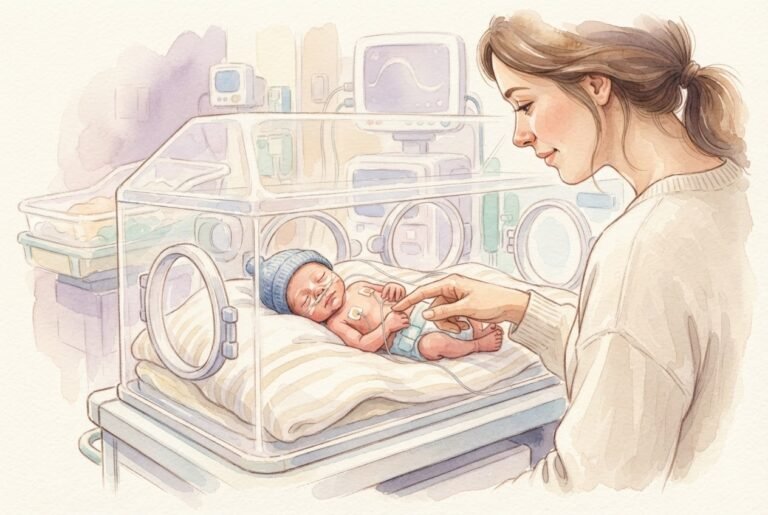
My three-year-old nephew walked into the hospital room, looked at the swaddled bundle in my arms, and asked if he could hold his old fire truck instead. No tears, no jealousy in that moment, just a quiet resetting of what mattered to him. That response didn’t happen by accident. His parents had spent the previous six weeks preparing him with exactly the kind of concrete, age-appropriate practice this article covers.
Most parents want to prepare older sibling for new baby but rely on a single conversation near the due date. That rarely works, and it sets up both the child and the parent for a harder transition than necessary. What follows are age-specific strategies drawn from developmental pediatrics and family psychology research, organized so you can start early enough to actually matter.
Toddlers (1-2 Years): Short Words, Concrete Actions
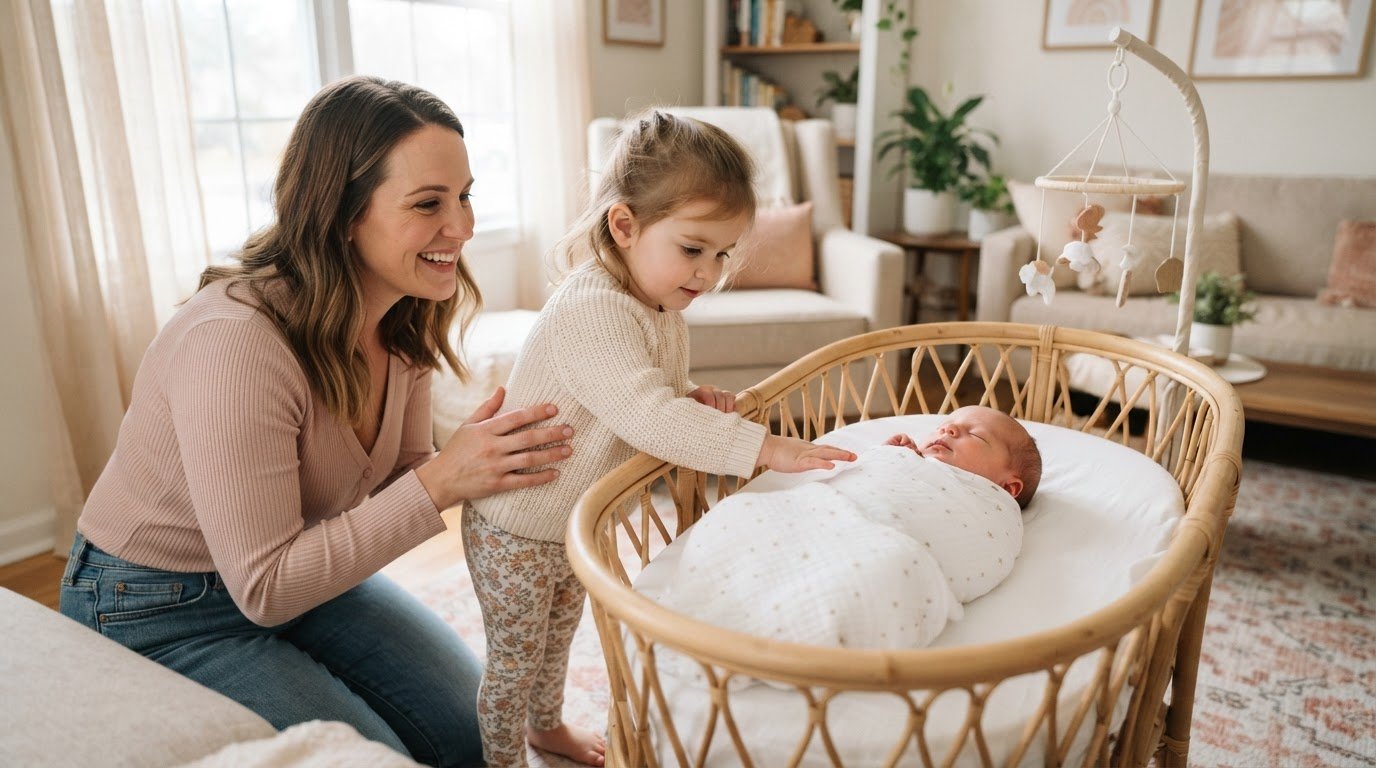
Toddlers live entirely in the present. They cannot project into next month, and they understand far more language than they can produce. Your job here is not to explain the concept of a sibling. Your job is to let them practice with what they can touch and see.
Scripts That Work
Stick to declarative sentences under five words. Say them while the child is engaged with something they enjoy, not while you are asking them to pay attention to you.
- “Baby cries. You had cries too.” (while looking at baby photos of your toddler)
- “Gentle hands.” (spoken during practice with a doll, not as a correction in the moment)
- “Baby sleeps a lot. You play.” (normalizing what will feel strange to a toddler accustomed to your full availability)
Notice what these scripts do not do. They do not promise the baby will be a playmate. They do not ask the toddler to be a “big kid.” They state facts about the baby and about the toddler’s own experience, which is the only framework that holds at this age.
Activities with Purpose
Doll practice. Get a cheap baby doll and let your toddler hold it, feed it with a toy bottle, and push it in a stroller. You are not teaching nurturing. You are normalizing the sight and handling of a small infant before one enters the house.
Photo book of babies. Collect three or four images of babies at different ages. Read it like any other picture book. Point and name: “nose,” “feet,” “sleeping.” The goal is familiarity, not narrative.
Sound exposure. Play audio of a baby crying at low volume during a calm activity, like building blocks. This seems counterintuitive, but toddlers who have heard a newborn cry before meeting one are measurably less startled by the real thing in the hospital or at home. Start at very low volume and never pair it with distress.
Preschoolers (3-4 Years): Questions, Roles, and Honesty
Three and four year olds have a strong sense of fairness and an emerging grasp of sequence. They can understand “after the baby comes” even if they cannot tell you what month it is. They also ask relentless questions, and how you answer those questions matters more than any single activity.
Answering the Hard Questions
Preschoolers will ask where the baby comes from, whether the baby will sleep in their bed, and if you will still pick them up. Answer the question asked, not the question you think they are asking.
| Child’s Question | Direct Answer | What to Avoid |
|---|---|---|
| “Where was I when you were pregnant?” | “You were not born yet. We waited for you.” | Long explanations about conception or timelines they cannot map |
| “Will the baby sleep in my room?” | “The baby will sleep near our bed. Your room stays yours.” | Vague reassurances like “Don’t worry about it” |
| “Do you love the baby more?” | “I love you both. My love doesn’t run out.” | Comparisons or scorekeeping about who you hold more |
The last row deserves emphasis. Research on sibling attachment consistently finds that the quality of the parent-child relationship after the birth is more predictive of sibling adjustment than any preparation activity you do during pregnancy. Saying “my love doesn’t run out” is not a platitude. It is the single most protective statement you can repeat, and you will repeat it dozens of times in the first month.
Activities That Build Anticipation Without Pressure
Help set up the baby space. Let the preschooler choose one item for the baby’s area, like a small blanket or a mobile. Keep it to one item. Giving too many choices at this age creates a feeling of obligation rather than contribution.
Read one book repeatedly. Pick a sibling-themed book and read it often enough that the child can “read” it back to you. The American Academy of Pediatrics lists sibling preparation among its recommended talking points for expectant families during the third trimester. The book becomes a script the child internalizes.
Practice waiting. Preschoolers struggle with delayed gratification. Practice small waits during play: “I will be there in two minutes. Can you build one more block while you wait?” This is not about training patience for the baby’s sake. It is about giving the child a lived experience of waiting and then being attended to, which is exactly what will happen when you are feeding or changing the newborn.
School-Age Children (5-8 Years): Ownership and Patience
Children in this range understand time, cause and effect, and other people’s feelings, though they still center their own experience. They can genuinely help with a baby, which is both an opportunity and a risk. The goal is to let them contribute without turning them into a secondary caregiver.
Scripts That Respect Their Capability
School-age children respond to specific language about what they can do and what is not their job.
- “You can hand me a diaper when I ask. You do not need to change the diaper yourself.”
- “If the baby is crying and I am not in the room, come get me. Do not try to fix it.”
- “You are the oldest. That means you get to do some things the baby cannot, like stay up later and pick the movie.”
That last script is more important than it looks. A five or six year old who feels that the baby has taken something away, even attention they were not using, will act out. Giving them a tangible privilege associated with being older reinforces that the new baby does not erase their position.
Activities That Give Real Responsibility
Create a “big kid” box. Fill a small container with special items that only the older child can use: a specific snack, a sticker pad, a set of markers. Explain that when you are feeding the baby and need a few minutes, they can use the box. This is not a bribe. It is a planned tool, and children this age do much better when they know the tool exists in advance rather than receiving it as a surprise during a stressful moment.
Tour the hospital or birth center. If the facility offers a sibling tour, take it. Children who have seen the room and met a staff member before the birth day report less anxiety during the separation. If a tour is not available, show photos of the building and describe what will happen step by step, including who will pick them up and where they will sleep the first night.
Write a letter to the baby. Have the child draw or write a message for the baby to “read when they are older.” This reframes the baby as a future person the child will have a relationship with, which helps counteract the very real loss they may feel in the present.
Preteens and Tweens (9-12+): Respect the Loss
This age group is frequently overlooked in sibling preparation. Parents assume that a ten year old can handle it because they can reason. In reality, preteens experience a specific kind of disruption: their household routines change, their parents are exhausted, and they may be asked to take on more chores or babysitting than they expected. Many also feel embarrassed about still needing comfort when their parents are suddenly unavailable.
Honest Conversations, Not Pep Talks
Talk to preteens directly. Tell them what will change, what will stay the same, and what you need from them.
“For the first few weeks, I will be more tired than usual. Dinner might come from a box sometimes. That is not your fault, and it is temporary. I still want to hear about your day, and I will make time for that.”
“You might feel annoyed by the baby sometimes. That is normal. You can tell me you feel that way without me being upset with you.”
These scripts do two things: they name the hard feelings the child may already be suppressing, and they give the child permission to express those feelings to you. Suppressed resentment in preteens often comes out as withdrawal or irritability toward the baby months later.
Activities That Preserve Their Identity
Protect one activity. Identify one existing commitment or hobby that remains non-negotiable, whether it is a weekly sport, a playdate with a specific friend, or a regular outing with one parent. When everything else shifts, one fixed point gives the preteen a sense of stability.
Involve them in planning, not executing. Ask for their input on a real decision: what color to paint the nursery, which stroller to buy, what to name the baby if you have not already decided. Input is not the same as responsibility. You are asking their opinion, not assigning them a task.
Give them a private space. If possible, designate a corner of their room or another area of the house that is entirely theirs and off limits to the baby and to visitors. A preteen’s need for privacy intensifies during times of household stress, and a physical space they control is one of the simplest supports you can offer.
Special Circumstances: Big Age Gaps and Temperament Differences
Not all sibling transitions fit the typical pattern. A twelve year old gaining a newborn is a different dynamic than a two year old doing the same. Similarly, a child who has always been slow to warm up to new people will need a different preparation than one who runs toward every stranger.
For large age gaps, the older child may feel more disruption than a younger one because they have had undivided parental attention for a longer period and have more routines to lose. The preparation strategies above for preteens apply here, with extra emphasis on naming the specific changes to daily life, not just the arrival of the baby.
For temperament differences, adjust the timeline rather than the content. A cautious child benefits from starting preparation earlier, repeating it more often, and moving at a slower pace through each activity. A child who adapts quickly may not need as much lead time, but will still benefit from the same concrete activities. The AAP’s guidance on sibling adjustment notes that a child’s existing temperament is one of the strongest predictors of how they respond to a new sibling, so tailoring your approach to who your child already are is more important than following any rigid schedule.
One more circumstance worth naming: if your older child has a developmental delay or a chronic health condition, speak with their pediatrician or specialist before the birth. They can help you modify these scripts and activities to match your child’s specific communication and processing level.
After the Baby Arrives: What Shifts and What Doesn’t
Preparation during pregnancy sets the stage, but the first six weeks at home are when the real adjustment happens. A few practices make that period smoother.
Keep the first meeting brief and low pressure. Let the older child approach the baby on their own terms. Do not hand them the baby and ask them to hold it. Say the baby is here, and let curiosity guide what happens next.
Protect daily one-on-one time with the older child. Even ten minutes of focused attention, without the phone and without the baby in the room, reduces regressive behaviors and acting out in the weeks that follow. This is not always possible with a newborn’s feeding schedule, and that is acceptable. Aim for consistency over duration.
Acknowledge regression without shaming it. It is common for a previously potty-trained three year old to start having accidents, or for a five year old to ask for a bottle again. This is not a failure of preparation. It is a developmental response to stress. Respond calmly, address the immediate need, and return to expectations when the child is regulated again.
When a Pediatrician Should Be Part of the Conversation
Most sibling adjustment is normal and temporary. Some signs warrant a call to your pediatrician:
- Persistent aggression toward the baby that does not respond to close supervision and redirection
- Regression lasting more than six weeks without any forward progress
- Sleep disruption so severe that the child cannot function during the day
- Expressions of wanting to hurt themselves or the baby
These signs do not mean you failed as a parent. They mean your child needs additional support, and a pediatrician can help determine whether the response is within the range of normal adjustment or warrants a referral to a child psychologist or developmental specialist.
Conclusion
The most effective way to prepare an older sibling for a new baby is to match the preparation to the child’s developmental stage, start early enough for repetition, and protect the parent-child relationship after the birth with the same energy you put into the preparation. Scripts and activities are useful tools. They are not substitutes for the ongoing work of making an older child feel secure in a household that has permanently changed. Start where your child is, not where you wish they were, and let that guide every conversation between now and the day the baby comes home.
Medical Disclaimer: This article is for informational purposes only and does not constitute medical advice. Always consult your pediatrician with any concerns about your child’s adjustment or behavior.
Frequently Asked Questions
How far in advance should I start preparing my older child?
Begin age-specific preparation two to three months before the due date for children over three. For toddlers, start in the final four to six weeks. Starting too early overwhelms younger children, while starting too late gives older children too little time to process the change.
What if my child says they do not want a new sibling?
That response is normal at every age. Do not argue with the feeling. Acknowledge it: “It sounds like things feel good the way they are.” Continue with age-specific activities and avoid pressuring enthusiasm. Most children adjust once the baby is a real presence rather than an abstract idea.
Should the older child visit the hospital after the birth?
If the facility allows it and your child is comfortable with new environments, a brief visit can help. Keep it short, have the parent who is not holding the baby greet the child first, and avoid forcing physical contact with the newborn. Some children do better waiting until the parent and baby come home.
Is it normal for my older child to act like a baby after the birth?
Yes. Regression in speech, toileting, or sleep habits is one of the most common responses to a new sibling. It typically resolves within a few weeks to a few months if met with patience and without punishment. If it persists beyond six weeks, consult your pediatrician.
Can my older child help with the baby safely?
Supervised help, like handing you a diaper or singing to the baby, is appropriate for school-age children and older. No child should be left alone to feed, bathe, or soothe a crying infant. Clarify this boundary explicitly so the child knows exactly where helpful participation ends.
Related Reading on ChildBloom
- Postpartum sleep strategies for parents
- Choosing a postpartum doula
- Maternity leave and finances checklist