First Steps to Bond After NICU Separation
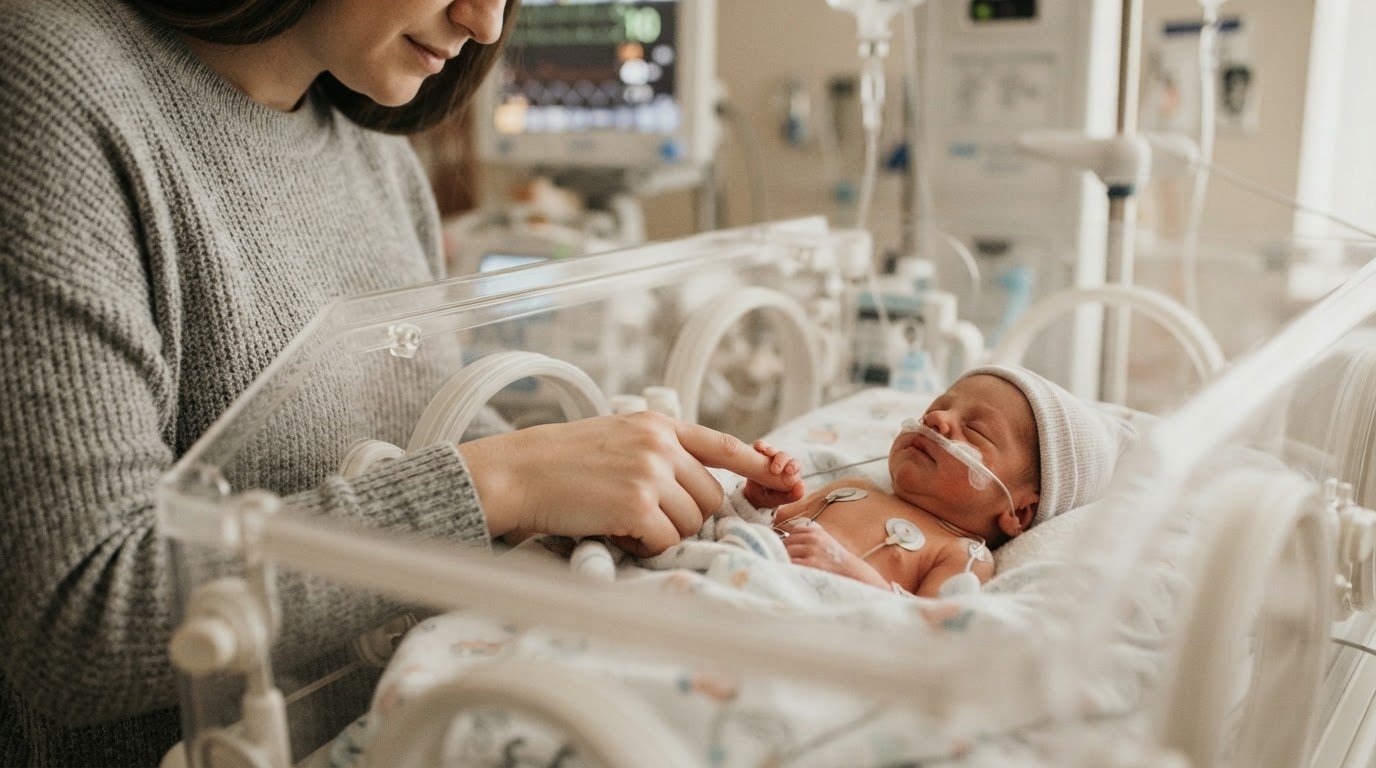
Bonding after separation at birth is possible with practical steps. Learn how to connect with your NICU baby through touch, voice, and presence. Looking for expert guidance on bonding after separation at birth? This comprehensive guide covers everything you need to know, from understanding the basics to making informed decisions for your family. Bonding after separation at birth is one of the most common sources of distress for new parents whose babies are admitted to the NICU. Many parents describe a specific kind of grief, a feeling that something was stolen from them in the first hours. That feeling is normal. It is also not the end of the story. Research on early attachment shows that the brain remains highly responsive to bonding cues well beyond the first hour after birth. While immediate skin-to-skin contact has measurable benefits for temperature regulation and breastfeeding initiation, parents who miss that window are not consoled to hear “it’s never too late.” They need practical steps for today. That is what this article offers. When your baby is in an incubator, the bonding process does not stop. It shifts. Instead of holding your baby against your chest, you might start by placing a hand inside the incubator. Instead of nursing, you might pump milk while sitting beside the warmer. The core of bonding, the development of a specific, two-directional attachment between you and your child, does not require a specific room, a specific hour, or a specific procedure. It requires repeated, responsive, and meaningful interaction over time. A common misconception is that NICU babies are too fragile to bond. The opposite is true. Even very premature infants show distinct responses to their parents’ voices, touch, and smell. They are already recognizing you. Your job is to find the entry points the medical team will allow and use them consistently. Kangaroo mother care, which involves holding a diaper-clothed baby skin-to-skin against a parent’s chest, is the single most well-supported intervention for improving bonding after separation at birth. The World Health Organization recommends it for all newborns, and the American Academy of Pediatrics includes it in its guidelines for NICU family-centered care. The benefits extend beyond bonding. Kangaroo care stabilizes heart rate, improves oxygen saturation, supports temperature regulation, and increases breastfeeding success rates. Many parents are surprised to learn that kangaroo care is often possible even for babies on ventilators or with multiple lines and monitors. The NICU staff can help you safely transfer your baby, managing the tubing and wires so you can focus on the experience rather than the logistics. If your baby is too unstable for full kangaroo care today, ask about the criteria for starting. Understanding the specific thresholds your baby needs to meet gives you a concrete goal rather than an indefinite wait. The experience itself is worth preparing for. During kangaroo care, many babies become visibly calmer. Their breathing steadies. Their hands may curl against your chest. These are signs that your baby recognizes you, that your body is regulating theirs. This is not incidental. This is the physiological foundation of attachment. Start with the sessions the team recommends, even if they feel short. Thirty minutes of skin-to-skin contact can have measurable effects on both parent and infant stress markers. As your baby stabilizes, sessions typically lengthen. The goal is not marathon sessions from day one. The goal is consistency. One session per day, at roughly the same time, creates a rhythm your baby begins to expect. There are days when kangaroo care is not possible. Your baby may be too unstable, recovering from a procedure, or requiring minimal handling. Bonding after separation at birth does not wait for the perfect moment. You can build connection through smaller, less dramatic actions that matter just as much in the long run. Containment holding. If your baby cannot be picked up, ask a nurse to show you containment holding, which means placing one hand gently on your baby’s head and the other on their feet or bottom, holding them in a flexed position without lifting. This type of touch provides security and has been associated with fewer stress behaviors in preterm infants. It is often possible even with multiple lines in place. Your voice. Babies in the NICUs where family-centered care is practiced show different patterns of auditory cortex activation in response to their parents’ voices compared to unfamiliar voices. Talk to your baby. Read aloud. Sing if you are comfortable. The content matters less than the consistency of the specific sound your baby is learning to associate with you. A parent who reads the same short book each evening is not just passing time. They are building a recognizable sensory anchor for their child. Your scent. Place a cloth that carries your scent near your baby’s incubator. Some NICUs encourage parents to leave a worn shirt or small cloth inside the incubator so the baby has access to maternal scent even when the parent is not present. This is a small step, but olfactory recognition is one of the earliest forms of infant attachment. When your baby is stable enough for brief handling, even one minute of gentle touch while the nurse manages care tasks counts. You are not competing with the equipment. You are adding a layer to the care that only you can provide. Feeding is one of the most powerful bonding rituals available to new parents, but in the NICU, the path to feeding often looks nothing like what you expected. Bonding after separation at birth requires adjusting your definition of feeding success in the early days. If you plan to breastfeed, begin pumping as soon as your medical team clears you, ideally within the first six hours. The act of providing breast milk, even through a tube, gives you a specific role that no one else can fill. Write your baby’s name and medical record number on every milk label. This is your contribution, and it matters. When your baby begins oral feeds, the experience may involve slow, effortful sucking with frequent pauses. Preterm babies fatigue quickly. You might spend twenty minutes at the breast or bottle for what looks like a few milliliters. This is normal. It is not failure. Your baby is learning, and your patient presence during that learning is itself a bonding act. Skin-to-skin contact during feeding, even partial skin contact, helps regulate the baby’s heart rate and breathing. If kangaroo care during a full feed is too much for your baby right now, ask about doing skin-to-skin before or after the feed, so your body is the starting or ending point of the experience. If you are using formula or donor milk, the bonding opportunity is exactly the same. The act of feeding is not about the substance. It is about the specific, repeated, responsive interaction between you and your baby around a biological need. Hold your baby during bottle feeds. Maintain eye contact. Pause when they pause. These small choices are the mechanics of attachment. One of the most important things you can do during a NICU stay is learn to read your baby’s specific behavioral cues. This skill directly supports bonding after separation at birth because it allows you to respond to your baby’s needs accurately, which over time builds trust between you. NICU babies, especially those born prematurely, communicate stress and stability through subtle signals that are easy to miss if no one points them out. Ask a nurse or a developmental specialist to walk you through what to look for in your baby specifically. Common stress cues include color changes, hiccups, sneezing, finger splaying, arching, and gaze aversion. Common stability cues include steady color, relaxed hands, flexed limbs, and sustained eye contact. Learning these cues takes time. It is normal to feel like you cannot read your baby at first. NICU staff who are trained in developmental care can help you distinguish between a baby who needs stimulation and a baby who needs quiet. When you can accurately identify what your baby is telling you, you are no longer a passive observer. You become the person who knows this baby best. That shift is the core of bonding. As you learn your baby’s cues, share your observations with the care team. Noticing that your baby calms during a specific type of touch, or that a certain time of day brings more alertness, gives the nurses valuable information and reinforces your role as your baby’s primary advocate. This is not a suggestion. It is a central part of family-centered NICU care as described in current AAP guidelines. The developmental trajectory of a NICU baby is not linear. There will be days of clear progress and days that feel like setbacks. Learning to read your cues helps you ride those fluctuations without losing confidence in your ability to connect. A baby who is too tired for kangaroo care today may be alert enough for it tomorrow. Your willingness to observe, adjust, and try again is itself an expression of attachment. Bonding after separation at birth is not only about what you do. It is also about what you feel. And what many parents feel in the NICU is a complicated mixture of grief, fear, guilt, and sometimes numbness. These feelings are not a sign that something is wrong with you as a parent. They are a predictable response to a situation that no one prepares for. Some parents experience symptoms consistent with post-traumatic stress after a complicated birth and NICU admission. Intrusive thoughts about the birth, difficulty sleeping even when physically able, emotional numbness, and hypervigilance about the monitors are all documented responses in NICU parent populations. If you recognize these patterns in yourself, seek support. Many NICUs have psychologists or social workers embedded in the team. Ask. If your NICU does not, ask your obstetrician or primary care provider for a referral. Early intervention for parental mental health difficulties after a traumatic birth is associated with better bonding outcomes over time. This is not a secondary concern. Your emotional state directly affects your baby’s stress regulation through the same channels that support bonding. Talking to other NICU parents, whether through a formal support group or informally in the NICU waiting room, can also help. Other parents understand the specific flavor of NICU grief in a way that well-meaning friends outside the unit sometimes cannot. You are not required to be grateful every day. You are not required to stay positive. You are required to show up as honestly as you can, and that honesty includes admitting when the experience is heavier than you expected. Some parents feel guilty for not bonding with their baby immediately. If that is you, hear this: bonding is not a single moment. It is a process that unfolds over weeks and months. The fact that you are reading this article, that you are looking for ways to connect, means you are already doing the work. The love may feel different than you imagined in these early days. That is allowed. It will grow. One of the most practical frameworks for bonding after separation at birth is to think in terms of routines rather than events. A single kangaroo care session matters. But a pattern of daily sessions, combined with consistent voice interaction, scent exposure, and responsive touch, creates something stronger than any individual moment. Create a daily ritual that belongs to you and your baby. It might be reading the same short book every morning. It might be a specific way you place your hand on your baby’s back during containment holding. It might be humming the same song while you pump. The content is not important. The consistency is. Repetition teaches your baby that this person, this voice, this touch, shows up reliably. That reliability is the foundation of secure attachment. If you cannot be at the NICU every day, and many parents cannot due to other children, work, or physical recovery, structure the time you can be there. Spend the first fifteen minutes of each visit doing skin-to-skin. Spend the next fifteen reading aloud. Spend the last fifteen observing and learning your baby’s cues. Having a plan reduces the helplessness that can flood in when you walk through the NICU doors. Document the small moments. Keep a journal of what you noticed, what your baby did, what you tried. Over weeks, this record shows you a trajectory of connection that is hard to see day to day. On a difficult afternoon, reading back through even a week of entries often reveals more progress than it felt like in the moment. Bonding after separation at birth is not only a maternal process. Partners, whether spouses, co-parents, or other support people, have an equally important role, and they often struggle to find it in the NICU environment. Encourage your partner to do skin-to-skin contact. Kangaroo care with a non-birthing parent provides the same physiological benefits for the baby, including temperature regulation and heart rate stabilization, and it builds the partner’s confidence as a caregiver. The earlier a partner holds their baby skin-to-skin, the stronger the reported attachment. Partners can also take on specific roles that reinforce bonding. Being the person who updates the family, who brings the scented cloth, who reads aloud when you need to rest, or who asks the nurses the questions you forgot to ask. These tasks are not filler. They are active contributions to the care environment your baby is living in. Open communication about the emotional weight of the NICU experience is just as important for partners. If one person is struggling more than the other, name it without judgment. Seek support together if needed. The strength of the parental relationship is itself a predictor of infant bonding outcomes, and protecting that relationship during a NICU stay is part of the work. Bonding after separation at birth does not follow the script most parents expect. It is built in small, repeated actions: a hand inside an incubator, a voice reading the same book, a daily kangaroo care session, a parent learning to read their baby’s specific cues. The NICU environment makes bonding harder in some ways, but it does not make it impossible. Your baby already knows you. Your presence, consistent and responsive, is what turns that recognition into a secure attachment over time. Keep showing up. The bond is forming in every visit, every touch, every moment you choose to stay close. Medical Disclaimer: This article is for informational purposes only and does not constitute medical advice. Always consult your pediatrician or NICU care team with specific questions about your baby’s condition, developmental needs, or your own mental health. There is no cutoff. Research on attachment shows that the brain remains responsive to bonding cues throughout the first year of life. While the immediate postpartum period offers unique opportunities, parents who experience separation can and do form secure attachments with their babies. Consistency over time matters more than the timing of the first contact. Even in the most restricted cases, parents can provide a familiar scent through a cloth placed near the incubator and a familiar voice through speaking or reading aloud. These sensory inputs are processed by the baby and contribute to recognition. As your baby stabilizes, the team will expand what is possible. Ask daily about what you can do. Yes. Emotional numbness and disconnection are common responses to the stress, fear, and grief that accompany a complicated birth and NICU admission. These feelings do not mean you love your baby less. They mean you are under enormous strain. If the numbness persists or is accompanied by intrusive thoughts, difficulty sleeping, or an inability to function, speak with a mental health professional who has experience with NICU parents. Bonding is rarely absent entirely. It is more commonly slower or harder to feel in the early weeks. If weeks pass and you continue to feel no emotional response toward your baby, or if you are avoiding the NICU, withdrawing from care, or feeling persistent resentment or distress when you do visit, bring this up with your pediatrician or a perinatal mental health specialist. Early support can change the trajectory.First Steps to Bond After NICU Separation
Why the First Hours Go Differently
Kangaroo Care and Skin-to-Skin Contact
Can’t Hold Your Baby Yet? Start Here
Feeding as a Bonding Opportunity
Reading the Signals Your Baby Gives You
The Emotional Weight Is Real
Small, Repeated Actions Build the Bond
What Your Partner Can Do
Conclusion
Frequently Asked Questions
How long after birth can I still form a strong bond with my baby?
What if my baby is too sick for any touching or holding?
Is it normal to feel emotionally disconnected from my NICU baby?
When should I worry that bonding is not happening?