Bilirubin Risk Assessment (Nomogram)
.cb-tool-shell{max-width:680px!important;margin:32px auto!important;padding:32px!important;background:#fff!important;border:1px solid #e5e1d8!important;border-radius:20px!important;box-shadow:0 10px 30px rgba(45,45,45,.06)!important;font-family:Inter,Arial,sans-serif!important;color:#2d2d2d!important;box-sizing:border-box!important}.cb-tool-shell h3{font-family:”Playfair Display”,Georgia,serif!important;color:#2d2d2d!important}.cb-tool-shell input,.cb-tool-shell select{box-sizing:border-box!important;border:1px solid #e5e1d8!important;border-radius:10px!important;background:#f9f7f2!important;padding:12px 14px!important;min-height:44px!important}.cb-tool-shell input:focus,.cb-tool-shell select:focus{outline:none!important;border-color:#b8860b!important;box-shadow:0 0 0 4px rgba(184,134,11,.12)!important}.cb-tool-shell button{border-radius:10px!important;min-height:44px!important;font-weight:600!important;cursor:pointer!important}.cb-tool-shell button:hover{filter:brightness(.95)!important;transform:translateY(-1px)!important}.cb-tool-shell [id$=”_result”]{margin-top:24px!important;padding:20px!important;border-radius:14px!important;background:#f9f7f2!important;border-left:4px solid #b8860b!important}.cb-calculator-links{max-width:680px;margin:30px auto;padding:22px 26px;background:#f9f7f2;border-left:4px solid #8a9a5b;border-radius:14px}.cb-calculator-links strong{font-family:”Playfair Display”,Georgia,serif;font-size:1.15rem}.cb-calculator-links ul{margin:12px 0 0;padding-left:20px}.cb-calculator-links a{color:#2d2d2d;font-weight:600;text-decoration:underline;text-decoration-color:#b8860b;text-underline-offset:3px}.cb-tool-note{max-width:680px;margin:18px auto;color:#687078;font-size:.88rem;line-height:1.6}@media(max-width:600px){.cb-tool-shell{padding:22px!important;margin:20px auto!important}.cb-calculator-links{margin:22px auto;padding:18px}}
document.addEventListener(“DOMContentLoaded”,function(){document.querySelectorAll(‘[id$=”_result”]’).forEach(function(r){var s=r.closest(“.cb-calc”)||r.closest(‘div[style*=”max-width”]’)||r.parentElement;if(s)s.classList.add(“cb-tool-shell”)});document.querySelectorAll(‘button[onclick*=”calc”],button[onclick*=”Calc”]’).forEach(function(b){b.classList.add(“cb-tool-button”)})});
Bilirubin Risk Assessment (Nomogram)
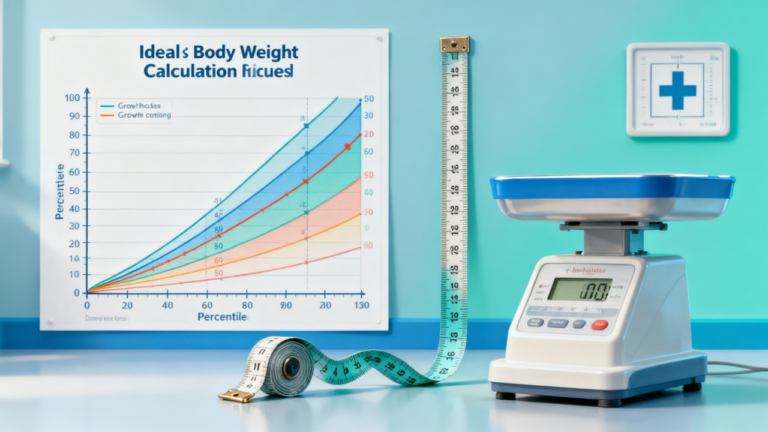
Neonatal jaundice, caused by elevated bilirubin levels, affects approximately 60% of full-term newborns and 80% of preterm infants. While most cases are benign and resolve on their own, severe hyperbilirubinemia can lead to kernicterus — a devastating form of brain damage. The Bhutani nomogram, developed in 1999 and endorsed by the AAP, classifies bilirubin levels by percentile based on the baby’s age in hours, helping clinicians determine which infants need phototherapy or further monitoring.
AAP Risk Zones (Based on Bhutani Nomogram)
- Low risk (< 40th percentile): No intervention needed
- Low intermediate risk (40th–75th percentile): Monitor, likely no intervention
- High intermediate risk (75th–95th percentile): Close monitoring required, possible phototherapy depending on risk factors
- High risk (> 95th percentile): Phototherapy likely indicated
The AAP’s 2022 clinical practice guideline for hyperbilirubinemia management updated the approach to include gestational age, risk factors, and a visual algorithm for phototherapy decisions. This calculator provides a simplified risk assessment — clinical decisions should always be made by a healthcare provider using the full AAP guidelines.
When to Seek Immediate Care
- Baby is yellow from the chest upward and is less than 48 hours old
- Jaundice extends to the arms or legs
- Baby is lethargic, not feeding well, or has fewer wet diapers
- Bilirubin level is rising rapidly between measurements
Bilirubin Risk Assessment Calculator
Bilirubin Risk Assessment
function calcBil() {
var age = parseFloat(document.getElementById(‘bil_age’).value);
var bilirubin = parseFloat(document.getElementById(‘bil_value’).value);
var ga = parseFloat(document.getElementById(‘bil_ga’).value);
if (isNaN(age) || isNaN(bilirubin) || age < 0 || bilirubin < 0) {
alert('Please enter valid values.');
return;
}
var p95, p75, p40;
if (age <= 24) { p95 = 8.0; p75 = 6.0; p40 = 4.0; }
else if (age <= 48) { p95 = 13.0; p75 = 10.0; p40 = 7.0; }
else if (age <= 72) { p95 = 17.0; p75 = 14.0; p40 = 10.0; }
else if (age <= 96) { p95 = 18.5; p75 = 15.0; p40 = 11.0; }
else { p95 = 19.0; p75 = 16.0; p40 = 12.0; }
if (!isNaN(ga) && ga = p95) { category = ‘High Risk Zone (>95th percentile)’; color = ‘#e74c3c’; action = ‘Phototherapy likely indicated. Contact your pediatrician immediately.’; }
else if (bilirubin >= p75) { category = ‘High Intermediate Risk (75th-95th percentile)’; color = ‘#f39c12’; action = ‘Close monitoring required. Consult your pediatrician. Phototherapy may be needed depending on risk factors.’; }
else if (bilirubin >= p40) { category = ‘Low Intermediate Risk (40th-75th percentile)’; color = ‘#27ae60’; action = ‘Monitor. Follow-up bilirubin level recommended in 24 hours.’; }
else { category = ‘Low Risk Zone (<40th percentile)'; color = '#27ae60'; action = 'No intervention needed. Routine follow-up.'; }
var resultDiv = document.getElementById('bil_result');
resultDiv.style.display = 'block';
resultDiv.style.background = color === '#27ae60' ? '#eafaf1' : (color === '#f39c12' ? '#fef9e7' : '#fdf2f2');
resultDiv.innerHTML =
'
Results
‘ +
‘
Age: ‘ + age + ‘ hours
‘ +
‘
Bilirubin: ‘ + bilirubin + ‘ mg/dL
‘ +
‘
Risk Zone: ‘ + category + ‘
‘ +
‘
95th Percentile Threshold: ‘ + p95 + ‘ mg/dL
‘ +
‘
Recommended Action: ‘ + action + ‘
‘ +
‘
Note: Based on Bhutani nomogram approximation. Clinical decisions should follow the full AAP 2022 hyperbilirubinemia guideline. Always consult your pediatrician.
‘;
}
Written by Dr. Emily Chen, MD (Pediatrics) | Medically approved by Dr. Ahmed Raza, MD (Pediatrics) | Updated for 2026
Disclaimer: This calculator is for general informational purposes only and is not a substitute for professional medical advice. Always consult your pediatrician.
How to Read Your Result
This tool approximates where a bilirubin reading falls on the Bhutani hour-specific nomogram, the standard AAP-endorsed chart used to gauge a newborn’s jaundice risk relative to their age in hours (not days) since birth — the same value rises differently depending on how many hours old a baby is, which is why age-in-hours, not just the bilirubin number alone, matters so much.
What Can Affect Accuracy
- Timing of the blood draw: Bilirubin can rise quickly in the first days of life, so a value from several hours ago may no longer reflect the current risk zone.
- Additional risk factors not captured here: ABO/Rh incompatibility, bruising from birth, a sibling who needed phototherapy, exclusive breastfeeding with poor intake, and East Asian ancestry all raise risk independent of the raw number, per AAP guidance.
- Prematurity: This tool applies a simplified adjustment for babies born before 38 weeks, but the full AAP 2022 guideline uses a more detailed gestational-age-based threshold table.
- Transcutaneous vs. serum readings: A transcutaneous (skin) bilirubin reading and a total serum bilirubin (blood) value are not interchangeable; if your baby’s initial screen was transcutaneous and came back elevated, confirmation with a blood test is standard practice.
Frequently Asked Questions
My result says “low risk” — does that mean no follow-up is needed?
Not necessarily. Most newborns still get a routine follow-up bilirubin check per their pediatrician’s or hospital’s schedule, especially if discharged before 72 hours old, regardless of an initial low reading — bilirubin typically continues rising for the first 3–5 days of life.
Why does the same bilirubin number mean different things at different ages?
Because a bilirubin level that’s unremarkable at 96 hours old would be alarmingly high at 24 hours old — the nomogram tracks the rate and trajectory of the rise, not just the raw number, which is why age in hours is one of the three inputs.
Is this the same as the full AAP 2022 guideline?
No. This is a simplified approximation of the Bhutani nomogram for parent education. The full 2022 AAP clinical practice guideline incorporates additional neurotoxicity risk factors and gestational-age-specific phototherapy thresholds that only a clinician can properly apply.
{“@context”: “https://schema.org”, “@type”: “WebApplication”, “name”: “Bilirubin Risk Assessment (Nomogram)”, “url”: “https://childbloom.site/bilirubin-risk-assessment-nomogram/”, “description”: “Review newborn bilirubin risk using this ChildBloom nomogram reference tool. Urgent jaundice concerns require prompt evaluation by a healthcare professional.”, “applicationCategory”: “HealthApplication”, “operatingSystem”: “All”, “offers”: {“@type”: “Offer”, “price”: “0”, “priceCurrency”: “USD”}, “publisher”: {“@type”: “Organization”, “name”: “ChildBloom”, “url”: “https://childbloom.site/”}}