Baby Hypothermia: Cold Exposure Emergency Signs & What to Do
If your baby feels cold to the touch, looks floppy, or has skin that’s unusually bright red or pale, your first instinct is probably panic — and that’s the right one. Baby hypothermia is a cold exposure emergency that can escalate fast, especially in newborns and young infants whose bodies are still learning to regulate temperature.
This article gives you the 60-second action plan first, then the prevention checklist. You’ll learn how to recognize hypothermia signs in babies by severity, understand why infants lose heat so quickly, and know exactly when to call 911 versus when to call your pediatrician. We’ll cover what to do right now if your baby is too cold, whether a baby can get hypothermia indoors, and gentle rewarming steps that are safe to try while you wait for help. Everything here is general information, not individualized medical advice — and no doses, medications, or specific temperature thresholds are invented here, because getting those wrong in a newborn could cost lives.
Medical disclaimer: This article provides general information only and is not a substitute for professional medical advice, diagnosis, or treatment. Always seek the advice of your pediatrician or other qualified health provider with any questions about your baby’s condition. If you think your baby has hypothermia, call 911 or your local emergency number immediately.
Looking for expert guidance on baby hypothermia? This comprehensive guide covers everything you need to know, from understanding the basics to making informed decisions for your family.
The 60-second plan if your baby feels cold right now
If your baby feels cold right now, start the cold exposure emergency response — not the research. Remove the cold source, warm the baby skin-to-skin, dry thoroughly, cover the head, and check a rectal temperature. Every minute matters with newborns because their thermoregulation system is immature; they lose heat four times faster than adults. What to do if baby is too cold is actually a short list: act first, call second, don’t guess doses.
Immediate action sequence
- Move baby away from cold air, drafts, or wet clothing.
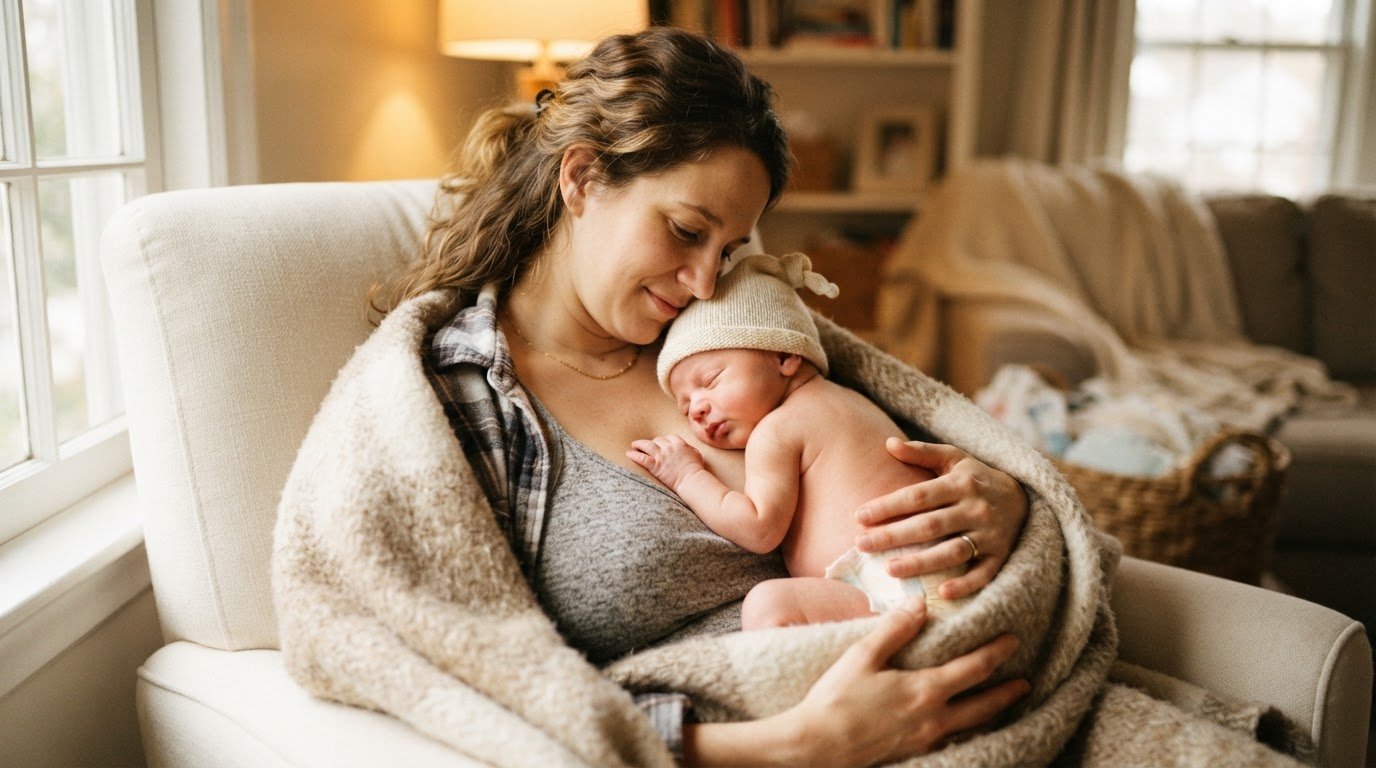
- Place baby skin-to-skin on your chest; cover both with a dry blanket.
- Dry wet hair and skin gently; replace wet diapers if needed.
- Cover the head — a hat reduces heat loss fast.
- Check rectal temperature if you have a digital thermometer; do not rely on forehead or hand checks alone.
While you do this, call for help if baby is floppy, not feeding, breathing slowly, or unusually pale/blue. If you’re alone and the baby is under 3 months, call 911 first, then begin rewarming.
Follow the Health Mental Plan so you’re not making these decisions alone at 3 a.m. — support is part of the safety net.
When to call 911: baby is unresponsive, breathing abnormally, blue/grey, rectal temp below 95°F (35°C) — or you can’t warm them within minutes. When to call pediatrician: baby feels cold but alert, feeding, normal color — still same-day contact.
Medical disclaimer: This article provides general information only and is not a substitute for professional medical advice, diagnosis, or treatment. Always seek the advice of your pediatrician or other qualified health provider with any questions about your baby’s condition. If you think your baby has hypothermia, call 911 or your local emergency number immediately.
How to recognize hypothermia in infants: signs by severity
Hypothermia in a baby shows up as cool skin with a drop in alertness and feeding — and the only reliable number is a rectal temperature below 95°F (35°C), per standard clinical thresholds.
Mild to moderate signs
- Cool skin, especially hands/feet, with mild shivering or none (shivering often stops in babies)
- Fussiness, slight lethargy, reduced feeding
- Rectal temp roughly 95–97°F — context matters more than the number alone
Severe signs — act now
- Floppy, very low energy, hard to wake
- Bright-red or pale/blue skin, slow/shallow breathing
- Rectal temp below 95°F (35°C) — this is the danger threshold; call 911
How to take a rectal temperature
- Use a digital thermometer, lubricate the tip, insert ½–1 inch, hold until it beeps
- This is the most reliable method for infants; armpit/temporal readings screen but don’t rule out hypothermia
Medical disclaimer: This article provides general information only and is not a substitute for professional medical advice, diagnosis, or treatment. Always seek the advice of your pediatrician or other qualified health provider with any questions about your baby’s condition. If you think your baby has hypothermia, call 911 or your local emergency number immediately.
Why babies lose heat so fast: thermoregulation basics
Newborns lose body heat three to four times faster than adults because their body-mass-to-surface-area ratio is large, their subcutaneous fat is thin, and their shivering response is immature.
- Larger surface-area-to-weight ratio — a baby’s skin relative to body mass is much bigger than an adult’s, so heat escapes quickly.
- Less fat — brown fat provides some heat, but stores are limited, especially in preemies or small newborns.
- Immature shivering — babies generate heat mainly by non-shivering thermogenesis; they can’t “shiver warm” the way adults do.
- Wet skin, cool rooms, wind — evaporation and convection pull heat fast after baths, diaper changes, or a cold car ride.
These aren’t signs of bad parenting — they’re normal newborn physiology. The same biology that helps a fetus grow makes a baby vulnerable the moment they’re out of the womb.
When to call 911: floppy, hard-to-wake, slow/shallow breathing, rectal temp below 95°F, or blue/pale skin. When to call pediatrician: baby feels cold, rectal 95–97°F, feeding down, extra sleepy — same-day eval.
Medical disclaimer: This article provides general information only and is not a substitute for professional medical advice, diagnosis, or treatment. Always seek the advice of your pediatrician or other qualified health provider with any questions about your baby’s condition. If you think your baby has hypothermia, call 911 or your local emergency number immediately.
Decision tree: call 911 vs call pediatrician vs home care
If you’re deciding whether to call 911 or your pediatrician because your baby feels cold, the fastest rule is: rectal temperature below 95°F, limpness, not waking, or trouble breathing = 911 now; anything less urgent but still worrying = same-day pediatrician.
Age-specific danger thresholds
- Under 3 months: any rectal temp below 97.7°F (36.5°C) with cold skin, or any fever ≥100.4°F / 38°C — call your pediatrician same-day or go to urgent care; under 3 months is the highest-risk window for rapid change.
- 3–12 months: rectal below 95°F / 35°C is an emergency threshold; 95–97°F with cold, pale, or floppy baby = same-day eval.
- Data unavailable: exact cutoff for “dangerous” low body temperature in infants by weight or gestational age.
Red-flag symptoms that mean call 911
- Limp or hard to wake
- Slow/shallow breathing, grunting
- Blue lips, tongue, or pale/gray skin
- Rectal temp below 95°F (35°C)
- Refusing feeds or unusually sleepy after a cold exposure
When home care only
Baby feels cool but alert, pink, feeding normally, rectal 95–97°F — warm the room, dry wet skin, skin-to-skin, monitor temp every 10–15 minutes. If temp drops, skin pales, or baby gets sleepier, escalate to 911 or pediatrician.
Medical disclaimer: This article provides general information only and is not a substitute for professional medical advice, diagnosis, or treatment. Always seek the advice of your pediatrician or other qualified health provider with any questions about your baby’s condition. If you think your baby has hypothermia, call 911 or your local emergency number immediately.
Immediate first-aid response: gentle rewarming and what NOT to do
If your baby feels cold right now, move them indoors, remove wet clothing, and warm them slowly — no hot baths, no rubbing, no alcohol rubs.
Do this now:
- Hold baby skin-to-skin on your chest, cover both with a dry blanket.
- Dry any moisture from skin and hair.
- Offer a warm feed if baby is alert and sucking.
- Monitor breathing and responsiveness; check rectal temp every 10–15 minutes if you have a thermometer.
What NOT to do:
- Don’t use hot water, heating pads, or hair dryers — baby skin burns easily and sudden heat can worsen shock.
- Don’t rub or massage limbs — it can push cold blood toward the core.
- Don’t give fever meds or adult remedies — they don’t treat low temperature and can harm infants.
- Don’t warm only the extremities — warm the core (chest, neck, head) first.
If baby is limp, blue, breathing slowly, or rectal temp is below 95°F (35°C), call 911 now and start rewarming while you wait. For cooler but alert babies, gentle skin-to-skin and a warm room are the right first steps — but if temperature keeps dropping or baby gets sleepier, escalate to your pediatrician or emergency care.
Requires verification: specific rewarming rates and exact temperature thresholds for home vs. hospital care should be confirmed with your pediatrician or local protocol; the 95°F/35°C threshold is a standard clinical marker cited by NHS and CDC guidance but must be applied with age context.
See also: After Bonding First Nicu for steps after NICU separation.
Sources: Mayoclinic hypothermia, CDC winter safety, NHS hypothermia.
Medical disclaimer: This section provides general information only and is not a substitute for professional medical advice. If you suspect hypothermia, call 911 or your local emergency number immediately.
When to seek medical care: age-specific thresholds and red flags
If your baby feels cold, looks floppy, or has bright-red skin, trust your instinct and call for help now — especially in newborns under 3 months.
Call 911 or your local emergency number immediately if:
- Baby is under 3 months old and has a rectal temperature below 97.7°F (36.5°C) or feels cold to the touch with lethargy
- Baby is hard to wake, not breathing normally, or skin turns blue or pale gray
- Rewarming at home hasn’t improved color and alertness within a few minutes
Call your pediatrician today (same-day visit) if:
- Baby is 3-12 months old and feels unusually cold with poor feeding or irritability
- You’re unsure whether the cold exposure was mild or significant
- Baby has been in a cool room for an extended period and seems “off”
The NHS and CDC identify a core temperature around 95°F (35°C) as the clinical threshold for hypothermia, but that number alone doesn’t tell the whole story — a 2-month-old with 96°F and shivering needs different care than a 6-month-old who feels cool but is alert and feeding (requires verification: exact age-specific temperature action thresholds should be confirmed with your pediatrician or local protocol).
Red flags that mean go now, not later:
- Weak cry or no cry
- Cold chest or belly with mottled skin
- Blood sugar concerns (jitteriness, limpness)
When in doubt, rewarm gently and get medical guidance — it’s always the right call to ask.
This section provides general information only and is not a substitute for professional medical advice. If you suspect hypothermia, call 911 or your local emergency number immediately.
Prevention checklist for cold exposure at home and outdoors
You can’t eliminate every cold risk with a newborn, but a few consistent habits lower the chance of baby hypothermia significantly.
Safe sleep environment
- Keep the nursery 68-72°F (20-22°C) — comfortable for a lightly clothed adult, not a sauna.
- Use a wearable sleep sack instead of loose blankets; no hats or hoods in the crib.
- Place baby on back on a firm flat surface, nothing soft nearby.
Dressing and bathing
- Dress baby in one more layer than you’re wearing indoors; remove a layer if they’re flushed or sweaty.
- Bath time: warm room, warm water, dry and dress immediately — never leave a damp baby unattended.
- Check neck and belly for temperature, not hands — cold extremities are common and misleading.
Travel and outdoors
- Car rides: no bulky coats under the harness — strap tight, then lay the coat over.
- Stroller walks: footmuff and weather cover, but keep air holes clear.
- Limit outdoor time in wind or below-freezing temps; watch for shivering, fussiness, or pale skin.
This section provides general information only and is not a substitute for professional medical advice. If you suspect hypothermia, call 911 or your local emergency number immediately.
FAQ: gaps the body won’t cover
Can a baby get hypothermia indoors? Yes — if the room is cold enough, especially with drafts, damp clothing, or a wet diaper. Baby hypothermia isn’t only an outdoor risk.
What is a dangerous low body temperature for an infant? Exact thresholds vary by age and source; rectal temperature is the most reliable measurement. Do not rely on forehead or room thermometers for a sick or cold infant.
Can I rewarm my baby with a hot water bottle or heating pad? No — direct heat can burn fragile newborn skin. Use skin-to-skin contact and dry clothing instead.
Should I feed the baby if they’re cold and sluggish? Only if they’re alert and sucking well. If they’re floppy, unresponsive, or breathing slowly, focus on gentle rewarming and call for help — don’t force feeding.
When does cold hands mean something serious? Cold hands alone are common in newborns. Worry when paired with lethargy, poor feeding, pale or bright-red skin, or a temperature you can’t explain.
Is baby hypothermia an emergency if they’re alert and warmish? Less likely, but trust your gut — if something feels wrong, call your pediatrician or 911.
This section provides general information only and is not a substitute for professional medical advice. If you suspect hypothermia, call 911 or your local emergency number immediately.
The bottom line
Rectal temperature is the most reliable way to check an infant’s core body temperature — if you haven’t taken one yet, do it now. Any low temperature in a baby under 3 months warrants an urgent pediatrician call; limpness, not waking, breathing changes, or blue lips means call 911. Gentle skin-to-skin rewarming is the safe first step — skip hot water, heating pads, or rubbing. Prevention centers on room temperature, proper dressing, and no drafts during sleep or travel. You already did the hardest part by noticing something was wrong — trust that instinct and act on it.
This information is general education only and not a substitute for professional medical advice. If you suspect hypothermia, call 911 or your local emergency number immediately.
Related Reading on ChildBloom
- Baby frostbite: cold injury signs
- Baby heat stroke: signs and what to do
- Severe dehydration baby: signs and emergency
References and Resources
Frequently asked questions
What body temperature is considered hypothermia in infants?
A rectal temperature below 97.7°F (36.5°C) is generally considered hypothermia in newborns and infants. “Low-grade” hypothermia runs roughly 95–97.6°F; moderate to severe is below 95°F (35°C). The article’s decision tree uses these ranges to help you decide between home care and calling the pediatrician or 911.
Does swaddling prevent hypothermia?
Swaddling with a lightweight, breathable blanket can help maintain warmth, but it’s not a substitute for a warm room, dry clothing, and skin-to-skin contact. Over-bundling or using thick, loose fabric increases overheating and SIDS risk, especially in young infants. The prevention checklist in the article pairs swaddling with room-temperature guidance and hat use for outdoor exposure.
How fast does a baby lose body heat?
Babies lose heat up to 4 times faster than adults because of their large surface-area-to-weight ratio, thin skin, and immature thermoregulation. Wet skin, drafts, and direct contact with cold surfaces speed this up dramatically. That’s why the 60-second plan emphasizes drying, skin-to-skin, and a warm room before you even think about a thermometer.
Are newborns more at risk than older babies?
Yes — newborns, especially premature or low-birth-weight infants, have the weakest thermoregulation and the smallest energy reserves. Full-term infants under 3 months are also higher-risk than older babies because their shivering response and fat insulation are still immature. The article’s age-specific danger thresholds treat any rectal temp under 97.7°F in a newborn as worth a same-day pediatrician call.
Can a baby get hypothermia indoors?
Absolutely — damp clothes, air conditioning, drafty windows, wet diapers, and even a cool bath can drop a baby’s core temperature indoors. The article lists indoor risk scenarios like sitting in a damp swim diaper too long or sleeping near an AC vent. Prevention focuses on dry layers, warm room temperature, and checking the neck/back for warmth rather than hands and feet, which normally feel cooler.
What’s the difference between hypothermia and just being chilly?
Chilly babies are alert, pink, and warm up quickly with a diaper change or snuggle; hypothermic babies are limp, unusually fussy or drowsy, pale or bluish, and don’t warm with normal measures. A rectal thermometer is the only reliable way to tell — “feels cold” is a clue, not a diagnosis. If baby stays cold after 10–15 minutes of skin-to-skin and dry clothing, or shows any red-flag symptom, call your pediatrician or 911 per the article’s decision tree.
This FAQ is for general education and does not replace individualized medical advice. If you’re unsure whether your baby’s temperature or symptoms need urgent care, call your pediatrician or 911. See the article’s full medical disclaimer.