Baby Chest Rub: Natural Alternatives
# Baby Chest Rub: Natural Alternatives for Your Little One’s Comfort
**Quick Answer:** For babies under 2 years, avoid chest rubs containing camphor, menthol, or eucalyptus. Safe natural alternatives include plain petroleum jelly, pure aloe vera gel, and virgin coconut oil. A gentle chest massage with any of these can provide comfort during colds. Always check with your pediatrician before trying new products on your baby’s skin.
—
Why Parents Turn to Chest Rubs During Cold Season
When your baby has a cold, it’s heartbreaking. They’re congested, fussy, and struggling to sleep. You’d do anything to help them feel better. That’s why so many parents reach for a baby chest rub — a topical ointment applied to the chest that promises to ease congestion and provide comfort.
The ritual itself is soothing. The warm touch of a parent’s hands, the gentle massage, the familiar scent — these things can calm a fussy baby and help them relax. And when your little one is miserable with a cold, that comfort matters enormously. Research has shown that gentle touch and massage can reduce stress hormones in infants and promote feelings of security and well-being. For a baby who feels unwell, that sense of safety is invaluable.
But here’s the challenge: many commercial vapor rubs and chest rubs contain ingredients that aren’t safe for babies. The [American Academy of Pediatrics (AAP)](https://www.healthychildren.org) advises that certain active ingredients in these products can be harmful to infants and toddlers. This leaves parents searching for safe alternatives that still provide the comfort they’re looking for. The confusion is understandable — products marketed as “natural” or “gentle” aren’t always safe for the youngest children.
The good news? There are natural, safe options that can help your baby feel better without exposing them to potentially harmful chemicals. In this guide, we’ll walk you through everything you need to know about baby chest rub alternatives — what’s safe, what’s not, and how to give your baby a comforting chest massage using natural ingredients. We’ll also cover when it’s time to call your pediatrician, because knowing the difference between a simple cold and something more serious is every parent’s most important skill.
—
What Makes a Chest Rub Safe for Babies?
Safety is the number one priority when choosing any product for your baby. Their skin is thinner and more permeable than adult skin, which means they absorb substances more easily. Their bodies are also less equipped to process certain chemicals. This is why ingredients that are fine for adults can be dangerous for infants. A baby’s liver and kidneys — the organs responsible for filtering and eliminating substances from the body — are still developing and can’t handle the same chemical load as an adult’s.
According to the [FDA](https://www.fda.gov), over-the-counter cough and cold products — including topical rubs — are not recommended for children under 2 years old. The agency has specifically warned about the risks of camphor, menthol, and eucalyptus oil in products used on young children. These warnings aren’t theoretical — they’re based on documented cases of serious harm in infants and toddlers.
A safe baby chest rub should:
– **Be free of camphor, menthol, and eucalyptus oil** — these are the big three to avoid at all costs
– **Use simple, single-ingredient bases** like petroleum jelly or coconut oil that are well-tolerated by infant skin
– **Be fragrance-free or use only baby-safe essential oils** (and only for babies 3 months and older)
– **Be patch-tested first** — apply a small amount to your baby’s inner arm and wait 24 hours to check for reactions
– **Be applied only to the chest and back** — never near the nose, mouth, or face where it could be inhaled or ingested
– **Be used in moderation** — a thin layer is all you need; more is not better
The [AAP’s HealthyChildren.org](https://www.healthychildren.org) emphasizes that for babies under 2, the safest approach is to stick with plain, inert ingredients that moisturize and provide a medium for gentle massage, rather than products that claim to have medicinal or decongestant properties. The comfort comes from the massage itself and the parent’s loving touch, not from any active ingredient in the product.
—
Ingredients to Avoid in Baby Chest Rubs
This is perhaps the most important section of this guide. Knowing what NOT to put on your baby’s chest is just as crucial as knowing what’s safe. Many parents assume that if a product is sold in the baby aisle or marketed as “natural,” it must be safe. Unfortunately, that’s not always the case. Here’s a detailed breakdown of the ingredients you should avoid.
Camphor
Camphor is found in many traditional vapor rubs and chest ointments. While it can create a cooling sensation that feels like it’s opening airways, camphor is toxic if ingested and can cause serious side effects in babies even when applied topically. The [FDA](https://www.fda.gov) has issued multiple warnings about camphor-containing products, noting they can cause seizures in infants and toddlers. Even small amounts absorbed through the skin can be dangerous. Camphor poisoning in babies can cause symptoms ranging from vomiting and agitation to seizures and, in severe cases, death. There is no safe amount of camphor for babies under 2.
Menthol
Menthol creates a cooling sensation by activating cold-sensitive receptors in the skin. While this can make adults feel like they’re breathing more easily, menthol can actually increase mucus production in babies and cause respiratory distress. For infants, whose airways are already small and inflamed during a cold, menthol can make breathing more difficult, not less. The cooling sensation can also be overwhelming for a baby’s sensitive skin and may cause irritation or discomfort.
Eucalyptus Oil
Eucalyptus oil is a common ingredient in natural and conventional chest rubs alike. While it has antimicrobial properties and is widely used in adult products, it’s not safe for babies under 2 years old. Eucalyptus oil can cause serious respiratory problems in infants, including bronchospasm (sudden constriction of the muscles in the airways) and breathing difficulties. The [National Poison Control Center](https://www.poison.org) has documented cases of eucalyptus oil toxicity in young children, with symptoms including rapid breathing, dizziness, and loss of coordination.
Other Ingredients to Watch For
– **Peppermint oil** — similar risks to menthol; contains menthol compounds and is not safe for babies
– **Turpentine** — found in some traditional rubs; toxic and absolutely not for babies
– **Synthetic fragrances** — can irritate sensitive baby skin and trigger allergic reactions or respiratory symptoms
– **Parabens** — preservatives that may disrupt hormones; best avoided for babies given their developing endocrine systems
– **Artificial dyes** — unnecessary chemicals that serve no purpose and may cause skin reactions
– **Alcohol** — found in some gel-based products; can dry and irritate baby skin
– **Lavender oil (undiluted)** — while sometimes used diluted for babies 3+ months, undiluted lavender oil can be irritating
When in doubt, read the label carefully. If you see any of these ingredients, put the product back on the shelf. Your baby’s safety is worth more than any promised relief. And remember that “natural” doesn’t automatically mean safe — many of the most potent toxins in nature are entirely natural.
—
Natural Alternatives to Commercial Vapor Rubs
Now for the good news: there are several safe, natural alternatives that can provide comfort during your baby’s cold. These options are gentle, effective, and widely recommended by pediatricians. They won’t cure the cold — nothing can do that except time — but they can make your baby more comfortable while their immune system does its work.
Petroleum Jelly (Plain, Unscented)
Plain petroleum jelly is one of the safest and most accessible options for a baby chest rub. It’s inert, meaning it doesn’t react with skin or cause systemic effects. It creates a protective barrier on the skin and provides an excellent medium for gentle chest massage. Petroleum jelly has been used safely on babies for generations and is recommended by dermatologists for infant skincare.
**Why it works:** Petroleum jelly is occlusive, meaning it locks in moisture and protects the skin. During a cold, your baby’s skin may become irritated from frequent nose wiping, general discomfort, and the dry air that often accompanies winter months. A thin layer of petroleum jelly on the chest can soothe and protect the skin while providing a smooth surface for massage.
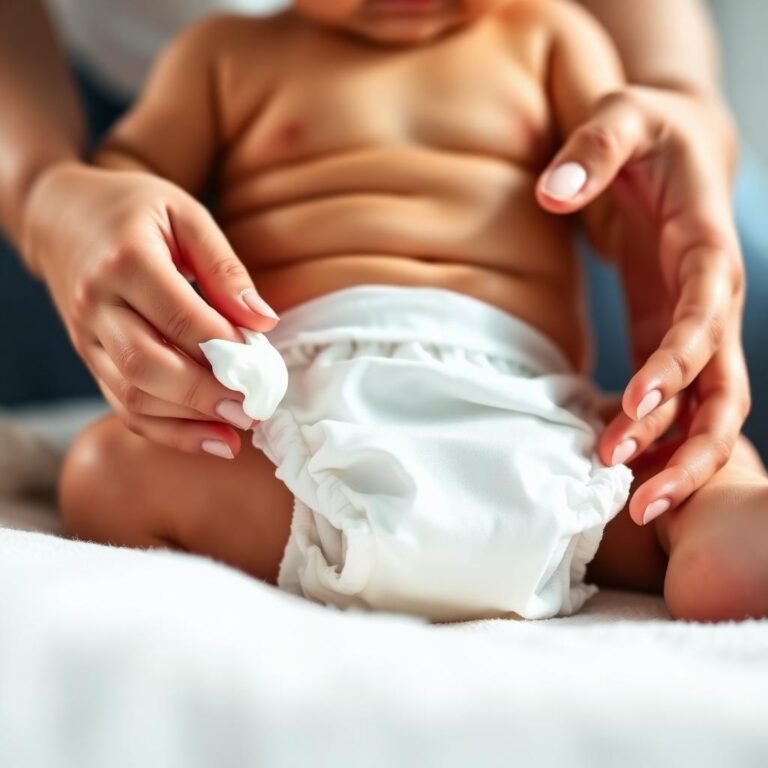
**How to use it:** Warm a small amount (about the size of a pea) between your palms, then gently massage it onto your baby’s chest in slow, circular motions. The warmth of your hands combined with the gentle pressure can be very calming. You can also apply a thin layer to your baby’s back if they seem to enjoy it.
**Important note:** Always use plain, unscented petroleum jelly. Avoid products with added fragrances, menthol, or other active ingredients. The original, unflavored variety is the safest choice. Check the label to make sure the only ingredient listed is “petroleum jelly” or “white petrolatum.”
**For babies 3+ months:** Some parents add a single drop of lavender essential oil to a tablespoon of petroleum jelly. Lavender is generally considered one of the gentler essential oils, but it should never be used on newborns. Always dilute properly (no more than 1 drop per tablespoon of carrier) and patch-test first. If your baby shows any signs of irritation, discontinue use immediately.
Pure Aloe Vera Gel
Aloe vera is a time-tested natural remedy for skin irritation and inflammation. Pure aloe vera gel (straight from the plant or a high-quality, additive-free product) can be a wonderful chest rub for babies. It’s been used for centuries to soothe skin and promote healing, and modern research supports its anti-inflammatory properties.
**Why it works:** Aloe vera has natural anti-inflammatory and soothing properties. It cools the skin gently, which can be comforting when your baby is feverish or uncomfortable. It’s also deeply moisturizing and helps maintain skin health. Unlike petroleum jelly, aloe vera absorbs into the skin rather than sitting on top of it, which some parents prefer.
**How to use it:** Apply a thin layer of pure aloe vera gel to your baby’s chest. The gel absorbs quickly and doesn’t leave a greasy residue. You can use it as a medium for gentle massage, or simply apply it and let it absorb. Some parents keep aloe vera gel in the refrigerator for an extra cooling effect during fevers.
**Important note:** Make sure you’re using pure aloe vera gel without added alcohol, fragrances, or colors. Many commercial aloe products contain these additives, which can irritate baby skin. If possible, use gel directly from an aloe plant (the inner gel from a fresh leaf), or choose a product that is labeled as 100% pure aloe vera with no additional ingredients.
Virgin Coconut Oil
Coconut oil has become a popular natural remedy for everything from diaper rash to dry skin, and it makes an excellent baby chest rub. Virgin, unrefined coconut oil is rich in lauric acid, which has natural antimicrobial properties. It’s also deeply moisturizing and has a naturally pleasant, mild scent that many parents and babies find calming.
**Why it works:** Coconut oil is moisturizing, gentle, and naturally antimicrobial. It’s solid at room temperature but melts on contact with skin, making it perfect for a warming chest massage. The mild, natural scent of coconut oil can be soothing without being overwhelming. Many parents find that coconut oil is their go-to for baby massage because of its texture and skin benefits.
**How to use it:** Scoop a small amount of virgin coconut oil (about half a teaspoon) and warm it between your hands until it melts. Then gently massage it onto your baby’s chest using slow, circular motions. The warmth and gentle pressure can help your baby relax and may provide some comfort from congestion. You can also apply it to your baby’s back and shoulders.
**Important note:** Choose virgin, unrefined coconut oil. Avoid refined or processed versions that may contain additives or have been chemically treated. Also, if your baby has a coconut allergy (rare but possible), skip this option. If you’ve never used coconut oil on your baby before, patch-test first.
Other Natural Options
– **Shea butter** — rich and moisturizing; great for dry, irritated skin. Choose unrefined, pure shea butter without added fragrances.
– **Olive oil** — a kitchen staple that’s gentle enough for baby massage. Use extra virgin olive oil for the purest option.
– **Calendula cream** — made from marigold flowers; known for soothing properties. Check for baby-safe formulations without added fragrances or preservatives.
– **Chamomile-infused oil** — very gentle; can be calming. Use only for babies 3+ months and patch-test first. Make sure it’s properly diluted.
—
How to Do a Gentle Chest Massage for Your Baby
The act of rubbing itself provides comfort — sometimes just as much as the product you’re using. A gentle chest massage can help your baby feel loved, secure, and relaxed. It’s a beautiful way to bond with your little one while providing physical comfort during a cold. Here’s how to do it safely and effectively.
When to Massage
– After a warm bath, when your baby is relaxed and the room is warm
– Before bedtime, to help them settle and sleep more comfortably
– During a cold, when they need extra comfort and congestion relief
– Anytime your baby seems fussy, overstimulated, or needs calming
– After feeding (wait at least 30 minutes to avoid spitting up)
Step-by-Step Guide
1. **Prepare the room.** Make sure the room is warm (around 75°F/24°C) and draft-free. Babies lose body heat quickly, so you want the environment to be comfortable. Close windows and turn off any fans that might blow directly on your baby.
2. **Choose your product.** Select one of the safe options discussed above — petroleum jelly, aloe vera gel, or coconut oil. Have it within reach before you start.
3. **Warm the product.** Place a small amount in your palms and rub your hands together to warm it. Cold products can startle your baby and make the massage unpleasant. Your hands should be warm and gentle.
4. **Get your baby comfortable.** Lay your baby on their back on a soft, safe surface. You can do this on a changing table (with the safety rail up), on your lap, or on a play mat on the floor. Make sure they’re happy and relaxed before you begin. If they’re already fussy, try calming them first with rocking or singing.
5. **Start with gentle touch.** Place your warm hands gently on your baby’s chest. Let them get used to the sensation before you start massaging. You might want to talk to your baby or make eye contact to help them feel secure.
6. **Use slow, circular motions.** Using your fingertips, make gentle circles on your baby’s chest. Start from the center (near the sternum) and move outward toward the sides. Use light pressure — your baby’s chest is delicate, and you should never press hard. Think of it as a gentle caress rather than a deep tissue massage.
7. **Move to the sides.** Gently massage along the sides of the ribcage, moving from top to bottom. This can help with relaxation and may provide some comfort. Be gentle around the ribcage area — never press directly on the ribs.
8. **Watch your baby’s cues.** If your baby seems uncomfortable, arches their away, cries, or pushes your hands away, stop immediately. Every baby is different, and some simply don’t enjoy massage. That’s okay — there are other ways to provide comfort.
9. **Keep it short.** For babies, even 2-3 minutes of massage can be beneficial. You don’t need a long session to provide comfort. As your baby gets older and more accustomed to massage, you can gradually increase the duration.
10. **Dress your baby afterward.** Once you’re done, dress your baby in comfortable, breathable clothing. Avoid overdressing, as this can lead to overheating. A light onesie or sleep sack is usually sufficient.
Tips for a Successful Massage
– **Timing is everything.** Don’t massage a hungry, tired, or overly fussy baby. Wait for a calm moment when your baby is content and receptive.
– **Talk or sing.** Your voice is one of the most soothing things for your baby. Talk softly, hum, or sing a lullaby while you massage. This adds an extra layer of comfort.
– **Follow your baby’s lead.** Some babies love chest massage; others prefer back or foot massage. Pay attention to what your baby enjoys and adapt accordingly.
– **Be consistent.** Regular massage can become a comforting routine that your baby looks forward to. Many parents find that a daily massage becomes a cherished part of their bedtime routine.
– **Never force it.** If your baby doesn’t want a massage, don’t push it. There are other ways to provide comfort — holding, rocking, singing, or simply being present.
– **Keep your nails short.** Long or sharp nails can scratch your baby’s delicate skin. Trim your nails before giving a massage.
– **Remove jewelry.** Rings, bracelets, and watches can catch on your baby’s skin or clothing. Remove them before massaging.
—
When to Call Your Pediatrician
While chest rubs and natural remedies can provide comfort, they’re not a substitute for medical care. It’s important to know when your baby’s cold requires a call to the doctor. Trust your instincts — you know your baby best, and if something feels wrong, it’s always better to call and be reassured than to wait and worry.
Call your pediatrician if your baby:
– Is under 3 months old and has a fever of 100.4°F (38°C) or higher — this is an emergency in young infants
– Has difficulty breathing or is breathing faster than usual (more than 60 breaths per minute in infants under 6 months)
– Is wheezing or making grunting sounds while breathing
– Refuses to eat or drink for more than one feeding
– Is unusually sleepy or difficult to wake
– Has a cough that lasts more than 10-14 days
– Has thick, green nasal discharge for more than 10 days
– Shows signs of ear pain (tugging at ears, crying when lying down, increased fussiness)
– Has a fever that lasts more than 3 days or returns after going away
– Seems to be in significant pain or discomfort that isn’t relieved by comfort measures
– Has a barking cough (could indicate croup, which may need medical treatment)
– Shows signs of dehydration (fewer than 4 wet diapers in 24 hours, dry mouth, no tears when crying, sunken soft spot on head)
– Has a history of respiratory problems like asthma or bronchiolitis
Seek emergency care if your baby:
– Has severe difficulty breathing (ribs pulling in with each breath, nostrils flaring, head bobbing)
– Turns blue around the lips or face
– Is unresponsive or extremely lethargic
– Has a seizure
– Stops breathing, even briefly
– Makes a high-pitched sound when breathing in (stridor)
The [AAP](https://www.healthychildren.org) reminds parents that for babies under 3 months, any fever is a reason to call the doctor immediately. Young infants have immature immune systems and can become seriously ill very quickly. What might be a simple cold in an older child can be a serious infection in a newborn. When in doubt, it’s always better to call and be reassured than to wait and worry.
—
Frequently Asked Questions (FAQ)
Can I use Vicks VapoRub on my baby?
No. Vicks VapoRub and similar products contain camphor, menthol, and eucalyptus oil — all of which are not safe for babies under 2 years old. The [FDA](https://www.fda.gov) specifically warns against using these products on children under 2. For older children (2+), always check the label and follow age recommendations. Even for older children, use sparingly and only as directed.
What about baby-specific chest rubs from the store?
Many “baby” chest rubs are marketed as safe for infants, but you should still read the labels carefully. Some contain ingredients like eucalyptus or menthol in lower concentrations, but these are still not recommended for babies under 2. Look for products that are specifically labeled as safe for your baby’s age group, and when in doubt, stick with plain petroleum jelly or coconut oil. The simpler the ingredient list, the better.
Can I put essential oils on my baby’s chest?
Most essential oils are not safe for babies under 3 months. For babies 3+ months, some gentle oils like lavender or chamomile may be used in very diluted forms (1 drop per tablespoon of carrier oil), but always patch-test first and consult your pediatrician. Never apply undiluted essential oils to your baby’s skin. And remember that “natural” doesn’t mean safe — essential oils are highly concentrated plant extracts that can be very potent.
How often can I apply a natural chest rub?
You can apply a natural chest rub 1-2 times per day, such as after a bath and before bedtime. More frequent application isn’t necessary and may irritate your baby’s skin. If you notice any redness, rash, or irritation, stop using the product and consult your pediatrician. Less is more when it comes to products on baby skin.
Will a chest rub cure my baby’s cold?
No. A chest rub won’t cure a cold — only time and your baby’s immune system can do that. What a chest rub can do is provide comfort, help your baby relax, and make the cold more bearable. Think of it as a comfort measure, not a treatment. The massage itself, the warmth, and the loving touch are what provide the real benefit.
Is it safe to use a humidifier with a chest rub?
Yes, using a cool-mist humidifier in your baby’s room is safe and can help with congestion. The [AAP](https://www.healthychildren.org) recommends cool-mist humidifiers (not warm-mist, which can pose a burn risk) for babies with colds. You can use a humidifier alongside a natural chest rub for added comfort. Just be sure to clean the humidifier regularly to prevent mold and bacteria growth.
Can I use chest rub on my newborn?
For newborns (under 3 months), it’s best to avoid any products on the chest beyond plain petroleum jelly. Newborn skin is extremely sensitive, and their bodies are still developing. Always consult your pediatrician before using any product on a newborn. The most important comfort measure for a newborn with a cold is frequent feeding, saline drops for nasal congestion, and plenty of cuddles.
What if my baby has sensitive skin?
If your baby has sensitive skin or a history of eczema, be extra cautious with any new product. Always patch-test first by applying a small amount to the inner arm and waiting 24 hours. If there’s no reaction, it’s likely safe to use on the chest. Plain petroleum jelly is usually the safest option for sensitive skin because it’s inert and rarely causes reactions. Avoid products with fragrances, dyes, or preservatives.
Are there any foods or drinks that can help with my baby’s cold?
For babies under 6 months, breast milk or formula provides all the hydration and nutrition they need. For babies 6+ months, you can offer small amounts of water, and for babies 1+, a small amount of warm (not hot) chamomile tea may be soothing. Always consult your pediatrician before introducing new foods or drinks. Never give honey to babies under 1 year due to the risk of botulism.
How can I help my baby sleep better with a cold?
Elevate the head of the crib mattress slightly (by placing a towel under the mattress, never under the baby), use a cool-mist humidifier, offer a gentle chest massage with a natural rub before bed, and use saline drops to clear nasal congestion. The [AAP](https://www.healthychildren.org) recommends always placing babies on their back to sleep, even during a cold. Avoid pillows, blankets, or other soft bedding in the crib.
Can I use chest rub on other parts of my baby’s body?
Chest rubs are generally intended for the chest and back only. Avoid applying any product to your baby’s face, near the nose, or on broken or irritated skin. If your baby has a rash or skin condition, consult your baby’s pediatrician before applying any product to the affected area.
—
Final Thoughts
When your baby has a cold, you want to do everything you can to help them feel better. A baby chest rub can be a wonderful comfort measure — but only if it’s safe. By choosing natural, gentle ingredients like petroleum jelly, aloe vera, or coconut oil, you can provide the soothing touch your baby needs without exposing them to harmful chemicals.
Remember, the most important ingredient in any chest rub is your loving touch. The gentle massage, the warmth of your hands, the sound of your voice — these are what truly comfort your baby. The product is just a medium for that connection. Your presence and attention are the most powerful comfort tools you have.
Always read labels carefully, avoid products with camphor, menthol, and eucalyptus, and when in doubt, ask your pediatrician. Your baby’s health and safety are worth the extra caution. And remember that colds are a normal part of childhood — your baby’s immune system is learning and growing with each one. With your love and care, they’ll get through it just fine.
—
*This article is for informational purposes only and does not constitute medical advice. Always consult your pediatrician before using any new product on your baby.*
Related Guides
Written by Dr. Sarah Williams, MD (Pediatrics), MD (Pediatrics) | Medically reviewed by Dr. Ahmad Raza, MD (Pediatrics) | Updated for 2026
This article is for general informational purposes only and does not constitute medical advice. Always consult your pediatrician with questions about your child’s specific health needs.