Clinical Pearl: What the Research Actually Says
One of the most valuable skills a parent can develop is the ability to evaluate health information critically. In the age of social media and parenting influencers, misinformation about child health spreads faster than evidence-based guidance. When you encounter a new parenting recommendation — whether about sleep, feeding, development, or safety — ask yourself three questions: Who is making this recommendation and what are their credentials? Is the recommendation supported by peer-reviewed research or is it based on anecdote and tradition?
Furthermore, does the recommendation align with guidance from major medical organizations like the American Academy of Pediatrics, the Centers for Disease Control and Prevention, or the World Health Organization? If a recommendation contradicts established medical guidance, it should be viewed with skepticism, regardless of how compelling the testimonial may be.
When in doubt, bring what you have read or heard to your pediatrician. We are trained to help you separate evidence from anecdote and to make decisions that are right for your individual child. This guide covers baby social milestones month by month first year chart and what parents need to know.
For more detailed guidance, visit the American Academy of Pediatrics or the CDC’s Infant and Toddler Health page.
Baby Social Development Stages: A Complete Guide from Birth to 12 Months

Social development in the first year of life is one of the most remarkable transformations you will witness as a parent. In just twelve months, your baby goes from a newborn who primarily sleeps and eats to a social being who smiles, laughs, imitates, and actively engages with the people around them.
Social development is the foundation for all future relationships, emotional health, and communication skills. As a pediatrician, I track social milestones at every well-child visit because they are powerful indicators of overall development. This guide walks you through the social development stages from birth through 12 months.
Why Social Development Matters
Specifically, social development is closely linked to emotional development, language development, and cognitive development. A baby who learns to engage socially is also learning to communicate, to understand cause and effect, to regulate their emotions, and to form secure attachments.
The quality of a baby early social experiences directly influences their brain architecture. Responsive, nurturing interactions with caregivers build the neural pathways that support emotional regulation, empathy, and social competence throughout life. When a caregiver responds consistently to a baby cues, the baby learns that the world is safe and that their actions have meaning, which is the foundation of secure attachment.
Secure attachment is one of the most important outcomes of healthy social development in infancy. Children who form secure attachments with their caregivers are more likely to develop strong social skills, have better emotional regulation, perform well academically, and form healthy relationships later in life.
The good news is that secure attachment is not about perfect parenting. It is about responsive parenting being consistently available and responsive to your baby cues, most of the time. Every repair after a missed cue or a stressful moment is an opportunity to strengthen the attachment bond.
Social Development Milestones by Age
Birth to 2 Months: The Foundation of Connection
In particular, newborns are born ready to connect. They prefer looking at faces over objects, especially faces that are close to them about 8 to 12 inches away. They recognize their mother voice and smell from birth and will turn toward familiar voices.
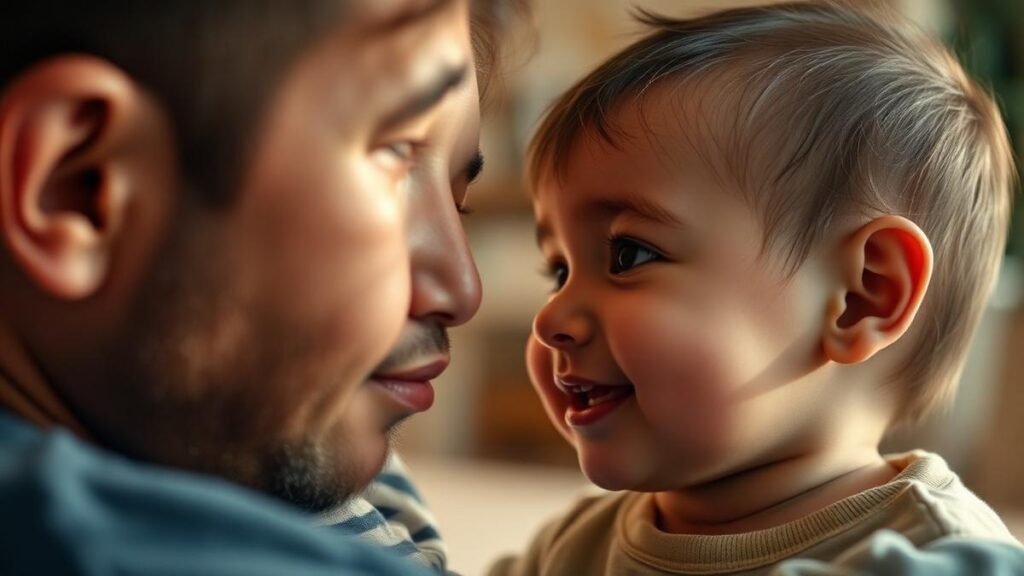
By 2 to 3 weeks, some babies begin to make brief eye contact that feels intentional. By 6 to 8 weeks, the first social smile emerges a genuine smile in response to your face and voice that is different from the reflexive smiles of the newborn period. This first social smile is a milestone that parents treasure, and it marks the beginning of reciprocal social interaction.
During this period, your baby is also learning about cause and effect in social interactions. When they cry and you respond, they learn that their actions have an effect on the world.
When they look at you and you smile back, they learn that their gaze has social power. These early back-and-forth exchanges are the first conversations your baby will ever have, and they set the stage for all future communication. Respond to your baby cries consistently, hold them close, talk to them in a gentle voice, and make eye contact during feeding and caregiving routines.
2 to 4 Months: The Social Awakening
However, between 2 and 4 months, your baby becomes much more socially engaged. They smile deliberately in response to your smile and may coo and babble back when you talk to them.
They begin to show excitement when they see a familiar face approaching, often with whole-body wiggling and increased arm and leg movement. They enjoy being held, cuddled, and played with, and they may quiet down when you pick them up or speak to them. They also begin to show a preference for familiar people over strangers, though they are still generally comfortable being held by anyone who approaches them gently.
This is the age when babies begin to imitate facial expressions. If you stick out your tongue, your baby may stick out theirs back. If you open your mouth wide, they may open theirs. This imitation is a sign of social engagement and learning. Keep your face close to your baby during play, make exaggerated expressions, and give them time to respond. These back-and-forth exchanges are building the foundation for turn-taking in conversation.
4 to 6 Months: Intentional Interaction
By 4 to 6 months, your baby social repertoire expands significantly. They laugh out loud, squeal with delight, and show clear enjoyment of social games like peek-a-boo. They recognize familiar faces and may become shy or wary with strangers, though this stranger anxiety typically peaks a bit later. They reach out to be picked up and may raise their arms when they want to be held. They enjoy looking at themselves in a mirror and may smile at their own reflection. They also begin to show specific preferences for certain people, toys, and activities.
As a result, this is a wonderful age for social play. Play peek-a-boo, make funny faces, sing songs with hand motions like itsy bitsy spider, and give your baby plenty of opportunities to initiate interaction. Follow your baby lead if they look at something interesting, look at it too and name it. This joint attention is a critical social skill that emerges during this period and predicts later language development.
6 to 9 Months: Stranger Anxiety and Separation Anxiety
Between 6 and 9 months, two important social milestones emerge: stranger anxiety and separation anxiety. Stranger anxiety is the wariness or fear that babies show toward unfamiliar people. Your baby may cry, cling to you, or hide their face when a new person approaches. This is a normal and healthy sign of social development that shows your baby can distinguish between familiar and unfamiliar people. Separation anxiety is the distress your baby shows when you leave the room or hand them to someone else. Both peak between 6 and 18 months and gradually resolve as your baby develops object permanence and the understanding that you will return.
During this period, your baby also becomes more intentional in their social interactions. They will play social games like peek-a-boo with enthusiasm, initiate interaction by babbling or reaching, and respond to their name consistently. They may also begin to show attachment to a specific comfort object like a blanket or stuffed animal. They understand simple social cues and may wave when you wave or clap when you clap. This is the beginning of social imitation, which is a powerful learning tool.
9 to 12 Months: The Social Communicator
The final months of the first year bring remarkable social advances. Your baby begins to use gestures intentionally to communicate, such as pointing to show you something interesting, shaking their head for no, and waving goodbye. Pointing is an especially important milestone because it demonstrates joint attention the ability to share focus on something with another person. Joint attention is a foundation of social communication and language development. Babies who point frequently tend to have larger vocabularies later.
Furthermore, your baby will also begin to imitate adult actions more deliberately, pretending to talk on the phone, trying to use a brush on their hair, or drinking from a cup. They may bring you toys to show you, follow simple requests like come here, and understand the meaning of no. They enjoy being around other children, though they mostly play alongside rather than with them at this age, which is called parallel play. They may also begin to test social boundaries by doing things they have been told not to do while watching your reaction. This is not misbehavior it is social experimentation. Your baby is learning about rules, limits, and cause and effect in the social world.
How to Support Healthy Social Development
- Respond to your baby cries and cues consistently and warmly. This builds trust and secure attachment.
- Engage in frequent face-to-face interaction. Get down to your baby eye level and make eye contact during play and caregiving.
- Talk to your baby constantly, narrating your day and describing what you see and do together.
- Play social games like peek-a-boo, pat-a-cake, and so big. These games teach turn-taking and social reciprocity.
- Follow your baby lead in play. When they show interest in something, join their focus and expand on it.
- Provide opportunities for safe exploration while staying close as a secure base your baby can return to.
- Introduce your baby to new people gradually and respect their need to warm up at their own pace.
- Read books together that show faces and emotions. Name the emotions characters are feeling.
- Limit screen time and prioritize live human interaction, which is how babies learn social skills.
- Take care of your own emotional health. Your baby picks up on your stress and your calm.
When to Talk to Your Pediatrician About Social Development
- Your baby does not smile socially by 2 months
- Your baby does not laugh by 4 months
- Your baby does not show interest in faces by 4 months
- Your baby does not respond to their name by 6 months
- Your baby does not show stranger anxiety by 9 months
- Your baby does not use gestures like pointing or waving by 12 months
- Your baby does not imitate actions or sounds by 12 months
- Your baby consistently avoids eye contact or seems uninterested in people
- Your baby loses social skills they previously had at any age
Your baby social development journey is unique and beautiful. Trust your instincts, enjoy each stage, and know that your loving presence is the most important factor in your baby healthy social development.
The Bottom Line from a Pediatrician
Social development in the first year is about connection. Your baby is born ready to connect with you, and every interaction is an opportunity to strengthen that bond. You do not need special toys or classes to support social development. What your baby needs most is you your face, your voice, your touch, and your responsive attention. Trust your instincts, follow your baby lead, and enjoy the process of getting to know the little person who is growing before your eyes. If you have concerns about your baby social development at any point, bring them up with your pediatrician early intervention is most effective when it starts early.
Related: Baby Growth Development 4 to 6 Months | Cognitive Development in Infants
Specifically,
Related Articles
- Newborn Sleep Schedule
- Toddler Motor Skills Milestones
- Toddler Social Development Sharing Friendships
- Cognitive Development Toddlers
- Reading to Toddlers
- Toddler Learning Through Play
Related: Baby Growth Development 4 6 Months
📖 More from the Pediatrician Corner Hub: your complete pediatrician-reviewed guide to your baby first year
Read more: infant speech milestones month by month
In particular, Related: infant speech milestones month by month when to worry