
Medically reviewed by Dr. Sophia Martinez, MD — Pediatrician
Disclaimer: This content is for informational purposes only and does not substitute professional medical advice. Always consult your pediatrician for concerns about your baby’s health.
Your Newborn Sleeps All Day and Won’t Eat — Should You Be Worried?
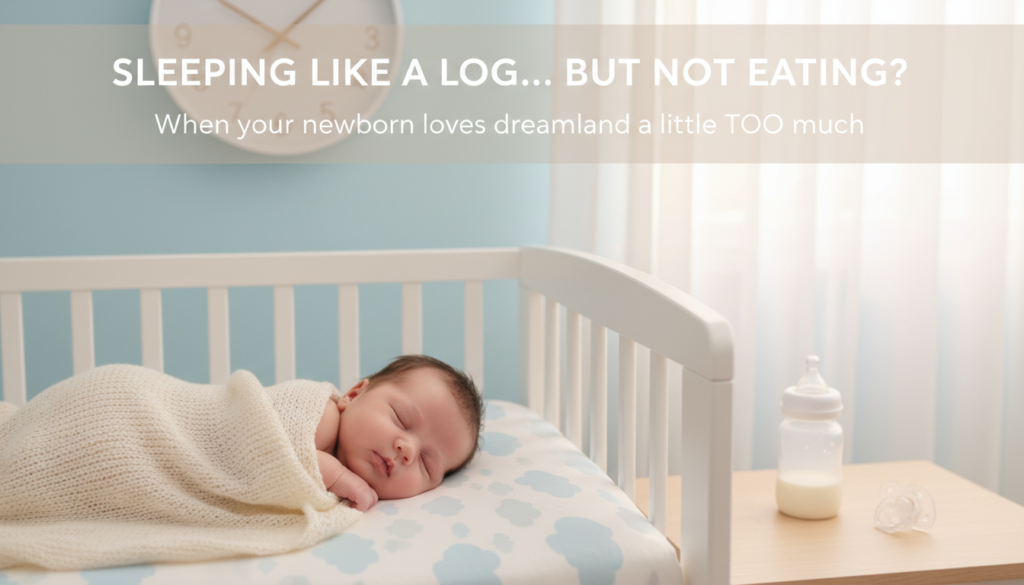
It’s 3 AM and your newborn has been sleeping for five hours straight. You know you should be grateful for the rest, but instead you’re anxious. She hasn’t eaten in hours. You try to wake her for a feeding, but she’s too sleepy to latch or take the bottle. Panic sets in: Is this normal? Is she sick? Is she getting enough?
This scenario is one of the most common panic moments for new parents, and it’s especially frightening because it counters everything you’ve been told: babies need to eat every 2–3 hours. But here’s the nuance — what constitutes “too much sleep” and “not enough eating” varies dramatically depending on your baby’s age, weight, and overall health.
In this guide, I’ll walk you through exactly when a sleepy newborn is normal and when it’s a red flag, based on my years of practice as a pediatrician. You’ll learn feeding minimums by age, the difference between “contentedly sleepy” and “dangerously lethargic,” and a clear decision framework for when to call your doctor.
Why Newborns Sleep So Much (And Why It’s Usually Normal)
Newborns sleep 14–17 hours per day in the first weeks of life. This is not only normal — it’s essential for brain development, growth hormone release, and memory consolidation. A newborn’s sleep cycle is only 50–60 minutes long (compared to 90 minutes for adults), which means they cycle through light sleep, deep sleep, and REM sleep much more frequently.
What parents often don’t realize is that some newborns are naturally “sleepy” feeders — they fall asleep at the breast or bottle because the act of feeding is physically exhausting for a tiny baby. This doesn’t necessarily mean they’re getting enough milk; it means they’re tired from the effort of eating.
Feeding Minimums by Age: The Numbers You Need to Know
Before you panic about your baby sleeping too much, check whether they’re meeting these minimum feeding thresholds:
| Age | Minimum Feeds per 24 Hours | Minimum Ounces per Feed (Bottle) | Minimum Wet Diapers per Day |
|---|---|---|---|
| Days 1–2 | 6–8 feeds | 0.5–1 oz | 1–2 (first day), 2–4 (second day) |
| Days 3–7 | 8–12 feeds | 1–2 oz | 4–6 |
| Weeks 2–4 | 8–10 feeds | 2–3 oz | 6–8 |
| Weeks 4–8 | 7–9 feeds | 3–4 oz | 6–8 |
| Months 2–4 | 6–8 feeds | 4–6 oz | 6–8 |
| Months 4–6 | 5–7 feeds | 5–7 oz | 6–8 |
Key takeaway: A newborn who consistently skips feeds and falls below these minimums — even while sleeping “peacefully” — needs to be evaluated. A baby who is meeting minimums but sleeping long stretches between feeds is likely fine.
Normal Sleepy Periods vs. Lethargy: How to Tell the Difference
This is the most critical distinction you need to make. There’s a world of difference between a baby who is “sleepy but can be roused” and one who is “lethargic and difficult to wake.”
A baby who is normally sleepy:
- Wakes to light touch or voice
- Opens eyes briefly, makes eye contact
- Cries or fusses when hungry
- Has normal color (pink, not pale or mottled)
- Feeds vigorously when awakened
- Has normal muscle tone (not floppy)
A baby who is dangerously lethargic:
- Difficult to wake even with vigorous stimulation
- Does not open eyes or make eye contact when awake
- Does not cry or fuss for feeds
- Appears “floppy” with poor muscle tone
- Has pale, mottled, or grayish skin
- Weak or absent cry
- Feeds poorly or refuses to feed even when awake
If your baby shows ANY signs of lethargy, this is a medical emergency. Call 911 or go to the ER immediately.
Why Is My Newborn Sleeping Too Much and Not Eating?
There are several possible causes, ranging from normal variation to serious medical conditions:
1. Jaundice
Physiological jaundice (yellowing of the skin and eyes) affects up to 60% of full-term newborns. Bilirubin buildup can make babies excessively sleepy and poor feeders. This is the most common medical cause of a sleepy, poor-feeding newborn. Jaundice typically peaks at day 3–5 and resolves within 1–2 weeks with adequate feeding and sometimes phototherapy.
What to look for: Yellow discoloration of the skin (press gently on the forehead — if the skin looks yellow when you release, jaundice is present), yellow whites of the eyes, dark urine (should be pale), pale stools.
2. Infection
Newborns with infections (sepsis, UTI, meningitis) often present with lethargy and poor feeding rather than fever. In fact, newborns under 3 months old may not mount a fever at all when fighting a serious infection. This makes lethargy + poor feeding an especially concerning combination in this age group.
What to look for: Temperature instability (too hot or too cold), poor muscle tone, breathing difficulty (fast breathing, grunting, flaring nostrils), mottled skin, vomiting.
3. Dehydration
Ironically, a baby who isn’t feeding well can become dehydrated, which makes them even sleepier and less interested in feeding — a dangerous cycle. Dehydration is especially risky in hot weather or if the baby has been vomiting or had diarrhea.
What to look for: Fewer wet diapers than expected (see chart above), dry mouth and lips, sunken soft spot (fontanelle), crying without tears, dark urine.
4. Hypoglycemia (Low Blood Sugar)
Newborns have limited energy reserves. If they go too long without feeding, their blood sugar can drop, causing lethargy, jitteriness, and poor feeding. Babies at higher risk include those born to diabetic mothers, premature infants, and those with birth complications.
5. Normal Variation (The “Good Sleeper”)
Some newborns are simply more efficient sleepers. If your baby is gaining weight appropriately (about 5–7 oz per week in the first month), has normal wet and dirty diapers, and wakes eagerly to feed at least 6–8 times per day, they may just be an efficient sleeper. This is especially common in breastfed babies after the first 2–3 weeks, when milk supply has established and the baby can transfer milk more efficiently.
When to Wake a Sleeping Baby for Feeding
General guidelines for waking a sleeping newborn:
- Birth to 2 weeks: Wake every 2–3 hours (from start of last feed) until birth weight is regained
- 2–4 weeks: Wake every 3 hours if not feeding adequately, but let sleep 4–5 hours once per night if gaining weight well
- 4–8 weeks: Can let sleep 5–6 hours at night if gaining weight well and having adequate wet diapers
- 8+ weeks: Most babies can sleep through 6–8 hour stretches if gaining weight appropriately
Note: Always wake a baby who is under their birth weight, has jaundice, is premature, or has any medical condition requiring frequent feeding.
The 3-Step Protocol for a Sleepy, Poor-Feeding Newborn
If your baby is sleeping longer than expected and missing feeds, try this protocol before panicking:
Step 1: Attempt to Wake Gently
- Unswaddle — remove blankets and layers
- Change diaper (the cold wipe is stimulating)
- Skin-to-skin contact on your chest
- Gentle massage of arms, legs, and back
- Burp in an upright position
Step 2: Attempt to Feed
- Offer breast or bottle immediately after waking
- Try different positions (upright may be easier for a sleepy baby)
- Express a few drops of milk onto baby’s lips to stimulate interest
- If breastfeeding, try breast compression to increase flow
Step 3: Assess the Response
- Green light: Baby wakes, feeds vigorously, has normal color and tone → continue monitoring, try again in 2–3 hours
- Yellow light: Baby wakes but feeds poorly, seems weak, or falls asleep quickly without feeding → call pediatrician within 24 hours
- Red light: Baby cannot be woken, appears floppy, has pale/mottled skin, or has breathing difficulty → go to ER immediately
When to Call the Doctor (Not the ER)
- Baby has missed 2+ consecutive feeds
- Fewer than 4 wet diapers in 24 hours (after day 5)
- Weight loss exceeding 7% of birth weight in the first week
- Jaundice (yellow skin or eyes)
- Baby seems “just not right” — a parental instinct that something is off
When to Go to the ER (Do Not Wait)
- Baby is difficult or impossible to wake
- Baby appears floppy or limp when held
- Baby is grunting, has retractions, or is breathing rapidly
- Baby has pale, gray, or mottled skin
- Baby has a fever (any temperature over 100.4°F rectally if under 3 months)
- Baby is vomiting green or yellow bile
- You feel in your gut that something is seriously wrong
Prevention: How to Keep Your Newborn Feeding Well
- Feed on demand in the first weeks — avoid strict schedules
- Track feeds and wet diapers for the first 2 weeks
- Keep baby awake during feeds: undress to diaper, tickle feet, burp mid-feed
- Ensure proper latch or bottle nipple flow
- Take baby for weight checks at 3–5 days and at 2 weeks
- Trust yourself — if something feels wrong, it probably warrants a call
Frequently Asked Questions
Q: Can a newborn sleep too much?
A: Yes, if it comes at the expense of adequate feeding. A newborn who consistently goes 5+ hours without feeding in the first 2 weeks needs evaluation. After weight is regained, some babies naturally consolidate sleep.
Q: Is it normal for breastfed babies to sleep longer than formula-fed?
A: Not typically. Breast milk digests faster than formula, so breastfed babies usually feed more frequently. A breastfed newborn who is sleeping unusually long may not be transferring milk effectively.
Q: My baby is 3 weeks old and started sleeping 5-hour stretches — is that OK?
A: If she’s gaining weight well, has normal wet diapers, and feeds eagerly when awake, this can be normal. But check with your pediatrician to confirm.
Q: Can teething make a baby sleepy?
A: Teething can disrupt sleep and cause fussiness, but it doesn’t typically cause excessive sleepiness in newborns. If your baby is under 4 months, teething is unlikely.
Q: What’s the difference between a sleepy baby and a lethargic baby?
A: A sleepy baby can be roused and will feed when awakened. A lethargic baby is difficult to wake, appears floppy, and has poor tone. Lethargy is a medical emergency.
Q: Should I let my baby sleep through the night at 4 weeks?
A: Only if your pediatrician has confirmed adequate weight gain and your baby is feeding well during the day. Even then, continue to monitor wet diapers and weight gain closely.
Related Articles
- Baby Not Feeding Well But Not Sick
- Newborn Grunting and Straining While Sleeping
- Pediatrician’s Guide to Baby Sleep
- Baby Breathing Fast While Sleeping No Fever
When Sleeping Too Much Is a Medical Concern
While newborns sleep a lot, excessive sleepiness that interferes with feeding can be a sign of medical problems. Jaundice is one of the most common causes of sleepiness in newborns. When bilirubin levels rise, it deposits in the brain and causes lethargy. A jaundiced baby who is hard to wake for feeds needs immediate evaluation. Infections can also cause sleepiness in newborns. A baby with a bacterial infection like a urinary tract infection or sepsis may sleep excessively because the body is redirecting energy to fighting the infection. These babies are often described as ‘floppy’ or ‘too good’ by parents. Low blood sugar, or hypoglycemia, can cause sleepiness in newborns, especially those born to mothers with diabetes, those who are large for gestational age, or those who had a difficult delivery. Heart problems, metabolic disorders, and thyroid conditions can also cause excessive sleepiness in newborns. The key warning signs are a baby who is difficult to wake even for vigorous stimulation, who takes less than half the usual amount at each feed, who has fewer than 4 wet diapers in 24 hours, who has poor muscle tone, or who has a weak cry. If you are worried that your baby is sleeping too much, wake them up for a feed and observe their alertness, feeding effort, and overall tone. If anything seems off, call your pediatrician.
Finding the right balance between newborn sleep and feeding is one of the biggest challenges of the newborn period. While the advice to wake a sleeping baby feels unnatural, it is necessary in the first few weeks to ensure adequate nutrition and weight gain. As your baby grows and shows signs of readiness, you can gradually shift to a more relaxed approach. The most important thing is to trust your instincts and call your pediatrician if something feels wrong. A baby who is genuinely too sleepy to feed is different from a baby who is sleeping peacefully and waking easily for feeds. Learning to tell the difference is a skill that develops with experience and observation.
📖 More from the Pediatrician’s Corner Hub: your complete pediatrician-reviewed guide to your baby’s first year — milestones, feeding, sleep, vaccines, common illnesses, and more
📖 More from the Health & Safety Hub: your A-Z pediatrician guide to baby health, common illnesses, fevers, rashes, allergies, safety