Best Baby First Aid Kits (2026): 10-Reviewed Picks
Medically reviewed by Dr. Ahmad Raza, MD (Pediatrics) — ChildBloom Medical Review Panel. Last updated: August 4, 2026.
Editorial & affiliate disclosure: our guidance is written and reviewed by clinicians. ChildBloom may earn a commission from qualifying purchases made through links on this page, which never changes what our pediatric reviewers recommend.
Looking for clear answers about baby first aid kits? This pediatrician-reviewed guide covers what matters, what to skip, the safety checks that count, and exactly when to involve your doctor — based on current AAP, CDC and CPSC guidance on baby first aid kits.
Quick pediatrician summary: baby first aid kits
Short answer: A pediatrician explains baby first aid kits: what is normal, the real risks, red flags to watch for and exactly when to call your doctor.
Best Baby First Aid Kits (2026): 10-Reviewed Picks
The 10 Kits and Tools We Reviewed
Tier 1 — Comprehensive Home Kits
KeepGoing Travel First Aid Kit for Kids (B0BPSTR36K) — 130 pieces, latex-free bandages (critical — latex allergy affects ~1% of children and rises to 8% in spina bifida patients), TSA-approved. Best all-around kit for families with children 1–12.
Portable First Aid Kit with CPR Shield (B0B2VPZ56J) — Includes a one-way CPR face shield, essential if you perform infant/child rescue breathing. Contains a printed pediatric first aid guide — useful in a panic moment when you cannot look up dosing.
Mini First Aid Kit 150 pc Waterproof (B0DB794BKQ) — Hard-shell waterproof case, best for pool bags, boat, beach, and swim lessons where wet trauma is more likely.
Tier 2 — Newborn-Specific Kits
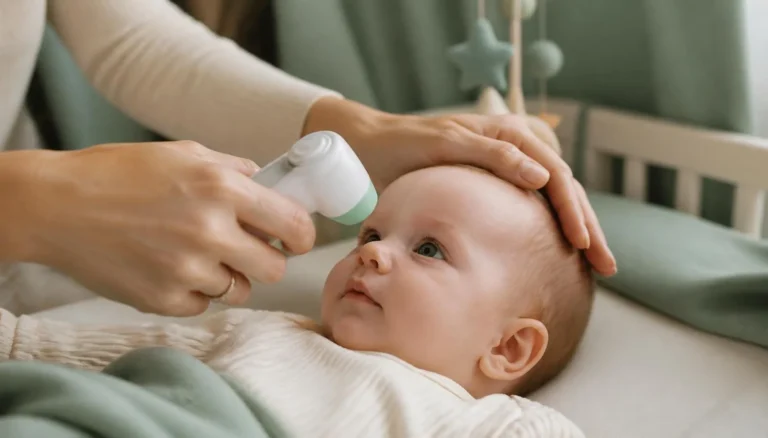
Safety 1st Deluxe Baby Healthcare and Grooming Kit (B00VXMXN30) — 25 pieces including digital thermometer, nasal aspirator, medicine dropper, nail clippers, and brush. Ideal newborn baseline kit — pair with the OTC meds below.
Little Remedies New Baby Essentials Kit (B075G6XMSF) — Newborn-safe OTC bundle: saline nasal spray, diaper rash cream, gas relief drops, gripe water. Note: gripe water is not FDA-regulated and evidence for colic benefit is weak (see our gripe water safety guide). Skip that component if preferred.
Tier 3 — Travel & Diaper Bag Kits
EVERLIT Pocket-Aid Kit — Pack of 3 (B0FX9L76KD) — Three hard-shell mini kits: one for car, one for diaper bag, one for grandparents’ house. Best value for multi-location coverage.
BAND-AID Brand Travel Ready 80 pc (B0B41MYSGP) — Reliable brand-name bandages plus Tylenol and Neosporin. Note: some children react to Neosporin (neomycin allergy) — swap for plain bacitracin if a rash develops.
Tier 4 — Specialty Tools (Add to Any Kit)
Frida Baby Medi Frida Medicine Pacifier Syringe (B073XVXQ6R) — Made in USA. The pacifier design triggers the suck reflex, allowing medicine to bypass the front of the tongue where bitter receptors sit. Reduces spit-out and vomiting during dosing. Pediatrician-recommended for infants who fight droppers.
Welly Bandages Bravery Badges (B08XWPML9Z) — Colorful patterns increase toddler cooperation with wound cleaning. Latex-free, breathable fabric. A behavioral tool, not a medical upgrade — but adherence matters.
LifeVac Home Kit (B017J293OU) — Non-powered airway suction device. Critical clarification: the American Heart Association and AAP do not currently endorse anti-choking suction devices as first-line rescue. Standard sequence remains: back blows and chest thrusts for infants; abdominal thrusts (Heimlich) for children over 1. Use LifeVac only after those techniques have failed and while EMS is en route. Take a Red Cross or AHA infant/child CPR class — the device is no substitute for training.
Correct Medication Dosing (Pediatric)
Overdose and underdose are the top errors parents make with infant OTC medication. Key rules from the AAP:
- Dose by weight, never age. A large 4-month-old and a small 12-month-old may need different amounts.
- Acetaminophen: 10–15 mg/kg every 4–6 hours (max 5 doses/24h). Safe from birth for fever >100.4°F rectal.
- Ibuprofen: 10 mg/kg every 6–8 hours. Only after 6 months of age and never for dehydrated babies (kidney risk).
- Never give aspirin to any child — Reye syndrome risk.
- Never give honey under 12 months — infant botulism risk.
- Never give cough or cold medicines under 6 years — FDA advisory since 2008.
- Use the syringe that comes with the medication, not a kitchen spoon.
Where to Store Your Kit
- Master kit: locked cabinet, out of child reach, out of bathroom (humidity degrades meds).
- Room-temperature location — bathrooms and cars in summer heat degrade acetaminophen potency by up to 30%.
- Duplicate mini-kit in every car and diaper bag.
- Emergency contact card visible in the kitchen and taped inside the master kit.
- Check expiration dates every 6 months (mark on calendar with baby’s checkups).
When to Call 911 (Not the Pediatrician)
- Choking that persists after 5 back blows + 5 chest thrusts (infant) or Heimlich (child >1)
- Unresponsiveness, seizure, or blue lips/skin (cyanosis)
- Difficulty breathing, wheezing, or grunting after allergen exposure
- Severe head injury with vomiting, loss of consciousness, or unequal pupils
- Uncontrolled bleeding after 10 minutes of direct pressure
- Suspected poisoning — call Poison Control at 1-800-222-1222 first if child is alert; call 911 if unresponsive or seizing
- Burns larger than the child’s palm, or any burn on face/hands/genitals
- Fever >100.4°F rectal in a baby under 3 months (always urgent evaluation)
Frequently Asked Questions
Do I really need a separate baby first aid kit?
Yes. Adult kits lack a rectal thermometer, weight-based dosing chart, latex-free pediatric bandages, and infant-appropriate medications. Adult ibuprofen concentration is 5x infant strength — mixing them up is dangerous.
Are anti-choking suction devices safe for babies?
Devices like LifeVac are legal and can be used on infants 20+ lbs with the pediatric mask, but the AAP and AHA still recommend back blows and chest thrusts as first-line rescue. Treat suction devices as a backup, and take a certified infant CPR class.
Can I give my baby adult Tylenol in a smaller dose?
Never. Adult formulations have different concentrations and inactive ingredients. Always use infant/children’s acetaminophen with the included dosing syringe, calculated by weight (10–15 mg/kg per dose).
What temperature reading requires an ER visit?
Any rectal temperature ≥100.4°F (38°C) in a baby under 3 months requires immediate pediatric evaluation. See our fever chart guide. For older infants, fever with lethargy, poor feeding, or difficulty breathing warrants urgent care regardless of number.
How often should I replace my first aid kit contents?
Check every 6 months. Replace liquid medications every 12 months (or by expiration), bandages every 2 years (adhesive fails), and antibiotic ointment every 12 months. Batteries in digital thermometers annually.
What is the single most important item in a baby first aid kit?
The Poison Control number (1-800-222-1222) and your pediatrician’s after-hours line. Most true pediatric emergencies are solved by a phone call before any product is used.
Medical disclaimer: This guide is educational and does not replace individualized advice from your child’s pediatrician or emergency evaluation. Product recommendations are independent — ChildBloom receives no manufacturer compensation. FAQ answers describe general presentations, not diagnoses. In any emergency, call 911 or Poison Control (1-800-222-1222) immediately.
References
- American Academy of Pediatrics. “First Aid Kits and Guides.” HealthyChildren.org, 2024.
- American Heart Association. “Infant and Child CPR & Choking Guidelines.” 2020 update, reaffirmed 2024.
- US Food and Drug Administration. “OTC Cough and Cold Products: Not For Infants and Children Under 2.” Consumer Advisory, updated 2023.
- Cleveland Clinic. “Home First Aid Kit Essentials for Families.” 2024.
- NIH MedlinePlus. “Pediatric Medication Safety.” 2024.
- Poison Control (AAPCC). 1-800-222-1222.
About the Author: Dr. Sarah Williams, MD is a board-certified pediatrician with over 15 years of experience in newborn and infant care. All ChildBloom articles are physician-reviewed and updated regularly.
Clinical Pearl: What the Research Actually Says
One of the most valuable skills a parent can develop is the ability to evaluate health information critically. In the age of social media and parenting influencers, misinformation about child health spreads faster than evidence-based guidance. When you encounter a new parenting recommendation — whether about sleep, feeding, development, or safety — ask yourself three questions: Who is making this recommendation and what are their credentials? Is the recommendation supported by peer-reviewed research or is it based on anecdote and tradition? Does the recommendation align with guidance from major medical organizations like the American Academy of Pediatrics, the Centers for Disease Control and Prevention, or the World Health Organization? If a recommendation contradicts established medical guidance, it should be viewed with skepticism, regardless of how compelling the testimonial may be. When in doubt, bring what you have read or heard to your pediatrician. We are trained to help you separate evidence from anecdote and to make decisions that are right for your individual child.
Ready to find the perfect option for your little one? Check our top picks and compare features to make the best choice for your family.
Related Pediatrician-Authored Guides
A well-stocked first aid kit is only half the picture — knowing when a skin symptom crosses into an emergency is the other half. Bookmark these clinical decision guides:
- when to worry about a rash on your child
- red blotches on your infant’s face: 10 causes
- baby rash types with pictures
📖 More from the Health & Safety Hub: your A-Z pediatrician guide to baby health, common illnesses, fevers, rashes, allergies, safety
Clinical Pearl: From a pediatric emergency medicine standpoint, the most critical item in any baby first aid kit is not a bandage or ointment — it is a current, printed guide to infant CPR and choking rescue. The AHA’s 2020 guidelines emphasize that the rescuer should begin CPR with chest compressions (30 compressions at a rate of 100-120 per minute, depth of 1.5 inches for infants) before giving rescue breaths in the C-A-B sequence. A properly stocked kit should include: (1) a bulb syringe or nasal aspirator for clearing airways, (2) digital thermometer with rectal probe capability for infants under 3 months, (3) acetaminophen infant drops (160 mg/5 mL concentration — never the 500 mg/15 mL concentration), (4) sterile saline drops, (5) hydrocortisone 1% cream, and (6) an oral syringe in 1 mL and 5 mL sizes for accurate medication dosing.
Common mistakes parents make with baby first aid kits
- Assuming a higher price means a safer or better-performing option — certification and correct fit matter far more.
- Skipping the instruction manual, weight limits and product registration, which is how recall notices reach you.
- Changing several things at once, so you cannot tell what actually helped your baby.
- Relying on advice from social media instead of your pediatrician when something feels off.
Related pediatrician-reviewed reading
- Baby Teething Timeline
- Best Baby Food Allergy Introduction Kits & Testing Options
- Baby Clothing Guide
- The Pediatrician’s Guide to Baby Teething
- baby health & safety hub
References & further reading
Medical disclaimer: this article is for general education and does not replace individual medical advice. Always follow your own pediatrician’s guidance for your child.