Newborn Nose Bleed From Dry Air: Causes & What To Do (Pediatrician, 2026)
Medically reviewed by Dr. Ahmad Raza, MD (Pediatrics) — ChildBloom Medical Review Panel. Last updated: August 4, 2026.
Editorial & affiliate disclosure: our guidance is written and reviewed by clinicians. ChildBloom may earn a commission from qualifying purchases made through links on this page, which never changes what our pediatric reviewers recommend.
Looking for clear answers about newborn nose bleed from dry air? This pediatrician-reviewed guide covers what matters, what to skip, the safety checks that count, and exactly when to involve your doctor — based on current AAP, CDC and CPSC guidance on newborn nose bleed from dry air.
Quick pediatrician summary: newborn nose bleed from dry air
Short answer: A pediatrician explains newborn nose bleed from dry air: what is normal, the real risks, red flags to watch for and exactly when to call your doctor.
Newborn Nose Bleed From Dry Air: Causes & What To Do (Pediatrician, 2026)

Short answer: Nose bleeds in newborns and young infants are uncommon and almost always caused by dry indoor air, aggressive nasal suctioning, or a small scratch inside a nostril. Most stop within 5–10 minutes with the baby held upright and gentle pressure on the soft part of the nose. A true newborn nose bleed — especially in a baby under 2 months, with no clear cause, or paired with fever, bruising, poor feeding, or blood in the mouth — is a same-day pediatrician call, not a wait-and-see.
Why nose bleeds are unusual in newborns
Babies under 12 months rarely get true nose bleeds. Their nasal blood vessels are still deep, the septum is soft cartilage rather than bone, and they don’t yet pick their nose. When blood does appear at a newborn’s nostril, it usually falls into one of these buckets:
- Dry-air irritation — heaters, air conditioning, low humidity, hot climates.
- Suction trauma — bulb syringe or NoseFrida used too often, too deep, or too forcefully.
- A single dry crust that pulled a fragile vessel when it dislodged.
- Swallowed maternal blood from delivery or from a cracked nipple during breastfeeding (this looks like a nosebleed but isn’t one — it’s spit-up that happens to be red).
- Regurgitated blood from a small tear at the back of the throat after coughing or vigorous suctioning.
- A medical cause — clotting disorder, vitamin K deficiency, infection, or (rarely) a growth in the nose. These need evaluation.
The word “epistaxis” is the medical term for a true nose bleed. In babies under 2 years, epistaxis is uncommon enough that pediatricians take a first one seriously — not because it’s usually dangerous, but because the cause is worth confirming.
The 5-minute stop protocol
Do this the moment you see blood at either nostril:
- Stay calm and pick the baby up in an upright position. Head slightly forward, not tipped back. Tipping back sends blood down the throat, which can cause coughing and vomiting.
- Pinch the soft part of the nose (below the bony bridge) gently between your thumb and index finger. Yes, you can do this on a newborn. Hold for a full 5 minutes without peeking. Set a timer.
- Wipe visible blood from around the nostrils with a soft damp cloth — do not clean inside the nose.
- Offer a feed (breast or bottle) to soothe. Keep the baby upright for 20 minutes after the bleed stops.
- Check for a second bleed in the next hour. If bleeding restarts, pinch again for another 10 minutes.
- Do not put anything inside the nose — no cotton, tissue, saline, or ice.
- Take a photo of the amount of blood on any cloth you used. It helps the pediatrician judge severity.
If pinching for 10 total minutes doesn’t stop the bleed, that’s an urgent-care or ER trip.
Is it really a nose bleed?
Before you treat it as epistaxis, rule out these look-alikes:
| What you see | More likely cause |
|---|---|
| Dark reddish-brown spit-up after breastfeeding | Swallowed maternal blood from cracked nipples |
| Rusty-orange stain in the diaper (first week) | Urate crystals — normal newborn concentration |
| Blood-tinged mucus after a bulb syringe | Suction trauma to a nostril |
| Fresh blood streaks in vomit after coughing | Small tear at the back of the throat |
| Bright red blood from one nostril, calm baby | True nose bleed — usually dry air or trauma |
| Blood from both nostrils, unwell baby | Same-day evaluation |
If you’re not sure whether the source is the nose, mouth, or throat, treat it as a same-day pediatrician call and take a photo.
How dry air causes newborn nose bleeds
The lining inside a newborn’s nose is one cell layer thick over a network of tiny arteries (Kiesselbach’s plexus on the front of the septum). Dry air pulls moisture out of that lining in three steps:
- Mucus dries into thin crusts.
- Crusts pull on the fragile vessels underneath when the baby breathes, sneezes, feeds, or gets suctioned.
- A vessel breaks and bleeds a small amount of bright red blood.
Indoor humidity below 30% is the tipping point. In winter with the heat on, or in an air-conditioned nursery in summer, humidity often sits at 15–25% — well below what a newborn’s nose can tolerate. Add a bulb syringe once or twice a day, and the surface never gets a chance to heal.
Environmental risk factors:
– Forced-air heating running overnight
– Air conditioning set below 70°F / 21°C
– Wood or pellet stoves
– Long car rides with the vent on
– Airplane cabins (humidity often <20%)
– Desert or high-altitude climates
– Recent move to a drier region
The dry-air fix: three layers
Do all three, not just one.
1. Humidify the room
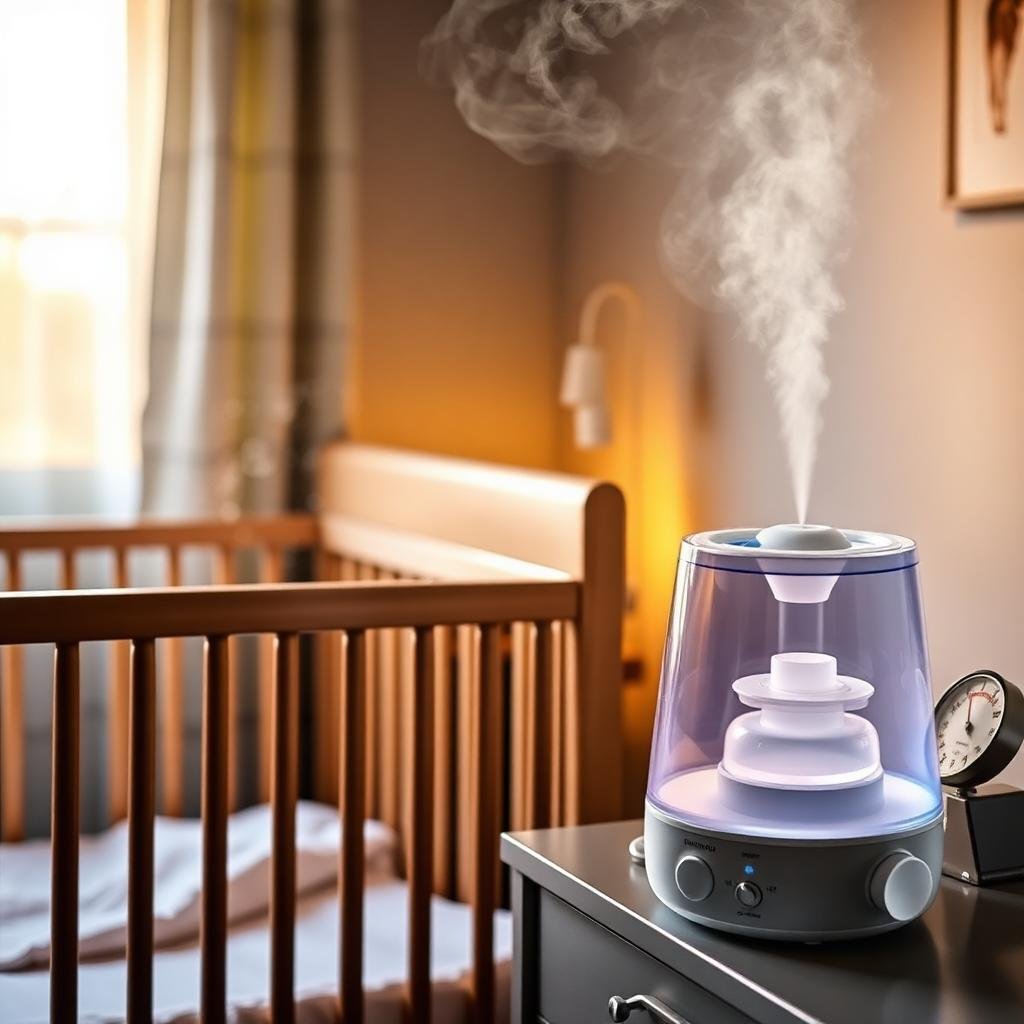
Use a cool-mist humidifier in the nursery, aimed away from the crib, running whenever the baby sleeps. Target 40–55% relative humidity — a $10 hygrometer from any hardware store confirms it. Clean the humidifier every 2–3 days (empty, wipe, fresh water) to prevent mold. Do not use warm-mist or vaporizer types near infants — burn and airway-irritation risk.
2. Saline, not suction, as the default
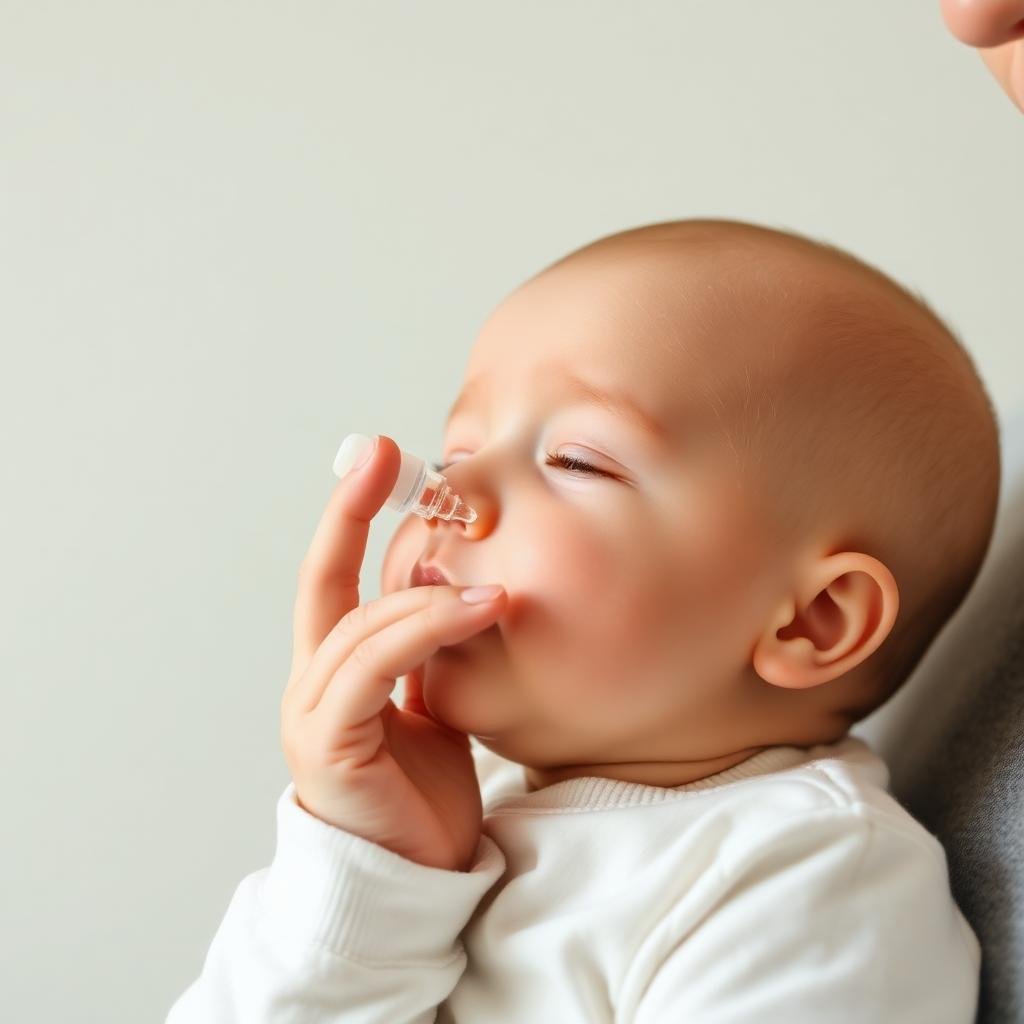
Saline drops (0.65% or 0.9% sodium chloride, over-the-counter) are the safest way to soften nasal mucus. Two drops in each nostril, wait 60 seconds, then let the baby sneeze or swallow it clear. Use before feeds and before sleep when congested, and once or twice a day preventively during dry season.
Reserve the bulb syringe or NoseFrida for when saline alone doesn’t clear a feeding-blocking amount of mucus. Suction no more than 2–3 times per day and never deeper than the tip you can see. Aggressive suction is one of the top causes of newborn nose bleeds pediatricians see.
3. Barrier moisturizer at the nostril rim
A tiny dab of plain petroleum jelly or a pediatrician-approved saline gel at the outer rim of each nostril (not deep inside) once a day helps the lining heal and prevents re-cracking. Skip essential oils, medicated ointments, and anything with menthol, camphor, or eucalyptus — those are not safe for infants.
The 7 red flags: call the pediatrician today
Any of the following moves this from “manage at home” to “get evaluated”:
- Baby under 2 months old with any nose bleed — even a small one.
- Bleeding that doesn’t stop after 10 minutes of steady pinching.
- Blood from both nostrils at once, or heavy blood filling the mouth.
- Second nose bleed within 24 hours, or 3+ in a week.
- Bruising elsewhere (thighs, arms, torso), bleeding gums, or petechiae (tiny red dots that don’t blanch when pressed).
- Fever ≥100.4°F (38°C) rectally under 3 months, or any fever with a nose bleed.
- Poor feeding, unusual sleepiness, pale color, or fussiness after a bleed.
Go to the ER now for:
– Bleeding that soaks through a burp cloth in under a minute
– A baby who looks pale, floppy, or hard to wake after a bleed
– Blood pouring from the mouth
– A recent facial injury with nose bleeding
– A baby with a known bleeding disorder or on blood-thinning medication
What the pediatrician will actually check
For a first isolated nose bleed with an obvious dry-air cause and a well-appearing baby, most pediatricians reassure, review humidification and suction technique, and follow up if it recurs.
For any red flag — or a second bleed without clear cause — expect some or all of:
- Full physical exam including skin (for bruising or petechiae), gums, liver, and spleen
- Nasal exam with a small light to look for a scratch, crust, or (rarely) a mass or foreign body
- Blood work — CBC, platelet count, PT/PTT, sometimes vitamin K level
- Feeding history including maternal nipple integrity if breastfeeding
- Medication and supplement review including any herbal drops
- Referral to pediatric ENT or hematology if bleeds are recurrent or workup abnormal
Bring the photo of the blood, note the time and duration, and mention any recent illness, vaccinations, or new environment.
Special situations
Swallowed maternal blood (the most common false alarm)
A breastfed baby with a mother who has cracked or bleeding nipples can swallow small amounts of maternal blood during feeds and later vomit or spit up dark, coffee-ground-looking material. It looks alarming but is not the baby’s blood. The Apt-Downey test run at the pediatrician’s office confirms it in minutes. Treat the nipple cracks (lanolin, better latch, lactation-consultant review) and the bleeds stop.
Blood after a bulb-syringe session
Bright red streaks in mucus right after suctioning are almost always a small surface scratch. Stop suctioning for 48 hours, use saline drops only, and add nightly humidification. If a true bleed follows, treat with the 5-minute protocol and skip suction for a week.
Nose bleed during a cold or RSV
Congestion + repeated nose-blowing (older babies) + dry heated air is a common combo. Humidify, saline every 3–4 hours, and treat the underlying illness. Persistent or heavy bleeding during any respiratory infection in a baby under 6 months deserves a same-day call.
Preemies and NICU graduates
Preemies have thinner nasal mucosa and are often on CPAP or high-flow oxygen, which dries the nose further. Any nose bleed in a former preemie under 3 months corrected age is a same-day pediatrician call.
Babies on vitamin K refusal
Babies whose parents declined the vitamin K shot at birth are at higher risk of bleeding for the first 6 months, including from the nose. Any bleeding in an unshot baby is an urgent evaluation, not a home-management situation.
Prevention checklist you can do tonight
- Add a cool-mist humidifier to the nursery, target 40–55% RH
- Move the crib away from heating vents and air-conditioner outlets
- Switch from routine suctioning to saline-drops-first, suction-only-if-needed
- Cap suction at 2–3 times per day
- Dab a rice-grain-sized amount of petroleum jelly at each nostril rim once a day
- Keep the nursery between 68–72°F / 20–22°C
- Check the humidifier tank daily, clean every 2–3 days
- Save the pediatrician’s after-hours number in your phone
Common myths worth clearing up
Myth: “Tip the baby’s head back to stop the bleed.”
Fact: Head slightly forward. Tipping back sends blood into the stomach and airway.
Myth: “Stuff a tissue up the nose.”
Fact: Never insert anything into a newborn’s nostril. Pinch from the outside.
Myth: “Ice on the forehead stops nose bleeds.”
Fact: No strong evidence. An ice pack on the bridge of the nose is optional and comforting; forehead ice does nothing.
Myth: “A nose bleed means the baby has leukemia.”
Fact: A single nose bleed with a clear cause (dry air, suction) in a well baby is not concerning. Recurrent bleeds, bruising, or petechiae are the pattern that prompts blood work — not one bleed alone.
Myth: “Saline drops are just water and don’t do anything.”
Fact: Isotonic saline softens crusts, thins mucus, and reduces the need for suctioning — the single most effective home tool for a congested infant.
When to Call Your Pediatrician
Same-day call for:
- Any nose bleed in a baby under 2 months
- Bleeding that doesn’t stop after 10 minutes of pinching
- Blood from both nostrils, or heavy blood in the mouth
- A second bleed within 24 hours, or 3+ bleeds in a week
- Bruising, petechiae, or bleeding gums alongside the nose bleed
- Fever, poor feeding, unusual sleepiness, or pale color after a bleed
- Any bleed in a preemie under 3 months corrected age
- Any bleed in a baby who did not receive the vitamin K shot
ER now for a soaked burp cloth in under a minute, a pale or floppy baby, blood pouring from the mouth, or a recent facial injury with bleeding.
Frequently Asked Questions
The answers below are general educational guidance and not a substitute for evaluation of your specific baby by a physician.
Can dry air really cause a newborn nose bleed?
Yes. Indoor humidity below 30% dries the thin lining inside a baby’s nose, forms crusts, and lets fragile vessels break. Humidifying to 40–55% and using saline drops usually prevents it.
How long should I pinch my baby’s nose to stop a nose bleed?
Pinch the soft part of the nose (below the bony bridge) for a full 5 minutes without peeking, with the baby upright and head slightly forward. If bleeding continues, pinch for another 5 minutes. Bleeding beyond 10 minutes needs urgent evaluation.
Is it safe to use a humidifier for a newborn?
Yes — a cool-mist humidifier placed a few feet from the crib, cleaned every 2–3 days, and set to keep humidity between 40–55% is safe and pediatrician-recommended. Avoid warm-mist or vaporizer types.
Can too much nasal suctioning cause a nose bleed?
Yes. Aggressive or frequent bulb-syringe or NoseFrida use is one of the most common causes of newborn nose bleeds. Limit suction to 2–3 times per day and always use saline drops first.
Should I put anything inside my baby’s nose to stop a nose bleed?
No. Never insert tissue, cotton, or ice inside a newborn’s nostril. Pinch from the outside only. A dab of petroleum jelly at the outer rim of the nostril once a day between bleeds is safe.
Is dark blood in my baby’s spit-up a nose bleed?
Not usually. Dark reddish-brown material in the spit-up of a breastfed baby is often swallowed maternal blood from cracked nipples. A quick test at the pediatrician’s office confirms it — call the same day.
When is a newborn nose bleed an emergency?
Go to the ER for bleeding that soaks a burp cloth in under a minute, a pale or floppy baby, blood pouring from the mouth, a recent facial injury, or any bleed in a baby with a known bleeding disorder.
Do frequent nose bleeds mean my baby has a bleeding disorder?
One nose bleed with a clear cause in a well baby is usually harmless. Three or more bleeds in a week, bleeding paired with bruising or petechiae, or bleeding in a baby who did not receive vitamin K should be evaluated with blood work.
Can breastfeeding cause a newborn to have blood in the nose or mouth?
Yes — indirectly. Cracked, bleeding nipples can lead to swallowed maternal blood that shows up in the baby’s spit-up. This is not the baby’s own blood and resolves once the nipple heals. See a lactation consultant for latch help.
What humidity level prevents newborn nose bleeds?
Target 40–55% relative humidity in the nursery. Below 30% dries the nasal lining and causes bleeds. A $10 hygrometer confirms the level and pairs well with a cool-mist humidifier.
Medically reviewed by Dr. Zeeshan Salam, MD — Pediatrician & Neonatologist. Reviewed July 2026. About the author.
Internal links: Health & Safety pillar · Safe room temperature for newborn sleep · Newborn grunting and straining · When to worry about baby fever · Baby soft spot pulsing rapidly · Best baby thermometer for newborns
Citations: AAP HealthyChildren – Nosebleeds in Children · Cleveland Clinic – Epistaxis in Infants · NIH – Humidification and Infant Airway · PMC – Epistaxis in Neonates: A Review · AAP – Vitamin K and the Newborn
📖 More from the Health & Safety Hub: your A-Z pediatrician guide to baby health, common illnesses, fevers, rashes, allergies, safety
Common mistakes parents make with newborn nose bleed from dry air
- Assuming a higher price means a safer or better-performing option — certification and correct fit matter far more.
- Skipping the instruction manual, weight limits and product registration, which is how recall notices reach you.
- Changing several things at once, so you cannot tell what actually helped your baby.
- Relying on advice from social media instead of your pediatrician when something feels off.
Related pediatrician-reviewed reading
- Newborn Allergic Rash
- Newborn sneezing
- Why Does My Newborn's Chin Quiver When Crying?
- How to Cut Newborn Nails Safely
- baby health & safety hub
References & further reading
Medical disclaimer: this article is for general education and does not replace individual medical advice. Always follow your own pediatrician’s guidance for your child.

One Comment