Baby-Led Weaning vs Purees: Balanced Guide
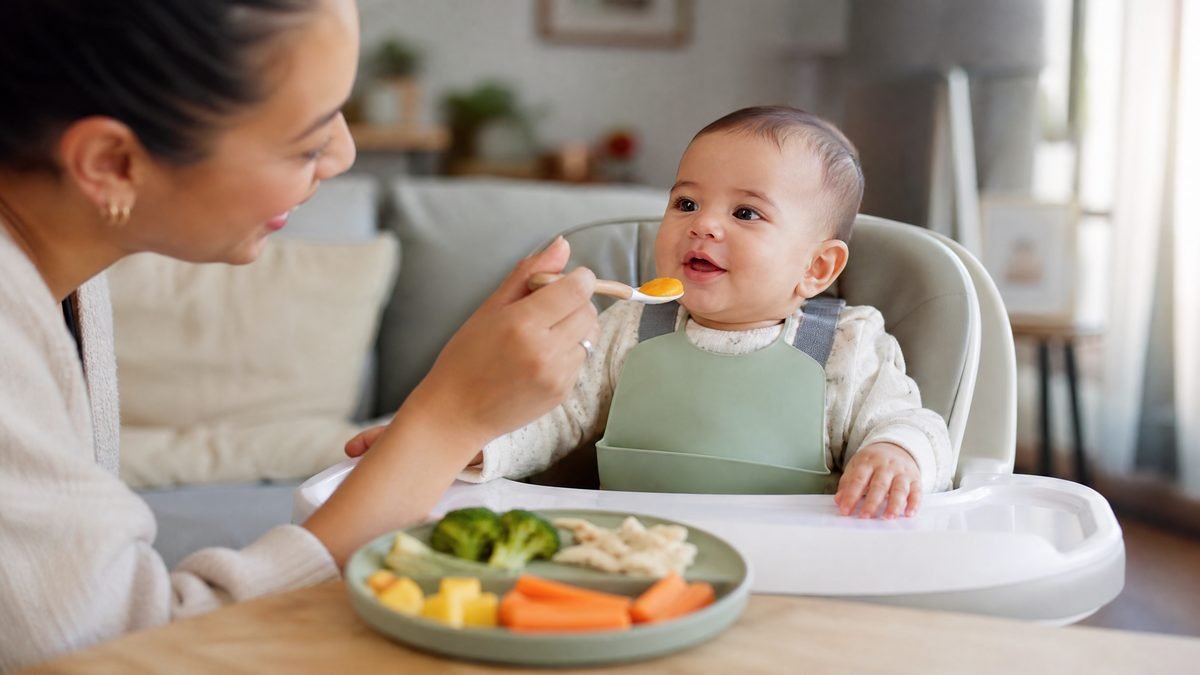
Baby-led weaning vs purees is best approached with developmentally appropriate, responsive guidance rather than a rigid rule.
Quick answer
## How families can think about the choice
Parents often ask whether to offer purees, let a baby self-feed finger foods (baby‑led weaning, or BLW), or do both. The safest, evidence-aligned approach focuses on three things:
- Developmental readiness (typically around 6 months, per guidelines)
- Safe textures and preparation for the infant’s skills
- Regular inclusion of iron-rich foods
For step‑by‑step readiness cues and starting solids basics, see our guide: introducing solids guide and the WHO complementary‑feeding overview: WHO complementary-feeding guidance
## What the best evidence says (cautious summary)
A 2026 systematic review published in Nutrition Reviews pooled randomized trials (four RCTs, 898 infants) but did not perform a formal meta‑analysis because studies varied in methods and outcomes. The reviewers reported similar choking outcomes and similar hemoglobin measures across BLW and traditional spoon‑feeding groups, and they concluded that BLW may be safe and nutritionally adequate when caregivers receive choking‑prevention education and include iron‑rich foods. The review also emphasized that the evidence base is limited and heterogeneous, so results should be interpreted cautiously: 2026 systematic review on baby-led weaning
This aligns with global guidance that food consistency and variety should increase gradually with the infant’s ability (WHO): WHO complementary-feeding guidance
## Practical decision framework (table)
| When to favour… | What it looks like | Why it may suit your family | Considerations and next steps |
|---|---|---|---|
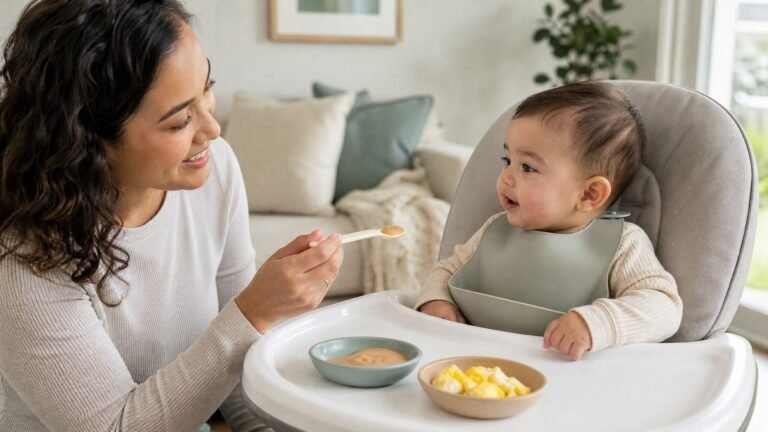
| Spoon‑fed purees (responsive spoon‑feeding) | Caregiver offers small spoonfuls, follows baby’s cues | Easier to ensure specific nutrients (e.g., iron‑fortified cereal, pureed meats) and to control ingredients | Use responsive feeding (follow hunger/fullness). Offer varied textures over weeks. See iron guidance: iron-rich foods guide |
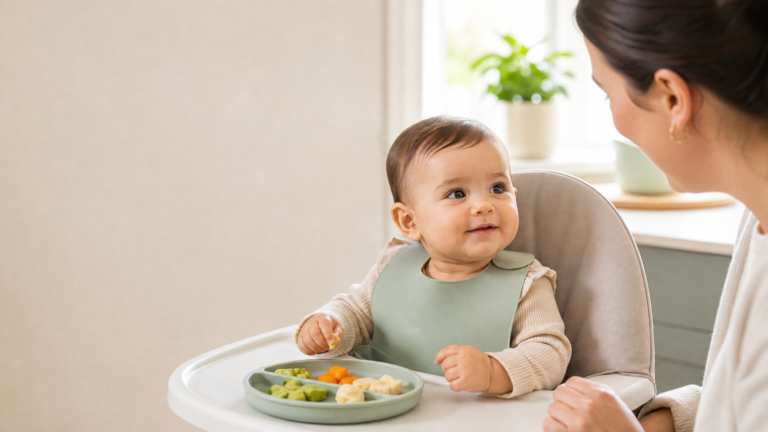
| Self‑feeding (BLW) | Baby offered soft, appropriately shaped finger foods to pick up and eat | Encourages exploration, self‑feeding practice, and family‑style meals | Learn safe preparations and supervise closely. Include iron‑rich finger foods (mashed meat, soft legumes). Review safety tips: baby-led-weaning safety guide |
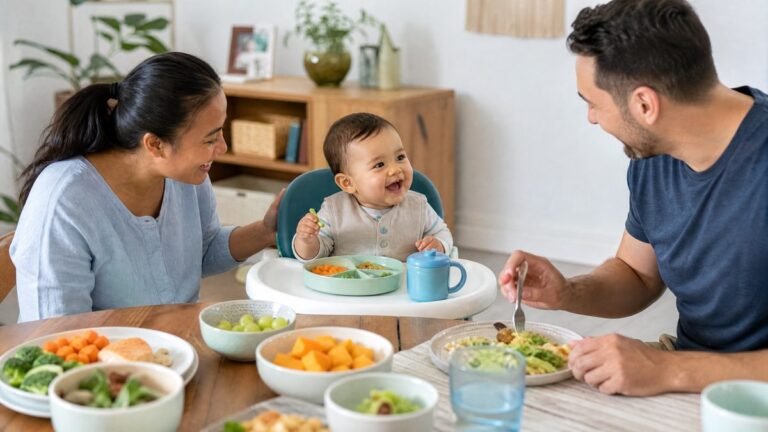
| Flexible/combined approach | Mix of spoon‑fed purees and self‑feeding opportunities at same meal | Balances nutrient assurance with hands‑on practice — may fit many family routines | Adjust balance by day and by baby’s interest. See sample schedules: 6-month feeding schedule |
Note: none of these paths is guaranteed superior; responsive feeding—watching and following the baby’s cues—is the shared principle.
## Safety and choking prevention
Choking is a real risk for all infants learning to eat. Risk depends more on food size, shape, and texture than on whether a caregiver or the baby is placing food in the mouth. Basic precautions:
- Offer age‑appropriate textures (soft, easily mashable for early solids).
- Cut and prepare foods to reduce choke risk; avoid whole grapes, nuts, large pieces of raw veggies, whole hot dogs, and similar hazards listed by the CDC: CDC choking guidance
- Always have the baby seated upright and supervised in a secure seat; do not feed in moving cars or strollers.
- Take a certified infant/child CPR and first‑aid course; for first‑aid guidance see the British Red Cross summary for choking response: British Red Cross infant first-aid guidance
If a baby appears to be unable to breathe, make noise, or becomes pale/blue, call your local emergency number right away. This article does not replace emergency training.
## Iron and nutrition points to watch
Breast milk and formula remain key calories to 12 months. Around 6 months, complementary foods should include iron‑rich options because stores from birth begin to decline for many infants. Heme iron from meat, poultry, and fish is absorbed more easily; iron‑fortified cereals and appropriate purees are reliable sources. For practical food ideas and safety when offering iron‑rich options, see: first foods guide and iron-rich foods guide
If you are concerned about growth, pale skin, low activity, or other signs of possible low iron or anemia, talk to your pediatric clinician; screening and supplement decisions are clinical matters.
## How to combine methods at a meal (examples)
- Offer one spoon‑fed bite of a pureed iron food (for example, pureed meat or iron‑fortified cereal) along with easy finger foods (soft-cooked vegetable sticks, mashed fruit, scrambled egg strips).
- Let the baby explore and pick up finger foods while you offer spoonfuls when the baby pauses or looks for a bite.
- Keep portions small, and follow the baby’s cues for stopping or continuing.
For detailed starter plans and schedules, see our step‑by‑step guide: introducing solids guide and sample feeding schedules: 9-month feeding schedule
## When to seek extra help
Consider earlier referral to a pediatric clinician or feeding specialist if
- The baby cannot sit with support, has persistent coughing/choking on thin purees, or shows clear swallowing difficulties.
- Weight gain is below expected or feeding is causing stress for parent or baby.
- You have questions about allergy risk in a baby with severe eczema or known food reactions (discuss timing and testing with your clinician; see AAP summary on allergen introduction for population‑level guidance: AAP allergen guidance).
## Bottom line
The choice between baby‑led weaning and purees does not have to be an all‑or‑nothing decision. Current randomized‑trial evidence is limited but shows similar choking and hemoglobin outcomes across approaches when caregivers use safe practices and include iron‑rich foods. Responsive feeding, careful food preparation, and attention to the infant’s readiness are the priorities.
## About the author
Author and medical reviewer: Dr. Ahmad Raza, MD, Pediatrics. This article was reviewed and approved for publication on August 22, 2026.
## References
- Systematic review (2026). Nutrition Reviews — four RCTs, no meta‑analysis; similar choking and hemoglobin outcomes; limited evidence: 2026 systematic review on baby-led weaning
- World Health Organization — complementary feeding and gradual texture progression: WHO complementary-feeding guidance
- Centers for Disease Control and Prevention — when, what, and how to introduce solid foods: CDC solids guidance
- American Academy of Pediatrics / HealthyChildren.org — advice on allergen introduction and timing when clinically indicated: AAP allergen guidance
Related ChildBloom guidance
For related guidance, see introducing solids guide, baby-led-weaning safety guide, iron-rich foods guide, 6-month feeding schedule, 9-month feeding schedule.
Evidence links
This article follows current guidance from 2026 systematic review on baby-led weaning, WHO complementary-feeding guidance, CDC solids guidance, AAP allergen guidance.


8 Comments