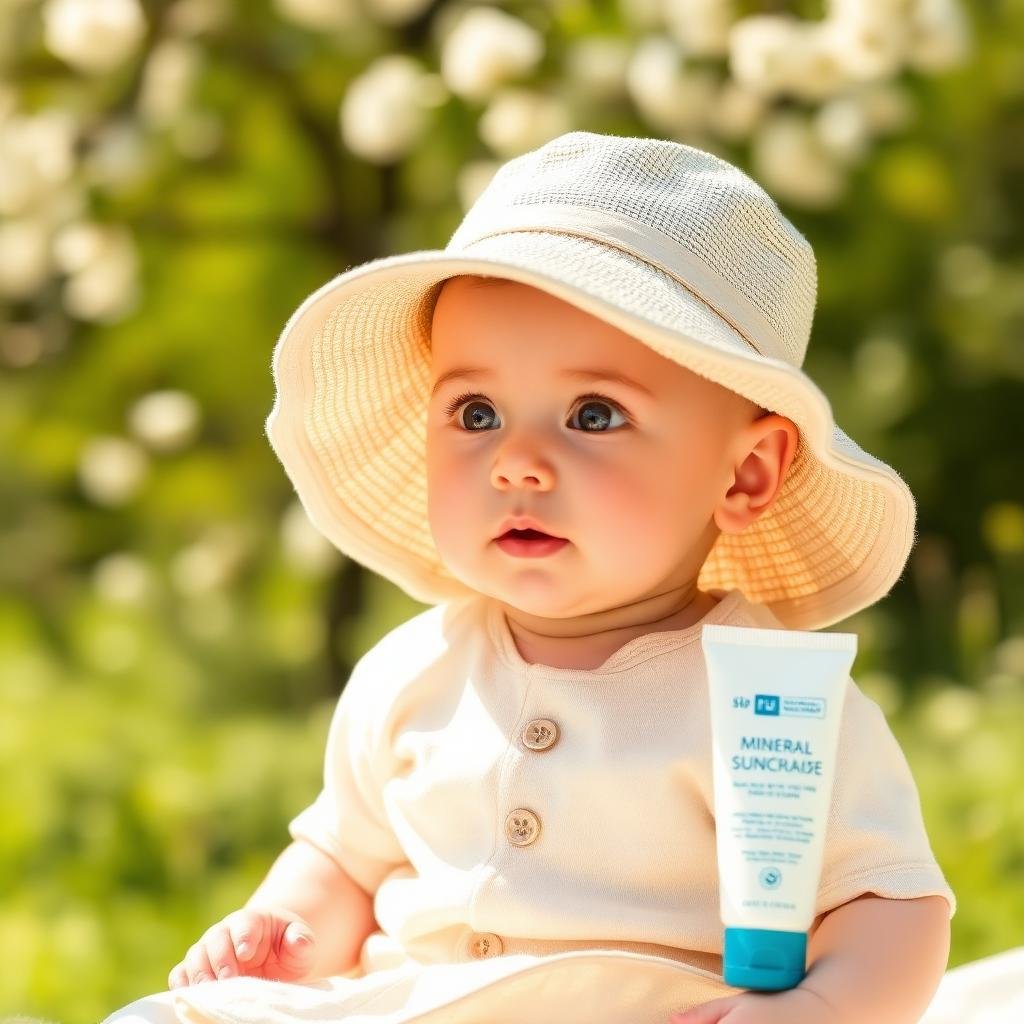
Spring sun protection for babies: Spring Sun Safety: When to Start Sunscreen & UV Index Rules for Babies
Medically reviewed by Dr. Ahmad Raza, MD (Pediatrics) — ChildBloom Medical Review Panel. Last updated: August 4, 2026.
Editorial & affiliate disclosure: our guidance is written and reviewed by clinicians. ChildBloom may earn a commission from qualifying purchases made through links on this page, which never changes what our pediatric reviewers recommend.
Looking for clear answers about spring sun protection for babies? This pediatrician-reviewed guide covers what matters, what to skip, the safety checks that count, and exactly when to involve your doctor — based on current AAP, CDC and CPSC guidance on spring sun protection for babies.
Quick pediatrician summary: spring sun protection for babies
Short answer: A pediatrician explains spring sun protection for babies: what is normal, the real risks, red flags to watch for and exactly when to call your doctor.
Spring sunshine means more time outdoors — and more UV exposure for your baby’s delicate skin. Here’s a pediatricians-reviewed guide to sun protection for babies this spring and year-round.
Why Baby Skin is Different
An infant’s skin is 20-30% thinner than adult skin and produces melanin (the protective pigment) at much lower levels. This means:
- Babies burn faster and more severely than adults in the same sun
- UV damage in the first year of life significantly increases lifetime skin cancer risk
- A baby’s skin absorbs more of every topical product — including sunscreen chemicals
- Infants under 6 months have almost no capacity to protect themselves from sun exposure
Sun Protection Methods (In Order of Effectiveness)
1. Shade — The Gold Standard
Keep babies under 6 months completely out of direct sunlight. Nursery strollers with built-in canopies, covered porch areas, tree shade, or dedicated shade structures are the best protection.
2. Clothing — Physical UV Protection
- Long-sleeve, lightweight, tightly woven cotton clothing in light colors
- Wide-brimmed hats covering ears and neck
- UV-protective swimwear (UPF 50+ rated) — available for infants
3. Sunscreen — For Exposed Areas Only
The AAP recommends sunscreen for babies over 6 months on exposed skin (face, hands, feet). For babies under 6 months with unavoidable sun exposure, apply sunscreen to small exposed areas only (face, backs of hands) after checking with your pediatrician.
Choosing a Baby Sunscreen
Look for mineral (physical) sunscreens — they sit on top of skin and reflect UV rays rather than being absorbed:
- Active ingredient: Zinc oxide or titanium dioxide (or both)
- Avoid: Oxybenzone (hormone disruptor), octinoxate (reef and skin harm), fragrance
- Form: Sunscreen stick for face (less running into eyes), lotion for body
- SPF: 30-50 is sufficient — higher doesn’t add meaningful protection
- Broad spectrum: Must say broad spectrum to protect against both UVA and UVB
Top picks: Thinkbaby Safe Sunscreen, Badger Baby SPF 40, Blue Lizard Australian Baby Sunscreen, Vanicream SPF 60.
Spring-Specific Sun Hazards
- Reflected UV: Snow, water, and sand反射 UV — spring skiing or lakeside trips increase exposure significantly
- Altitude: UV intensity increases 4% per 1,000 feet of elevation — mountain hiking requires extra diligence
- Late winter/spring sunburn: Snow reflection + high altitude = double UV exposure in late winter/spring recreation
- Melted snow on skin: Wet skin burns faster than dry skin
After-Sun Care
- Mild sunburn: Cool (not cold) compresses, aloe vera gel, and extra breastfeeding/formula for hydration
- Red, painful skin: Over-the-counter infant acetaminophen (Tylenol) per pediatrician dosing for pain/fever from sunburn
- Blistering sunburn: Seek medical care immediately — this is a burn injury requiring treatment
- Never apply petroleum-based products (petroleum jelly) to sunburn — they trap heat in the skin
Spring Outdoor Time: Safe Schedule
The sun is strongest between 10am and 4pm, but even on cloudy spring days, 80% of UV rays penetrate cloud cover. Use a dedicated UV meter app or check the UV index forecast before planning outdoor time.
For spring outings with baby: aim for early morning (before 10am) or late afternoon (after 4pm), always with shade available.
Sun protection is one of the most evidence-based things you can do for your child’s long-term health. Start these habits now and they’ll protect your child for life.
Related: Baby Sun Safety: Sunscreen, Shade & What Actually Works
Related: Seasonal Baby Care Guide
Related: Newborn Rashes: A Visual Identification Guide
📖 More from the Health & Safety Hub: your A-Z pediatrician guide to baby health, common illnesses, fevers, rashes, allergies, safety
Year-Round Sun Protection
Sun Protection in Every Season
Sun protection is not just for summer. Snow reflects up to 80% of UV rays, significantly increasing exposure during winter activities. UV rays penetrate clouds, so protection is needed on overcast days. Autumn and spring sun, when the sun is lower in the sky, can still cause burns, especially during extended outdoor time. Make sun protection a consistent habit year-round, regardless of the weather or season.
Teaching Sun Safety Habits Early
Children learn sun safety habits from their parents. Model good sun protection by wearing sunscreen, a hat, and sunglasses yourself. Make applying sunscreen a normal part of the outdoor routine, like putting on shoes before going outside. Explain in simple terms why you protect your skin: “The sun is strong, and we need to protect our skin so it stays healthy.” As your child grows, involve them in choosing their own sun hat and applying their own sunscreen (with supervision).
Choosing Baby Products: An Evidence-Based Approach
The baby product market is a multi-billion dollar industry that markets directly to exhausted, anxious new parents with the promise that the right product will solve their baby’s sleep problems, feeding challenges, or developmental concerns. The reality is that most baby products are unnecessary, and the ones that matter most are those that address genuine safety or health needs. Understanding how to evaluate baby products through an evidence-based lens can save you money, reduce decision fatigue, and — most importantly — keep your baby safe.
The safety of baby products is regulated by the Consumer Product Safety Commission (CPSC), but the level of regulation varies dramatically by product category. Car seats, cribs, and pacifiers are subject to mandatory federal safety standards with rigorous testing requirements. Other products — including baby carriers, nursing pillows, diaper bags, and many toys — are subject only to voluntary standards, meaning that manufacturers choose whether to test their products. When evaluating any baby product, look for certification from the Juvenile Products Manufacturers Association (JPMA), which indicates that the manufacturer has voluntarily submitted the product for independent safety testing. Also check the CPSC website for recall information before purchasing any product, especially if you are buying secondhand.
The car seat is the single most important safety purchase you will make for your baby, and the evidence supports a clear hierarchy of priorities. The safest car seat is the one that fits your vehicle, fits your child, and will be installed and used correctly on every single ride. All car seats sold in the United States meet federal safety standards, which means that the most expensive car seat is not necessarily safer than a mid-range model. The critical features to look for are ease of installation (a seat that is difficult to install correctly is less likely to be installed correctly), the presence of a five-point harness, and a high rear-facing weight and height limit (the AAP recommends rear-facing until at least age 2, and ideally until the child reaches the maximum height or weight allowed by the seat). The extended rear-facing position is five times safer than forward-facing, and the evidence does not support the common concern that rear-facing causes leg injuries — leg injuries in forward-facing crashes are actually more common.
Baby monitors are a category where the evidence and the marketing are particularly divergent. For families who room-share — which the AAP recommends for at least the first 6 months — a monitor is largely redundant. For families where the baby sleeps in a separate room, a simple audio monitor is sufficient for safety. Video monitors can be helpful for checking on a sleeping baby without entering the room, but they can also become a source of parental hypervigilance and anxiety. Wearable monitors, pulse oximeters, and “smart” sleep trackers have not been shown to prevent SIDS and are not recommended by the FDA or the AAP for healthy infants. These devices can produce false alarms that cause unnecessary emergency department visits, and they can create a false sense of security that leads to unsafe sleep practices. The safest monitor is a nearby parent, not a technological device.
Feeding products — bottles, breast pumps, high chairs — are necessary but do not require the premium-priced options to be effective. The best bottle is the one your baby will accept, and it is common to need to try two or three different brands before finding one that works. The best breast pump is the one that fits your nipples correctly, is comfortable to use, and effectively removes milk — and the evidence suggests that manual pumps can be as effective as electric pumps for occasional use. The best high chair is one that is stable, easy to clean, and has a five-point harness (not just a lap belt, which does not prevent a child from sliding down and strangling). The features that add cost — fancy designs, multiple recline positions, built-in Bluetooth speakers — do not add safety or nutritional value.
Clinical Pearl: Navigating the World of Baby Toys
The baby toy market is saturated with products that claim to boost development, but the evidence tells a different story. The best toys for babies are simple, open-ended, and encourage exploration and creativity. A cardboard box, a set of wooden blocks, and a collection of household objects (clean, safe, and age-appropriate) are more developmentally valuable than most electronic toys that light up, sing songs, and claim to teach letters and numbers. The research on toy-based learning shows that the most important factor is not the toy itself, but the interaction it facilitates between the child and a caregiver. A simple toy that a parent and child explore together — talking about the colors, describing the textures, taking turns stacking and knocking down — is far more beneficial than a fancy electronic toy that the child interacts with alone. When choosing toys, prioritize those that encourage creativity, problem-solving, and social interaction over those that provide passive entertainment.
If you have specific concerns about your child’s health, development, or behavior that are not addressed in this article, please bring them to your next pediatrician visit. Every child is unique, and personalized medical advice — based on your child’s individual history, examination findings, and family context — is always more valuable than generalized guidance. Your pediatrician is your partner in navigating the complex and rewarding journey of raising a healthy, happy child.
Baby Products: What Research Says About Safety and Value
The baby product industry is a $12 billion market that thrives on parental anxiety. The promise that the right product will make your baby smarter, sleep better, be safer, or develop faster is a powerful marketing message, but it is rarely supported by evidence. In my clinical practice, I have developed a framework for evaluating baby products that I share with every new parent, and it has saved countless families from unnecessary purchases and, in some cases, from products that are actually harmful.
The first principle is that the most important factor in your baby’s health and development is not a product — it is you. The thousands of dollars spent on educational toys, development-tracking monitors, and specialized sleep products would be better spent on parental leave, childcare, and mental health support. The evidence for this is overwhelming: the quality of the parent-child relationship is a stronger predictor of child outcomes than any product or intervention. This does not mean that products are irrelevant — it means that they should be evaluated in the context of whether they genuinely support the parent-child relationship, not whether they promise to replace it.
The second principle is that the most expensive product is not necessarily the safest or most effective. In the car seat market, for example, all seats sold in the United States must meet federal safety standards, and a $150 seat and a $500 seat provide equivalent crash protection if both are used correctly. The extra cost buys convenience features — easier installation, easier harness tightening, more padding — that can make correct use more likely, but they do not add safety beyond what the federal standard requires. The safest car seat is the one that will be installed correctly on every ride, and the features that make correct installation easier are worth paying for. The features that add style, comfort, or entertainment value are not.
The third principle is that the baby product market is not well-regulated. While car seats, cribs, and pacifiers are subject to mandatory federal safety standards, many other products are subject only to voluntary standards, meaning that manufacturers choose whether to test their products for safety. Products like baby carriers, nursing pillows, diaper bags, and many toys have no mandatory safety testing requirement. When evaluating any baby product, look for the Juvenile Products Manufacturers Association (JPMA) certification mark, which indicates that the manufacturer has voluntarily submitted the product for independent safety testing. Also check the Consumer Product Safety Commission (CPSC) website for recall information before purchasing any product, especially if you are buying secondhand or receiving hand-me-downs.
Frequently asked questions about spring sun protection for babies
Is spring sun protection for babies normal in babies?
Mild, short-lived episodes are common and usually settle with simple home care. It is not normal if your baby is feeding poorly, unusually sleepy, breathing fast, has a fever under 3 months of age, or the problem is getting worse instead of better.
When should I call the doctor about spring sun protection for babies?
Call the same day for fever in a baby under 3 months, breathing difficulty, repeated vomiting, dehydration signs such as very few wet diapers, unusual floppiness or a rash that does not fade with pressure. Trust your instinct — if something feels wrong, get your baby seen.
What can I safely do at home for spring sun protection for babies?
Focus on comfort, hydration, feeding and rest, and use only medicines and doses your pediatrician has approved for your baby’s age and weight. Avoid honey under 12 months, avoid over-the-counter cough and cold products under 6 years, and never give aspirin.
Common mistakes parents make with spring sun protection for babies
- Assuming a higher price means a safer or better-performing option — certification and correct fit matter far more.
- Skipping the instruction manual, weight limits and product registration, which is how recall notices reach you.
- Changing several things at once, so you cannot tell what actually helped your baby.
- Relying on advice from social media instead of your pediatrician when something feels off.
Related pediatrician-reviewed reading
- Best UPF 50+ Baby Sun Protection Clothing & Hats
- Best Digital Thermometers for Babies
- Fever in Babies
- Common Rashes in Babies and When to Worry
- baby health & safety hub
References & further reading
Medical disclaimer: this article is for general education and does not replace individual medical advice. Always follow your own pediatrician’s guidance for your child.

One Comment
Comments are closed.