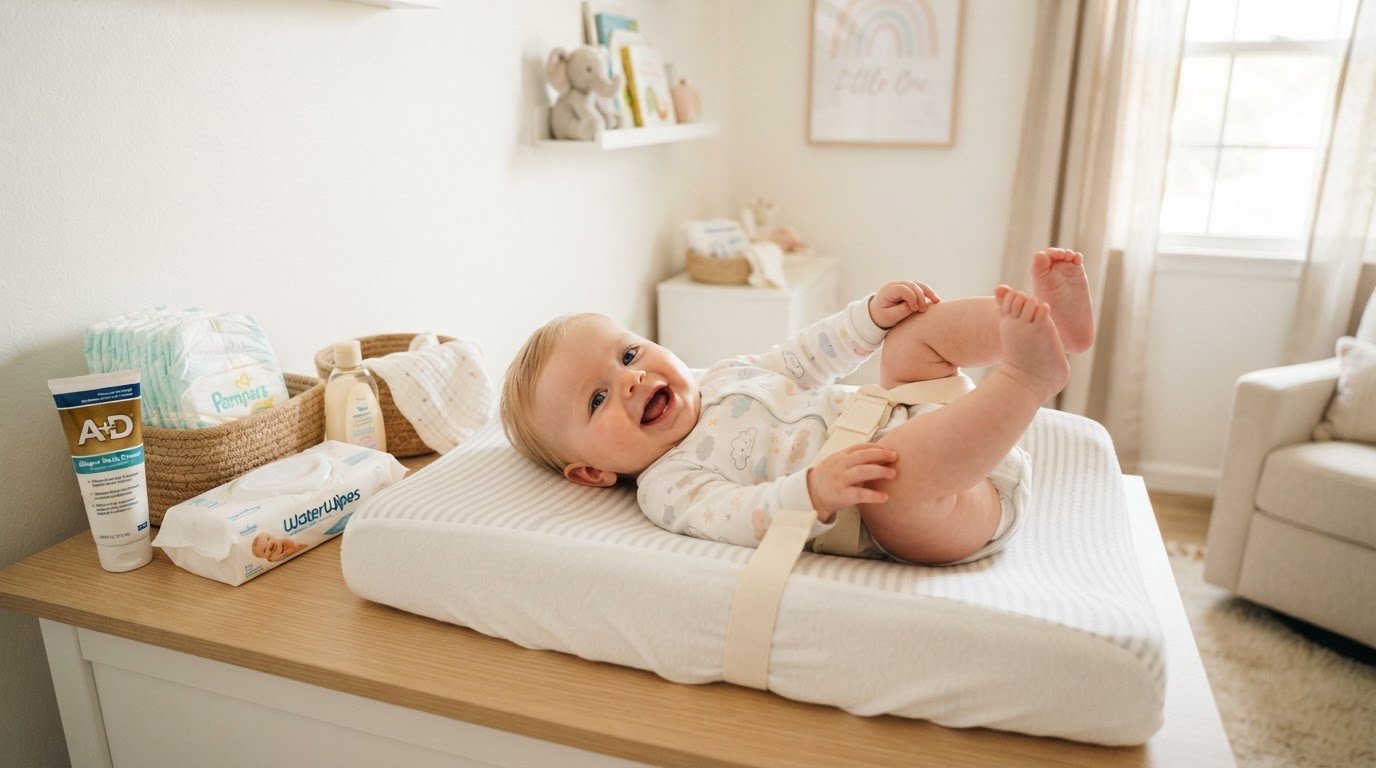
Baby Diaper Rash Prevention: 10 Tips for Healthy Skin
Medically reviewed by Dr. Ahmad Raza, MD (Pediatrics) — ChildBloom Medical Review Panel. Last updated: August 4, 2026.
Editorial & affiliate disclosure: our guidance is written and reviewed by clinicians. ChildBloom may earn a commission from qualifying purchases made through links on this page, which never changes what our pediatric reviewers recommend.
Looking for clear answers about baby diaper rash prevention? This pediatrician-reviewed guide covers what matters, what to skip, the safety checks that count, and exactly when to involve your doctor — based on current AAP, CDC and CPSC guidance on baby diaper rash prevention.
Diaper rash prevention: the routine that matters
Use this checklist to build a repeatable routine rather than changing several products at once. The right approach depends on your baby’s skin, diaper fit, stool or urine exposure, and how the rash changes over time.
Quick pediatrician summary: baby diaper rash prevention
Short answer: A pediatrician explains baby diaper rash prevention: gentle routines, ingredients to avoid, product picks and the skin signs that need a doctor.
Introduction
Baby diaper rash is one of the most common skin problems in the first year of life. Almost every baby gets it at some point. The good news? Baby diaper rash prevention is simpler than you might think.
Diaper rash appears as red, irritated skin in the diaper area. It can make your baby uncomfortable, fussy, and reluctant to lie still during changes. But with the right habits, most cases are easy to avoid. Gentle bath time routines can also soothe irritated skin.
This guide shares 10 proven baby diaper rash prevention tips, along with advice on treating mild rashes at home and knowing when to call the doctor. These tips come from trusted sources like the American Academy of Pediatrics (AAP) and the Mayo Clinic.
Let’s keep your baby’s skin healthy and comfortable.
Table of Contents
- What Causes Diaper Rash in Babies?
- 10 Baby Diaper Rash Prevention Tips
- Best Diaper Rash Creams and Ointments
- How to Treat Diaper Rash at Home
- When Diaper Rash Becomes Serious
- Cloth Diapers vs. Disposables: Does It Matter?
- Key Takeaways
- Frequently Asked Questions
- When to Call the Pediatrician
- Bottom Line
- References
What Causes Diaper Rash in Babies?
Before you can prevent diaper rash, you need to understand what causes it. Several factors contribute to this common skin problem.
Common Causes of Diaper Rash
- Prolonged moisture — Wet or soiled diapers left against the skin for too long break down the skin barrier.
- Friction — Rubbing from a tight diaper irritates sensitive skin.
- Urine and stool — Enzymes in stool and the acidity of urine can burn the skin.
- Yeast infection (Candida) — Warm, moist environments encourage yeast growth, which leads to a specific type of rash.
- Bacterial infection — Bacteria can infect broken or irritated skin.
- Sensitive skin — Some babies have naturally more reactive skin.
- New products — New diapers, wipes, or creams may trigger contact dermatitis.
- Diet changes — Starting solid foods changes stool composition and frequency, which can irritate skin.
- Antibiotic use — Antibiotics can disrupt normal bacteria balance and increase the risk of yeast diaper rash.
Quick Answer: Baby diaper rash prevention works best when you keep the diaper area clean, dry, and well-ventilated. Frequent changes and barrier creams are your strongest tools.
10 Baby Diaper Rash Prevention Tips
Follow these 10 tips to protect your baby’s delicate skin from diaper rash.
1. Change Diapers Frequently
Change wet or soiled diapers as soon as possible. Newborns may need changes every 2 to 3 hours. Older babies need changes every 3 to 4 hours. Check diapers regularly and change them before they become saturated.
2. Clean Gently but Thoroughly
Use warm water and a soft cloth or cotton ball to clean the diaper area. If you use wipes, choose fragrance-free, alcohol-free options. Wipe gently — never scrub — and always wipe front to back for girls to prevent urinary tract infections.
3. Let the Skin Air Dry
After cleaning, let your baby’s skin air dry completely before putting on a fresh diaper. You can also pat the area gently with a soft towel. Moisture trapped under a diaper is a leading cause of rash.
4. Apply a Barrier Cream Every Change
Use a thick layer of diaper cream or ointment with every change. Products containing zinc oxide or petroleum jelly create a protective barrier between skin and moisture. Think of it like sunscreen — you want a visible layer on the skin.
5. Avoid Tight-Fitting Diapers
Diapers that are too tight increase friction and limit airflow. Choose the right size for your baby’s weight. If your baby is between sizes, go up rather than down. Avoid fastening tabs too snugly.
6. Give Diaper-Free Time Daily
Let your baby spend some time each day without a diaper. Lay a waterproof mat or towel on a safe surface and let your baby kick and play bare-bottomed. Air exposure helps skin stay dry and healthy. Aim for 10 to 15 minutes, several times a day.
7. Choose the Right Diapers and Wipes
Some babies react to dyes, fragrances, or chemicals in certain diaper brands or wipes. If your baby gets rashes frequently, try switching to hypoallergenic, fragrance-free diapers and wipes. Look for products labeled “sensitive skin.”
8. Wash Cloth Diapers Properly
If you use cloth diapers, wash them in hot water with a gentle, fragrance-free detergent. Avoid fabric softeners and bleach, which can irritate baby skin. Rinse thoroughly to remove all soap residue.
9. Watch for Food Triggers
Once your baby starts solids, some foods can cause more acidic stools. Citrus, tomatoes, and strawberries may trigger diaper rash in sensitive babies. Notice if rashes worsen after specific foods and adjust accordingly.
10. Use the Right Amount of Cream
More cream does not always mean better protection. Apply a generous but even layer. Too much cream can clog pores and trap moisture. Reapply a thin layer with each change and add extra when you see redness.
Baby Diaper Rash Prevention Checklist
Best Diaper Rash Creams and Ointments
Barrier creams are your best defense against diaper rash. Here is a comparison of popular types.
| Type | Key Ingredient | Best For | Notes |
|---|---|---|---|
| Zinc oxide cream | Zinc oxide | Everyday protection, mild rash | Thick barrier, easy to see |
| Petroleum jelly | Petroleum jelly | Moisture barrier, sensitive skin | Light, affordable, widely available |
| Lanolin cream | Lanolin | Dry, cracked skin | Natural, thick; may trigger wool allergy |
| Dimethicone cream | Dimethicone | Moderate rash | Creates breathable barrier |
| Antifungal cream | Clotrimazole or miconazole | Yeast rash only | Use only if pediatrician recommends |
Tip: Keep a tube of diaper cream in every diaper bag and changing station. You will always have it when you need it.
How to Treat Diaper Rash at Home
If your baby already has a mild diaper rash, these steps can help heal it quickly.
- Change diapers more often. Aim for every 1.5 to 2 hours during a rash.
- Use extra-thick barrier cream. Apply a generous layer at every change.
- Give more diaper-free time. Air exposure speeds healing.
- Use a warm (not hot) bath. A short warm bath can soothe irritated skin. Add colloidal oatmeal if desired.
- Pat dry, never rub. After baths or cleaning, pat the skin gently.
- Avoid new products during a rash. Stick to what you know works.
Most mild rashes improve within 2 to 3 days with these home care steps.
When Diaper Rash Becomes Serious
Not all diaper rashes are mild. Some need medical attention. Watch for these warning signs.
Signs of a Serious Diaper Rash
- Rash does not improve after 3 days of home care
- Bright red rash with well-defined edges
- Red bumps or pus-filled sores (possible bacterial infection)
- White patches with red spots around them (possible yeast infection)
- Rash that spreads beyond the diaper area
- Baby has a fever with the rash
- Baby seems in significant pain or distress
- Skin is cracked, bleeding, or oozing fluid
Common Types of Severe Diaper Rash
- Yeast diaper rash (Candidiasis): Caused by a fungal infection. Looks bright red with small red spots around the edges. Often appears in skin folds. Requires antifungal treatment.
- Bacterial diaper rash: May show golden-yellow crusts (impetigo) or painful, swollen areas. Needs antibiotic treatment.
- Allergic contact dermatitis: Caused by reaction to diaper materials, wipes, or creams. Red, itchy skin where the product touched.
Cloth Diapers vs. Disposables: Does It Matter?
Parents often ask whether cloth or disposable diapers are better for preventing rash.
Comparison
| Feature | Cloth Diapers | Disposable Diapers |
|---|---|---|
| Absorbency | Lower — needs more frequent changes | Higher — super-absorbent gels |
| Breathability | More breathable | Varies by brand |
| Chemical exposure | Fewer chemicals | Some brands contain dyes or fragrances |
| Cost | Lower long-term cost | Higher ongoing cost |
| Convenience | Requires washing | Easy to toss and go |
| Rash risk | Slightly higher if not changed often | Slightly lower with super-absorbent types |
What the Research Says
No studies prove that one type clearly prevents more diaper rash than the other. The key factor is how often you change the diaper and how well you keep the skin clean and dry. Choose the type that helps you keep your baby’s diaper area clean, dry, and comfortable.
Key Takeaways
- Baby diaper rash prevention starts with frequent diaper changes and gentle cleaning.
- Always let the skin air dry before applying a barrier cream.
- Use a zinc oxide or petroleum jelly cream at every diaper change.
- Give your baby diaper-free time daily for air exposure.
- Choose hypoallergenic, fragrance-free diapers and wipes.
- Watch for signs of yeast or bacterial infection.
- If a rash lasts more than 3 days, or shows warning signs, call your pediatrician.
- Both cloth and disposable diapers work — the key is consistent hygiene.
- Diet changes can affect stool acidity and trigger rashes.
- Most diaper rashes clear up quickly with proper home care.
Frequently Asked Questions
1. How do I prevent diaper rash in newborns?
Change diapers every 2 to 3 hours, clean with warm water, let skin air dry, and apply a zinc oxide barrier cream. Diaper-free time also helps. These baby diaper rash prevention steps work well for newborns.
2. What is the fastest way to heal diaper rash?
Change diapers more frequently, apply a thick barrier cream, give extra diaper-free time, and use warm baths. Most mild rashes heal in 2 to 3 days.
3. Is diaper rash a sign of an allergy?
It can be. If a rash appears after switching diapers, wipes, or creams, your baby may have contact dermatitis. Try switching back to the previous product or choose hypoallergenic options.
4. Can I use powder to prevent diaper rash?
Pediatricians advise against using talcum powder. Powder can be inhaled and harm your baby’s lungs. Cornstarch-based powders are safer but creams and ointments work better as barriers.
5. When should I take my baby to the doctor for diaper rash?
See your pediatrician if the rash lasts more than 3 days, spreads, has pus or open sores, or if your baby has a fever. These signs may indicate an infection that needs prescription treatment.
6. Do certain foods cause diaper rash?
Acidic foods like citrus, tomatoes, and strawberries can increase stool acidity and trigger rashes in sensitive babies. Watch for patterns between new foods and rashes.
7. Is diaper rash more common with cloth diapers?
Not necessarily. Cloth diapers can lead to more rashes if not changed frequently enough, but disposables can also cause rashes from chemicals. Consistent hygiene matters most.
8. Can I use coconut oil for diaper rash?
Coconut oil has some antibacterial and moisturizing properties, but it does not provide as strong a moisture barrier as zinc oxide or petroleum jelly. You can use it as a supplement, but not as your primary barrier cream.
When to Call the Pediatrician
Call your baby’s doctor if you notice any of these signs:
- The rash does not improve after 3 days of home treatment
- The rash is bright red, swollen, or has raised bumps
- You see pus, bleeding, or open sores
- Your baby has a fever along with the rash
- The rash spreads to areas outside the diaper region
- Your baby seems very uncomfortable, cries during changes, or refuses to lie down
- You suspect a yeast or bacterial infection
Early treatment helps serious rashes heal faster and prevents complications.
Bottom Line
Baby diaper rash prevention is about consistency. Change diapers often, keep the skin clean and dry, use a good barrier cream, and give your baby plenty of diaper-free time each day. These simple steps prevent most rashes before they start.
When a rash does appear, do not panic. Most cases clear up quickly with proper home care. If a rash persists or shows warning signs, your pediatrician can help you find the right treatment.
Healthy skin starts with good habits. You have got this.
References
- American Academy of Pediatrics. “Diaper Rash.” HealthyChildren.org. https://www.healthychildren.org/English/ages-stages/baby/diapers-clothing/Pages/Diaper-Rash.aspx
- Mayo Clinic. “Diaper Rash — Symptoms and Causes.” https://www.mayoclinic.org/diseases-conditions/diaper-rash/symptoms-causes/syc-20371670
- Cleveland Clinic. “Diaper Rash: What It Is, Causes, Prevention & Treatment.” https://my.clevelandclinic.org/health/diseases/14473-diaper-rash
- NHS UK. “Nappy Rash.” https://www.nhs.uk/conditions/nappy-rash/
- Centers for Disease Control and Prevention. “Hygiene-Related Diseases.” https://www.cdc.gov/nceh/environmentalhealth/hygiene-related-diseases.html
- Kazmi, S., et al. “Diaper Dermatitis.” StatPearls [Internet]. 2023. https://www.ncbi.nlm.nih.gov/books/NBK534258/
Medical Disclaimer
Medical Disclaimer: This article provides general educational information only and does not replace professional medical advice. Always consult your pediatrician or a qualified healthcare provider for diagnosis and treatment of your baby’s skin conditions. If your baby’s rash is severe, spreading, or accompanied by fever, seek medical attention promptly.
Common mistakes parents make with baby diaper rash prevention
- Assuming a higher price means a safer or better-performing option — certification and correct fit matter far more.
- Skipping the instruction manual, weight limits and product registration, which is how recall notices reach you.
- Changing several things at once, so you cannot tell what actually helped your baby.
- Relying on advice from social media instead of your pediatrician when something feels off.
Related pediatrician-reviewed reading
- Yeast Diaper Rash
- Best Diaper Rash Cream
- Diaper Rash That’s Bleeding
- Baby Rash Types With Pictures
- baby bath & skincare hub
References & further reading
Medical disclaimer: this article is for general education and does not replace individual medical advice. Always follow your own pediatrician’s guidance for your child.



3 Comments