Baby Acid Reflux Positions for Sleep: Safe Guide for Parents
Medically reviewed by Dr. Ahmad Raza, MD (Pediatrics) — ChildBloom Medical Review Panel. Last updated: August 4, 2026.
Editorial & affiliate disclosure: our guidance is written and reviewed by clinicians. ChildBloom may earn a commission from qualifying purchases made through links on this page, which never changes what our pediatric reviewers recommend.
Looking for clear answers about baby acid reflux positions for sleep? This pediatrician-reviewed guide covers what matters, what to skip, the safety checks that count, and exactly when to involve your doctor — based on current AAP, CDC and CPSC guidance on baby acid reflux positions for sleep.
Quick pediatrician summary: baby acid reflux positions for sleep
Short answer: A pediatrician explains baby acid reflux positions for sleep: what is normal, the real risks, red flags to watch for and exactly when to call your doctor.
Baby Acid Reflux Positions for Sleep: Safe Guide for Parents
If your baby arches their back during feedings, spits up often, or cries more than usual at bedtime, you may be dealing with infant reflux. Finding the right baby acid reflux positions for sleep can make a real difference for both you and your little one.
Most babies experience some degree of reflux in the first months of life. It is common, it is exhausting for parents, and it often gets better with simple changes. The challenge is knowing which positions are safe, which actually help, and which ones you should avoid.
This guide walks you through evidence-backed, pediatrician-approved positions and practical strategies to help your Baby Sleep more comfortably — without compromising safety.
Quick Answer: The safest position for babies with acid reflux is on their back, on a flat, firm sleep surface. Holding your baby upright for 20–30 minutes after feeding is the most effective way to reduce reflux episodes before sleep.
Table of Contents
- What Is Baby Acid Reflux?
- Why Reflux Gets Worse at Night
- Safe Baby Sleep Schedule and Acid Reflux Positions for Sleep
- Positions and Products to Avoid
- Other Tips to Reduce Baby Reflux at Bedtime
- When Reflux Might Be GERD: Signs to Watch
- Key Takeaways
- Frequently Asked Questions
- When to Call the Pediatrician
- Bottom Line
- References
What Is Baby Acid Reflux?
Baby acid reflux happens when stomach contents — milk, acid, and partially digested food — flow back up into the esophagus. This occurs because the lower esophageal sphincter (the muscle valve between the stomach and esophagus) is still immature in newborns.
Think of it like a door that has not learned to stay closed yet. Every time the stomach squeezes, contents can push upward and cause discomfort.
Medical terms you may see include:
- Gastroesophageal reflux (GER): Normal spitting up that does not cause complications. Very common in healthy babies.
- Gastroesophageal reflux disease (GERD): More severe reflux that leads to poor weight gain, breathing issues, or esophageal damage. This requires medical treatment.
Most babies with simple reflux — sometimes called “happy spitters” — are otherwise healthy. They gain weight well and do not seem bothered by it. But when reflux causes pain, poor sleep, or feeding resistance, position strategies become especially important.
According to the NIH/NIDDK, more than half of three-month-old babies experience reflux at least once a day. By age 12 months, most outgrow it on their own.
Why Reflux Gets Worse at Night
You may notice your baby seems more uncomfortable during nighttime sleep. There are clear reasons for this:
- Gravity is no longer helping. When babies lie flat, stomach contents do not need to travel far to reach the esophagus.
- Feedings happen close to bedtime. The stomach is full when the baby goes down.
- Longer sleep stretches mean more time for reflux to build up. A full stomach sitting still gives acid more time to creep upward.
- Babies have shorter, more curved esophagi. The distance between the stomach and throat is smaller than in adults.
Understanding these factors explains why choosing the right baby acid reflux positions for sleep matters so much — and why pre-sleep routines play a big role too.
Safe Baby Acid Reflux Positions for Sleep
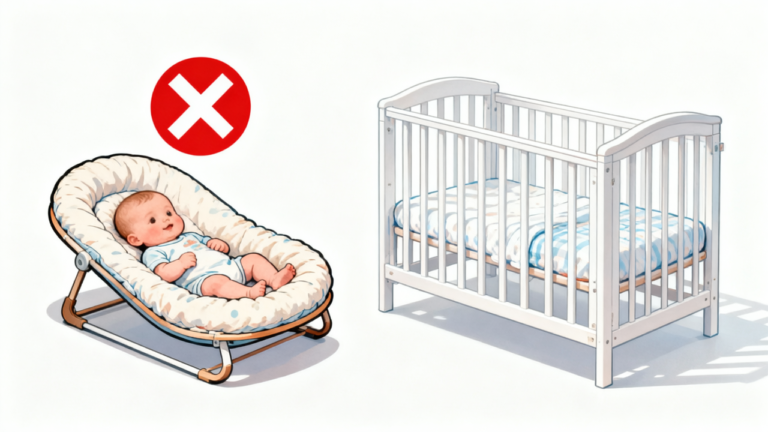
The single most important rule: always place your baby on their back to sleep, even if they have reflux. The American Academy of Pediatrics (AAP) has confirmed this is the safest sleep position and does not increase choking risk, even in babies with GERD.
With that foundation in place, here are the strategies that can help.
1. Upright Holding After Feeds
Before laying your baby down, hold them in an upright position — against your chest or over your shoulder — for 20 to 30 minutes after every feeding.
Why it works: Gravity helps keep stomach contents below the esophageal opening. This simple step reduces the number of reflux episodes before sleep.
Tips:
– Keep the baby still. Bouncing or active movement can trigger spitting up.
– A quiet, dim room helps the baby stay calm and settled.
– If your baby falls asleep while upright, gently transfer them to a flat crib on their back.
2. Left-Side Position While Awake (Not for Sleep)
Research shows that lying on the left side reduces reflux episodes. This is because of the stomach’s shape — the stomach curves to the left, so left-side positioning keeps the gastric junction lower than the body of the stomach.
Important distinction: Left-side positioning helps while your baby is awake and supervised. But for actual sleep time, the AAP recommends back sleeping only.
You can use left-side holding or left-side Tummy Time while your baby is awake and you are watching.
3. Elevated Holding Position (Supervised, Awake Only)
Some parents find that holding the baby at a 30–45 degree angle — like a semi-reclined feed position — helps during and right after feeding.
Key rules:
– Only use while the baby is awake and you are supervising.
– Never prop pillows or cushions in the crib to create an incline. (More on this below.)
– Transition to flat-on-back for sleep.
4. Tummy Time After Feeds (Supervised Only)
Short, supervised tummy time sessions after feeding can help some babies with reflux. Gentle pressure on the belly may reduce gas buildup.
However, this works best for older babies (4+ months) who have good head control. Never leave a baby on their tummy unsupervised.
Positions and Products to Avoid
Knowing what not to do is just as important. The following positions and products are unsafe for infant sleep — even for babies with reflux.
| Avoid | Why It Is Unsafe |
|---|---|
| Inclined sleepers or wedges in the crib | Can cause the baby to slide down, blocking the airway. Banned by the U.S. CPSC since 2022. |
| Sleep positioners | FDA warns these pose suffocation risks. Never use in the crib. |
| Side sleeping unsupervised | Babies can roll onto their stomach, increasing SIDS risk. |
| Stomach sleeping | Strongly linked to SIDS. Not recommended for any baby under 12 months. |
| Propped-up bottles | Increases risk of ear infections, choking, and overfeeding. |
| Car seats or swings as routine sleep surfaces | The seated angle can cause the head to fall forward and block the airway during extended sleep. |
The AAP is clear: A flat, firm sleep surface with no loose bedding, pillows, or positioners is the safest sleep environment for every baby — including those with reflux.
Other Tips to Reduce Baby Reflux at Bedtime
Positioning alone helps. But combining it with these strategies can make a bigger difference.
Feed Smaller, More Frequent Meals
Overfilling the stomach puts pressure on the esophageal valve. Instead of large feeds every 3–4 hours, try smaller feeds every 2–2.5 hours. This keeps the stomach from getting too full.
Burp Thoroughly and Often
Burp your baby midway through every feeding and again at the end. Trapped gas pushes upward and carries milk with it.
Try these burping positions:
– Over the shoulder with gentle back pats
– Seated on your lap, leaning slightly forward, supporting the chin
– Face-down across your lap with gentle back rubbing
Avoid Tight Clothing and Diapers
A snug waistband puts pressure on the stomach. Choose loose-fitting sleep clothes and make sure the diaper is not fastened too tightly around the belly.
Keep the Sleep Environment Calm
A stressed, overtired baby swallows more air while crying. A simple, consistent bedtime routine — dim lights, gentle rocking, quiet feeding — helps reduce reflux-triggering fussiness.
Consider the Mother’s Diet (If Breastfeeding)
Some babies are sensitive to proteins in cow’s milk or other allergens that pass through breast milk. If reflux seems severe, talk to your pediatrician about an elimination diet.
Formula Changes (If Formula-Feeding)
Your pediatrician may recommend a reflux-specific formula or a hypoallergenic formula if cow’s milk protein sensitivity is suspected. Never switch formulas without medical guidance.
When Reflux Might Be GERD: Signs to Watch
Most baby reflux is normal and resolves by the first birthday. But some babies develop gastroesophageal reflux disease (GERD), which requires medical treatment.
Watch for these signs:
- Poor weight gain or weight loss
- Refusing to feed or pulling away from the bottle or breast
- Frequent, forceful vomiting (not just gentle spitting up)
- Arching the back and crying during or after feeds (signs of pain)
- Breathing problems — coughing, wheezing, or recurrent pneumonia
- Blood in the spit-up or stool
- Irritability that does not improve after feeds and position changes
If you notice any of these symptoms, schedule an appointment with your pediatrician. GERD in babies is treatable, and early intervention helps your baby feel better faster.
Key Takeaways
- Always place your baby on their back to sleep — this is the safest position, even with reflux.
- Hold your baby upright for 20–30 minutes after feeding before laying them down.
- Left-side positioning helps while awake and supervised, but never for unsupervised sleep.
- Avoid inclined sleepers, wedges, and positioners in the crib. They are unsafe and banned.
- Smaller, more frequent feeds reduce stomach pressure and reflux episodes.
- Burp your baby thoroughly during and after every feeding.
- Most babies outgrow reflux by 12 months. But watch for GERD warning signs.
Frequently Asked Questions
Is it safe to elevate the head of the crib for a baby with reflux?
No. The AAP strongly advises against elevating the head of the crib or using wedges. Babies can slide down and their airway can become blocked. A flat, firm mattress is the safest sleep surface for every baby.
Can babies with reflux sleep on their side?
Side sleeping is not recommended for unsupervised sleep. Babies can roll onto their stomach, which increases SIDS risk. However, left-side positioning while awake and supervised can help reduce reflux episodes.
How long should I hold my baby upright after feeding?
Hold your baby upright for 20 to 30 minutes after each feeding. This gives gravity time to help keep stomach contents down before laying the baby in the crib.
Does reflux get worse at 4 months?
Reflux often peaks around 4 months of age and then gradually improves as babies start sitting up, eating solid foods, and spending more time upright during the day. Most babies outgrow it by 10–12 months.
Can reflux cause my baby to wake up frequently at night?
Yes. Reflux can cause discomfort that wakes babies, especially when lying flat. Holding your baby upright after feeding and following a consistent bedtime routine can help reduce nighttime waking.
Is it normal for my baby to spit up after every feeding?
Yes, frequent spitting up is normal in the first months. As long as your baby is gaining weight, seems comfortable, and is otherwise healthy, spitting up alone is not a concern. Talk to your pediatrician if the spitting up is forceful, contains blood, or your baby seems in pain.
What is the best sleeping position for a baby with colic and reflux?
The safest sleep position is always on the back on a flat, firm surface. For colic and reflux, upright holding after feeds, thorough burping, and smaller, more frequent meals are more effective than changing the sleep position.
When should I worry about my baby’s reflux?
Contact your pediatrician if your baby is not gaining weight, refuses feeds, vomits forcefully, has blood in spit-up, or seems to be in significant pain. These may be signs of GERD, which needs medical evaluation.
When to Call the Pediatrician
Reach out to your doctor if your baby shows any of the following:
- Vomiting that is forceful or projectile
- Blood or green/yellow fluid in the vomit
- Not gaining weight or losing weight
- Refusing to eat or crying during feeds
- Trouble breathing, persistent cough, or wheezing
- Fewer wet diapers than normal (sign of dehydration)
- Extreme irritability that does not improve
- Back arching and stiffening during or after feeds
These signs may indicate GERD or another condition that needs treatment. Your pediatrician can evaluate your baby and recommend safe, effective options.
Bottom Line
Finding the right baby acid reflux positions for sleep starts with one clear rule: always put your baby on their back on a flat, firm surface. That is non-negotiable for safety.
From there, simple changes make a big difference. Hold your baby upright for 20–30 minutes after each feed. Burp often. Offer smaller, more frequent meals. Avoid inclined sleepers and positioners.
Most babies outgrow reflux by their first birthday. In the meantime, these safe strategies can ease your baby’s discomfort and help your whole family get more rest.
When in doubt, always talk to your pediatrician. Your baby’s doctor knows their history and can guide you toward the safest, most effective plan.
References
- American Academy of Pediatrics. Safe Sleep Recommendations. Updated 2022. https://www.aap.org
- HealthyChildren.org. Reflux in Babies. AAP Parent Resource. https://www.healthychildren.org
- National Institute of Diabetes and Digestive and Kidney Diseases (NIDDK/NIH). GERD in Infants. https://www.niddk.nih.gov
- Centers for Disease Control and Prevention (CDC). Safe Sleep and SIDS Prevention. https://www.cdc.gov
- NHS (UK). Baby Reflux and Spilling. https://www.nhs.uk
- Vandenplas Y, et al. “Guidelines for the Diagnosis and Management of Gastroesophageal Reflux Disease in Infants and Children.” Journal of Pediatric Gastroenterology and Nutrition. 2018.
- World Health Organization. Infant and Young Child Feeding Guidelines. https://www.who.int
Medical Disclaimer
Medical Disclaimer: This article is for informational purposes only and does not replace professional medical advice. Always consult a qualified pediatrician for diagnosis and treatment of your baby’s specific condition. If your baby shows signs of distress, difficulty breathing, or severe vomiting, seek emergency medical care immediately. The information provided here reflects current pediatric guidelines as of the publication date and may not include the most recent updates.
Recommended Bassinets for Safe Sleep
The following bassinets meet current AAP safe sleep guidelines and are highly rated by parents:
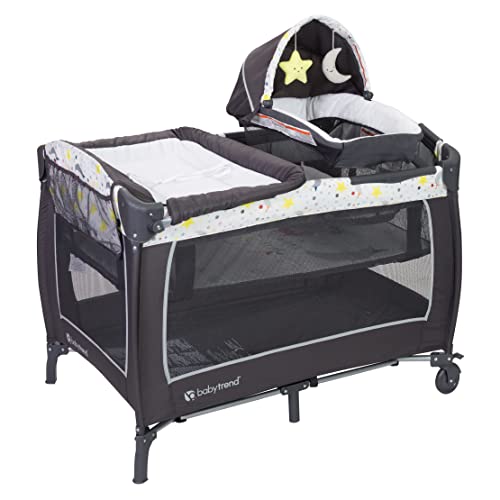
- 100% Polyester
- Imported
- Cozy napper with canopy and 2 plush toys

- Bassinet designed to fold with your playard for easy setup and take-down
- Features folding feet and wheels for 20% more compact fold than other Graco playards
- Full-size infant bassinet provides an easy-to-reach and easy-to-view spot for your baby to sleep

- 【Ultra-Stable Pyramid Structure + Universal Silent Wheels】Safety First! Our pyramid base bedside bassinet ensures rock-s…
- 【99% Gap-Free Bassinet Bedside Sleeper】Strictly compliant with U.S. safety standards, our bedside bassinet creates a 99%…
- 【7-Level Height Adjustment】Unlike standard 3-level or 4-level baby bassinet, Cowiewie offers 7 adjustable heights (16.7″…

- LIGHT and VERSATILE:The Karley Bassinet is designed with a lightweight aluminum frame that allows you to move it easily …
- ROOMY INTERIORS: With dimensions of 34.5Lx19.5Wx37H inches, the Karley is as spacious as they come . The roomy, airy bas…
- STYLISH LOOK: The Karley is made out of a soft, safe and comfortable polyester foam fabric, which is easy to clean. It i…
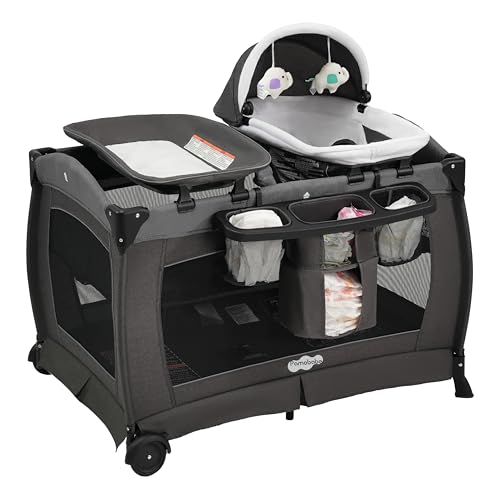
- Please make sure the newborn bassinet is horizontal when using, Cannot be used if tilted
- [4-in-1 Versatile Design] This pack and play combines a baby playard, newborn bassinet, insert bassinet, and changing ta…
- [Quick Setup & Travel-Ready] Folds and unfolds in seconds with a compact fold design . Perfect for grandparents’ house, …
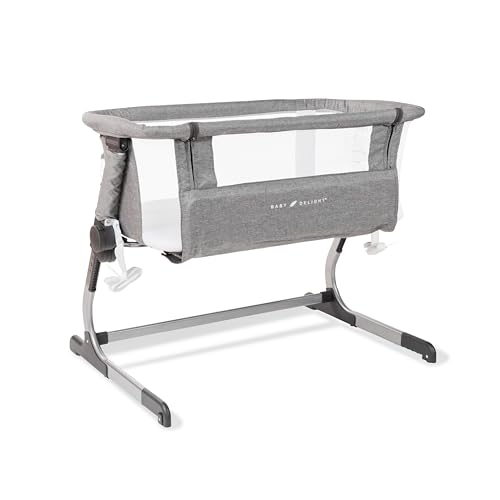
- 100% Polyester
- MAXIMUM SAFETY: Sleep soundly knowing your baby is safely nestled in the bedside sleeper. Anchors at the bottom firmly s…
- STYLYISH AND COZY: Your little one will rest on a comfy, yet firm mattress surrounded by breathable, mesh walls that kee…
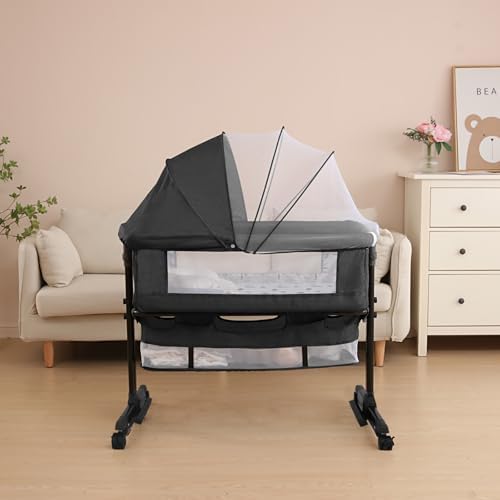
- Newborn’s Independent Comfort Space: Features a supportive mattress and breathable mosquito net with a waterproof layer …
- Multi-functional design: The crib-side bassinet doubles as a bedside sleeping basket, and can also be used independently…
- Mesh design ensures visibility: Breathable side mesh promotes airflow, reducing suffocation risk, while the transparent …

- VERSATILE CONVERTIBLE MODE: This Baby Bassinet is armed with CPC, ASTM, and CPSIA Certified. All Baby Bassinet of produc…
- HEIGHT ADJUSTABLE & FLEXIBLE: This bedside cradle features 3 adjustable height positions that can be easily adjusted usi…
- SAFETY AND STABILITY: The bedside sleeper features a stable and sturdy structure, and utilizes a double-sided mesh desig…
Common mistakes parents make with baby acid reflux positions for sleep
- Assuming a higher price means a safer or better-performing option — certification and correct fit matter far more.
- Skipping the instruction manual, weight limits and product registration, which is how recall notices reach you.
- Changing several things at once, so you cannot tell what actually helped your baby.
- Relying on advice from social media instead of your pediatrician when something feels off.
Related pediatrician-reviewed reading
- Baby Spit Up vs Reflux
- Top 5 Baby Sleep Trackers & Wearables
- Tog rating
- Baby Spitting Up a Lot? Normal vs. Reflux
- baby health & safety hub
References & further reading
Medical disclaimer: this article is for general education and does not replace individual medical advice. Always follow your own pediatrician’s guidance for your child.