Introducing Textures After Purees: A Safe, Flexible Guide
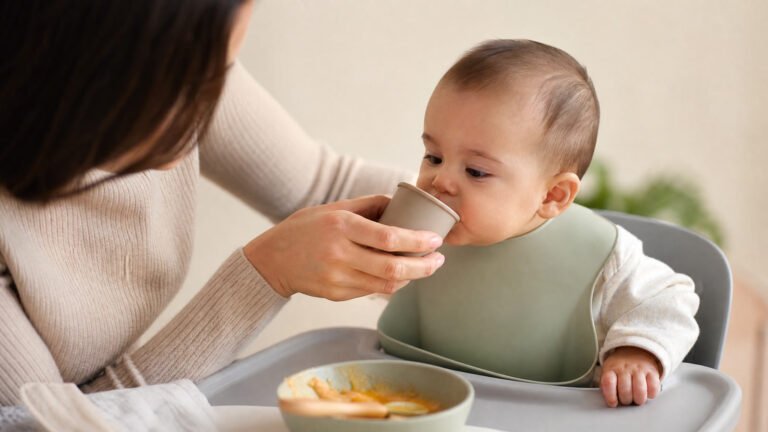
Introducing textures after purees is usually a gradual learning process, not a test with a deadline. When your baby is ready, move from smooth foods toward mashed, lumpy, and soft finger foods while keeping breast milk or formula important. Follow posture, interest, swallowing, and comfort cues. 1
Care note: This article offers general pediatric education. Feeding needs vary, especially with prematurity, medical conditions, allergies, growth concerns, or swallowing symptoms. Your child’s pediatrician can tailor advice.
What texture progression means
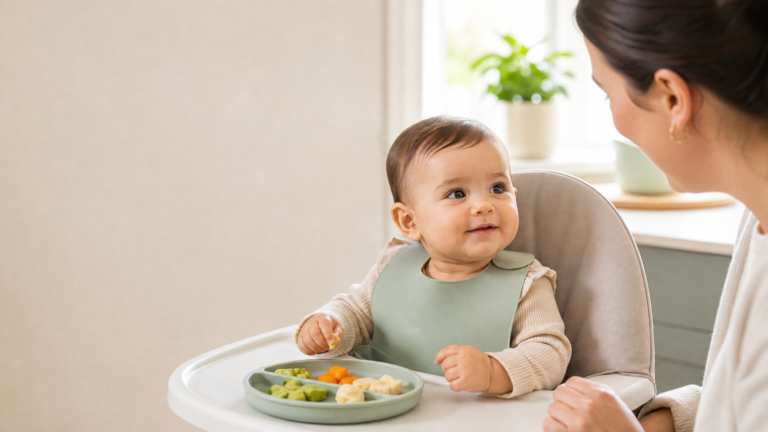
A baby does not need to complete a fixed “texture ladder.” Smooth foods can be followed by mashed, lumpy, finely chopped, or soft finger foods in different orders. Some children accept a new texture quickly. Others need smaller changes and more repeated practice.
The goal is to help your baby explore food safely. Progress may include touching food, bringing it to the mouth, moving it with the tongue, and gradually managing thicker textures. Spitting food out or refusing a new texture can happen during learning. Pause when your baby turns away, cries, or becomes tired, then try again another time.
The AAP and CDC encourage variety in tastes and textures as developmental skills allow. They do not set one deadline that fits every baby. 1
Signs your baby may be ready for a new texture
Look at the whole feeding picture rather than one age or milestone. Helpful signs may include:
- Sitting upright with steady head and neck control.
- Showing interest in food and opening the mouth for it.
- Bringing hands or objects toward the mouth.
- Staying comfortable and alert during a meal.
- Managing the current texture without repeated coughing or distress.
A baby who is not ready may push food out, turn away, or become upset. That is a reason to pause, not to force the next step. If your baby was born prematurely or has a medical condition, ask the care team how readiness should be assessed.
A gentle way to move beyond smooth purees
Try one small change at a time. You might make a familiar puree slightly thicker, add a soft mash, or offer a separate soft piece that your baby can explore. Keep breast milk or formula as an important part of the diet during the first year.
Examples include:
| Current experience | A reasonable next experiment |
|---|---|
| Smooth cereal or vegetable puree | A thicker mash with no hard pieces |
| Mashed fruit or avocado | A soft, easily squished strip or small soft piece |
| Smooth yogurt or porridge | A thicker texture with soft, finely minced ingredients |
| Soft finger foods | A wider range of soft shapes and family foods modified for safety |
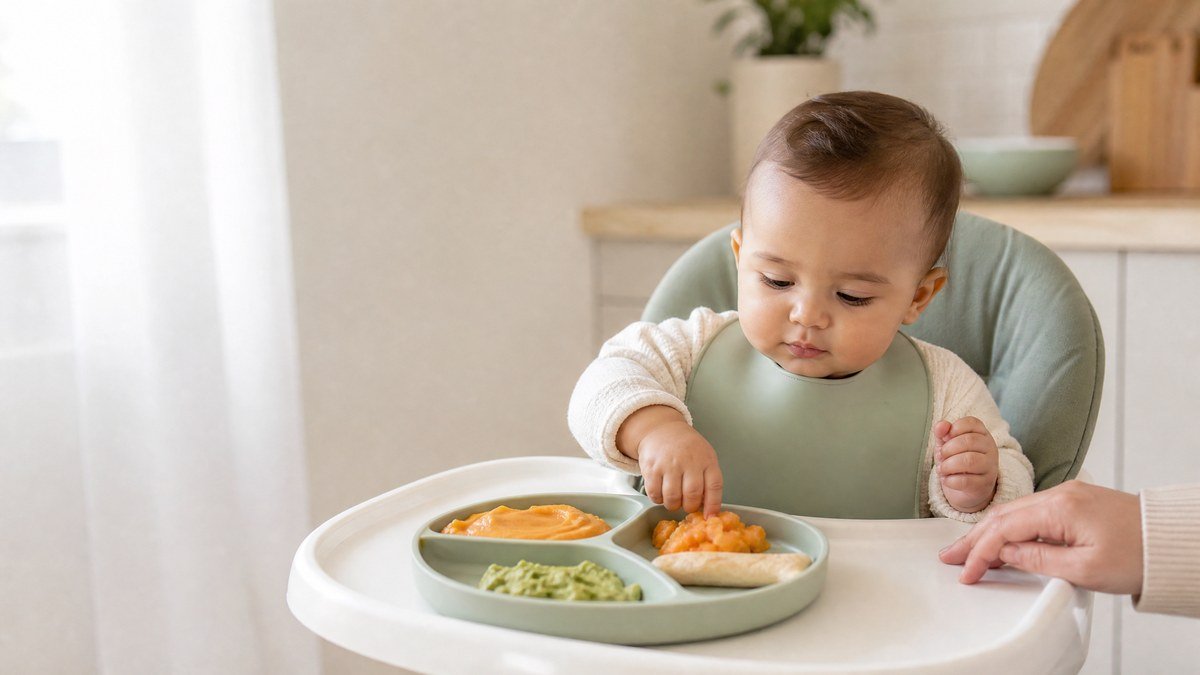
These are examples, not a prescription. Prepare food to match your baby’s skills. Sit your baby upright, stay within arm’s reach, and keep distractions low. Review current choking guidance before offering any new food. 3
Gagging and choking are different
Gagging can be loud. A baby may cough, sputter, make a retching sound, or bring food forward. Stay close and watch. Avoid putting your fingers into the mouth, because that can push food farther back.
Choking may be quiet. The child may be unable to breathe, cry, or cough effectively. This is an emergency. Learn infant and child choking first aid from a qualified course and follow local emergency instructions. Food preparation reduces risk, but no food shape eliminates choking risk.
For more preparation examples, see baby-led weaning food sizes and the baby choking hazards chart.
If your baby refuses, spits out, or pockets food
Refusal does not mean the baby will never accept the food. Offer the food again later without pressure. You can also change the temperature, shape, or preparation while keeping it safe. Eat together when possible so your baby can watch you.
If food stays in the cheeks, stop offering more. Do not use water to force food down. Ask your pediatrician or feeding therapist whether the texture is too difficult and whether an assessment is needed.
A mixed approach is fine. Many families use spoon-fed foods, self-feeding, or both. Read baby-led weaning vs purees for a balanced comparison.
When to call your pediatrician
Ask for help if your baby repeatedly coughs or chokes, has wet or noisy breathing during or after meals, vomits with many textures, refuses most feeds, cannot manage food beyond one consistency, or is not growing as expected. Babies with prematurity, developmental differences, reflux symptoms, or a history of tube feeding may need an individualized feeding plan.
Call emergency services for breathing difficulty, blue or gray coloring, collapse, or a child who cannot breathe, cry, or cough effectively.
FAQ
Does my baby have to stop purees?
No. Purees can remain part of a varied diet while your baby learns other textures. The aim is gradual skill-building, not a sudden switch.
How quickly should textures advance?
There is no universal timetable. Follow skills and comfort. If progress is difficult, ask the pediatrician rather than using an online deadline.
Is gagging dangerous?
Gagging can be a normal protective response, but it still requires close supervision. Choking is different and needs immediate action.
Related ChildBloom guides
Author and medical-review status
Dr. Ahmad Raza, MD, Pediatrics is the named ChildBloom pediatric author for this draft. Prepared for medical review by Dr. Ahmad Raza, MD, Pediatrics. Reviewed and approved by Dr. Ahmad Raza, MD, Pediatrics on August 23, 2026.
Last updated: August 22, 2026