Diaper Wetness Indicator: Does It Actually Tell You When to Change

Diaper wetness indicator changing color

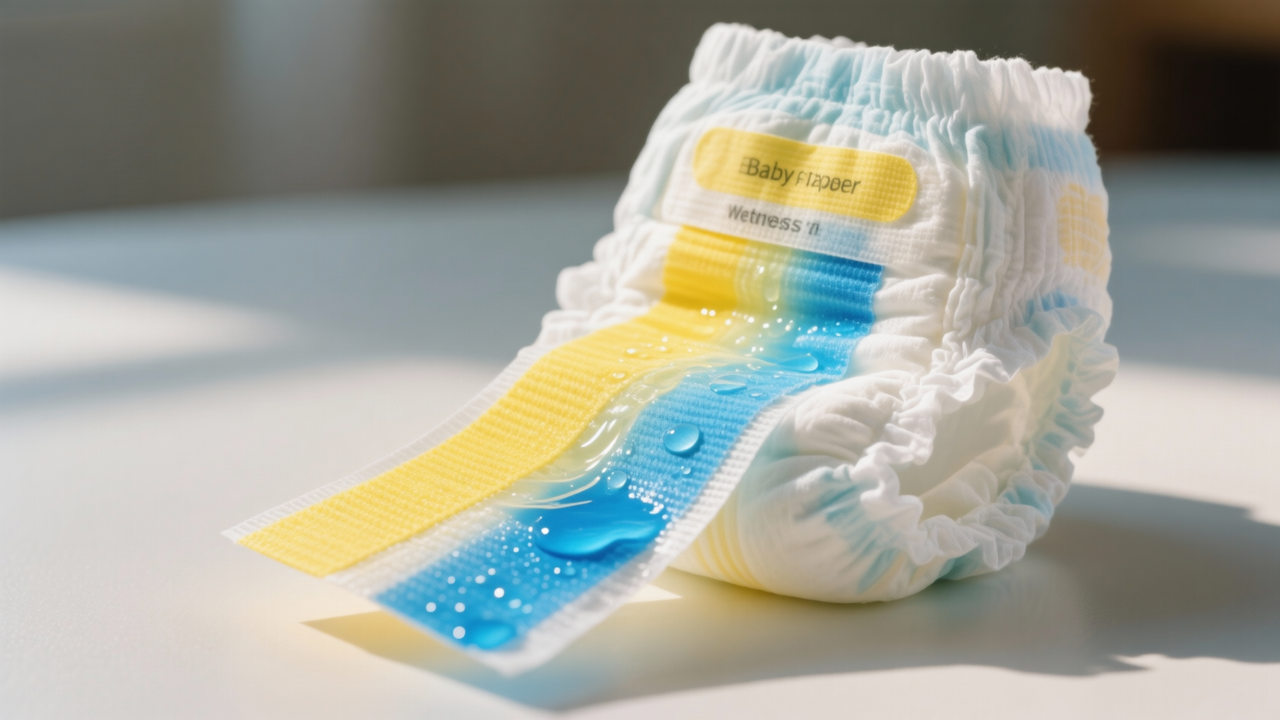
Every new parent has experienced the same moment: you glance at your baby’s diaper and notice a little yellow line has turned blue or green. The wetness indicator is telling you something has happened. But what exactly is it telling you, and more importantly, can you trust it?

Diaper wetness indicators have become a standard feature in most major diaper brands over the past two decades. They promise to take the guesswork out of diaper changes, giving parents a clear visual signal when their baby has urinated. For first-time parents navigating the overwhelming world of baby care, this seems like a straightforward solution to a common problem. But the reality is more nuanced than a simple color change.

This comprehensive guide examines the science, accuracy, limitations, and practical value of diaper wetness indicators. Whether you are a new parent trying to understand that little stripe or a seasoned caregiver evaluating whether the feature is worth the cost, this article will give you the detailed information you need to make informed decisions about diaper changes.

How Wetness Indicators Work: The Chemistry Behind the Color Change

The wetness indicator in modern disposable diapers is a surprisingly elegant piece of chemistry packed into a thin strip of material, usually running along the outside front of the diaper. Understanding how it works requires a brief look at the materials science involved.

The pH-Sensitive Dye System

Most wetness indicators rely on a pH-sensitive dye embedded in a thin strip of material on the exterior of the diaper. The most commonly referenced compound in this context is a dye that reacts to changes in acidity or alkalinity. When a baby urinates, the liquid passes through the top sheet and into the absorbent core, which contains superabsorbent polymer (SAP) materials, typically sodium polyacrylate. As urine is absorbed, some of the moisture migrates outward through the diaper layers.

The indicator strip contains a dye that changes color when it comes into contact with moisture. In many designs, the strip starts as yellow and transitions to blue or green when wet. This color shift occurs because the dye molecules undergo a structural change when they interact with water, altering the wavelengths of light they absorb and reflect.

Some manufacturers use a system based on acid-base chemistry. Fresh urine is typically slightly acidic, with a pH ranging from 5.0 to 7.0, though this can vary based on diet and hydration. The indicator dye is formulated to respond to this slight acidity change, triggering the visible color transition.

The Physical Mechanism

The indicator strip is positioned between the outer cover of the diaper and the absorbent core. It is designed to be thin enough that it does not interfere with the diaper’s absorbency, yet exposed enough to detect moisture that migrates through the core materials. The strip is typically made of a non-woven material similar to the rest of the diaper, with the reactive dye printed or embedded along its length.

When moisture reaches the indicator strip, the dye reacts almost immediately. The speed of this reaction depends on several factors, including the volume of liquid, the temperature, and how quickly moisture travels through the diaper’s layers. In most cases, the color change is visible within seconds of urination, though the exact timing can vary.

Limitations of the Chemistry

It is important to understand that the wetness indicator is not measuring the volume of urine or the saturation level of the diaper. It is simply detecting whether moisture has reached the area where the indicator strip is located. This distinction is critical. A small amount of urine that reaches the indicator will trigger the same color change as a large amount, meaning the indicator tells you that urination has occurred, but not necessarily how much has occurred or whether the diaper is approaching its absorbency limit.

Which Brands Offer Wetness Indicators

The wetness indicator has become nearly ubiquitous in the diaper market, though the implementation varies by brand and product line.

Pampers

Pampers was one of the earliest major brands to introduce wetness indicators, and the feature is now standard across nearly their entire product line. Pampers Swaddlers, Pampers Cruisers, Pampers Baby Dry, and Pampers Pure Protection all feature wetness indicators. The indicator appears as a yellow stripe that turns blue when wet. Pampers has invested heavily in this technology and generally receives positive feedback for the reliability and visibility of their indicator line.

Huggies

Huggies also includes wetness indicators across most of their product lines, including Huggies Little Snugglers, Huggies Little Movers, and Huggies Overnites. The Huggies indicator typically appears as a yellow line that transitions to blue or green. Some parents report that the Huggies indicator is slightly less visible than the Pampers equivalent, though this can vary by product line and lighting conditions.

Luvs

Luvs, which is owned by Procter and Gamble (the same parent company as Pampers), features wetness indicators in their product line. Luvs positions itself as a more budget-friendly option while still including this feature, making it an attractive choice for cost-conscious parents who want the indicator functionality.

Store Brands and Generic Options

Most major store brands, including Target’s Up and Up, Walmart’s Parent’s Choice, and Costco’s Kirkland Signature, now include wetness indicators in their diapers. The quality and visibility of these indicators can vary. Some store brands have indicators that are just as reliable as name-brand options, while others may have indicators that are harder to see or slower to react.

Premium and Eco-Friendly Brands

Many premium and eco-friendly diaper brands, such as Seventh Generation, Nature Babycare, and Andy Pandy, also include wetness indicators. These brands sometimes use slightly different indicator chemistries, and some parents report variations in responsiveness compared to conventional brands.

Accuracy of Wetness Indicators

The central question for most parents is simple: does the wetness indicator accurately reflect whether the diaper needs to be changed? The answer requires understanding what “accurate” means in this context.

What the Indicator Does Well

The wetness indicator is highly effective at its primary function: detecting that urination has occurred. In controlled testing and widespread consumer use, the indicator reliably changes color when urine contacts the relevant area of the diaper. False negatives where the baby has urinated but the indicator does not change are relatively uncommon, though they do occur under specific circumstances discussed below.

The indicator is particularly useful for detecting small amounts of urine that might not cause any visible bulging or external signs of wetness. For newborns, who urinate frequently but in small volumes, this can be genuinely helpful for parents who are still learning to read the subtle signs of a wet diaper.

Where Accuracy Breaks Down

The indicator’s accuracy problem is not about whether it detects moisture. It is about what detecting moisture actually tells you about the diaper’s status. The indicator does not measure how full the diaper is, how much absorbency capacity remains, or whether the diaper is saturated to the point of risking leaks. A diaper can show a full color change on the indicator and still have significant absorbency remaining. Conversely, a diaper can be approaching saturation in the core while the indicator has only partially changed color.

This disconnect between indicator response and actual absorbency status is the fundamental limitation of the technology. The indicator answers the question “Has the baby peed?” but not the question “Does the diaper need to be changed right now?”

Sensitivity and Threshold Issues

The indicator is designed to be highly sensitive, meaning it reacts to even small amounts of moisture. This high sensitivity is a double-edged sword. On one hand, it ensures that parents are alerted to urination quickly. On the other hand, it can trigger a color change when the diaper has barely begun to use its absorbency capacity, potentially leading to unnecessary changes.

For parents who are trying to maximize the lifespan of each diaper, particularly during the night or when out and about, this over-sensitivity can be frustrating. The indicator may tell you to change a diaper that still has hours of effective absorbency remaining.

False Positives and False Negatives

False Positives

A false positive occurs when the indicator shows that the diaper is wet, but the baby has not actually urinated. Several scenarios can cause this:

Condensation is one of the most common causes of false positives. In warm, humid environments, moisture from the air can condense inside the diaper, particularly if the diaper has been on for some time and the baby’s body heat has created a warm, moist microclimate. This condensation can reach the indicator strip and trigger a color change.

Diaper cream is another frequent culprit. Many diaper creams contain oils, petroleum jelly, or zinc oxide that can create a moisture barrier. When these creams are applied generously, they can sometimes migrate to the indicator area and cause a color change, even in the absence of urine. The mechanism varies by cream formulation, but the result is the same: an indicator that says “wet” when the diaper is actually dry.

Sweat can also trigger the indicator. Babies, particularly newborns, can sweat in the diaper area, especially when bundled in warm clothing or sleeping in a heated room. This sweat can be enough to activate the indicator strip.

False Negatives

A false negative occurs when the baby has urinated but the indicator does not change color. This is less common than false positives but can happen in several situations:

If the diaper is put on very tightly or if the baby is positioned in a way that directs urine away from the indicator strip, the moisture may be fully absorbed by the core without reaching the indicator. This is more likely to happen with certain diaper brands where the indicator strip is positioned in a specific location that does not cover the full width of the absorbent core.

In cases of very heavy urination, particularly with older babies, the absorbent core may become so saturated that the gel formed by the superabsorbent polymer actually blocks moisture from migrating outward to the indicator strip. This is an ironic failure mode where the diaper is at maximum capacity but the indicator does not fully reflect this.

Some parents also report that the indicator can become less responsive over time, particularly if the diaper has been stored in a humid environment before use. The reactive dye may degrade slightly, reducing its sensitivity.

How Quickly Does the Indicator React

The reaction time of wetness indicators is generally fast, but it is not instantaneous. Most indicators begin to show a color change within five to fifteen seconds of urination, with the full color transition occurring within thirty seconds to two minutes. The exact timing depends on several factors:

The volume of urination affects reaction time. A larger volume of urine will reach the indicator strip more quickly and produce a more dramatic color change. A small amount of urine may take longer to migrate through the core to the indicator location.

The position of the baby matters. A baby who is lying down may distribute urine differently across the absorbent core than a baby who is standing or sitting. This can affect how quickly moisture reaches the indicator strip.

Temperature plays a role as well. In colder environments, the chemical reaction in the indicator may proceed slightly more slowly, though this effect is generally minimal under normal household conditions.

The age and condition of the diaper can also influence reaction time. A diaper that has been stored for a long time or in unfavorable conditions may have a slightly less responsive indicator.

Indicator Versus Actual Absorbency Capacity

One of the most important distinctions for parents to understand is the difference between what the indicator tells you and what the diaper can actually handle. This gap between indicator response and absorbency reality is where many parents find themselves changing diapers unnecessarily.

The Absorbency Gap

Modern disposable diapers are engineering marvels. The combination of fluff pulp and superabsorbent polymer can hold many times its weight in liquid. A size 1 diaper, for example, can typically hold around 100 to 150 milliliters of liquid before reaching saturation. A newborn may urinate only 20 to 40 milliliters at a time. This means the indicator will show a full color change after the first urination, even though the diaper has used only a fraction of its absorbency capacity.

As babies grow and their bladder capacity increases, the gap between indicator response and actual saturation narrows. An older baby who urinates 80 to 100 milliliters at a time will bring the diaper closer to saturation with each void, making the indicator’s signal more aligned with actual need for a change.

Practical Implications

For parents of newborns, this absorbency gap means that following the indicator blindly will result in changing diapers far more frequently than necessary. A newborn may need eight to twelve diaper changes per day for hygiene and skin health reasons, but the indicator would suggest changing after every single urination, which could mean fifteen or more changes.

For older babies, the indicator becomes somewhat more useful as a signal, because each urination represents a larger proportion of the diaper’s total capacity. However, it still does not provide information about how much capacity remains.

Newborn Versus Older Baby: Does the Indicator Perform Differently

The usefulness and accuracy of wetness indicators varies significantly depending on the baby’s age and stage of development.

Newborns

For newborns, the wetness indicator can be genuinely helpful in the early days and weeks. Newborn diapers are small, and the absorbency capacity is limited relative to what the indicator detects. Newborns urinate frequently but in small amounts, and the indicator can help parents track whether the baby is producing adequate wet diapers, which is an important marker of hydration and feeding adequacy in the first weeks of life.

Pediatricians often advise parents to track the number of wet diapers per day in the first week, and the indicator makes this tracking easier. However, parents should be aware that the indicator will change color with even a small amount of urine, so a “wet” indicator on a newborn diaper does not necessarily mean the diaper is full or even close to it.

Older Babies and Toddlers

As babies grow, the dynamics change. Older babies urinate larger volumes less frequently. The diaper sizes are larger and have greater absorbency capacity. The indicator still detects urination reliably, but the gap between indicator response and actual need for change becomes more variable.

For toddlers who are beginning potty training, some parents find that the wetness indicator can serve as a teaching tool, helping the child understand the connection between the sensation of urination and the visible result. However, this is a secondary use and not what the indicators were designed for.

Overnight Reliability

Overnight diapering presents unique challenges for wetness indicators, and this is where the technology faces its most significant test.

The Overnight Challenge

Overnight, babies may sleep for eight to twelve hours without a diaper change. During this time, they may urinate multiple times. The diaper needs to handle the cumulative volume without leaking, and parents need to trust that the diaper will perform.

The wetness indicator, in this context, becomes somewhat less useful. If the indicator changes color after the first urination at ten o’clock in the evening, it provides no information about whether the diaper will still be effective at six in the morning. Parents who wake to check the indicator and see a full color change face a dilemma: do they change the diaper and risk waking the baby fully, or do they trust the diaper’s absorbency and hope for the best?

Overnight-Specific Diapers

Many brands offer overnight-specific diapers that are designed with extra absorbency for extended wear. These diapers often still include wetness indicators, but the indicators may be less meaningful given the extended wear time and higher volumes involved. Pampers Baby Dry Overnight, Huggies Overnites, and Luvs Nighttime all feature indicators, but most parents learn to rely more on the diaper’s design and reputation for overnight performance than on the indicator itself.

Practical Overnight Advice

For overnight use, most experienced parents and pediatricians recommend choosing a diaper specifically designed for overnight use, sizing up if necessary to increase absorbency, and not relying solely on the wetness indicator to determine whether a middle-of-the-night change is needed. If the baby seems uncomfortable, if the diaper feels heavy, or if there are signs of leakage, a change is warranted regardless of what the indicator shows.

Impact of Diaper Cream on Indicator Function

Diaper cream is one of the most common factors that interferes with wetness indicator function, yet many parents are unaware of this interaction.

How Creams Affect the Indicator

Many diaper rash creams and barrier ointments contain thick, occlusive ingredients such as petroleum jelly, zinc oxide, dimethicone, or lanolin. When applied generously to the diaper area, these creams can transfer to the inner surface of the diaper and migrate toward the indicator strip.

Petroleum-based products, in particular, can cause the indicator to change color even in the absence of urine. This happens because the cream creates a moist, occlusive environment that can trigger the pH-sensitive dye. The result is a false positive: the indicator shows wet when the diaper is actually dry.

Zinc oxide creams, which are among the most commonly recommended by pediatricians for diaper rash prevention, can also interfere with the indicator. The thick, white paste can coat the inner surface of the diaper and affect moisture migration patterns, potentially causing both false positives and delayed indicator response.

Minimizing Cream Interference

To minimize the impact of diaper cream on the indicator, parents can apply the cream carefully, focusing on the areas of the skin that need protection while avoiding excessive application near the front of the diaper where the indicator strip is typically located. Using a thin, even layer rather than a thick glob can also reduce the likelihood of cream migration.

Some parents find that switching to a cream with a lighter formulation, such as a spray-on barrier or a thinner lotion-style cream, reduces indicator interference while still providing adequate skin protection.

Environmental Factors: Temperature and Humidity

The performance of wetness indicators can be affected by environmental conditions, though these effects are generally modest under normal household circumstances.

Temperature Effects

The chemical reaction that drives the indicator’s color change is temperature-dependent, as are most chemical reactions. In very cold environments, the reaction may proceed more slowly, resulting in a delayed color change. In very warm environments, the reaction may proceed slightly faster. Under normal indoor temperatures (65 to 75 degrees Fahrenheit), these effects are negligible.

However, in extreme conditions, such as a cold car during winter travel or a hot, humid nursery without air conditioning, the indicator’s performance may be noticeably affected. Parents in these situations should be aware that the indicator may not be as responsive as it would be under normal conditions.

Humidity Effects

High humidity can cause condensation inside the diaper, particularly if there is a significant temperature difference between the baby’s body and the surrounding air. This condensation can trigger the indicator, leading to false positives as discussed earlier. In very humid climates or during summer months, parents may notice that the indicator changes color more readily than expected.

Low humidity, on the other hand, generally does not affect indicator performance significantly, though extremely dry conditions could theoretically slow the migration of moisture through the diaper’s layers.

Comparison of Indicator Technology Across Brands

Not all wetness indicators are created equal. While the basic principle is the same across brands, the implementation varies in ways that matter to parents.

Visibility

One of the most significant differences between brands is how visible the indicator is. Pampers is widely regarded as having one of the most visible indicators, with a clear, high-contrast color change from bright yellow to bright blue. Huggies also has a visible indicator, though some parents find the color change to be slightly less dramatic. Store brands vary, with some offering indicators that are nearly as visible as name brands and others that are harder to see, particularly in low light.

Placement and Coverage

The placement of the indicator strip varies by brand. Some brands place a single strip down the center of the front of the diaper, while others use two parallel strips or a wider band. The placement affects how reliably the indicator detects urination regardless of the baby’s position and how the urine is distributed across the absorbent core.

Brands with wider or multiple indicator strips tend to have fewer false negatives, because there is a larger area for moisture to reach and trigger the color change.

Reaction Speed

While most indicators react within seconds, some brands are faster than others. Pampers and Huggies generally have fast-reacting indicators, while some store brands may be slightly slower. The difference is usually a matter of seconds, but for parents who are checking the diaper frequently, even a small difference in reaction time can affect the user experience.

Cost Analysis: Do Indicator Diapers Cost More

The wetness indicator is a feature that adds to the manufacturing cost of a diaper, and this cost is passed on to consumers. However, the cost difference is not always straightforward.

Price Comparison

In general, diapers with wetness indicators cost slightly more than comparable diapers without indicators, but the indicator has become so widespread that it is difficult to find major brand diapers that do not include one. The price difference between diapers with and without indicators is typically absorbed into the overall brand pricing strategy.

When comparing store brands to name brands, the store brand diapers with indicators are typically 20 to 40 percent less expensive per diaper than name brand equivalents with indicators. This suggests that the indicator itself is not the primary driver of cost difference between brands. Rather, the brand name, marketing costs, and other features account for the price premium.

Is the Feature Worth the Cost

Whether the wetness indicator justifies any additional cost depends on the individual parent and situation. For first-time parents who are uncertain about diaper change timing, the indicator can provide valuable reassurance and reduce anxiety. For experienced parents who have developed a reliable sense of when diapers need changing, the indicator may add little practical value.

For families on a tight budget, store brand diapers with indicators offer the feature at a lower price point, making the cost question less relevant.

Alternatives to Wetness Indicators

Parents who find wetness indicators unreliable or unnecessary have several alternative approaches to determining when a diaper needs changing.

Timing Schedules

Many parents develop a timing schedule based on their baby’s patterns. Newborns typically need changes every two to three hours, while older babies may go three to four hours between changes. By tracking feeding and urination patterns, parents can develop a reliable schedule that minimizes both unnecessary changes and overdue diapers.

Weight-Based Detection

A simple and surprisingly effective method is to weigh the diaper. A dry diaper has a known weight, and each milliliter of urine adds approximately one gram. By picking up the diaper and assessing its weight relative to when it was put on, experienced parents can gauge how full it is with reasonable accuracy. Some parents even use a small portable scale for this purpose, though most develop a tactile sense over time.

Smart Diaper Apps and Sensors

Several technology companies have developed smart diaper systems that use sensors to detect wetness and send alerts to a smartphone app. These systems, such as the now-discontinued Owlet Dream Sock (which included wetness detection as part of a broader monitoring system) and various standalone smart diaper clips, offer more detailed information than a simple color-changing strip.

Some smart diaper clips attach to the outside of the diaper and use moisture sensors to detect wetness, sending notifications to the parent’s phone. These devices can provide more granular information, such as the volume of urination and the time since the last change, but they add cost and complexity to the diapering process.

Visual and Tactile Inspection

The most basic alternative is simply checking the diaper by looking at it and feeling its bulk. A diaper that is visibly swollen, sagging, or heavy is likely due for a change regardless of what any indicator says. This method requires no special technology and is reliable when parents learn what to look and feel for.

When to Change Regardless of What the Indicator Says

There are several situations where a diaper should be changed immediately, regardless of whether the wetness indicator has triggered.

After a Bowel Movement

This should be obvious but bears stating: any diaper containing stool needs to be changed immediately, regardless of what the wetness indicator shows. Stool contains enzymes and bacteria that can rapidly damage the baby’s skin and cause diaper rash or infection.

Before and After Feeding

Many parents find it helpful to change diapers before or after feedings as part of a routine. This is particularly useful for newborns, who tend to urinate during or immediately after feeding due to the gastrocolic reflex.

At Regular Intervals

Even if the indicator has not changed, diapers should be changed at regular intervals. For newborns, this means every two to three hours. For older babies, every three to four hours is a reasonable maximum. Urine sitting against the skin for extended periods, even in small amounts, can contribute to diaper rash and skin irritation.

When the Diaper Feels Heavy or Bulky

If the diaper feels noticeably heavy or bulky, it is approaching or has exceeded its effective absorbency capacity, regardless of what the indicator shows. This is particularly important for preventing overnight leaks.

Before Outings and Bedtime

Putting a fresh diaper on before leaving the house and before bedtime reduces the likelihood of problems during times when changing may be inconvenient. This is a practical strategy that does not depend on the indicator at all.

Diaper Rash Prevention and Change Frequency

The relationship between wetness indicators and diaper rash prevention is worth examining, because the indicator’s impact on change frequency can either help or hinder skin health.

How Diaper Rash Develops

Diaper rash develops when the skin in the diaper area is exposed to moisture, friction, and irritants for prolonged periods. Urine breaks down into ammonia, which is alkaline and irritating to the skin. Stool contains digestive enzymes that can break down the skin’s protective barrier. The combination of moisture and these irritants creates the perfect conditions for diaper rash.

The Indicator’s Role in Rash Prevention

In theory, the wetness indicator should help prevent diaper rash by alerting parents to wet diapers sooner, leading to more timely changes. In practice, the effect is more complex. If the indicator causes parents to change diapers after every small urination, it may reduce moisture exposure but also increase the friction and skin disruption that comes from frequent changing.

Conversely, if parents rely on the indicator and wait for it to show a full color change before checking the diaper, they may actually leave wet diapers on longer than they would without the indicator, because they assume the diaper is fine until the indicator tells them otherwise.

Most pediatricians recommend changing diapers every two to three hours for newborns and every three to four hours for older babies, regardless of whether the diaper feels full or the indicator has triggered. This regular schedule ensures that the skin is not exposed to moisture and irritants for extended periods.

Using a barrier cream with each change, allowing the skin to air dry before putting on a fresh diaper, and ensuring the diaper is not too tight are all more important for rash prevention than the wetness indicator alone.

Expert Opinions: What Pediatricians Say

The medical community’s view on wetness indicators is generally pragmatic. Pediatricians acknowledge that the feature can be helpful in certain situations but do not consider it essential or universally reliable.

General Medical Consensus

Most pediatricians view wetness indicators as a convenience feature rather than a medical necessity. They are helpful for new parents who are learning to care for a newborn and need reassurance about whether the baby is urinating adequately. They are less important for experienced parents who have developed reliable methods of assessing diaper status.

Pediatricians consistently emphasize that the wetness indicator does not replace the need for regular, scheduled diaper changes. The indicator detects urination but does not measure skin health, absorbency saturation, or the buildup of irritants that lead to diaper rash.

Advice for New Parents

Pediatricians commonly advise new parents to use the wetness indicator as one piece of information among many. It should be combined with regular checking, scheduled changes, and attention to the baby’s comfort and skin condition. Parents should not rely solely on the indicator to determine when a diaper needs changing.

Special Considerations

For babies with sensitive skin, eczema, or a history of severe diaper rash, pediatricians may recommend more frequent changes than the indicator suggests. In these cases, the indicator’s signal should be treated as a minimum threshold for checking, not as the definitive guide to when a change is needed.

For premature babies or babies with medical conditions that affect urination patterns, pediatricians may have specific guidance about diaper monitoring that goes beyond what the wetness indicator can provide.

Practical Tips for Getting the Most from Wetness Indicators

For parents who want to use wetness indicators effectively, the following practical tips can help maximize their value while avoiding common pitfalls.

Use the indicator as a starting point, not the final word. When the indicator changes color, check the diaper. Assess its weight, bulk, and the baby’s comfort level before deciding whether a change is needed.

Learn your baby’s patterns. Track how long it typically takes for the indicator to change after a fresh diaper is put on. This baseline helps you understand whether a particular color change represents a small or large urination.

Do not wait for the indicator to change before checking. Check diapers on a regular schedule regardless of the indicator. The indicator is a supplement to good diapering habits, not a replacement for them.

Be aware of false positives. If the indicator shows wet but you suspect the diaper is dry, check it. Diaper cream, condensation, and sweat can all trigger false readings.

Consider the diaper’s total capacity. A color change on the indicator does not mean the diaper is full. Especially with newborns, the diaper may have significant absorbency remaining after the indicator first changes.

Check indicator placement. Make sure the diaper is put on correctly, with the indicator strip positioned where it can detect moisture. A poorly positioned diaper may result in missed detections.

Factor in the baby’s age and size. As babies grow and urinate larger volumes, the indicator becomes a more meaningful signal. Adjust your expectations accordingly.

Use overnight diapers for nighttime. Overnight diapers are designed for extended wear and higher volumes. The indicator on an overnight diaper is less meaningful than on a regular diaper, so rely more on the diaper’s design and your own assessment.

Conclusion

The diaper wetness indicator is a useful but imperfect tool. It reliably detects that urination has occurred, which is valuable information, particularly for new parents. However, it does not measure how full the diaper is, how much absorbency remains, or whether the diaper needs to be changed right now. The gap between what the indicator tells you and what you actually need to know is the source of both its value and its limitations.

Parents who understand what the indicator can and cannot do will get the most from the feature. Used as one input among many, combined with regular checking, scheduled changes, and attention to the baby’s comfort and skin health, the wetness indicator can make diapering a little easier and a little less uncertain. Used as the sole guide to diaper changes, it can lead to both unnecessary changes and overdue diapers.

The bottom line is straightforward: the wetness indicator tells you when the baby has peed. It does not tell you when to change the diaper. That decision requires the indicator, your own judgment, and a good understanding of your baby’s needs.

Leave a Comment

Your email address will not be published. Required fields are marked *