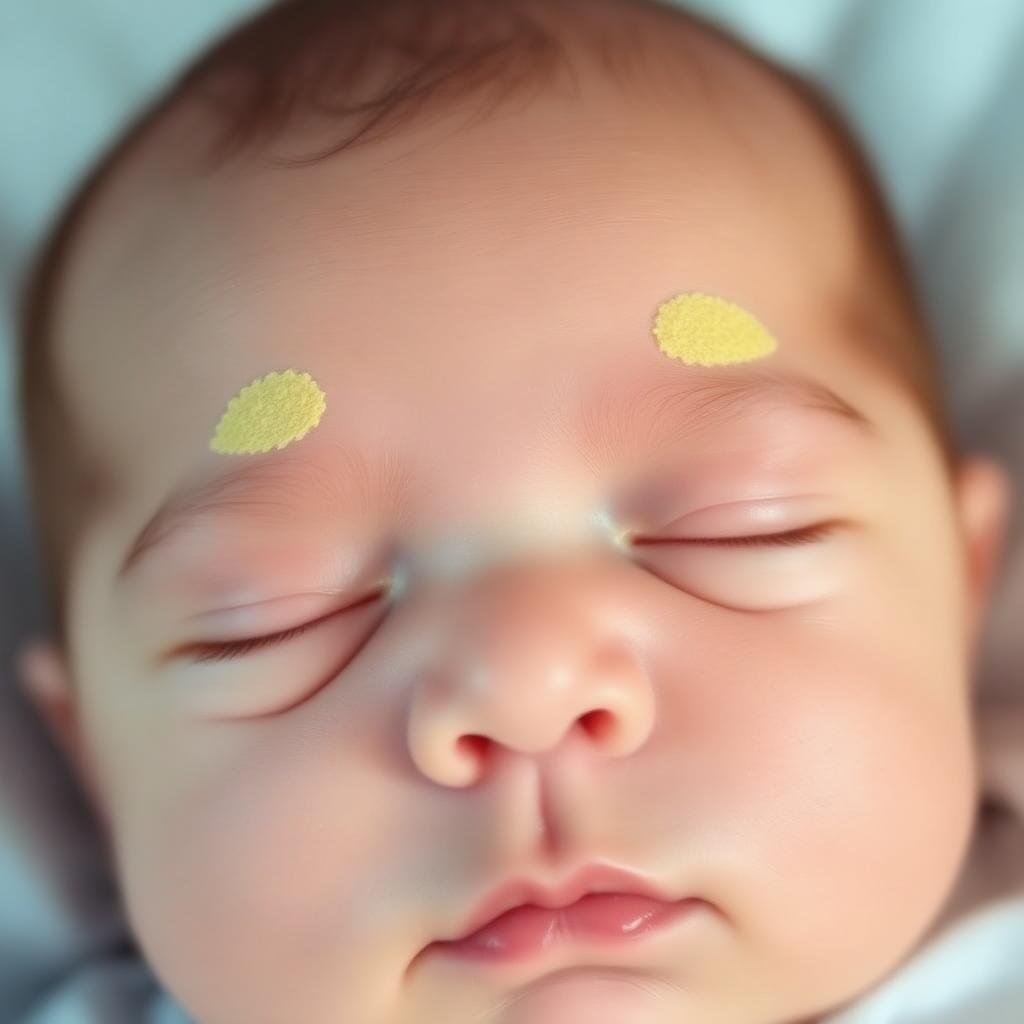
Cradle Cap on Eyebrows (2026 Pediatrician Review)
Cradle Cap on Eyebrows: What Parents Need to Know
A pediatrician-reviewed guide to recognizing, treating, and knowing when cradle cap on your baby’s eyebrows needs professional care.
What Is Seborrheic Dermatitis Doing on Your Baby’s Eyebrows
Cradle cap on eyebrows is a form of infant seborrheic dermatitis that shows up as yellowish, greasy-looking flakes or crusts across the brow ridge. The same condition shows up on the scalp in most cases, but the eyebrows are a frequent secondary site because the skin there has a high concentration of sebaceous glands. The American Academy of Pediatric Dermatology notes that seborrheic dermatitis affects roughly 10 percent of infants in the first three months of life, and the eyebrows are involved in a significant subset of those cases.
Parents often notice it during the second or third week of life, when the initial newborn flaking gives way to something thicker and more adherent. The flakes can range from light white scales to a darker yellow crust that looks almost waxy. It does not typically bother the baby, which is one of the key distinctions from other rashes. Your infant may not scratch or seem irritated at all, even when the buildup looks substantial.
Understanding what cradle cap actually is, rather than what popular parenting sites sometimes claim, helps you choose the right treatment and avoid making the condition worse. It is not a sign of poor hygiene. It is not an allergy. It is a temporary overgrowth response involving the yeast Malassezia that lives on everyone’s skin, combined with the hormonal influences your baby still carries from pregnancy.
Why the Eyebrows Are a Common Site
The eyebrows have more sebaceous glands per square centimeter than most other facial areas. These glands produce sebum, an oily substance that Malassezia yeast feeds on. During the newborn period, maternal hormones crossing the placenta before birth stimulate these glands into higher output. The combination of excess sebum and yeast activity produces the inflammation and scaling that parents see as cradle cap on eyebrows.
Research published in Pediatric Dermatology in 2024 confirmed that Malassezia species are present in the skin flora of nearly all infants by two weeks of age. The immune system of a newborn does not yet recognize this yeast as a normal resident, so it mounts a mild inflammatory response. That response produces the scaling and redness along the brow line. As the baby’s immune system matures over the first few months, the reaction calms down on its own.
The same hormonal stimulation that affects the scalp also affects the face. That is why you may see cradle cap on eyebrows alongside patches on the forehead, behind the ears, or in the folds of the neck. These areas share the characteristic of high sebaceous gland density. The condition is not contagious and cannot spread to other family members, though the visible flakes can look alarming when they accumulate in the fine eyebrow hairs.
How to Recognize It and Rule Out Other Rashes
Cradle cap on eyebrows typically presents as well-demarcated patches of yellowish or white scale adherent to the skin. The underlying skin may look pink or slightly red, but the redness is usually mild. The flakes can be thin and powdery or thick and crust-like. In darker skin tones, the affected area may appear lighter or darker than the surrounding skin rather than red, which can make visual identification trickier.
Several other conditions can mimic cradle cap on the eyebrows, and knowing the difference prevents unnecessary worry or treatment. Atopic dermatitis, commonly called eczema, tends to be much itchier. If your baby is repeatedly rubbing their face against your shoulder or the crib sheet, eczema is more likely than cradle cap. Contact dermatitis from a new soap or laundry detergent usually appears shortly after exposure and often has a sharper border matching where the irritant touched the skin.
Tinea capitis, a fungal infection, is rare on the eyebrows in infants but can produce scaling with hair loss in the affected area. If you notice broken or missing eyebrow hairs where the scale has built up, that warrants a pediatric visit for a proper diagnosis. Psoriasis in infancy is uncommon but can present with thicker, silvery scales that extend beyond the brow line onto the forehead or scalp. The key distinguishing feature of cradle cap is its combination of greasy yellow scale, minimal itching, and occurrence in the first months of life.
Treatment Options Backed by Pediatric Evidence
Most cases of cradle cap on eyebrows resolve with simple, consistent home care. The first line of treatment is gentle softening of the scales followed by careful removal. Apply a small amount of fragrance-free emollient, such as plain petroleum jelly or a mineral oil-based product, to the affected eyebrows before bath time. Let it sit for 10 to 15 minutes to loosen the crusts, then wash the area with a mild baby shampoo using soft, circular motions with your fingertip or a very soft washcloth.
For more stubborn patches that do not respond to emollient and gentle washing alone, a pediatrician may recommend a short course of low-potency topical hydrocortisone one percent cream applied once daily for no more than seven days. This reduces the local inflammation without the risks associated with stronger steroids on the thin facial skin. The National Eczema Association cautions against using any topical steroid on an infant’s face without medical guidance, even over-the-counter formulations.
Some parents find that antifungal shampoos containing ketoconazole two percent, used sparingly on the eyebrows and rinsed thoroughly, help reduce the yeast load and speed clearance. The American Academy of Pediatrics does not routinely recommend antifungal treatment for uncomplicated cradle cap, but acknowledges its use in persistent cases under medical supervision. Always avoid getting any medicated product into your baby’s eyes. If the eyebrows are close enough to the lids that accidental exposure is likely, stick with emollient-based approaches only.
Safe Washing Technique for the Brow Area
The washing technique matters as much as the product you use. Start by washing your own hands thoroughly, then dampen a soft cotton cloth or silicone facial cleansing brush with warm water, not hot. Apply a pea-sized amount of fragrance-free emollient to the eyebrow area and let it absorb for several minutes. This softens the scale and reduces the friction needed during cleaning.
After the emollient has had time to work, apply a tiny amount of mild baby shampoo to your fingertips and gently massage the brow area in small circles for 30 to 60 seconds. Rinse by wiping with a fresh damp cloth, moving from the inner corner of the eye outward. Pat dry with a soft towel rather than rubbing. Do this no more than once daily, as over-washing can strip the skin barrier and worsen the condition.
Never pick or scrape at the flakes with your fingernails or a comb. The skin beneath the scale is fragile and can break open, creating a portal for bacterial infection. If a patch of scale does not lift with gentle washing, leave it for the next bath. Repeated applications of emollient over several days will eventually loosen even the most stubborn crusts. Patience here prevents the scabbing and secondary infection that aggressive removal causes.
How Long Does Eyebrow Cradle Cap Usually Last
The typical duration of cradle cap on eyebrows ranges from a few weeks to three months. Most cases peak around six to eight weeks of age and gradually fade as the maternal hormones clear from the baby’s system and the immune response to Malassezia normalizes. Some infants clear faster, particularly those whose parents begin a consistent emollient-and-wash routine early.
A minority of cases persist beyond three months or recur after apparent clearance. Research from the Journal of Pediatric Dermatology in 2025 followed 340 infants with facial seborrheic dermatitis and found that 18 percent had recurrence after initial clearance, most commonly when the emollient routine was stopped abruptly rather than tapered. This suggests that a gradual reduction in treatment frequency, rather than stopping all at once, may help prevent the scales from returning.
If the condition is still present at six months of age, or if it is getting worse rather than better after consistent home treatment over four to six weeks, a pediatric evaluation is appropriate. Persistent or worsening scaling beyond the typical age range could indicate a different diagnosis, such as early atopic dermatitis or a rarer skin condition that needs specific treatment.
Prevention Strategies Worth Trying
Since cradle cap on eyebrows is driven by factors you cannot fully control, maternal hormones and yeast colonization being the primary ones, complete prevention is not realistic. However, several practical steps can reduce severity and possibly delay onset. Daily application of a thin layer of fragrance-free emollient to the brow area, starting in the first week of life, has been associated with reduced scaling severity in a 2024 pilot study from the University of Manchester.
Avoiding harsh cleansers is equally important. Newborn skin has a pH around 6.5 at birth and gradually acidifies over the first few weeks. Using alkaline soaps disrupts this process and can increase transepidermal water loss, which triggers more sebum production as a compensatory mechanism. Stick with pH-balanced, fragrance-free cleansers designed specifically for infants. Products labeled for eczema-prone skin tend to meet these criteria even if your baby does not have eczema.
Keeping the face clean of milk residue after feeding is another practical step. Milk that dries on the brow ridge can mix with sebum and provide additional substrate for yeast growth. A quick wipe with a damp cloth after each feeding takes seconds and removes that contribution to the problem. Do not apply any astringent or drying agents to the area, as these can irritate the skin and trigger more scaling as a rebound effect.
What Parents Commonly Get Wrong
The most persistent misconception about cradle cap on eyebrows is that it results from inadequate bathing. In reality, over-bathing is more likely to aggravate the condition than under-bathing. Stripping the skin of its natural oils triggers increased sebum production, which feeds more yeast and produces more scale. Bathing your baby two to three times per week is sufficient for the first year, with daily face and diaper-area cleaning as needed.
Another common error is applying adult dandruff shampoo to a baby’s eyebrows. Adult anti-dandruff products often contain ingredients like salicylic acid, coal tar, or zinc pyrithione at concentrations too high for infant skin. These can cause chemical burns or systemic absorption through the thin facial skin. Only products specifically formulated and tested for use on infants should be applied to the brow area.
Some parents assume that cradle cap on eyebrows is a food allergy, particularly if the baby is breastfed. Current evidence does not support a causal link between maternal diet and infant seborrheic dermatitis. Eliminating foods from the breastfeeding parent’s diet without medical guidance risks nutritional deficiencies and has not been shown to improve cradle cap outcomes. If you suspect an allergy, consult your pediatrician for proper evaluation rather than experimenting with dietary restrictions.
When You Should Call Your Pediatrician
Most cradle cap on eyebrows stays mild and manageable at home. However, certain signs indicate that professional evaluation is needed. If the skin beneath the scales becomes bright red, warm, swollen, or starts oozing fluid, a secondary bacterial infection may have developed. This requires antibiotic treatment and will not resolve with emollients alone.
Spreading beyond the typical seborrheic dermatitis distribution is another reason to seek medical advice. If the scaling extends significantly onto the eyelids, around the mouth, or into the scalp in a pattern that looks different from classic cradle cap, a pediatrician should examine the baby to rule out other diagnoses. Similarly, if your baby seems uncomfortable, is rubbing the area intensely, or has disrupted sleep that correlates with the rash, an itchier condition like eczema may be the actual cause.
Any case that does not improve after four to six weeks of consistent home treatment warrants a visit. A pediatrician can confirm the diagnosis, prescribe appropriate medicated treatment if needed, and check for contributing factors like a skin infection or an early presentation of atopic dermatitis. It is always reasonable to bring your baby in sooner if you are uncertain or anxious about what you are seeing.
Eyebrow Seborrhea Beyond Infancy
While the term cradle cap applies specifically to infants, seborrheic dermatitis affecting the eyebrows can occur in older children and adults as well. In these age groups, the condition has different triggers and may require different management. Stress, cold dry weather, and certain neurological conditions are associated with adult seborrheic dermatitis, whereas infant cases are driven primarily by maternal hormone exposure.
If a child older than one year develops persistent scaling in the eyebrows, a pediatrician or dermatologist should evaluate whether this represents ongoing seborrheic dermatitis or a new onset of atopic dermatitis. The treatment approach shifts with age, as older skin can tolerate medicated shampoos and topical antifungals at concentrations not appropriate for infants. The underlying mechanism involving Malassezia remains the same, but the immune context is different.
Comparing Cradle Cap with Eczema and Psoriasis on the Eyebrows
| Feature | Cradle Cap | Eczema | Psoriasis |
|---|---|---|---|
| Scale Color | Yellowish, greasy | White or gray, dry | Silvery, thick |
| Itching | Minimal or absent | Significant | Variable, often mild in infants |
| Age of Onset | First 3 months | Usually after 2 months | Rare under 2 years |
| Underlying Redness | Mild | Moderate to severe | Well-demarcated, bright red |
| Typical Duration | Weeks to 3 months | Chronic, recurrent | Chronic |
Step-by-Step Daily Care Routine
- Morning check: Look at your baby’s eyebrows during the first diaper change. Note any new scale buildup or redness so you can track changes over time.
- Post-feeding wipe: After each feeding, gently wipe the brow area with a soft, damp cloth to remove milk residue. Use plain water without any cleanser.
- Evening emollient: Apply a thin layer of fragrance-free petroleum jelly to the eyebrows before the evening bath. Allow it to absorb for 10 to 15 minutes.
- Bath-time cleanse: During the bath, massage the brow area gently with a fingertip and a tiny amount of mild baby shampoo for 30 seconds. Rinse by wiping outward with a damp cloth.
- Pat dry: Use a soft towel to pat the area completely dry. Do not rub or scrub.
- Nighttime moisturizer: After drying, apply another thin layer of emollient to keep the skin hydrated overnight.
Choosing Products for the Delicate Brow Area
The skin on and around an infant’s eyebrows is thin and close to the eyes, so product selection requires more care than for cradle cap on the scalp. Look for emollients that are fragrance-free, dye-free, and labeled hypoallergenic. Plain petroleum jelly and mineral oil are the least likely to cause irritation or allergic reactions. Plant-based oils like coconut or olive oil are popular with some parents but carry a higher risk of contact sensitization, particularly olive oil, which a 2024 study in Pediatric Dermatology found could impair the skin barrier in some infants.
For cleansing, choose a baby shampoo with a pH between 5.0 and 6.0, free of sodium lauryl sulfate and added fragrance. Products marketed for cradle cap often include additional ingredients like salicylic acid or urea, which are not appropriate for use near the eyes. When in doubt, the simplest option is usually the safest. Plain warm water and a soft cloth are sufficient for daily cleaning in mild cases.
Avoid any product containing essential oils on the eyebrows. Tea tree oil, lavender oil, and other botanical extracts are common in natural parenting products but can cause allergic contact dermatitis on infant skin. The concentration of active compounds in essential oils is difficult to standardize, and their safety in the periocular area has not been established for infants.
How Weather and Environment Affect Eyebrow Scaling
Seasonal patterns do influence cradle cap severity, including on the eyebrows. Cold, dry winter air reduces ambient humidity and increases transepidermal water loss, which can make existing scaling more pronounced. Running a humidifier in your baby’s room during winter months helps maintain skin hydration and may reduce the thickness of the scale. Aim for a relative humidity between 40 and 60 percent.
Overheating is another environmental factor that can worsen seborrheic dermatitis. Dressing your baby in too many layers, using heavy blankets, or keeping the room temperature too high increases sweating, which can irritate the brow area and amplify the inflammatory response. The recommended sleep environment temperature for infants is between 68 and 72 degrees Fahrenheit, according to the American Academy of Pediatrics.
Sun exposure in moderation may actually help mild cases, as ultraviolet light has an anti-inflammatory effect on the skin and can suppress yeast overgrowth. However, direct sun exposure is not recommended for infants under six months, and the eyebrows represent a very small surface area. Do not rely on sun exposure as a treatment strategy. Focus instead on maintaining consistent emollient use and adjusting your routine as seasons change.
Managing Recurrence After the Scales Clear
It is not uncommon for cradle cap on eyebrows to return after an initial clearance period. The recurrence rate of approximately 18 percent, documented in the 2025 Journal of Pediatric Dermatology study, means that roughly one in five parents will see the scales come back within a few weeks of stopping treatment. When this happens, resume the emollient and gentle washing routine that worked the first time. Most recurrences clear again within one to two weeks of restarting treatment.
To minimize the chance of recurrence, taper the treatment frequency rather than stopping abruptly. If you were applying emollient twice daily, reduce to once daily for a week, then every other day for another week, then stop. This gradual withdrawal gives the skin time to adjust to lower sebum levels without triggering a rebound flare. Continue to wipe the brow area after feedings even after stopping the emollient application.
If recurrences become frequent or the cradle cap persists beyond six months despite consistent care, a pediatric dermatologist can evaluate whether your baby has a form of seborrheic dermatitis that needs a longer-term maintenance plan, or whether the diagnosis should be reconsidered. In most cases, the condition resolves completely by the first birthday and does not require ongoing management.
The Bottom Line
Cradle cap on eyebrows is a temporary, benign condition driven by maternal hormones and a normal yeast on your baby’s skin. It responds well to a simple routine of emollient application and gentle washing, clears within weeks to months in most cases, and does not indicate any failure in your care. Resist the urge to scrub or pick at the scales, avoid adult anti-dandruff products near your baby’s eyes, and consult your pediatrician if the condition worsens, persists beyond four to six weeks of treatment, or is accompanied by signs of infection. With consistent, gentle care, the smooth skin underneath will emerge on its own timeline.
Medical Disclaimer: This article is for informational purposes only and does not constitute medical advice. Always consult your pediatrician with any concerns about your infant’s skin or health.
Frequently Asked Questions
Can cradle cap on eyebrows spread to the eyes themselves
The scales themselves cannot invade the eye, but inflammation can extend onto the eyelid margins in some cases, a condition called blepharitis. If the eyelids look red, swollen, or crusted at the lash line, see your pediatrician. Do not apply any over-the-counter product directly onto or under the eyelids without medical guidance.
Is it safe to use coconut oil on my baby’s eyebrows for cradle cap
Coconut oil has some antimicrobial properties and is generally safe for most infants, though it can cause contact dermatitis in babies with tree nut allergies. Plain petroleum jelly is the lowest-risk option because it contains no potential allergens. If you try coconut oil and notice increased redness, stop using it and switch to petroleum jelly.
Will cradle cap on eyebrows leave scars or cause permanent hair loss
No. Infant seborrheic dermatitis does not scar and does not destroy hair follicles. The eyebrow hair may look thinner while scale is built up, but it returns to normal once the condition clears. Aggressive picking or scraping can cause temporary breaks in the skin surface, which is another reason to let the scales soften and lift naturally.
Can I use a soft baby brush to remove the eyebrow scales
A soft silicone facial brush designed for infants can be used with gentle pressure during the bath, after emollient application. Avoid bristle brushes, which can scratch the thin skin and introduce bacteria. If the scale does not come away with light brushing, it is not ready to be removed, and forcing it risks breaking the skin.
Does breastfeeding make cradle cap on eyebrows worse
No. Breastfeeding does not worsen cradle cap, and eliminating foods from the breastfeeding parent’s diet has not been shown to improve seborrheic dermatitis. The condition is hormonal and yeast-driven, not allergy-driven in the vast majority of cases. Breastfeeding provides immune benefits that may actually support overall skin health.
Should I apply moisturizer to the eyebrows even when there are no visible scales
Yes, during the first three months of life, a thin layer of fragrance-free emollient applied to the brow area daily can reduce the severity of scaling and may prevent buildup from reaching the thick, crusty stage. Once the cradle cap has fully cleared and remained gone for two weeks, you can stop the preventive application.
Can older siblings or adults catch cradle cap from the baby
No. Cradle cap is not contagious. The Malassezia yeast involved lives on everyone’s skin already. The infant’s reaction to it is specific to their immature immune system and hormonal environment. Other family members cannot develop cradle cap from contact with the baby’s scales.
What temperature should the bath water be when washing cradle cap from eyebrows
Bath water should be warm, not hot, at approximately 100 degrees Fahrenheit. Test it with your elbow or a bath thermometer before placing your baby in the water. Hot water strips natural oils from the skin and can worsen scaling. A comfortably warm bath is sufficient for softening the crusts when combined with an emollient.


One Comment