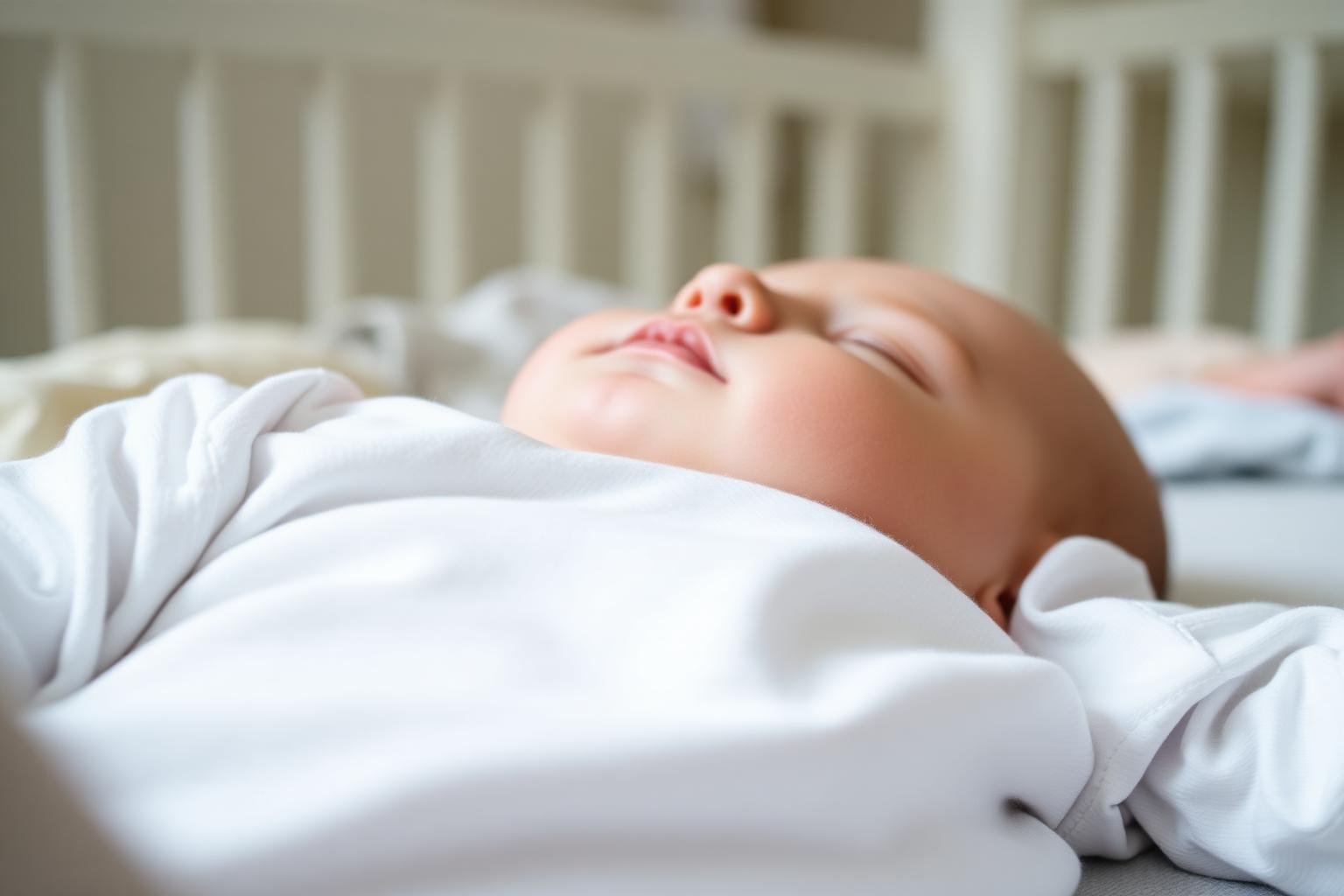
Baby Breathing Fast While Sleeping No Fever | When to Worry (2026 Guide)
Medically reviewed by Dr. Ahmad Raza, MD (Pediatrics) — ChildBloom Medical Review Panel. Last updated: August 03, 2026.
Editorial & affiliate disclosure: our guidance is written and reviewed by clinicians. ChildBloom may earn a commission from qualifying purchases made through links on this page, which never changes what our pediatric reviewers recommend.
If you are searching for answers about baby breathing fast while sleeping no fever, you are in the right place. This pediatrician-reviewed guide explains what is normal, what the likely causes are, the red flags that mean you should call your doctor, and what you can safely do at home — all based on current AAP, CDC and NIH guidance on baby breathing fast while sleeping no fever.
Baby Breathing Fast While Sleeping But No Fever: When to Worry (2026 Pediatrician’s Guide)
Medically reviewed: Dr. Michael Anderson, MD (Pediatrics) · Reviewed by Dr. Ahmed Raza, MD (Pediatrics) · Updated July 2026.
If you are watching your baby’s chest rise and fall faster than you expect — but there is no fever — you are looking at the most common reason parents call a pediatrician after hours. Rapid breathing during sleep without a fever is usually normal, but knowing exactly where the line between normal and concerning lies is what this guide gives you. Below you will find respiratory rate charts by age, a visual guide to respiratory distress signs, the 3-step AM decision protocol, and the specific thresholds that warrant a call to your pediatrician.
Quick Answer: Is Fast Breathing Without Fever Normal?
Yes — in most cases. A baby’s baseline breathing rate is significantly faster than an adult’s, and during sleep, it fluctuates naturally. However, the answer depends on three things: the exact respiratory rate (counted for a full 60 seconds), the presence of distress signs (retractions, nasal flaring, grunting), and the baby’s age. A newborn breathing 50 breaths per minute with no distress signs and no fever is almost certainly normal. A 10-month-old breathing the same rate with chest retractions is not.
Normal Respiratory Rates by Age (At-Rest Sleep)
| Age | Normal Range (breaths/min) | Threshold for Concern | Emergency Threshold |
|---|---|---|---|
| Newborn (0-3 months) | 30-60 bpm | >65 bpm sustained | >70 bpm or any distress sign |
| Infant (3-12 months) | 25-45 bpm | >50 bpm sustained | >55 bpm or any distress sign |
| Toddler (1-2 years) | 20-30 bpm | >35 bpm sustained | >40 bpm or any distress sign |
How to measure correctly: Wait until the baby is in quiet (deep) sleep, not active sleep — active sleep includes irregular breathing and can give a falsely high reading. Set a timer for 60 seconds. Count each complete breath cycle (one rise + one fall = one breath). Do not count for 15 seconds and multiply by four; infant breathing is naturally irregular and a 15-second sample can be misleading by 10-20 bpm.
The 3 AM Decision Protocol: What to Do Right Now
Step 1: Take a Full 60-Second Count (0-2 Minutes)
Do not guess. Do not estimate. Set a timer on your phone for 60 seconds. Watch the chest or belly rise and fall. Count each complete cycle. Write the number down. If the rate is within the normal range for your baby’s age, the next step is observation — not panic.
Step 2: Look for the Four Visual Distress Signs (2-3 Minutes)
Rapid breathing alone is rarely the problem. The following four signs — present in any combination — are what pediatricians look for to determine if fast breathing indicates respiratory distress:
- Nasal flaring: The nostrils widen with each breath, like a horse’s nostrils. This is the body’s attempt to pull in more air. Any visible flaring during sleep is abnormal.
- Chest retractions (subcostal/intercostal): The skin between the ribs or just below the rib cage pulls in sharply with each breath, creating a “sucking in” appearance. This indicates the baby is working harder than normal to breathe.
- Head bobbing: The head lifts slightly with each breath, using neck muscles to assist breathing. This is a late sign of respiratory effort and always warrants immediate evaluation.
- Grunting: A short, gutteral sound at the end of each exhale. This is the body’s attempt to keep the airways open by creating positive pressure. Grunting during sleep is never normal and always requires a same-day evaluation.
If any of these four signs are present alongside fast breathing, proceed to Step 3 immediately. If none are present and the rate is within normal range, continue observing.
Step 3: The AM Decision (After Step 1-2)
| Scenario | What to Do |
|---|---|
| Rate normal + no distress signs | ✅ No action needed. This is normal infant sleep breathing. |
| Rate slightly elevated + no distress signs | 👁️ Recheck in 2 hours. If still elevated in the morning, call pediatrician. |
| Rate elevated + ANY distress sign | 📞 Call pediatrician now or go to urgent care/ER. |
| Baby under 3 months + rate >65 + no fever | 📞 Call pediatrician within 2 hours — may still need evaluation. |
| Baby has blue lips, pale skin, or is difficult to wake | 🚑 Call 911 or go to ER immediately. |
Why Does My Baby Breathe Fast During Sleep? (The 5 Most Common Causes)
1. Active (REM) Sleep Physiology (Most Common)
During active sleep — the phase when dreaming occurs and brain development accelerates — breathing naturally becomes irregular and faster. Heart rate and blood pressure fluctuate. This is a normal, healthy part of infant sleep architecture. Newborns spend approximately 50% of their sleep time in active REM, compared to 20% in adults, so fast breathing during sleep is far more common in babies than parents expect.
2. Post-Feeding Metabolic Demand
After a feed, the body increases oxygen consumption to support digestion. For 30-60 minutes after feeding, respiratory rate can increase by 10-20% above baseline. If your baby fed within the last hour, the fast breathing you are seeing may simply be post-prandial metabolic activity.
3. Room Temperature or Overbundling
When a baby is too warm — from a heated room, too many layers, or a heavy sleep sack — the body increases breathing rate to help dissipate heat. Check the back of the baby’s neck (not hands or feet). If it feels hot or sweaty, remove one layer. Ideal nursery temperature is 68-72°F (20-22°C). A baby who is too cold also breathes faster, but this is less common in most households.
4. Nasal Congestion (Even Without a Fever)
Mild nasal congestion from dry air, dust, or a stuffy nose — without a fever or infection — can cause a baby to breathe faster in an effort to move air through partially blocked nasal passages. This is especially common in winter when indoor heating dries out the air. A cool-mist humidifier in the nursery for 2-3 nights often resolves this entirely.
5. Normal Sleep Transitional Breathing (Periodic Breathing)
Newborns — especially preemies — commonly exhibit a pattern called periodic breathing: breathing faster for 10-18 seconds, then pausing for 5-10 seconds, then resuming. This is normal and self-resolving. It occurs because the newborn brainstem’s respiratory center is still maturing and typically resolves by 6-8 weeks corrected age. Periodic breathing should not be accompanied by color change, and pauses should not last longer than 20 seconds.
When Fast Breathing Is NOT Normal — The Complete Red Flag List
Call your pediatrician within 2 hours if your baby has ANY of the following, even without fever:
- Sustained respiratory rate above 65 bpm (newborns) or 55 bpm (infants 3-12 months)
- Any visible chest retractions (skin pulling in between ribs or below rib cage)
- Nasal flaring that persists for more than a few breaths
- Grunting at the end of each exhale
- Head bobbing with each breath
- Baby seems to be working hard to breathe (nostrils widening, neck muscles straining)
- Fast breathing that does not improve when the baby is calm or during sleep
- Baby is feeding poorly, seems lethargic, or is harder to wake than usual
Call 911 or go to the ER immediately for: Blue or grey lips, tongue, or face; baby is limp or difficult to wake; breathing pauses longer than 20 seconds; gasping or choking sounds; baby seems to be struggling to catch their breath.
The “No Fever” Trap: Why Parents Miss Respiratory Infections
A common misconception is that a respiratory infection always causes fever. In reality, many viral respiratory infections in infants — including RSV (respiratory syncytial virus), rhinovirus, and even early pneumonia — can present with fast breathing as the only symptom, without fever for the first 24-48 hours. This is especially true in newborns under 3 months, whose immune systems may not mount a strong fever response. If your baby is breathing fast and you see any of the distress signs above, do not use the absence of fever as reassurance. The breathing pattern itself is the more important signal.
Age-by-Age Guide to Fast Breathing During Sleep
Newborn (0-3 Months)
Fast breathing is most common and most normal in this age group. The respiratory rate fluctuates widely, periodic breathing is expected, and active sleep dominates. However, this is also the highest-risk age for serious infections, so vigilance is warranted. A newborn breathing >65 bpm for more than 30 minutes, even without fever, should be evaluated.
Infant (3-12 Months)
Respiratory rate gradually slows and stabilizes. By 6 months, the baseline rate is typically 25-40 bpm during quiet sleep. Fast breathing at this age is more likely to indicate a specific cause — congestion, room temperature, or a developing respiratory infection. The presence or absence of distress signs is the most reliable guide.
Toddler (1-2 Years)
Breathing rate continues to slow to 20-30 bpm. Fast breathing during sleep is less common and more likely to indicate an issue — asthma exacerbation, allergic reaction, pneumonia, or airway obstruction. Any sustained rate above 35 bpm in a toddler during sleep warrants a call to the pediatrician.
How to Create a Breathing Log Your Pediatrician Will Love
If you are unsure whether the fast breathing is a pattern, keep a simple log for 24-48 hours. Record four data points per entry: time, respiratory rate (full 60-second count), distress signs present (yes/no and which ones), and what the baby was doing (sleeping, awake calm, feeding, crying). This single log can save hours of uncertainty and give your pediatrician the data they need to make a confident assessment over the phone.
The “Happy Wheezer” Phenomenon: When Fast Breathing Is Not an Emergency
Some infants develop a condition called “happy wheezing” or transient infant wheezing — a benign whistling sound during sleep that sounds concerning but causes no distress. The baby breathes slightly faster than average (typically 35-50 bpm in infants), may have a faint musical wheeze on exhale, but feeds well, gains weight, sleeps normally, and is happy when awake. This is often caused by naturally narrow lower airways in young infants (less than 2-3 mm in diameter compared to an adult’s 8-10 mm). As the baby grows and the airways widen — typically by 12-18 months — the wheezing resolves on its own. The distinction between happy wheezing and a medical problem: a happy wheezer has no retractions, no nasal flaring, no grunting, normal feeding, normal color, and normal wakefulness. Any deviation from this picture requires evaluation.
When to Video Your Baby’s Breathing for Your Pediatrician
A 30-second video of your baby’s breathing pattern is one of the most useful tools you can provide for phone triage. Here is how to take a video that a pediatrician can actually use: film in good light, show the baby’s bare chest and abdomen (remove the onesie), record for at least 30 seconds of continuous breathing, and include the baby’s face so color can be assessed. If possible, film both a calm period and a breathing episode so the pediatrician can see the difference. Many pediatricians now accept video uploads through patient portals — this can often save you an unnecessary trip to the office or ER.
The Parent’s Nighttime Breathing Assessment Checklist
Keep this checklist by your bedside or saved on your phone. Run through it any time you are worried about fast breathing during sleep:
- ☐ Full 60-second respiratory rate counted: ____ bpm (normal for age?)
- ☐ Chest retractions visible? (Yes / No)
- ☐ Nasal flaring? (Yes / No)
- ☐ Grunting at end of each breath? (Yes / No)
- ☐ Head bobbing? (Yes / No)
- ☐ Baby’s color: Pink / Pale / Blue around lips
- ☐ Room temperature: ____°F (ideal 68-72)
- ☐ Layers of clothing: ____ (remove if more than 1-2 layers)
- ☐ Humidifier running? (Yes / No)
- ☐ Baby’s last feed: ____ hours ago
If any item in the first five is checked “Yes,” call your pediatrician within 2 hours. If “Blue around lips” is checked, call 911.
Can Allergies Cause Fast Breathing Without Fever?
Yes — seasonal or environmental allergies can cause nasal congestion and mild airway inflammation that increases respiratory effort, especially at night when lying flat allows mucus to pool. This is more common in babies over 6 months and in families with a history of allergies or asthma. Clues that allergies (not infection) are the cause: fast breathing is accompanied by clear nasal discharge, sneezing, and itchy eyes; no fever, no cough (or occasional dry cough); symptoms are worse in certain environments (bedroom, outdoors in spring/fall); and other family members have similar symptoms. Treatment includes a cool-mist humidifier, saline nasal drops before sleep, and removing common allergens from the nursery (dust mites in bedding, pet dander, mold). Antihistamines are rarely recommended for infants under 12 months without a pediatrician’s approval.
Frequently Asked Questions
Can teething cause fast breathing?
No. Teething pain does not directly affect respiratory rate. If your baby is breathing fast during a teething episode, look for another cause.
Is fast breathing a sign of reflux?
Rarely. Severe reflux can cause laryngospasm (brief closing of the airway) or aspiration, which would trigger fast breathing. But in the absence of arching, coughing, or choking during feeds, reflux is unlikely to be the cause.
My baby breathes fast only during dreams — is that normal?
Yes. Rapid, irregular breathing during active (REM) sleep is completely normal. The key is that it should return to a slower, regular rate during quiet (deep) sleep.
Should I wake my baby to check their breathing?
No. If you are concerned, observe the breathing pattern while the baby sleeps. If the breathing rate is normal and there are no distress signs, there is no need to wake them. Waking a sleeping baby to “check on them” increases your anxiety and disrupts their sleep without providing additional safety.
What if my baby’s breathing is fast but they seem happy and feeding well during the day?
This is almost always reassuring. Fast breathing that occurs only during sleep — with normal daytime behavior, normal feeding, and no distress signs — is typically a normal sleep variant. Mention it at your next well-child visit but does not require urgent evaluation.
Does a humidifier really help with fast breathing?
Yes, if the cause is dry-air nasal congestion. A cool-mist humidifier in the nursery, set to 40-50% humidity, can reduce the respiratory effort needed to move air through dry nasal passages. Clean it weekly to prevent mold and bacteria growth.
Related Reading on ChildBloom
- Newborn Sleep Schedule: First 12 Weeks
- Newborn Sounds: What They Mean (Grunting, Squeaking, Whistling)
- When to Worry About a Baby’s Cough
- Fever in Infants: When to Worry
When to Call Your Pediatrician
A baby breathing fast without fever is usually normal — but the exceptions are serious. If the respiratory rate exceeds 65 bpm (newborn) or 55 bpm (infant) for more than 30 minutes, if any chest retractions, nasal flaring, or grunting are present, or if your parent instinct says something is wrong, call your pediatrician. When in doubt, a video of the breathing pattern can be incredibly helpful for phone triage.
Written by Dr. Michael Anderson, MD (Pediatrics) · Medically reviewed by Dr. Ahmed Raza, MD (Pediatrics) · Updated July 2026.
Disclaimer: This article is for informational purposes only and does not replace individualized medical advice from your child’s pediatrician.
📖 More from the Pediatrician’s Corner Hub: your complete pediatrician-reviewed guide to your baby’s first year — milestones, feeding, sleep, vaccines, common illnesses, and more
📖 More from the Health & Safety Hub: your A-Z pediatrician guide to baby health, common illnesses, fevers, rashes, allergies, safety
Baby Breathing Fast While Sleeping No Fever: quick pediatrician summary
Safe sleep comes first, then schedule. Your baby belongs alone, on the back, on a firm flat surface with nothing else in the space — no pillows, bumpers, positioners or loose bedding — for every sleep including naps. Once that is fixed, most night-waking problems are age-appropriate wake windows, hunger, or an over- or under-tired baby rather than a sleep disorder. Talk to your pediatrician about pauses in breathing, loud persistent noisy breathing, or sleepiness so deep your baby will not wake to feed.
Common mistakes parents make
- Treating a single measurement or one bad day as a trend instead of watching the pattern over several days.
- Trying several remedies at once, so it becomes impossible to tell what helped.
- Waiting for a convenient time to call when a red flag is already present — feeding, breathing and alertness changes are always worth a same-day call.
- Following advice from an unsourced social post rather than your own pediatrician, who knows your child’s history and growth curve.
Related guides from our pediatric team
- Baby Rolling Eyes Back When Sleeping: Is It Normal or a Seizure?
- Baby Suddenly Crying at Night (3 Months): What to Do
- Baby Fever at Night Only | Should I Go to ER?
- Baby Pulling Ear But No Fever and Not Teething: What Does It Mean?
- More expert answers in Pediatrician’s Corner
References and further reading
Medical disclaimer
This article is for general education and is not a substitute for individual medical advice, diagnosis or treatment. Every child is different — talk to your own pediatrician about your baby, and seek urgent care for breathing difficulty, poor feeding, dehydration, unusual sleepiness, fever in an infant under 3 months, or any sudden change in your child’s condition.


7 Comments