Baby Pale Episode: Benign vs Concerning Signs
Baby pale episode guide: distinguish benign causes from concerning signs, when to call 911, and what to watch for in infants.

Baby pale episode guide: distinguish benign causes from concerning signs, when to call 911, and what to watch for in infants.

Blood streaked stools breastfed baby guide: common causes, when it’s normal, when to call the pediatrician, and what to watch for.

Blue lips baby cries guide: recognize cyanosis signs, distinguish benign from serious, when to call 911, and what to do in an emergency.

Breath-holding spells toddlers guide: recognize cyanotic vs pallid spells, what to do during an episode, when to call the doctor, and prevention tips.

High-pitched cry newborn guide: recognize abnormal crying patterns, common causes, when it’s an emergency, and what to tell your pediatrician.

Baby goes limp unresponsive guide: recognize emergency signs, immediate steps to take, when to call 911, and what to expect at the ER.

A clear, non-diagnostic safety guide for families: the difference between postpartum symptoms that warrant a call this week and the signs of a psychiatric emergency that need action right now, plus a concrete action plan and crisis resources.

A clear, practical breakdown of postpartum contraception options compatible with breastfeeding — LAM’s strict conditions, progestin-only vs. estrogen-containing methods, and the exact questions to bring to your provider.

Honest, practical guidance on resuming sex after childbirth — what’s actually happening in your body, why pain is common at first, and how to talk with your partner about timing and comfort.

A practical guide to finding a qualified pelvic floor physical therapist after childbirth — the credentials that matter, questions to ask before booking, and exactly what to expect at your first visit.

A practical framework — plus ready-to-use scripts — for setting newborn visitor boundaries around health precautions, timing, and family pushback during the fourth trimester.
A practical, stage-by-stage guide for birth partners: what to actually do during early labor, active labor, transition, and pushing — plus how to advocate for your partner and take care of yourself along the way.
# Baby Aspirin Danger: Why It’s Deadly for Children (Reye’s Syndrome) Quick Answer **Never give aspirin or aspirin-containing products to a child under 18 years old.** The baby aspirin danger is real: even low-dose aspirin can trigger Reye’s syndrome, a rare but life-threatening condition that causes brain swelling and liver damage. Since 1980, the [American…

Baby won’t self-feed? Learn gentle ways to offer finger foods and pre-loaded spoons, improve mealtime setup, and recognize when to ask for help.

Premature baby starting solids? Learn how corrected age, readiness, iron, feeding history, and the medical team shape an individualized plan.

Combination feeding schedule ideas for breast milk, formula, and solids at 6, 9, and 12 months—without rigid volumes or universal rules.

Is your 12-month-old eating less? Appetite can vary after the first year. Learn what to watch, how to feed responsively, and when to call.

Picky eating at 18 months is common. Learn a responsive, low-pressure plan with regular meals, safe foods, choices, and red flags.

Toddler refuses dinner but snacks? Learn how predictable meals, balanced snacks, responsive feeding, and calm boundaries can help without pressure.

Baby open cup practice can begin around 6 months with solids. Learn safe steps, water limits, cup options, and when to ask your pediatrician.

Introducing textures after purees? Learn how to progress safely, follow readiness cues, reduce pressure, and tell gagging from choking.

8-month feeding schedule with flexible milk feeds, meals, textures, water practice, iron-rich foods, and safety guidance.

11-month feeding schedule with flexible meals, milk feeds, textures, iron-rich foods, and responsive guidance for families.
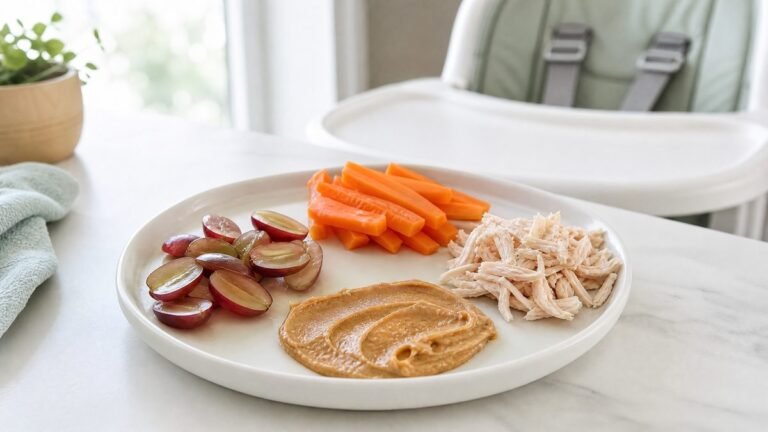
Choking hazards for babies: foods to avoid or modify, safer textures, supervision tips, and urgent choking guidance.

Baby refuses solids but drinks milk? Learn responsive feeding strategies, iron-food ideas, and red flags that need pediatric advice.
We use cookies to improve your experience on our site. By using our site, you consent to cookies.
Manage your cookie preferences below:
Essential cookies enable basic functions and are necessary for the proper function of the website.
These cookies are needed for adding comments on this website.
Statistics cookies collect information anonymously. This information helps us understand how visitors use our website.
Google Analytics is a powerful tool that tracks and analyzes website traffic for informed marketing decisions.
Service URL: policies.google.com (opens in a new window)