Baby Sun Safety: Sunscreen, Shade, and Clothing
Medically reviewed by Dr. Ahmad Raza, MD (Pediatrics) — ChildBloom Medical Review Panel. Last updated: August 03, 2026.
Editorial & affiliate disclosure: our guidance is written and reviewed by clinicians. ChildBloom may earn a commission from qualifying purchases made through links on this page, which never changes what our pediatric reviewers recommend.
If you are searching for answers about baby sun safety, you are in the right place. This pediatrician-reviewed guide explains what is normal, what the likely causes are, the red flags that mean you should call your doctor, and what you can safely do at home — all based on current AAP, CDC and NIH guidance on baby sun safety.
Quick Answer
Babies 6 months and older can wear sunscreen — use a broad-spectrum SPF 30–50 mineral formula with zinc oxide or titanium dioxide, reapplied every 2 hours. Under 6 months, shade, UPF clothing and timing are the primary protection; the AAP allows a small amount of mineral sunscreen on exposed areas like the face and hands when shade is not possible.
{“@context”: “https://schema.org”, “@type”: “FAQPage”, “mainEntity”: [{“@type”: “Question”, “name”: “Is any sunscreen safe for babies under 6 months?”, “acceptedAnswer”: {“@type”: “Answer”, “text”: “The AAP suggests applying mineral sunscreen sparingly on small exposed areas such as the face and hands if shade and clothing are insufficient. Mineral formulas are strongly preferred.”}}, {“@type”: “Question”, “name”: “Is spray sunscreen okay for babies?”, “acceptedAnswer”: {“@type”: “Answer”, “text”: “Avoid spray sunscreens on babies due to inhalation risk and uneven coverage.
Furthermore, use lotion-based mineral sunscreen instead.”}}, {“@type”: “Question”, “name”: “What about sunscreen products that combine bug repellent?”, “acceptedAnswer”: {“@type”: “Answer”, “text”: “Avoid combination products. Sunscreen needs reapplication every 2 hours but bug repellent should not be reapplied that frequently.”}}]} This guide covers is sunscreen safe for babies under 6 months old when okay and what parents need to know.
Baby Sun Safety: A Complete Pediatrician Guide to Sunscreen Shade and Clothing

Protecting your baby from the sun is not just about preventing sunburn in the moment. It is about reducing their lifetime risk of skin cancer, including melanoma, which is the most common cancer among young adults ages 25 to 29.
For more detailed guidance, visit the American Academy of Pediatrics or the CDC’s Infant and Toddler Health page.
Sun exposure during childhood is a major risk factor for skin cancer later in life, and the American Academy of Pediatrics emphasizes that sun protection should begin at birth. The good news is that sun safety for babies is straightforward when you understand the basic principles of protecting delicate infant skin.
A baby skin is thinner and more sensitive than adult skin, with less melanin to provide natural protection against ultraviolet radiation. A baby also has a larger surface area to body weight ratio, meaning they absorb more of any substance applied to the skin relative to their body size. This is why sunscreen recommendations for infants are more conservative than for older children and adults. The sun protection strategy for babies relies on three layers of defense: shade, protective clothing, and sunscreen used appropriately.
Sun Safety for Babies Under 6 Months
Specifically, for babies younger than six months, the primary sun protection strategy is avoidance. Their skin is too sensitive for routine sunscreen use, and their immature cooling systems make them more vulnerable to heat-related illness.
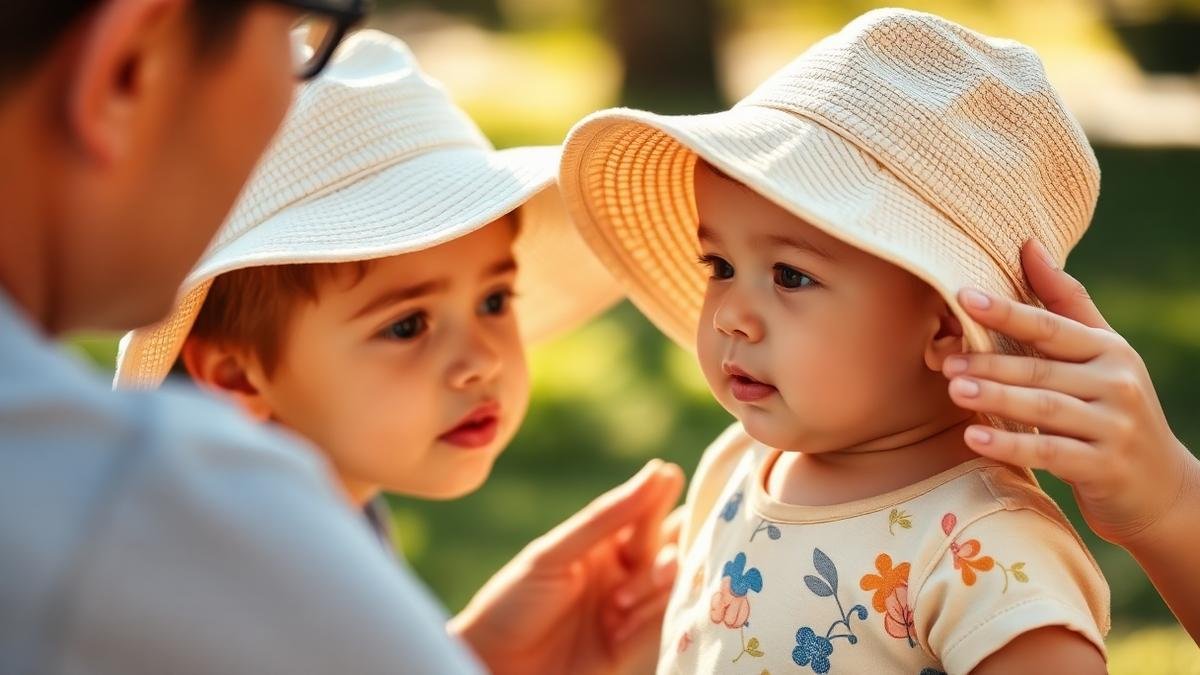
The AAP recommends keeping babies under six months out of direct sunlight as much as possible. This means planning outdoor activities for early morning or late afternoon when UV rays are less intense, using stroller canopies, umbrellas, and shade trees to create a protective barrier, dressing the baby in lightweight long sleeves, long pants, and a wide-brimmed hat, and using a stroller with a UPF-rated canopy or attaching a sunshade.
The AAP does acknowledge that there may be situations where even the most careful parents cannot keep a young baby completely shaded. In those cases, it is acceptable to apply a small amount of mineral sunscreen to small areas of exposed skin, such as the face and hands. Choose a sunscreen with zinc oxide or titanium dioxide as the active ingredient, with an SPF of at least 30. Test a small area first to check for any skin reaction.
Sun Safety for Babies 6 Months and Older
Once your baby reaches six months, sunscreen becomes a regular part of the sun protection routine. However, sunscreen should still be considered the third line of defense after shade and clothing.
In particular, the AAP recommends using a broad-spectrum sunscreen that protects against both UVA and UVB rays, with an SPF of at least 30 and preferably 50. Choose a mineral sunscreen containing zinc oxide or titanium dioxide, as these ingredients sit on top of the skin and reflect UV rays rather than being absorbed into the skin. Mineral sunscreens are less likely to cause skin irritation and are considered safer for young children.
Apply sunscreen generously 15 to 30 minutes before going outside. Use enough to cover all exposed areas, including the face, ears, back of the neck, arms, legs, and the tops of the feet. Do not forget often-missed areas like the back of the ears, the back of the knees, and the part line of the scalp. Reapply every two hours and immediately after swimming, toweling dry, or heavy sweating. One application does not last all day.
Understanding UPF Clothing and Hats
Sun-protective clothing is one of the most effective and convenient sun safety tools. Look for clothing labeled with a UPF ultraviolet protection factor rating. A UPF of 50 means the fabric blocks 98 percent of UV radiation. UPF clothing is available in lightweight, breathable fabrics that keep babies cool while providing superior protection. For everyday use, regular lightweight long sleeves and long pants in tightly woven fabrics also provide good protection. Darker colors and denser weaves block more UV than lighter colors and looser weaves.
A wide-brimmed hat provides essential protection for the face, ears, and back of the neck. Baseball caps leave the ears and neck exposed, making them a poor choice for sun protection. Look for hats with a brim that extends all the way around, at least three inches wide. Infant hats with a flap that covers the neck are ideal. If your baby resists wearing a hat, try different styles and fabrics to find one they tolerate better, and model wearing a hat yourself so they see you doing it too.
However, baby sunglasses with UV protection are also recommended to protect the eyes from UV damage, which can contribute to cataracts and other eye problems later in life. Look for sunglasses labeled with 100 percent UV protection or UV 400 rating. Wrap-around styles provide the best coverage.
Timing Your Outdoor Activities
The sun UV rays are strongest between 10 AM and 4 PM. During these hours, the sun is directly overhead and the UV index is at its peak. Plan outdoor activities for early morning before 10 AM or late afternoon after 4 PM when UV levels are lower. Many weather apps and websites report the daily UV index, which is a helpful guide for planning your sun protection needs. A UV index of 3 or higher requires sun protection. A UV index of 6 or higher requires especially careful protection.
Be aware that UV rays reflect off surfaces like water, sand, snow, and concrete, increasing exposure even in the shade. These surfaces can reflect up to 80 percent of UV rays, meaning you can get sunburned even while sitting under an umbrella at the beach. On cloudy days, up to 80 percent of UV rays can penetrate the cloud cover, so do not skip sun protection on overcast days. Sunburn can happen even when it does not feel hot outside.
Sunburn First Aid for Babies
If your baby does get sunburned despite your best efforts, act quickly. Move them indoors or into the shade immediately. Apply cool not cold compresses to the affected areas for 10 to 15 minutes several times a day. Offer plenty of breast milk or formula to keep them hydrated. You can apply a gentle, fragrance-free moisturizer or aloe vera gel to soothe the skin, but ask your pediatrician before using any medicated creams or ointments.
As a result, for babies older than six months, you can give acetaminophen or ibuprofen to help with pain and discomfort, following the dosing guidelines for their weight. Contact your pediatrician if the sunburn blisters, covers a large area of the body, or is accompanied by fever, chills, headache, or signs of dehydration such as fewer wet diapers than usual. Do not pop blisters as this increases the risk of infection. Seek medical attention immediately if your baby seems confused, lethargic, or is not responding normally.
When to Call Your Pediatrician About Sun Exposure
- Your baby has a sunburn with blisters
- The sunburn covers a large area of the body
- Your baby has a fever or chills after sun exposure
- Your baby seems unusually lethargic or difficult to wake
- Your baby shows signs of dehydration fewer wet diapers, dry mouth, no tears when crying
- Your baby is younger than 6 months and has any sunburn at all
- You are unsure about which sunscreen product is safe for your baby
Understanding UV Rays and Your Baby Skin
Ultraviolet radiation from the sun comes in two main types that affect the skin. UVA rays penetrate deep into the skin and are primarily responsible for premature aging and wrinkles. UVB rays burn the superficial layers of the skin and are the primary cause of sunburn and skin cancer.
Both types are harmful to babies, and a broad-spectrum sunscreen protects against both. The UV index, reported by weather services, ranges from 0 to 11 and above. A UV index of 3 or higher requires sun protection. At a UV index of 6 or higher, protection is essential and sun exposure should be minimized during peak hours.
Babies are more vulnerable to UV damage for several reasons. Their skin has less melanin, the pigment that provides natural sun protection. Their skin is thinner and more easily penetrated by UV rays.
Furthermore, they have a larger surface area to body weight ratio, meaning more of their body is exposed relative to their size. And they spend more time outdoors than most adults, accumulating sun exposure that contributes to lifetime skin cancer risk. Research shows that one blistering sunburn during childhood doubles the risk of developing melanoma later in life. This makes sun protection in the early years a true investment in lifelong health.
Choosing the Right Sunscreen for Your Baby
When selecting a sunscreen for your baby, look for a mineral sunscreen containing zinc oxide or titanium dioxide as the active ingredients. These are physical blockers that sit on top of the skin and reflect UV rays, rather than chemical sunscreens that are absorbed into the skin.
Mineral sunscreens are less likely to cause skin irritation or allergic reactions, making them the preferred choice for sensitive baby skin. Choose a sunscreen with an SPF of at least 30 and preferably 50. Higher SPF numbers provide only marginally more protection for example SPF 50 blocks 98 percent of UVB rays while SPF 100 blocks 99 percent but higher SPFs may give parents a false sense of security that leads to less frequent reapplication.
Choose a water-resistant sunscreen if your baby will be in water or sweating. The FDA requires water-resistant sunscreens to state whether they protect for 40 or 80 minutes of water exposure. Lotions are preferred over sprays because sprays can be inhaled and may not provide even coverage.
Specifically, stick sunscreens are convenient for the face but may not apply enough product for full protection. Look for sunscreens that are fragrance-free and hypoallergenic to minimize the risk of skin reactions. Test any new sunscreen on a small patch of your baby skin before full application.
Sun Protection for Special Situations
At the beach or pool, take extra precautions. UV rays reflect off water and sand, increasing exposure by up to 80 percent. Use a beach tent or umbrella for shade, dress your baby in a UPF-rated swim shirt and hat, and reapply sunscreen immediately after water exposure. In the snow, UV rays reflect off the surface and can cause sunburn even on cold days. High altitude increases UV exposure by 10 to 12 percent per 1000 meters of elevation gain. In the car, UV rays can penetrate through windows and cause sunburn on long drives. Consider applying sunscreen or using car window shades for your baby. On overcast days, up to 80 percent of UV rays penetrate cloud cover, so sun protection is still needed.
Setting a Good Example for Your Child
Children learn sun safety habits by watching their parents. When you model good sun protection by wearing sunscreen, a hat, and sunglasses and seeking shade during peak hours, your child will naturally adopt these habits as they grow. Make sun protection a normal, non-negotiable part of your daily routine during outdoor time. As your baby grows into a toddler and preschooler, involve them in the process, letting them help apply their own sunscreen and choose their sun hat. Building these habits early creates a lifetime of healthy sun behavior.
The Bottom Line
Sun protection for babies is simple and effective when you follow the layered approach. Keep babies under six months out of direct sun. For older babies, use a combination of shade, protective clothing including a wide-brimmed hat and UV-blocking sunglasses, and mineral sunscreen with SPF 30 or higher. Avoid peak UV hours between 10 AM and 4 PM. Reapply sunscreen every two hours and after swimming. These habits will protect your baby skin now and reduce their risk of skin cancer for the rest of their life. Set a good example by practicing sun safety yourself your baby learns from watching you.
In particular, Related: Spring Sun Protection for Babies | Seasonal Baby Care Guide
Related Articles
- Wake Windows by Age Chart
- Crib to Toddler Bed Transition
- Bottle to Cup Transition
- Top 9 Allergens Introduction
- Toddler Tantrums What Works
Related Articles
- How to Tell if Baby is Getting Enough Milk
- Signs of Dehydration in Babies
- Why is My Baby Fussy 12 Reasons
- Baby Bath Safety
- Baby Ear Infection Signs
Related: Spring Sun Protection Babies Sunscreen
📖 More from the Pediatrician Corner Hub: your complete pediatrician-reviewed guide to your baby first year
However, Related: fever temperature 101 baby 6 months when to worry
Frequently Asked Questions
When can babies wear sunscreen?
From 6 months of age, babies can wear broad-spectrum SPF 30–50 mineral sunscreen on all exposed skin. Under 6 months, shade and clothing are the main protection, though the AAP allows a small amount of mineral sunscreen on the face and backs of the hands when shade is not available.
What kind of sunscreen is best for babies?
A mineral (physical) sunscreen with zinc oxide or titanium dioxide as the active ingredient, SPF 30–50, broad-spectrum and water-resistant. These sit on the skin instead of being absorbed and are less likely to irritate infant skin. Avoid sprays near the face and avoid oxybenzone.
How much sunscreen does a baby need and how often?
Roughly a teaspoon for the face and neck and a teaspoon per limb. Apply 15–30 minutes before going outside and reapply every 2 hours, or immediately after swimming, sweating, or towel drying.
Can newborns go outside in the sun?
Short walks are fine, but keep newborns fully shaded. Avoid direct sun between 10 a.m. and 4 p.m., use a stroller canopy plus a lightweight cover that allows airflow, and dress the baby in long sleeves and a wide-brim hat.
How do I treat a baby’s sunburn?
Move the baby out of the sun, apply cool compresses, offer extra breast milk or formula for hydration, and use plain moisturiser or aloe. Call your pediatrician for any sunburn in a baby under 1 year, or for blistering, fever, lethargy, or poor feeding at any age.
Related Reading on ChildBloom
Authoritative Sources
- American Academy of Pediatrics (HealthyChildren.org)
- Centers for Disease Control and Prevention
- Cleveland Clinic
Medically reviewed by the ChildBloom Pediatric Review Board. Last updated August 2026. This article is for general education and does not replace advice from your child’s pediatrician.
Baby Sun Safety: quick pediatrician summary
Most of the time this is a normal newborn or infant variation that settles on its own, and the job of a parent is to know the small number of red flags that change the plan. Watch feeding, breathing, alertness and wet diapers — those four tell you more than the symptom itself. Call your pediatrician the same day for fever in a baby under 3 months, laboured or fast breathing, refusal to feed, fewer wet diapers, unusual floppiness or sleepiness, or a symptom that is clearly getting worse rather than better.
Common mistakes parents make
- Treating a single measurement or one bad day as a trend instead of watching the pattern over several days.
- Trying several remedies at once, so it becomes impossible to tell what helped.
- Waiting for a convenient time to call when a red flag is already present — feeding, breathing and alertness changes are always worth a same-day call.
- Following advice from an unsourced social post rather than your own pediatrician, who knows your child’s history and growth curve.
Related guides from our pediatric team
- Baby Bath Safety: 3–12 Months Guide
- Pet safety: Bringing Baby Home to a Dog or Cat: Pet Safety with Newborns
- When to Worry About a Baby Cough: Pediatrician’s Guide
- Newborn Stroller Safety: From Bassinet Attachments to Hot Days
- More expert answers in Pediatrician’s Corner
References and further reading
- AAP HealthyChildren: symptoms & when to call the doctor
- CDC child health & development
- NIH MedlinePlus infant and newborn care
Medical disclaimer
This article is for general education and is not a substitute for individual medical advice, diagnosis or treatment. Every child is different — talk to your own pediatrician about your baby, and seek urgent care for breathing difficulty, poor feeding, dehydration, unusual sleepiness, fever in an infant under 3 months, or any sudden change in your child’s condition.




3 Comments