Amber Teething Necklaces: Are They Safe or a Strangulation Risk?
Medically reviewed by Dr. Ahmad Raza, MD (Pediatrics) — ChildBloom Medical Review Panel. Last updated: August 4, 2026.
Editorial & affiliate disclosure: our guidance is written and reviewed by clinicians. ChildBloom may earn a commission from qualifying purchases made through links on this page, which never changes what our pediatric reviewers recommend.
Looking for clear answers about amber teething necklaces? This pediatrician-reviewed guide covers what matters, what to skip, the safety checks that count, and exactly when to involve your doctor — based on current AAP, CDC and CPSC guidance on amber teething necklaces.
Quick pediatrician summary: amber teething necklaces
Short answer: A pediatrician explains amber teething necklaces: what is normal, the real risks, red flags to watch for and exactly when to call your doctor.
When it comes to amber teething necklaces, parents need clear, evidence-based guidance. Written by the ChildBloom Pediatric Panel, FAAP | Medically reviewed | Last updated July 2025
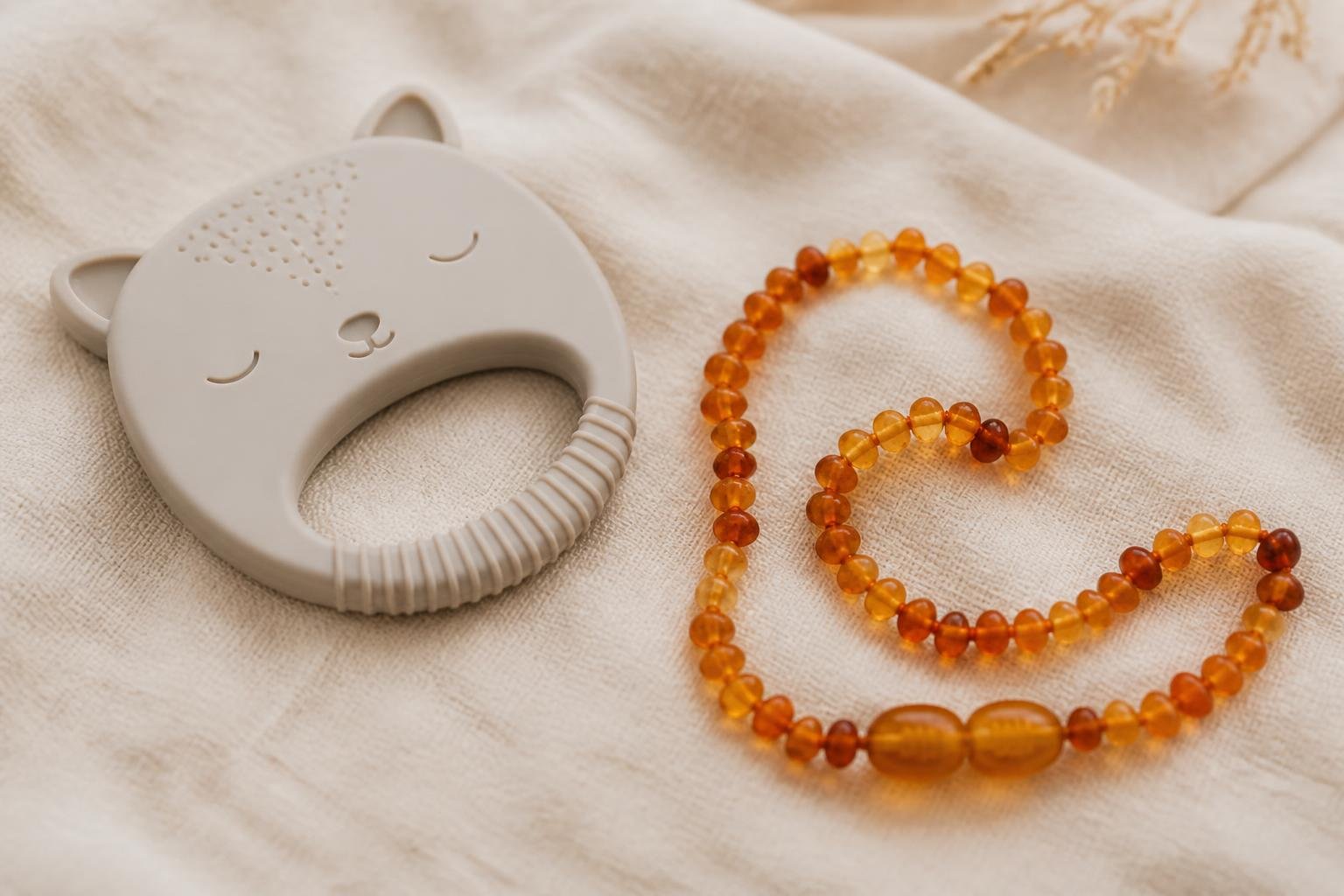
You have seen them everywhere. The beautiful, honey-colored necklaces around babies’ necks. They are called “amber teething necklaces,” and the claim is that the warmth of the baby’s body releases succinic acid from the amber, which is then absorbed through the skin and provides natural pain relief for teething.
They are marketed as natural, safe, and effective. They are sold in baby boutiques, on Etsy, and on Amazon. Other parents swear by them.
And the American Academy of Pediatrics says they are dangerous.
Table of Contents
Part 1: The Claim — Succinic Acid Absorption
1.1 What Is Succinic Acid?
Succinic acid is an organic acid that occurs naturally in amber (fossilized tree resin). It is also produced in the human body as part of the Krebs cycle. In laboratory settings, it has been shown to have mild anti-inflammatory properties.
1.2 The Claim
The marketing claim for amber teething necklaces is:
- Body warmth softens the amber.
- The softened amber releases succinic acid.
- The succinic acid is absorbed through the baby’s skin.
- The absorbed succinic acid provides anti-inflammatory and analgesic effects on the gums.
1.3 The Evidence
There is NO scientific evidence to support this claim. Specifically:
- No study has demonstrated that body temperature is sufficient to release succinic acid from amber. Amber is fossilized resin — it is hard and stable at body temperature. It does not soften or release compounds at 98.6°F (37°C).
- No study has demonstrated that succinic acid can be absorbed through the skin in meaningful quantities from an amber necklace.
- No clinical trial has shown that amber necklaces provide any pain relief compared to placebo.
- A study published in the Journal of Pediatrics and Child Health (2016) found that perceived benefits were consistent with placebo effect and normal fluctuation of teething symptoms.
The succinic acid claim is biologically implausible. Even if succinic acid were released, it would need to penetrate the skin barrier, enter the bloodstream, and reach the gums in therapeutic amounts. None of these steps have been demonstrated.
1.4 The Regulatory Status
- The FDA has not approved amber teething necklaces for any medical use.
- Health Canada has issued warnings about amber teething necklaces.
- The AAP explicitly recommends against their use.
- Several hospitals and childcare centers have banned them.
Part 2: The Real Risks
2.1 Strangulation
This is the most serious risk. Any necklace around a baby’s neck poses a strangulation hazard.
- Babies roll, wiggle, and move unpredictably. A necklace can catch on crib rails, stroller handles, car seat straps, clothing, or other objects.
- Even “breakaway” necklaces have been implicated in strangulation incidents. The breakaway mechanism may not function reliably.
- The US CPSC has reported at least two deaths and multiple near-strangulation incidents involving amber teething necklaces.
2.2 Choking
- The beads are small (typically 3-8mm). If the necklace breaks, the beads become choking hazards.
- Babies chew on the necklace. Beads can break off and be aspirated or swallowed.
- Choking on small objects is a leading cause of injury in babies and toddlers.
2.3 Oral Injury
- The hard amber beads can damage emerging teeth, irritate the gums, or cause oral lacerations.
- The necklace can become tangled around fingers or toes, cutting off circulation.
2.4 Bacterial Contamination
- Necklaces are worn continuously and not cleaned regularly.
- The warm, moist environment under the necklace is ideal for bacterial growth.
Part 3: What the AAP Says
Part 4: Safe Alternatives for Teething Relief
4.1 Silicone Teethers
- Firm, BPA-free, phthalate-free silicone teethers are safe and effective.
- They can be chilled (not frozen) for additional relief.
- Choose a size and shape appropriate for the baby’s age.
4.2 Chilled Washcloth
- Wet a clean washcloth, wring it out, and refrigerate it.
- Let the baby chew on it. The texture and temperature provide soothing relief.
4.3 Gum Massage
- Wash your hands and gently rub the baby’s gums with your finger.
- The counter-pressure provides immediate, if temporary, relief.
4.4 Cold Foods (for babies on solids)
- Chilled applesauce, yogurt, or a frozen banana in a mesh feeder.
4.5 Pain Medication (when needed)
- Acetaminophen (from birth) or ibuprofen (from 6 months), dosed by weight.
- Use sparingly — only when non-pharmacological methods are not sufficient.
For detailed product recommendations, see our guides: Best Silicone Teethers by Teething Stage and Best Safe Teething Relief Products.
Part 5: What If Your Baby Already Wears One?
If your baby is currently wearing an amber teething necklace:
- Remove it. The risk is real, even if you have not had a problem so far.
- Do not use it during sleep. This is the highest-risk time.
- Do not use it unsupervised. If you choose to use it despite the AAP warning, at minimum remove it before sleep, naps, and any time you are not actively watching.
- Consider the alternatives above. They are safe, effective, and do not carry strangulation or choking risk.
👩⚕️ Pediatrician’s Take
I understand why parents are drawn to amber necklaces. Teething is hard, and the idea of a natural, chemical-free solution is appealing. But the evidence does not support the succinic acid claim — it is biologically implausible and has never been demonstrated. And the risks are real: strangulation, choking, and oral injury. I have read the CPSC reports of deaths. There is no benefit that justifies these risks. Use a silicone teether, a chilled washcloth, or (when needed) weight-appropriate acetaminophen.
When to Call the Doctor
- If your baby has been wearing an amber necklace and you notice marks on the neck
- If your baby has choked on or aspirated a bead (CALL 911)
- If your baby has gum injury or oral laceration from chewing on a hard necklace
Related Articles
- Teething Fever: Can Teething Really Cause a Fever?
- Best Safe Teething Relief Products: Pediatrician-Approved Picks
- The Pediatrician’s Guide to Baby Teething
MEDICAL DISCLAIMER: This article is for informational purposes only and does not constitute medical advice. Always consult your pediatrician for guidance on your child’s specific needs.
Related: Best Safe Teething Relief Products: Pediatrician-Approved Picks
Related: Top 5 Baby Toothbrushes & Finger Brushes for First Teeth: Pediatrician-Reviewed
Related: Best Silicone Teethers by Teething Stage: A Pediatrician’s Guide
Reference: CDC – Children’s Health
Key Facts About Amber Teething
Every parent should understand amber teething. This guide covers what you need to know, based on current pediatric evidence.
Understanding Amber Teething Necklaces: What Parents Need to Know
Amber Teething Necklaces is a topic that comes up frequently in pediatric practice. Here is what the current evidence tells us, and what you should know as a parent.
Related Resources
Explore more pediatrician-reviewed guidance from ChildBloom:
- Teething Rash on Chin & Cheeks: Drool Dermatitis or Allergy?
- When to Start Brushing Baby Teeth: Fluoride Rules by Age
Authoritative External Sources
Frequently Asked Questions
Q: When should I call the pediatrician?
A: Call immediately for: fever in a baby under 3 months, difficulty breathing, signs of dehydration (no wet diapers for 8+ hours, no tears when crying), lethargy or difficulty waking, a rash that doesn’t fade when pressed, or if your baby seems to be getting worse. For non-urgent concerns, call during business hours.
Q: How do I know if my baby is developing normally?
A: Development varies widely, but babies should show progressive gains in motor skills, social interaction, and communication. If your baby isn’t meeting multiple milestones or is losing skills they once had, discuss with your pediatrician. Early intervention is highly effective if there are delays.
Q: What products do I really need for my baby?
A: The essentials are: a correctly installed car seat, a safe sleep space (crib or bassinet with firm mattress), diapers and wipes, appropriate clothing, and a digital thermometer. Beyond these, focus on products that address specific needs rather than marketing claims. Always prioritize safety certifications over features.
Related Articles
- Parent Guide: Baby Teething Guide
- Teething Fever: Can Teething Really Cause Fever?
- Baby Teeth Eruption Chart & Timeline
- When to Start Brushing Baby Teeth
- Teething Rash on Chin & Cheeks
- Best Silicone Teethers by Stage
- Best Baby Toothbrushes & Finger Brushes
- Best Safe Teething Relief Products
📖 More from the Health & Safety Hub: your A-Z pediatrician guide to baby health, common illnesses, fevers, rashes, allergies, safety
Frequently asked questions about amber teething necklaces
Is amber teething necklaces normal in babies?
Mild, short-lived episodes are common and usually settle with simple home care. It is not normal if your baby is feeding poorly, unusually sleepy, breathing fast, has a fever under 3 months of age, or the problem is getting worse instead of better.
When should I call the doctor about amber teething necklaces?
Call the same day for fever in a baby under 3 months, breathing difficulty, repeated vomiting, dehydration signs such as very few wet diapers, unusual floppiness or a rash that does not fade with pressure. Trust your instinct — if something feels wrong, get your baby seen.
What can I safely do at home for amber teething necklaces?
Focus on comfort, hydration, feeding and rest, and use only medicines and doses your pediatrician has approved for your baby’s age and weight. Avoid honey under 12 months, avoid over-the-counter cough and cold products under 6 years, and never give aspirin.
Common mistakes parents make with amber teething necklaces
- Assuming a higher price means a safer or better-performing option — certification and correct fit matter far more.
- Skipping the instruction manual, weight limits and product registration, which is how recall notices reach you.
- Changing several things at once, so you cannot tell what actually helped your baby.
- Relying on advice from social media instead of your pediatrician when something feels off.
Related pediatrician-reviewed reading
- Teething relief
- The Pediatrician’s Guide to Baby Teething
- Teething Fever
- Teething vs Ear Infection
- baby health & safety hub
References & further reading
Medical disclaimer: this article is for general education and does not replace individual medical advice. Always follow your own pediatrician’s guidance for your child.




2 Comments