Diaper Wetness Indicator: Does It Actually Tell You When to Change
Medically reviewed by Dr. Ahmad Raza, MD (Pediatrics) — ChildBloom Medical Review Panel. Last updated: August 12, 2026.
Editorial & affiliate disclosure: our guidance is written and reviewed by clinicians. ChildBloom may earn a commission from qualifying purchases made through links on this page, which never changes what our pediatric reviewers recommend.
Most disposable diapers printed with a colored line, row of dots, or cartoon characters on the front are using a wetness indicator. Parents rely on it to know when a change is due — but does that line actually tell you when to change, or just that the diaper is already wet? This pediatrician-reviewed guide explains how wetness indicators work, how reliable they really are, and the signs that matter more than the color of the strip.
Quick pediatrician summary: diaper wetness indicators
Short answer: A wetness indicator tells you a diaper is wet (urine is present) — it does not measure how full the diaper is or how long it has been since the last change. Use it as a helpful cue, not a rule. Change based on your baby’s age, schedule, and cues (and always promptly after poop), not only when the line finishes changing color.
What a wetness indicator actually is
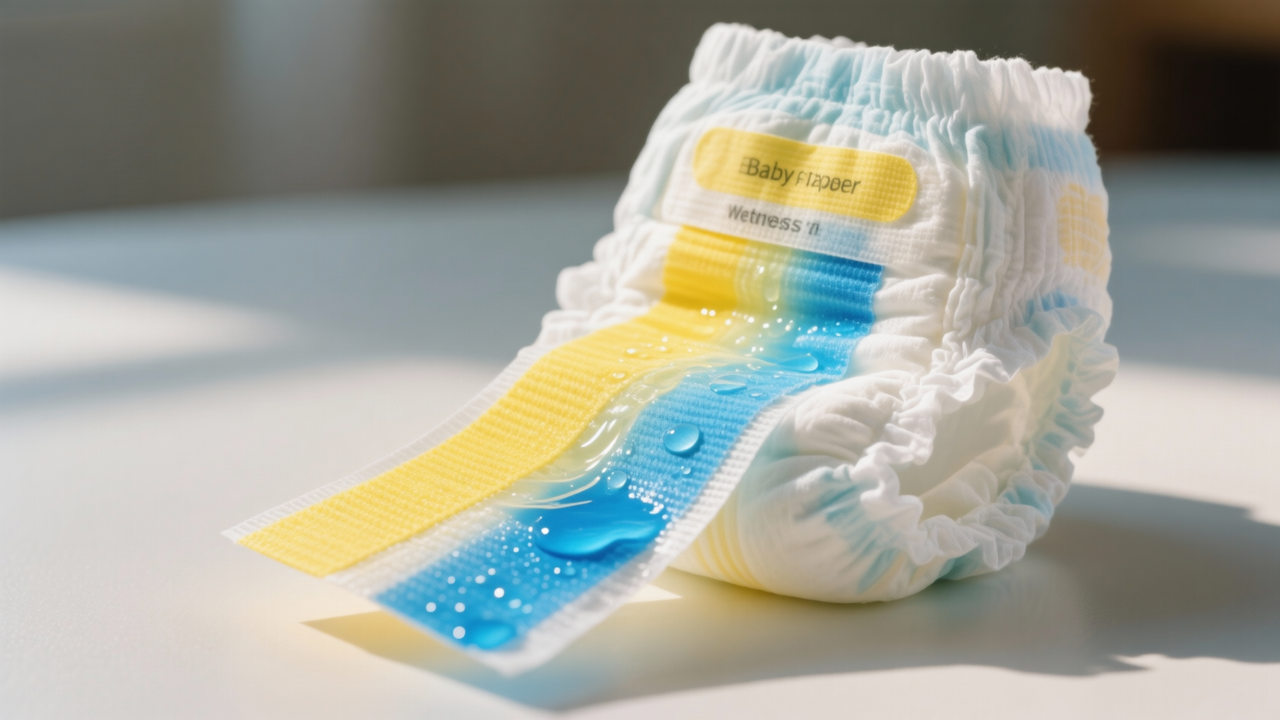
A wetness indicator is a strip, line, or pattern printed on the outside of the absorbent core (between the inner layers and the outer backsheet) using a pH-sensitive, urine-activated dye. You see it through the back of the diaper. It is a visual convenience feature — common on many mainstream disposable brands — and it is completely separate from the diaper’s absorbency or leak protection.
How the color change works
Urine is more alkaline than the dry indicator. When urine reaches the printed strip, the pH shift triggers the dye to change color — most often from yellow to blue or green (some brands use a fading character or a line that “disappears”). It is a simple wet/dry signal, not a sensor. Once it changes, it stays changed until you put on a fresh diaper.
Do wetness indicators actually tell you when to change?
This is the question most parents are really asking, and the honest answer is partially. The indicator answers “Is this diaper wet?” — yes. It does not answer “Is it time to change?” because “time to change” depends on your baby’s age, skin sensitivity, and whether there’s stool, not on a color flip.
What the line really signals
- It signals urine is present. A changed line means at least some wetting has happened.
- It does not signal fullness or capacity. A diaper can be wet but far from full, or (less often) saturated while the line looks only partly changed.
- It does not signal stool. A poop does not reliably trigger the color change. You still need to look, smell, and feel — especially with a breastfed newborn whose stools are frequent and loose.
How reliable are wetness indicators?
Reliability varies by brand, batch, and even diaper size. In practice:
- The line can change after a single small void, which may prompt more changes than necessary.
- On a heavy wetter, it may change very fast and give you little early warning.
- On darker-colored or patterned diapers, the indicator can be hard to see, especially in low light (e.g., night checks).
- Some lines change gradually; waiting for “fully blue” can mean leaving a wet diaper on longer than needed.
When the indicator is misleading
- At night: One line change does not mean the diaper is done for the night. Many babies pee multiple times; a single change of color early on can lull you into thinking they’re “fine” until morning.
- For poop: The indicator won’t reliably tell you. Check visually and by smell.
- For tiny wettings: A barely-there color shift is still “wet” — don’t wait for a dramatic change.
- For sensitive skin: A baby prone to rash may need changing before the line fully changes.
Signs your baby needs a change (beyond the line)
The most reliable cues are behavioral and physical, not the printed strip:
- Feel the diaper: A heavy, sagging diaper means change now, regardless of the line.
- Smell: Any stool odor means an immediate change.
- Baby cues: Fussiness, squirming, or tugging at the diaper area can signal discomfort from wetness or rash.
- Skin check: Redness or a developing rash means more frequent changes and a barrier cream, not waiting for the indicator.
- Schedule: For newborns and young infants, change on a routine (see below) rather than only when prompted.
How often should you change a diaper?
Frequency matters more than the indicator. General pediatrician guidance:
| Age | Typical changes per day | Notes |
|---|---|---|
| Newborn (0–6 weeks) | 8–12 | Change every 2–3 hours and immediately after stool. |
| Infant (6 weeks–6 months) | 6–8 | Before/after naps and feeds; night changes as needed. |
| Older infant (6–12 months) | 5–7 | Still prompt after poop. |
| Toddler (12+ months) | 4–6 | Check after naps and before bedtime. |
These are ranges, not rules. A baby with diarrhea, a rash, or very sensitive skin needs more frequent changes.
Diapers with vs without indicators
Wetness indicators are a convenience, not a quality marker. Many premium and eco-friendly disposable brands — and all cloth diapers — have no indicator at all, and babies do perfectly well in them. If you prefer indicators, they’re widely available; if you don’t, you can absolutely skip them and change on a schedule and by feel. Choose based on fit, skin tolerance, and budget — not the presence of a line.
When to call the pediatrician
A wetness indicator is never a substitute for watching your baby’s skin and comfort. Contact your pediatrician if you notice:
- A diaper rash that isn’t improving after 2–3 days of diligent changes and barrier cream.
- Rash with bleeding, open sores, blisters, or spreading beyond the diaper area.
- Fever, irritability, poor feeding, or lethargy alongside a rash.
- Signs of dehydration in a baby with frequent watery stools (fewer wet diapers than usual, no tears, sunken soft spot).
Common mistakes parents make with wetness indicators
- Waiting for the line to fully change before changing — partial color still means wet.
- Relying on it for poop, which it doesn’t reliably detect.
- Over-trusting it at night and leaving a saturated diaper on until morning.
- Ignoring skin cues (redness, fussiness) because “the line isn’t all the way blue yet.”
- Assuming the indicator measures fullness — it only signals the presence of urine.
This article is for informational purposes only and does not constitute medical advice. Always consult your pediatrician for guidance on your child’s care.






2 Comments