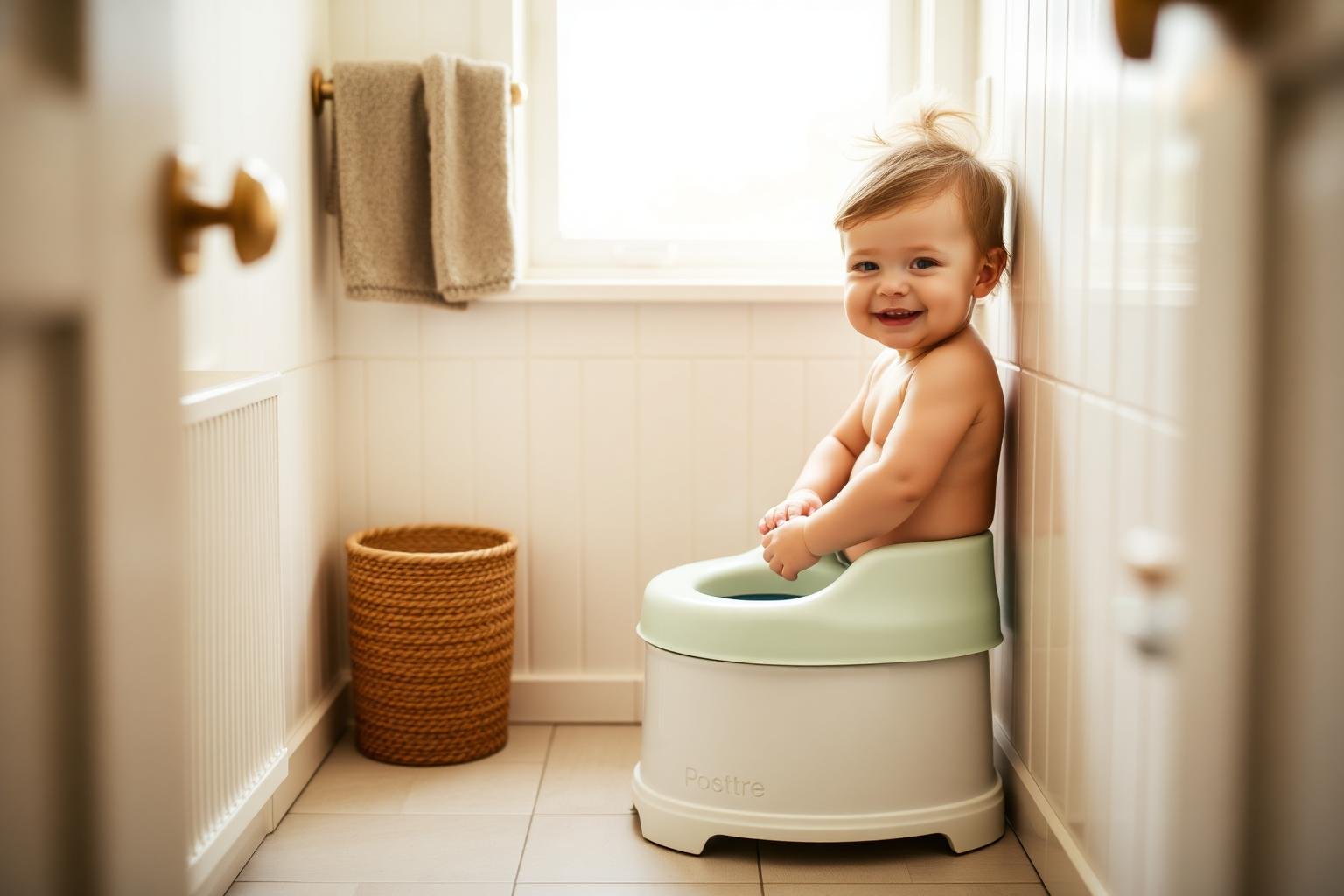
Potty Training Readiness: Signs, Method & Timeline
Medically reviewed by Dr. Ahmad Raza, MD (Pediatrics) — ChildBloom Medical Review Panel. Last updated: August 03, 2026.
Affiliate disclosure: ChildBloom may earn a commission from qualifying purchases made through links on this page. It never changes which products our pediatric reviewers recommend.
This pediatrician-reviewed guide to potty training readiness keeps things practical: what genuinely affects your baby’s safety and comfort, what marketing you can ignore, and how to decide quickly. Our guidance on potty training readiness follows current AAP, CDC and CPSC recommendations.
{“@context”: “https://schema.org”, “@type”: “FAQPage”, “mainEntity”: [{“@type”: “Question”, “name”: “Why Age Alone Is a Poor Guide”, “acceptedAnswer”: {“@type”: “Answer”, “text”: “Parents often feel pressure to u201cfinishu201d training before a sibling arrives or before preschool starts. But a child who is not yet physically or emotionally ready cannot simply try harder.
Furthermore, the bladder typically gains meaningful overnight capacity only after 12 months of daytime control, and the nerves that signal a full rectum mature gradually.
Comparing your toddler to a friendu2019s child is rarely useful; the range of normal is wide, and gentle timing protects your childu2019s confidence.”}}, {“@type”: “Question”, “name”: “Before You Start”, “acceptedAnswer”: {“@type”: “Answer”, “text”: “Block off three consecutive days when you can stay home with no obligations. Buy a small potty chair or a sturdy step-stool seat, 10 to 15 pairs of easy-pull underwear, and plenty of cleaning supplies.
For more detailed guidance, visit the American Academy of Pediatrics or the CDC’s Infant and Toddler Health page.
Explain the plan to your toddler in simple language the day before. Avoid starting during big disruptionsu2014a new sibling, a move, or beginning daycare can raise stress. If your child attends care, coordinate with providers using our daycare transition without tears tips so routines stay consistent across settings.”}}, {“@type”: “Question”, “name”: “Day-by-Day Plan”, “acceptedAnswer”: {“@type”: “Answer”, “text”: “Day 1: Introduce the potty, read a book about it, and offer sits every 20 to 30 minutes.
Expect many accidents; stay calm and upbeat, and let your child help clean up without shame.”}}, {“@type”: “Question”, “name”: “After the Three Days”, “acceptedAnswer”: {“@type”: “Answer”, “text”: “Return to normal life but keep prompting every 1 to 2 hours and watch for signals. Daytime dryness typically arrives within 3 to 6 months of consistent practice. Keep a portable potty or seat in the car for outings, and pack extra clothes for at least 8 weeks.
Specifically, if your toddler attends group care, share your approach so teachers reinforce the same words and routine.”}}, {“@type”: “Question”, “name”: “Building a Positive Routine”, “acceptedAnswer”: {“@type”: “Answer”, “text”: “Consistency is what cements learning. Use the same phrases (u201cletu2019s try the pottyu201d), the same small reward, and the same timing each day.
The CDCu2019s infant and toddler nutrition guidance reminds parents that adequate fluids and fiber support regular stools, which makes toilet sitting more comfortable and successful.
A relaxed child who is not constipated learns far faster than one who fears pain.”}}, {“@type”: “Question”, “name”: “When to Call Your Pediatrician”, “acceptedAnswer”: {“@type”: “Answer”, “text”: “Contact your pediatrician if your child shows no readiness signs by age 3 years, has painful or bloody urination, develops constipation lasting more than 2 weeks, or experiences stool withholding with belly pain. Also call if daytime wetting persists after age 4 years or if training triggers ongoing distress for your child.
These may signal a medical issue that needs evaluation.”}}, {“@type”: “Question”, “name”: “What age shows potty training readiness?”, “acceptedAnswer”: {“@type”: “Answer”, “text”: “Most children show potty training readiness between 18 and 30 months, though some are ready earlier or later than this range. Watch for dry diapers and genuine interest in the toilet rather than relying on age alone, because every toddler develops on a unique and personal timeline.”}}, {“@type”: “Question”, “name”: “How long does potty training take?”, “acceptedAnswer”: {“@type”: “Answer”, “text”: “Most toddlers reach daytime dryness within 3 to 6 months of consistent practice, although the intensive 3-day method simply builds the early foundation. Nighttime bladder control often arrives much later, sometimes not until age 5 or 6 years, which is completely normal for healthy children.”}}, {“@type”: “Question”, “name”: “What if my child refuses the potty?”, “acceptedAnswer”: {“@type”: “Answer”, “text”: “If your toddler refuses the potty, pause training for 2 to 4 weeks and try again when moods are calmer. Forcing the issue often creates a power struggle, so return to diaper comfort and revisit readiness signs without pressure or criticism from caregivers.”}}, {“@type”: “Question”, “name”: “Should boys and girls train differently?”, “acceptedAnswer”: {“@type”: “Answer”, “text”: “Boys and girls usually follow the same readiness timeline, but many parents train boys sitting down first for simplicity and less mess. There is no required order, and most children manage both urination and bowel training within the same 3 to 6 month window.”}}, {“@type”: “Question”, “name”: “Can screen time affect potty training?”, “acceptedAnswer”: {“@type”: “Answer”, “text”: “Excessive screen time can distract toddlers from body signals, so limits help during training. The American Academy of Pediatrics encourages mindful viewing, and our toddler screen time guidelines suggest balanced play that keeps children tuned in to their own bladder cues.”}}]} This guide covers potty training readiness checklist for 2 year old 10 signs and what parents need to know.
Related Articles
- Positive Discipline Toddlers: A Parent’s Gentle Guide
- Managing Toddler Frustration: A Practical Parent Guide
- Toddler Public Meltdowns: A Calm Parent Guide for 2026
- Toddler Emotional Regulation: Building Skills That Last
- Toddler Outdoor Play: Benefits, Ideas & Safety (1–3 Years)
In particular, Related: Potty Training Readiness Signs
📖 More from the Parenting Tips Hub: evidence-based parenting guidance on toddler behavior, feeding, potty training, screen time
Building Emotional Regulation Skills

Co-Regulation: The Foundation of Self-Regulation
Babies and toddlers learn to regulate their emotions through co-regulation with a calm, responsive adult. When your child is upset, your calm presence literally helps their nervous system settle. Take a deep breath before responding. Use a calm, low voice. Offer physical comfort if your child will accept it. Narrate what you see: “You are having a hard time right now. I am here with you.” Over time, this co-regulation becomes internalized as self-regulation.
Setting Limits with Empathy
Effective discipline balances firm limits with empathy. You can validate feelings while holding boundaries: “I see you are angry that we have to leave the park. It is still time to go. I will help you to the car.” This approach teaches children that all feelings are acceptable but not all behaviors are. Natural consequences (if you throw the toy, it goes away for a while) are more effective than arbitrary punishments.
Physical Readiness: Beyond Age Milestones
However, while most children show readiness between 18-36 months, age is less important than physical development. Key physical readiness signs include: bladder control — your toddler stays dry for at least 2 hours during the day or wakes up dry from naps. This indicates they have enough bladder capacity and control. Predictable bowel movements — you can roughly predict when your child will poop (after meals, at specific times of day). Physical ability — your toddler can walk to and sit on a potty independently, pull pants up and down (with help for fasteners), and get on and off the potty safely. Body awareness — they know when they’re peeing or pooping, even if they don’t announce it. Some toddlers stop mid-activity, make a grunting face, or hide behind furniture when pooping — all signs they’re aware of what’s happening. If these physical signs aren’t present, wait a few more weeks or months. Starting before your child is physically ready leads to frustration for everyone and can prolong the process.
The Three-Day Potty Training Method: How It Works
The three-day method (also called the “potty training boot camp”) is an intensive, at-home approach for when your child shows strong readiness signs. Here’s how it works: Day 1 — remove all diapers first thing and dress your child in loose pants or just a long shirt. Stay home. Watch for cues constantly. Every 15-20 minutes, ask “Do you need to go potty?” and sit them on the potty. Expect accidents — lots of them. Praise any success effusively. Day 2 — continue the same approach but extend the interval between reminders to 30-45 minutes. Your child should start initiating some trips themselves. Day 3 — stay home but let your child lead. They should be initiating most potty trips. If day 3 is going well, take a short trip (30-60 minutes) to build confidence. The key to success: stay home for 3 consecutive days, clear your schedule completely, use rewards (stickers, small treats) for successes, and don’t punish accidents — just clean up matter-of-factly. Many parents find this method effective, but it requires intense commitment. If your child is resistant after day 1, they may not be ready — don’t force it.
Nighttime Potty Training: A Different Timeline
Nighttime dryness is controlled by a different physiological mechanism than daytime control — it requires the brain to recognize a full bladder during sleep and either wake up or hold urine through the night. This is hormonally driven (the anti-diuretic hormone, ADH, concentrates urine at night) and neurologically driven (nerve signals from the bladder must reach the sleeping brain). Most children achieve nighttime dryness months to years after daytime training. The average age for nighttime dryness is 4-5 years for girls and 5-7 years for boys, with many children still having occasional nighttime accidents well into elementary school. To support nighttime dryness: limit drinks 1-2 hours before bedtime, ensure a final potty trip right before bed, use a waterproof mattress protector (not negotiable), consider overnight training pants for children under 5, and praise dry mornings without shaming wet ones. If nighttime wetting persists past age 7, talk to your pediatrician to rule out medical causes like constipation, urinary tract infections, or sleep-disordered breathing.
The Pediatric Approach to Potty Training Readiness
In my clinical practice, I emphasize to parents that potty training is a developmental milestone, not a training exercise. From a physiological standpoint, the child must have achieved three things: bladder capacity sufficient to hold urine for 1-2 hours, the ability to sense a full bladder, and the motor coordination to reach and sit on the potty independently. Rushing these before the neurologic readiness is present is the single most common reason potty training fails. The average age for daytime dryness is 32 months for girls and 35 months for boys — waiting until your child shows all three readiness signs, rather than training at a specific age, leads to faster and less stressful outcomes.
Addressing Common Potty Training Challenges
As a result, one of the most frequent concerns parents raise in my clinic is what to do when a child who was successfully using the potty suddenly starts having accidents. This regression is developmentally normal and typically triggered by stressors — a new sibling, starting daycare, or even a minor illness. The clinical approach is to return to basics without making the child feel punished: increase bathroom trip frequency to every 45 minutes, use a visual timer as a readiness cue, and avoid any language that frames accidents as failures. The evidence supports using a positive-only reinforcement system rather than punishment for accidents, as shame around elimination can contribute to withholding behaviors that lead to chronic constipation.
The single most important predictor of successful potty training is not the method or the readiness age but the parent’s emotional readiness. Children are highly attuned to parental anxiety, and if you approach potty training with tension or urgency, the child will resist. The evidence clearly shows that training at the child’s pace — even if it means waiting until 3 years or later — produces better long-term outcomes than training at a calendar age. If you feel frustrated after 2 weeks of consistent effort, take a month off and try again. More potty training struggles fail from parental burnout than from child unpreparedness.
The key metric I monitor in my practice is not the age of training completion but the trajectory — are accidents becoming less frequent over a 4-week period? If so, the child is on the right path regardless of chronological age. Potty training is a developmental process, not a race, and children who train later tend to have fewer relapses and nighttime wetting issues than those who train earlier.
Managing Nighttime Potty Training
Nighttime dryness is controlled by a different physiological mechanism than daytime control — it requires the brain to respond to bladder fullness signals during deep sleep, a skill that is neurologically mediated by the hormone vasopressin. Most children achieve nighttime dryness between 4-6 years, with only 15% of 5-year-olds still wetting the bed regularly. The most important step parents can take is to distinguish daytime accidents (which respond to practice and routine) from nighttime wetting (which is biological and not behaviorally influenced). Limiting fluids 90 minutes before bed and ensuring a last-minute potty visit before sleep can help, but pressuring a child about nighttime wetting can create anxiety that makes the problem worse. Pull-ups at night are a practical solution, not a step backward — they preserve the child’s dignity while the neurological maturation takes its natural course.
Furthermore, Related: how to stop toddler mealtime power struggles fast
Potty training readiness: quick pediatrician summary
If you read nothing else about potty training readiness: choose the option that meets current safety standards, fits your baby’s current age and weight, and that you can use correctly every single time without shortcuts. Consistency beats features. When two products are close, pick the simpler one — fewer parts means fewer ways to use potty training readiness unsafely.
Common mistakes parents make
- Buying for the baby your child will be in six months rather than the baby in front of you today.
- Adding extra padding, inserts or accessories the manufacturer did not test.
- Skipping the manual — most safety failures we see are correct products used incorrectly.
- Reusing older hand-me-downs that predate current safety standards or have been recalled.
Related ChildBloom guides
- AAP Screen Time Rules for 2-Year-Old (2026 Guide)
- Baby Speech Milestones 0-12 Months: A Parent's Guide
- Twin Pregnancy: Higher Risk Factors & What Monitoring to Expect
- Top 5 Breast Pumps for Comfort & Efficiency: Pediatrician-Reviewed
- Twin development milestones: Twin Milestones: Should You Expect Them to Develop at the Same Rate?
- More Parenting Tips guides from our pediatric team
- Pediatrician’s Corner: evidence-based parenting answers
References and further reading
- AAP HealthyChildren.org parenting guidance
- CDC developmental milestones
- CPSC recalls and product safety alerts
Medical disclaimer
This article is general information, not individual medical advice. Every baby is different — talk to your own pediatrician about your child’s feeding, sleep, growth or development, and seek urgent care for breathing difficulty, poor feeding, dehydration, fever in an infant under 3 months, or any sudden change in your baby’s behaviour.




One Comment