Health and safety guidance, with the red flags spelled out
Thermometers, first-aid kits, baby-proofing and symptom guidance — written so you know what is normal, what can wait, and what needs a doctor today.
Know the difference, know when to call
Symptom-by-symptom guidance with clear escalation points.
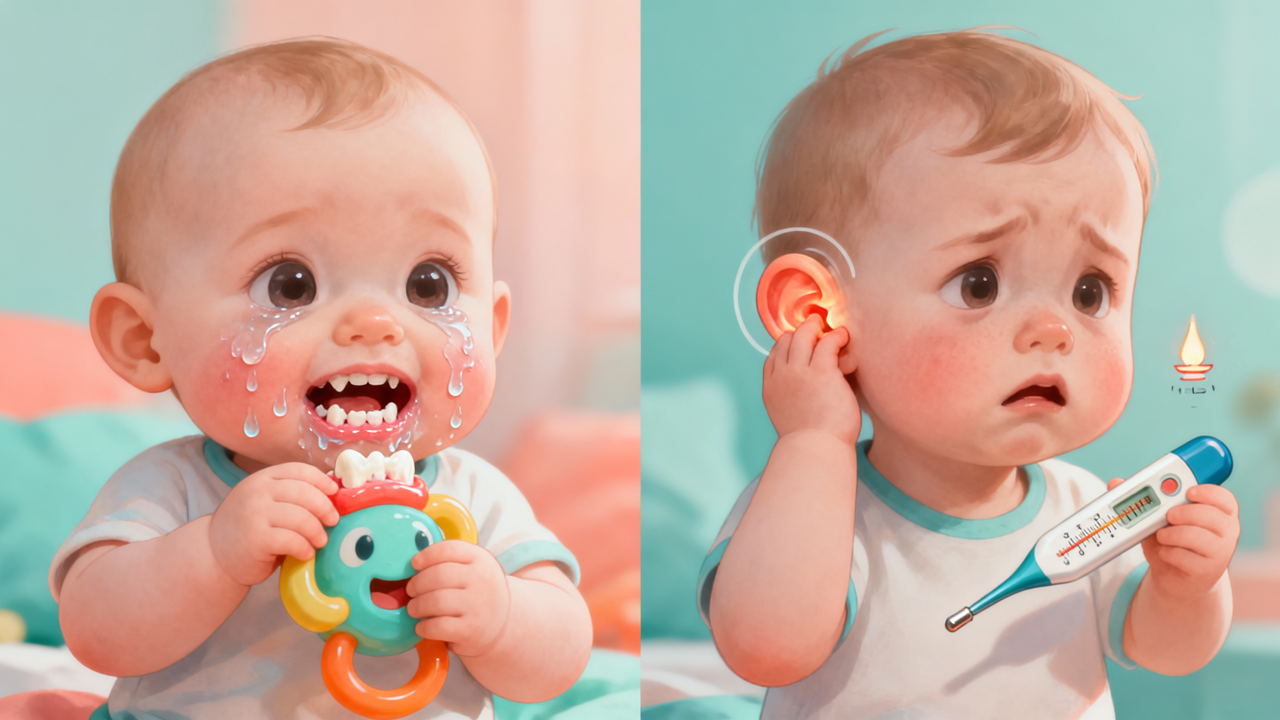
Teething vs Ear Infection: How to Tell the Difference (Symptom Guide 2026)
Every parent knows the drill. Your baby is fussy, pulling at their ears, maybe running a low-grade fever. Your mind rac…

Baby Ear Wax Cleaning: Safe Methods and When to See a Doctor
Learn safe baby ear wax cleaning methods. Pediatrician-approved techniques for cleaning baby ears and signs that requir…

Baby Teething Timeline: Complete Chart of First Teeth by Age
Complete baby teething timeline with chart showing when each tooth appears. Learn teething signs, symptoms, and relief…

Baby Spit Up vs Reflux: How to Tell the Difference
Learn the difference between baby spit up and reflux. Understand what’s normal, warning signs, and when to call your pe…

Baby Hair Care: When to Start Washing and Shampoo Guide
Complete baby hair care guide. Learn when to start using shampoo, how often to wash, and tips for cradle cap and health…

Baby Massage Techniques: 10 Gentle Strokes for Sleep and Digestion
Introduction New parents often search for natural ways to calm a fussy baby, ease digestion, and encourage longer stret…
Four things every household needs to get right
Measuring temperature
Which method is accurate at which age, what counts as a fever, and the numbers that mean call now.
Home first aid
A kit that covers what actually happens — falls, burns, choking, allergic reactions — and how to use it.
Baby-proofing
Furniture anchoring, cords, water, stairs and button batteries, ordered by real injury data.
When to call
Every health guide on this site ends with explicit red flags and an escalation threshold.
Who reviews this section
Illness and safety guidance is reviewed by two physicians before publication.

Dr. Martinez, MD
PediatricsPediatric skin, allergy and everyday illness.

Dr. Ahmed Raza, MD
PediatricsNewborn care, infant feeding and first-year growth.
Every guide in health carries a named pediatric reviewer and a dated sign-off, re-checked at least every six months. Read the ChildBloom promise.
What we will and will not publish.
No dosing advice is given without an explicit instruction to confirm with your own pediatrician.
Every symptom guide carries a red-flag section. Anything without one does not go live.
Product guidance follows CPSC, AAP and manufacturer recall data, checked at review time.
Nothing on this site replaces an examination by the clinician who knows your child.
Health questions parents ask us most
What counts as a fever in a baby?
A rectal temperature of 38°C (100.4°F) or higher. In an infant under three months, that reading is a same-day medical call regardless of how well the baby looks. Older infants are judged on behaviour as much as on the number.
Which thermometer should I use?
Rectal is the reference standard under three years. Temporal artery and tympanic thermometers are convenient for older infants but are more sensitive to technique. Whichever you use, note the method alongside the reading.
How do I tell teething from an ear infection?
Teething causes drooling, gum discomfort and chewing, and does not cause a true fever. Ear infection typically follows a cold and brings fever, night-time pain, ear pulling with distress, or fluid drainage. Drainage or fever means get the ear looked at.
What belongs in a home first-aid kit for a baby?
Digital rectal thermometer, saline drops and a bulb or nasal aspirator, infant acetaminophen with a dosing syringe, adhesive bandages, sterile gauze, antiseptic wipes, tweezers, and your pediatrician plus poison-control numbers written down.
Ask our editorial team
If a guide looks out of date or you cannot find an answer for your child’s situation, tell us and a reviewer will look at it.
Contact ChildBloom