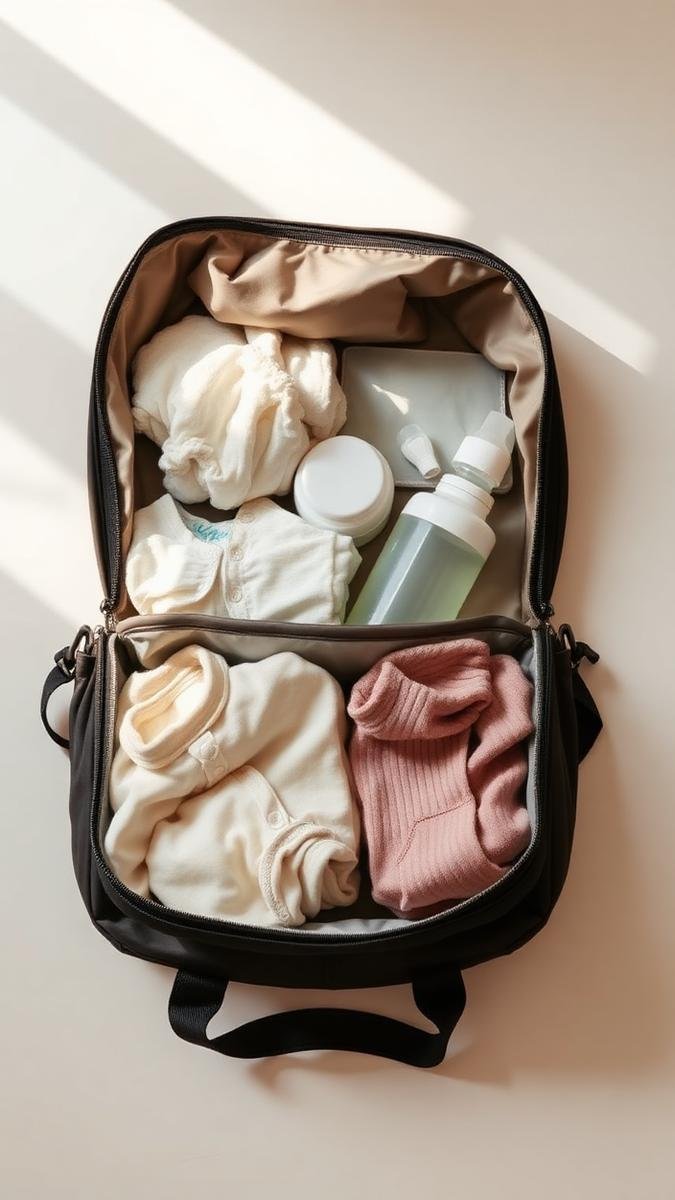
Minimal Diaper Bag Essentials for Newborn (Checklist)
Medically reviewed by Dr. Ahmad Raza, MD (Pediatrics) — ChildBloom Medical Review Panel. Last updated: August 03, 2026.
For the full picture, read our pillar guide on Minimal Baby Travel Gear Checklist for Flying.
Affiliate disclosure: ChildBloom earns a commission from qualifying purchases made through links on this page. This never changes which products our pediatric reviewers recommend.
This pediatrician-reviewed guide covers what to pack in diaper bag newborn in plain language: what actually matters for safety, what to ignore, and how to choose without overspending. Everything below reflects current AAP and CPSC guidance on what to pack in diaper bag newborn.
Diaper Bag Essentials: The Short List That Actually Gets Used
Most parents pack twice what they need and still forget the one thing that matters. After a few weeks out of the house, almost every diaper bag settles into the same core kit: a change of everything, a way to feed, and something to clean up with. This checklist is that kit — organised by how often you actually reach for each item.
Quick answer: For a typical outing pack one diaper per hour plus two, wipes, a changing pad, diaper cream, a full change of clothes, two sealed bags, a feeding option, and two burp cloths. Everything else is optional — and restocking when you get home matters more than what bag you buy.
The non-negotiables (every single trip)
- 4–6 diapers — roughly one per hour you’ll be out, plus two.
- Travel wipes — a refillable case beats a floppy pack.
- Portable changing pad — public tables are rarely clean.
- Diaper cream in a travel tube or spatula applicator.
- Two sealable bags — one for wet clothes, one for dirty diapers.
- A full change of clothes for baby (and a spare top for you).
- Feeding kit — bottle and pre-measured formula, or a nursing cover if you prefer one.
- Burp cloths or muslins — two, minimum.
Worth carrying, but not every day
- Pacifier plus a clip and a clean case
- Sun hat and mineral sunscreen for babies over 6 months
- Infant pain reliever and saline drops (check dosing with your pediatrician first)
- A small toy or teether for waiting rooms
- Snacks and a water bottle for the adult carrying the bag
What to leave at home
Full-size lotion bottles, a bulky bottle warmer, more than one blanket, and the third outfit “just in case”. Every extra pound you carry makes it less likely you’ll bring the bag at all.
How to Pack a Diaper Bag So You Can Find Things One-Handed
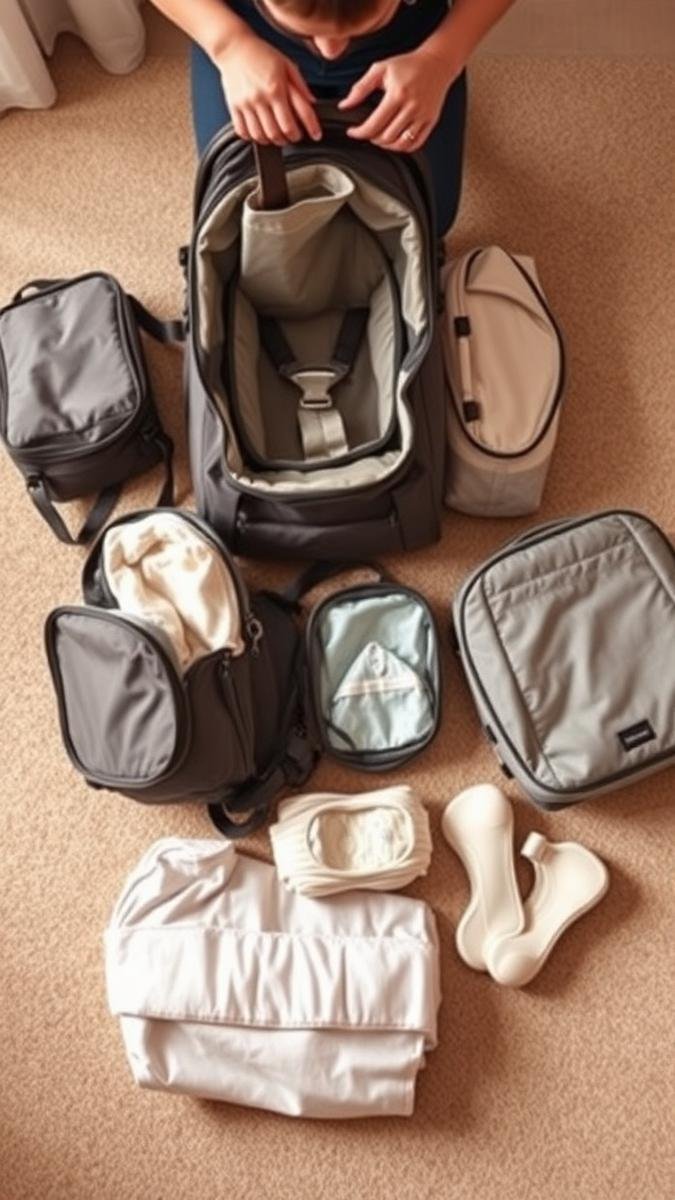
Assume you will be holding a baby with one arm every time you open it. Use pouches by function — changing, feeding, clean-up — so you grab a whole pouch instead of digging. Keep wipes and one diaper in an outside pocket for fast changes, and restock the bag the moment you get home rather than the moment you leave.
Related reading: Best Newborn Strollers with Bassinets for Safe Use.
Diaper Bag Essentials by Age
Newborn to 3 months
Highest diaper turnover and the messiest spit-up phase: pack more burp cloths and two full outfits, and skip toys entirely.
4 to 8 months
Add a teether and a small tub of first foods or a spoon once solids start — see our 6-month feeding schedule for portion guidance on the go.
9 months and up
Diapers drop to 3–4, snacks and a spill-proof cup become essential, and you can swap the changing pad for a slimmer travel version.
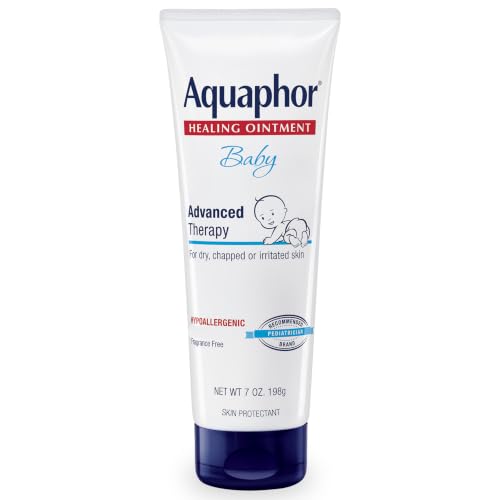
Aquaphor Baby Healing Ointment Advanced Therapy Skin Protectant, …
- ONE ESSENTIAL SOLUTION: Aquaphor Baby Healing Ointment is clinically proven to restore smooth, healthy skin, a perfect m…
- HEALING OINTMENT FOR TENDER SKIN: Provide extra gentle care for your babys tender and delicate skin by applying
- DIAPER RASH PREVENTION: Use Aquaphor Ointment as a preventative diaper rash ointment and apply with every diaper change …

Little Remedies New Baby Essentials Kit with Saline Nasal Spray, …
- Little Remedies New Baby Essentials Kit contains the essentials a new parent needs to safely and effectively tackle your…
- This kit of newborn essentials must-haves makes a perfect baby shower gift for new parents and has everything they need …
- This newborn essentials kit can help your little one feel better from their first diaper rash to stuffy nose, so you’re …
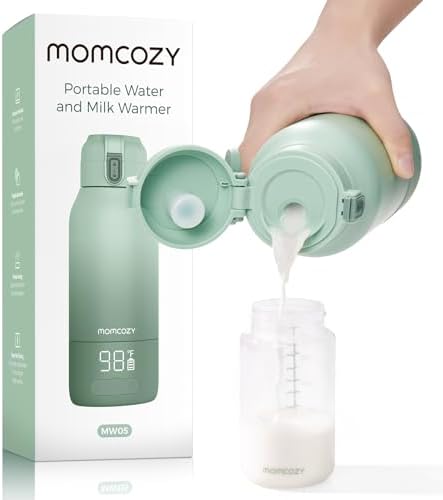
Momcozy Portable Bottle Warmer for Travel – Dual Heating Modes fo…
- 𝐅𝐚𝐬𝐭 𝐇𝐞𝐚𝐭𝐢𝐧𝐠 𝐰𝐢𝐭𝐡 𝐍𝐮𝐭𝐫𝐢𝐞𝐧𝐭𝐬 𝐏𝐫𝐞𝐬𝐞𝐫𝐯𝐞𝐝: Warm 4oz of water to 104°F in just 2 minutes or breast milk to 98°F in 5 minutes….
- 𝐃𝐮𝐚𝐥 𝐌𝐨𝐝𝐞𝐬 𝐰𝐢𝐭𝐡 𝐏𝐫𝐞𝐜𝐢𝐬𝐞 𝐓𝐞𝐦𝐩𝐞𝐫𝐚𝐭𝐮𝐫𝐞 𝐂𝐨𝐧𝐭𝐫𝐨𝐥: Choose between breast milk warming (90/95/98°F) and water heating (98/104/1…
- 𝐏𝐨𝐫𝐭𝐚𝐛𝐥𝐞 & 𝐄𝐚𝐬𝐲 𝐭𝐨 𝐂𝐚𝐫𝐫𝐲: You can slip this cordless bottle warmer into your diaper bag or car cup holder. Take it with …
Momcozy Portable Bottle Warmer for Travel – Dual Heating Modes fo…
- 𝐅𝐚𝐬𝐭 𝐇𝐞𝐚𝐭𝐢𝐧𝐠 𝐰𝐢𝐭𝐡 𝐍𝐮𝐭𝐫𝐢𝐞𝐧𝐭𝐬 𝐏𝐫𝐞𝐬𝐞𝐫𝐯𝐞𝐝: Warm 4oz of water to 104°F in just 2 minutes or breast milk to 98°F in 5 minutes….
- 𝐃𝐮𝐚𝐥 𝐌𝐨𝐝𝐞𝐬 𝐰𝐢𝐭𝐡 𝐏𝐫𝐞𝐜𝐢𝐬𝐞 𝐓𝐞𝐦𝐩𝐞𝐫𝐚𝐭𝐮𝐫𝐞 𝐂𝐨𝐧𝐭𝐫𝐨𝐥: Choose between breast milk warming (90/95/98°F) and water heating (98/104/1…
- 𝐏𝐨𝐫𝐭𝐚𝐛𝐥𝐞 & 𝐄𝐚𝐬𝐲 𝐭𝐨 𝐂𝐚𝐫𝐫𝐲: You can slip this cordless bottle warmer into your diaper bag or car cup holder. Take it with …
- Mylicon, the #1 pediatrician recommended brand, has been providing safe, effective relief of infant gas for generations
- Mylicon works gently to speed up a baby’s natural process of getting rid of gas, relieving pressure and discomfort
- Safe for use with all infants – even the newest of newborns – Mylicon can be used at every feeding, up to 12 times a day…
- Mylicon, the #1 pediatrician recommended brand, has been providing safe, effective relief of infant gas for generations
- Mylicon works gently to speed up a baby’s natural process of getting rid of gas, relieving pressure and discomfort
- Safe for use with all infants – even the newest of newborns – Mylicon can be used at every feeding, up to 12 times a day…

Bumco Travel Baby Diaper Cream Spatula with Protective Travel Cas…
- TRAVEL-SIZED: The Mini Bumco diaper cream spatula makes diaper changing on the go an absolute breeze! The 4-inch baby sp…
- SQUEAKY CLEAN & HYGIENIC: Keep your fingers clean from sticky diaper cream with the ORIGINAL mom-invented baby butt spat…
- SOFT & GENTLE SILICONE: Gently apply ointment to your baby’s sensitive skin with the Bumco Baby bum brush! This diaper r…
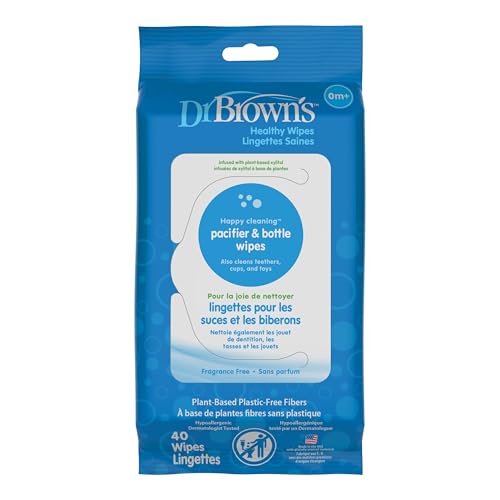
Dr. Brown’s Pacifier and Bottle Wipes, 40 Count
- PACIFIER AND BOTTLE WIPES. Dr. Brown’s Pacifier & Bottle Wipes safely and naturally clean baby’s bottles, pacifiers, tee…
- HYPOALLERGENIC CLEANING WIPES. Dr. Brown’s wipes are hypoallergenic and dermatologist tested.
- PLASTIC-FREE WIPES. Plant-based wipes are gentle, durable, and made without any plastic.

Munchkin® Arm and Hammer Diaper Bag Dispenser and 24 Diaper Dispo…
- Plastic
- Imported
- Ideal for diaper bag, stroller, car and at home

MIGIOL Baby Burp Cloths 100% Cotton Newborn Muslin Burp Cloths 10…
- 100% COTTON
- Soft and Comfortable:Made of pure natural muslin cotton, our burp cloths are soft, breathable, skin-friendly and non-irr…
- Versatile Newborn Essentials;Muslin Burp Cloths can be used for baby’s daily care such as patting the baby’s back, bathi…
Related reading: the hospital bag checklist, newborn essentials that actually matter, and the babyproofing checklist.
W: quick pediatrician summaryhat to pack in diaper bag newborn
If you only read one section: the right choice for what to pack in diaper bag newborn comes down to three things — a firm, flat, correctly sized sleep or seating surface; a design that keeps your baby’s airway open and chin off the chest; and a product that still meets current safety standards rather than an older hand-me-down. Price is a distant fourth. When comparing options for what to pack in diaper bag newborn, check the safety label and the date of manufacture before you check the review score.
- Best Diaper Bag for Hospital: Newborn Packing List 2026
- Best Compact Stroller for Air Travel: Overhead-Bin Picks
- Best Lightweight Travel Car Seat: FAA Picks Under 15 lb
- Car Seat on Airplane FAA Approved: Rules for Parents
- More Travel guides from our pediatric team
- FAA: flying with children
- AAP: traveling safely with children
- CDC travelers’ health
Medical disclaimer
This article is for general information only and is not a substitute for individual medical advice. Every baby is different — talk to your own pediatrician about your child’s sleep, feeding, growth or travel plans, and seek urgent care for breathing difficulty, poor feeding, fever in an infant under 3 months, or any sudden change in your baby’s behaviour.
Related ChildBloom Guides
- What Diaper Bag to Bring to Hospital (Checklist 2026)
- Lightweight Travel Crib for Overnight Sleep (AAP 2026)
- Best Compact Stroller That Fits Overhead Bin
- Choosing a Safe Portable Crib for Baby Travel and Home Sleep Safety
- Diaper Bag Packing List for Hospital Newborn
- Browse all Travel guides
References & Medical Sources
Reviewed by the ChildBloom pediatric panel. Meet our physicians on the About page. This article is educational and does not replace your child’s clinician.
7 Comments