Read Baby Food Labels: Heavy Metals Awareness Guide
Read Baby Food Labels Heavy Metals: What Parents Need to Know
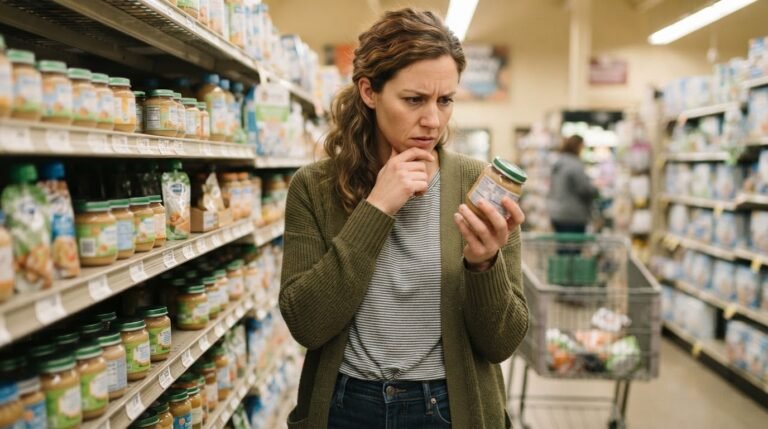
You’re staring at the shelf, flipping jars, wondering what “heavy metal free” actually means. Of course you’re scanning every label — you want to protect your baby from something you can’t see, taste, or smell. Learning to read baby food labels heavy metals is less about chemistry and more about knowing what the packaging is actually telling you.
This article gives you practical, store-side skills to decode packaging claims, ingredient lists, and certifications so you can make faster, calmer choices in the aisle. You’ll learn what “heavy metal free” really means, which ingredients carry higher risk, whether certification marks actually guarantee safety, how to find testing data before you buy, what brand-published ppb thresholds mean (and why they aren’t FDA limits), and whether QR codes on jars are worth trusting. You’ll also get a 5-step label checklist and clear thresholds for when to call your pediatrician about exposure.
Looking for expert guidance on read baby food labels heavy metals? This comprehensive guide covers everything you need to know, from understanding the basics to making informed decisions for your family.
What does ‘heavy metal free’ actually mean on a baby-food label
Which ingredients on the list signal higher heavy-metal risk
Certain ingredients consistently show up with higher heavy-metal readings when tested, so scanning the ingredient list is one of the most practical things you can do while standing in the aisle.
Rice-based ingredients — rice cereal, rice flour, rice starch — top the list for inorganic arsenic because rice pulls arsenic from waterlogged soil more than other grains. If rice flour is the first ingredient, that’s worth noting before you grab the jar.
Root vegetables and tubers — sweet potatoes, carrots, beets — can accumulate cadmium and lead from soil, especially when grown in older agricultural regions. They’re nutritious, but variety matters here.
Large, long-lived fish — tuna, swordfish, shark — carry mercury risk. Many baby food fish blends use smaller fish like cod or salmon specifically to lower this.
Bone broth and “natural” flavor powders can contain lead if bones aren’t tested. These show up in savory snacks and mixed grain pouches.
Fruit/veg blends with multiple ingredients from different sourcing regions can average out risk — or concentrate it if one component is high.
Reading baby food labels heavy metals means spotting these ingredients quickly, then checking the brand’s testing data (more on that next). Homemade food can still carry soil-based metals, so swapping rice for oat or barley sometimes lowers arsenic exposure without drastic diet changes.
If you’re worried about what your baby has already eaten, ask your pediatrician about blood testing rather than overhauling the diet alone.
Do certification marks guarantee low heavy-metal levels
No — a certification mark on baby food does not guarantee low heavy-metal levels, and parents reading labels should treat these marks as a starting point, not a promise. The FDA has not set a formal certification standard for “heavy-metal free” baby food, so brands may use third-party seals or internal thresholds that differ from federal limits.
What you’ll see on shelves:
- USDA Organic — addresses farming practices, not heavy-metal testing
- Non-GMO Project — covers genetic modification, not metal content
- Brand-specific “tested” seals — often reflect internal lab work, not FDA verification
Some brands publish their own limits, like lead ≤10 ppb, but these are company standards, not FDA limits. A seal can mean the brand tested the batch, yet testing varies by product line and frequency. When you read baby food labels heavy metals, look past the badge and check for batch-specific testing data or QR code disclosures if available.
Homemade food can still carry soil-based metals, so certification on store-bought jars doesn’t automatically make home blending safer — sourcing and variety matter either way. Rice and sweet potatoes concentrate metals from soil; rotating grains and veggies lowers risk more than any single seal.
If you’re worried about cumulative exposure, ask your pediatrician about blood testing rather than overhauling your baby’s diet alone. Lead is especially harmful under age 6, and no safe level is established for children.
Call your pediatrician if your baby shows persistent vomiting, constipation, or developmental delays and you have concerns about exposure — these are concrete reasons to seek care, not just label anxiety.
How do I find testing data on a jar before I buy
To find testing data on a jar before you buy, look for batch-specific reports on the brand’s website or a QR code linking to lab results rather than relying on front-label claims alone.
Flip the jar or check the brand’s site before you toss it in the cart. Some companies publish batch-specific heavy-metal results — look for a lot number on the label that matches a report online. A QR code on the package can link to current test data, but treat it as a starting point, not a guarantee. Disclosure practices vary by brand; the Virginia food-labeling code and brand sites like Cerebelly note that “tested” doesn’t always mean “tested for every batch” https://law.lis.virginia.gov/vacodeupdates/title3.2/section3.2-5125.1/ https://heavymetaltested.com/research/cerebelly-baby-food-heavy-metals.
What to scan for:
- A named third-party lab (not just “internally tested”)
- Results for inorganic arsenic, lead, cadmium, and mercury in ppb
- A lot or batch number that ties to the report date
Brand-published thresholds, like lead ≤10 ppb, are internal standards — not FDA limits. The FDA has not set a specific “safe” level for children, and lead is especially harmful under age 6. No certification mark alone guarantees low heavy-metal content. Also check the ingredient list: rice and sweet potatoes can concentrate metals from soil, so even a clean batch doesn’t mean every batch from that brand will — variety and sourcing matter. If you can’t find testing data on the shelf, pick a different brand or ask store staff where batch reports are kept.
If you’re worried about cumulative exposure, ask your pediatrician about blood
What do brand-published ppb thresholds mean, and are they official limits
Brand-published ppb thresholds are internal standards a company sets for itself — not FDA limits, and not proof that every jar meets them. When you read baby food labels heavy metals, that number on the packaging reflects the brand’s own target, not a government ceiling.
The FDA has not established a specific “safe” level of heavy metals for children. Some brands publish targets like lead ≤10 ppb based on their own testing, but those figures are voluntary guardrails, not regulated limits. A jar testing below that threshold doesn’t guarantee the next batch will, either.
What to look for on the label:
- The exact threshold number and which metal it covers
- The lab that ran the test (named third-party preferred)
- A lot or batch number tied to the report date
If a brand only says “tested” with no numbers, you’re reading marketing, not data. The same applies to “heavy metal free” claims — there is no legal definition for that phrase on baby food.
Mean levels published by a brand are only as reliable as the testing behind them — Cravings Mean Pregnancy They — and batch-to-batch variation is real. If you want the full picture, check whether the brand posts batch-specific reports or just averages.
When to call your pediatrician: if your baby has had ongoing exposure and you notice developmental delays, vomiting, or unusual fatigue — especially under age 6, when lead is most harmful. Blood testing can clarify exposure; don’t restrict your baby’s diet drastically without medical advice.
Are QR codes on jars a reliable source of heavy-metal info
QR codes on baby-food jars can be a starting point, but they are not a guarantee. Scanning a code may lead you to a brand’s internal report, a third-party lab summary, or a marketing page — and the quality of what’s behind that link varies widely (MedicalXpress, 2025). As you read baby food labels heavy metals info, treat the QR code as a clue, not a certificate.
What to look for once you scan:
- A named third-party lab, not just “tested by us”
- The exact metal and unit (ppb vs ppm)
- A lot or batch number tied to the report date
- Mean levels alongside range or max values
If a brand only says “tested” with no numbers, you’re reading marketing, not data. The same applies to “heavy metal free” claims — there is no legal definition for that phrase on baby food. Batch-to-batch variation is real, so a single report may not reflect what’s in the jar in your hand.
No “safe” level is established for children, and lead is especially harmful under age 6. Brand-published internal thresholds (e.g., lead ≤10 ppb) are not FDA limits. If you’re worried about exposure, ask your pediatrician about blood testing; don’t restrict your baby’s diet drastically without medical advice.
When to call your pediatrician: ongoing exposure with developmental delays, vomiting, or unusual fatigue — especially under age 6.
This information is for educational purposes only and does not replace professional medical advice. If you suspect heavy-metal exposure, contact your pediatrician or poison control.
Does homemade baby food actually lower exposure
Not necessarily. Homemade baby food can still carry soil-based metals, so reading baby food labels heavy metals is just as useful at home as in the store aisle.
You might assume “homemade” means “cleaner,” but fruits, vegetables, and grains pull metals from soil and water no matter who prepares them. Rice and sweet potatoes tend to accumulate inorganic arsenic, while leafy greens and root vegetables can pick up cadmium depending on farmland history and irrigation water. That means your kitchen is not a metal-free zone — it’s a sourcing and variety game.
If you want to lower exposure without drastically restricting your baby’s diet:
- Rotate grains: oats, barley, quinoa, and multigrain cereals instead of only rice
- Vary produce sources and brands across different growing regions
- Peel and trim skins where appropriate, then rinse well before cooking
- Check local soil or water reports if you garden yourself
The goal is variety and sourcing, not perfection. No baby food is metal-free, and no “safe” level is established for children. Lead is especially harmful under age 6.
Brand-published internal thresholds (e.g., lead ≤10 ppb) are not FDA limits, and batch-to-batch variation is real. If you’re worried about exposure, ask your pediatrician about blood testing rather than cutting entire food groups without medical advice.
When to call your pediatrician: ongoing exposure with developmental delays, vomiting, or unusual fatigue — especially under age 6.
This information is for educational purposes only and does not replace professional medical advice. If you suspect heavy-metal exposure, contact your pediatrician or poison control.
When should I call the pediatrician about heavy-metal exposure
Call your pediatrician if your baby shows ongoing exposure signs like developmental delays, vomiting, or unusual fatigue — especially under age 6. (FACT)
Heavy metals accumulate quietly; early symptoms are easy to miss. (EDITORIAL GUIDANCE)
Look for these patterns before calling:
- Consistent vomiting or diarrhea lasting more than a day
- New developmental delays — not hitting milestones, low muscle tone
- Unusual fatigue or irritability that doesn’t match a typical illness
- Known consumption of a recalled or high-risk product over time
If you’ve been reading baby food labels heavy metals and still feel unsure about a specific brand or batch, bring the jar or packaging to your appointment. (EDITORIAL GUIDANCE)
Your pediatrician may order a blood lead test or heavy-metal panel — these are the only ways to confirm exposure. (FACT)
Don’t panic and don’t restrict your baby’s diet drastically on your own. (EDITORIAL GUIDANCE)
Call poison control (1-800-222-1222) immediately if you know your baby ate a large amount of a contaminated product and now has vomiting, lethargy, or seizures. (FACT)
For routine concerns after reading labels, a standard well-child visit works — but trust your gut if something feels off. (EDITORIAL GUIDANCE)
Under age 6, lead is especially harmful to developing brains, so earlier is always better when deciding to test. (FACT)
Keep the jar’s batch number and purchase date handy — this helps your pediatrician track exposure timing and report patterns if needed. (EDITORIAL GUIDANCE)
This information is for educational purposes only and does not replace professional medical advice. If you suspect heavy-metal exposure, contact your pediatrician or poison control.
When to call your pediatrician
Call your pediatrician if you’ve read baby food labels heavy metals and still worry about exposure — especially with these age-based thresholds.
For infants under 3 months, any fever or unexplained vomiting, lethargy, or poor feeding after a new food warrants a same-day call.
Under age 6, lead is especially harmful to developing brains, so earlier testing is always better when exposure is suspected.
Know the urgent signs:
- Known large ingestion + vomiting, lethargy, or seizures → call poison control (1-800-222-1222) immediately
- Developmental regression, persistent constipation, or irritability without clear cause → schedule within 24-48 hours
- You just switched brands and noticed a recall or high test result → bring the jar’s batch number and purchase date to your visit
Don’t panic and don’t restrict your baby’s diet drastically on your own — homemade food can still carry soil-based metals, so variety and sourcing matter more than eliminating foods.
If worried about exposure, ask your pediatrician about blood testing — not drastic diet changes.
Keep the jar’s batch number and purchase date handy — this helps your pediatrician track exposure timing and report patterns if needed.
For routine concerns after reading labels, a standard well-child visit works — but trust your gut if something feels off.
This information is for educational purposes only and does not replace professional medical advice. If you suspect heavy-metal exposure, contact your pediatrician or poison control.
The bottom line
“Heavy metal free” isn’t a regulated claim — no baby food is truly free, and no safe level is established for kids. Brand-published ppb thresholds are internal standards, not FDA limits, so look for actual testing data via QR codes or brand websites rather than trusting labels alone. Certification marks help but don’t guarantee low levels. Risk varies by ingredient sourcing and processing, so variety matters more than banning specific foods. If you suspect exposure, contact your pediatrician or poison control — bring the jar’s batch number and purchase date. You don’t need to overhaul your baby’s diet on your own; a well-child visit is the right place to discuss blood testing if worry persists. Trust your gut, but let data guide the next step.
Related Reading on ChildBloom
- Pair foods boost iron absorption baby
- Plant-based infant nutrition 6-24 months
- Baby feeding log track solids allergens
References and Resources
Frequently asked questions
Medical Disclaimer: This article is for informational purposes only and does not constitute medical advice. Always consult your pediatrician or a qualified healthcare provider with any concerns about your child’s health.