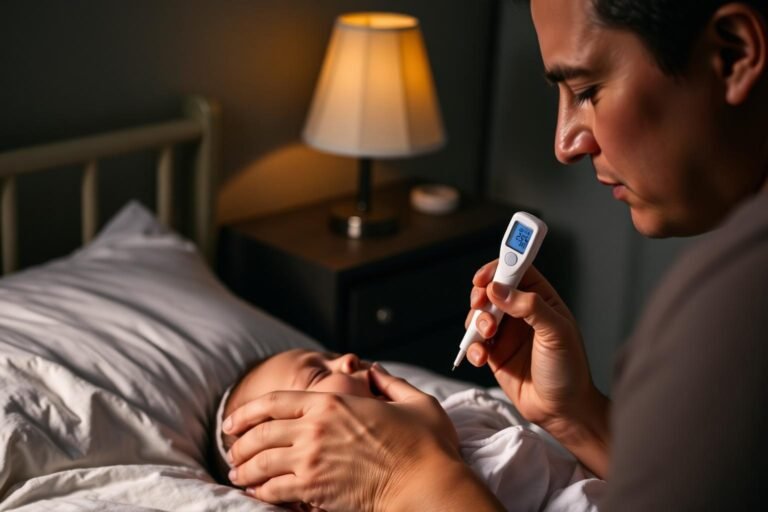
Baby Aspirin: Why It’s Dangerous (Reye’s Syndrome)
# Baby Aspirin Danger: Why It’s Deadly for Children (Reye’s Syndrome)
Quick Answer
**Never give aspirin or aspirin-containing products to a child under 18 years old.** The baby aspirin danger is real: even low-dose aspirin can trigger Reye’s syndrome, a rare but life-threatening condition that causes brain swelling and liver damage. Since 1980, the [American Academy of Pediatrics (AAP)](https://www.aap.org) has warned against aspirin use in children, and cases have dropped dramatically as a result. If your child accidentally takes aspirin, call your pediatrician immediately or contact Poison Control at 1-800-222-1222. Safe alternatives like acetaminophen (Tylenol) and ibuprofen (Motrin, Advil) are available for pain and fever relief.
> **Key Takeaways**
> – **Aspirin is not safe for children under 18** — even “baby” or low-dose aspirin can trigger Reye’s syndrome
> – **Reye’s syndrome causes brain and liver damage** — it can be fatal within days of onset
> – **The risk is highest during viral illnesses** — flu, chickenpox, and other infections amplify the danger
> – **Safe alternatives exist** — acetaminophen and ibuprofen are effective for children’s pain and fever
> – **Accidental ingestion requires immediate action** — call Poison Control at 1-800-222-1222 or your pediatrician right away
—
What Is Reye’s Syndrome?
Reye’s syndrome is a rare but extremely serious medical condition that primarily affects children and teenagers recovering from a viral infection, such as the flu (influenza) or chickenpox (varicella). The syndrome is characterized by sudden, severe inflammation of the brain (encephalopathy) and liver (hepatic steatosis), and it can progress rapidly from mild symptoms to life-threatening complications within hours to days.
The [National Institute of Neurological Disorders and Stroke (NINDS)](https://www.ninds.nih.gov) describes Reye’s syndrome as a two-phase illness: a viral infection (usually influenza or chickenpox) appears to be resolving, but then the child develops sudden, severe symptoms including persistent vomiting, confusion, lethargy, and sometimes seizures. Without prompt medical treatment, Reye’s syndrome can lead to permanent brain damage, coma, and death.
What makes Reye’s syndrome particularly frightening is how quickly it escalates. A child who seemed to be recovering from a routine illness can deteriorate dramatically within a 24- to 48-hour window. The syndrome affects nearly every organ in the body, but the brain and liver bear the most severe damage. Liver enzymes become dangerously elevated, blood sugar drops to critically low levels, and fluid builds up in the brain, causing dangerous pressure that can lead to irreversible neurological injury.
The exact mechanism by which Reye’s syndrome develops is still not fully understood, but researchers believe it involves a combination of viral infection and exposure to a triggering agent — most notably aspirin (salicylates). The condition appears to cause damage to mitochondria, the energy-producing structures inside cells, particularly in the liver and brain. When mitochondria fail, the body’s organs cannot function properly, leading to the cascade of symptoms seen in Reye’s syndrome.
Before the medical community identified the link between aspirin and Reye’s syndrome, the condition was far more common. In the late 1970s and early 1980s, hundreds of cases were reported each year in the United States alone. Since public health warnings were issued in 1980, the number of cases has dropped by more than 90 percent, according to the [Centers for Disease Control and Prevention (CDC)](https://www.cdc.gov). However, the condition has not been eliminated entirely, and vigilance remains essential.
—
Why Aspirin Is Dangerous for Children
The baby aspirin danger cannot be overstated. While aspirin is a safe and effective medication for adults — commonly used for pain relief, fever reduction, and even heart attack prevention — it poses a unique and severe risk to children and teenagers. This risk is not related to dosage; even small amounts of aspirin can trigger Reye’s syndrome in a vulnerable child.
The [Mayo Clinic](https://www.mayoclinic.org) emphasizes that aspirin should never be given to children or teenagers during or after viral illnesses, especially flu or chickenpox. The danger is not limited to aspirin tablets specifically marketed for adults. Many over-the-counter products contain aspirin or aspirin-like compounds, including some cold remedies, teething gels, and combination pain relievers. Parents must read labels carefully to ensure that any medication they give their child is aspirin-free.
Children’s bodies metabolize medications differently than adults. Their livers and kidneys are still developing, which means they process and eliminate drugs less efficiently. When aspirin is given to a child, the salicylate compound can accumulate in tissues, particularly in the liver and brain, causing the mitochondrial damage that characterizes Reye’s syndrome. Additionally, children are more susceptible to viral infections that serve as the trigger for Reye’s syndrome, making the combination of aspirin exposure and viral illness especially perilous during childhood.
It is important to understand that the risk extends beyond aspirin tablets. The term “baby aspirin” refers to low-dose aspirin (typically 81 mg) that is sometimes given to adults for cardiovascular protection. However, this lower dose does not eliminate the risk for children. Even a single baby aspirin tablet can be dangerous for a child, particularly if the child is fighting a viral infection. The term “baby aspirin” can mislead parents into thinking the product is safe for infants and children, but this is not the case. The [AAP](https://www.aap.org) and [healthychildren.org](https://www.healthychildren.org) both explicitly warn that no form of aspirin is safe for children under 18.
—
The Aspirin-Reye’s Syndrome Link
The connection between aspirin use and Reye’s syndrome was first identified in the late 1970s and early 1980s through a series of epidemiological studies. Researchers noticed that a striking majority of children diagnosed with Reye’s syndrome had been given aspirin during a recent viral illness. This observation led to a landmark public health campaign.
In 1980, the [CDC](https://www.cdc.gov) issued its first warning about the association between aspirin and Reye’s syndrome. By 1982, the U.S. Surgeon General issued an advisory, and by 1986, the FDA required that all aspirin-containing products carry a warning label about Reye’s syndrome. These measures led to a dramatic decline in cases. According to the [CDC](https://www.cdc.gov), the peak year for Reye’s syndrome in the United States was 1980, with 555 reported cases. By the mid-1990s, the number of reported cases had dropped to fewer than 30 per year.
The [NINDS](https://www.ninds.nih.gov) notes that studies have consistently shown a strong statistical association between aspirin use during viral illness and the development of Reye’s syndrome. One study published in the New England Journal of Medicine found that children who were given aspirin during a viral respiratory illness were approximately 35 times more likely to develop Reye’s syndrome than children who were not given aspirin. This finding was replicated in multiple studies across different populations and time periods.
The biological mechanism behind this link involves the way salicylates (the active component of aspirin) interact with mitochondria in the presence of a viral infection. Viral infections already stress the body’s cellular machinery, and salicylates appear to amplify this stress, leading to mitochondrial dysfunction. When mitochondria in the liver and brain fail, the organs cannot produce enough energy to function, resulting in the accumulation of toxic metabolites and the swelling that characterizes Reye’s syndrome.
It is worth noting that while aspirin is the most well-established trigger for Reye’s syndrome, other salicylate-containing products may also pose a risk. Some herbal remedies and topical products contain salicylates, and parents should consult their pediatrician before using any such products on or giving them to their children.
—
Safe Alternatives to Aspirin for Children
Fortunately, parents have safe and effective alternatives for managing their child’s pain and fever. The two most commonly recommended options are acetaminophen (Tylenol) and ibuprofen (Motrin, Advil). Both medications have been extensively studied and are safe for children when used according to the dosing instructions on the label or as directed by a pediatrician.
**Acetaminophen (Tylenol)** is safe for infants as young as 2-3 months old (with pediatrician approval) and is available in liquid, chewable tablet, and suppository forms. It is effective for reducing fever and relieving mild to moderate pain, such as headaches, sore throats, and teething discomfort. Acetaminophen is generally gentler on the stomach than ibuprofen, making it a good choice for children with sensitive stomachs. The [healthychildren.org](https://www.healthychildren.org) website provides detailed dosing charts based on your child’s weight and age.
**Ibuprofen (Motrin, Advil)** is approved for infants 6 months and older and is available in liquid and chewable forms. Ibuprofen is particularly effective for reducing inflammation and is often preferred for conditions like ear infections, sore throats, and muscle aches. It tends to provide longer-lasting relief than acetaminophen (6-8 hours versus 4-6 hours). However, ibuprofen can irritate the stomach lining, so it is best given with food or milk.
The [AAP](https://www.aap.org) recommends that parents always use the measuring device that comes with the medication — never a kitchen spoon — to ensure accurate dosing. Overdosing on either acetaminophen or ibuprofen can be dangerous, so it is critical to follow the dosing instructions carefully and to wait the appropriate amount of time between doses.
For parents who prefer non-medication approaches, several strategies can help manage a child’s discomfort during illness. These include ensuring adequate fluid intake, using a cool-mist humidifier, applying cool compresses for fever, and providing plenty of rest. However, if a child’s fever is high (above 102°F or 38.9°C) or causing significant discomfort, medication is appropriate and recommended.
It is also important to note that some combination cold and flu medications contain aspirin or aspirin-like compounds. Always read the active ingredient list on any medication before giving it to your child. If you are unsure whether a product is safe, ask your pediatrician or pharmacist.
—
What to Do If Your Child Accidentally Takes Aspirin
Despite parents’ best efforts, accidental ingestion can happen. A child might find a bottle of aspirin in a purse, on a nightstand, or in a medicine cabinet. If you discover that your child has taken aspirin, it is important to act quickly but calmly.
**Step 1: Determine how much was taken.** Check the bottle to see how many tablets are missing and what the dosage was. This information will help medical professionals assess the level of risk.
**Step 2: Call Poison Control immediately.** The national Poison Control hotline is **1-800-222-1222**. This number connects you to a network of poison control centers staffed by medical professionals who can provide immediate guidance based on your child’s age, weight, and the amount of aspirin ingested. The service is free, confidential, and available 24 hours a day, 7 days a week.
**Step 3: Call your pediatrician.** Even if Poison Control advises that the amount ingested is not dangerous, it is wise to inform your pediatrician so they can document the incident and provide follow-up guidance.
**Step 4: Watch for symptoms.** If your child develops any symptoms — including vomiting, lethargy, confusion, rapid breathing, or unusual behavior — seek emergency medical attention immediately. Go to the nearest emergency room or call 911.
**Step 5: Do not induce vomiting** unless specifically instructed to do so by a medical professional. Inducing vomiting can cause additional complications, especially if the child is already showing symptoms.
The [Mayo Clinic](https://www.mayoclinic.org) advises that even if a child appears fine after ingesting aspirin, medical evaluation is still recommended. Reye’s syndrome can develop days after aspirin exposure, particularly if the child is fighting a viral infection. Early detection and treatment are critical for the best possible outcome.
—
When to Call Your Pediatrician
Parents should contact their pediatrician in any of the following situations:
– **Your child has taken any amount of aspirin**, even a single tablet. Call Poison Control (1-800-222-1222) and your pediatrician.
– **Your child is showing symptoms of Reye’s syndrome**, including persistent vomiting, extreme lethargy, confusion, irritability, rapid breathing, or seizures. These symptoms require emergency medical attention — go to the ER or call 911.
– **You are unsure whether a medication contains aspirin.** Many combination products, including some cold remedies and teething gels, contain aspirin or salicylates. When in doubt, call your pediatrician or pharmacist before giving the medication to your child.
– **Your child has a fever that is not responding to acetaminophen or ibuprofen**, or a fever that lasts more than three days.
– **Your child is under 3 months old and has a fever** (rectal temperature of 100.4°F or 38°C or higher). This is a medical emergency in young infants.
The [healthychildren.org](https://www.healthychildren.org) website, published by the AAP, is an excellent resource for parents seeking guidance on when to call the doctor. It provides clear, evidence-based information on a wide range of childhood health concerns, including medication safety.
—
Frequently Asked Questions
Can I give my child baby aspirin for a fever?
**No.** Baby aspirin is not safe for children under 18, regardless of the dose. Even low-dose (81 mg) baby aspirin can trigger Reye’s syndrome. Use acetaminophen (Tylenol) or ibuprofen (Motrin, Advil) instead, following the dosing instructions on the label or as directed by your pediatrician.
At what age is aspirin safe for children?
The [AAP](https://www.aap.org) and [CDC](https://www.cdc.gov) recommend that aspirin not be given to anyone under 18 years of age. In some countries, the recommendation extends to age 16. There are rare medical conditions — such as Kawasaki disease — for which a pediatrician may prescribe aspirin as part of a treatment plan, but this should only be done under close medical supervision.
What are the early signs of Reye’s syndrome?
Early signs include persistent vomiting, extreme sleepiness or lethargy, confusion, irritability, rapid breathing, and in later stages, seizures or loss of consciousness. If your child develops these symptoms — especially after a viral illness and aspirin exposure — seek emergency medical care immediately.
Are there any medications that contain aspirin that I should watch out for?
Yes. Some products that may contain aspirin or salicylates include certain cold and flu remedies, combination pain relievers, teething gels, and some herbal remedies. Always read the active ingredient list carefully. Look for terms like “aspirin,” “acetylsalicylic acid,” or “salicylate.” When in doubt, ask your pharmacist or pediatrician.
What should I do if my child accidentally took aspirin?
Call Poison Control immediately at **1-800-222-1222**. Then call your pediatrician. Do not wait for symptoms to appear. Even if your child seems fine, medical evaluation is recommended because Reye’s syndrome can develop days after exposure.
Is Reye’s syndrome contagious?
No. Reye’s syndrome is not contagious. It is a metabolic condition triggered by the combination of a viral infection and aspirin exposure. You cannot catch Reye’s syndrome from another child.
How common is Reye’s syndrome today?
Reye’s syndrome is now very rare in the United States, with fewer than 30 cases reported per year since the mid-1990s, according to the [CDC](https://www.cdc.gov). This dramatic decline is directly attributed to public health warnings about aspirin use in children. However, cases still occur, which is why continued vigilance is essential.
Can teenagers take aspirin?
The [AAP](https://www.aap.org) recommends that aspirin not be given to anyone under 18. Teenagers are at risk for Reye’s syndrome, particularly if they are recovering from a viral illness. Acetaminophen and ibuprofen are safe alternatives for teenagers.
—
Conclusion
The baby aspirin danger is one of the most important medication safety messages for parents. Aspirin, even in small doses, can trigger Reye’s syndrome — a rare but potentially fatal condition that causes brain and liver damage. The good news is that Reye’s syndrome is almost entirely preventable by simply not giving aspirin to children under 18.
Safe alternatives like acetaminophen and ibuprofen are effective for managing your child’s pain and fever. Always read medication labels carefully, keep all medications out of your child’s reach, and never hesitate to call your pediatrician or Poison Control if you have questions or concerns.
By staying informed and vigilant, you can protect your child from this serious but preventable condition. Share this information with other parents, grandparents, and caregivers — because every child deserves to be safe from the dangers of aspirin.
—
*This article is for informational purposes only and does not constitute medical advice. Always consult your pediatrician with any questions about your child’s health or medications.*
—
Sources:
– [American Academy of Pediatrics (AAP)](https://www.aap.org)
– [Centers for Disease Control and Prevention (CDC)](https://www.cdc.gov)
– [National Institute of Neurological Disorders and Stroke (NINDS)](https://www.ninds.nih.gov)
– [Mayo Clinic](https://www.mayoclinic.org)
– [healthychildren.org](https://www.healthychildren.org)
Related Guides
Written by Dr. Ahmad Raza, MD (Pediatrics), MD (Pediatrics) | Medically reviewed by Dr. Ahmad Raza, MD (Pediatrics) | Updated for 2026
This article is for general informational purposes only and does not constitute medical advice. Always consult your pediatrician with questions about your child’s specific health needs.