Beach Essentials for Newborns: A Pediatrician-Reviewed Checklist
A first beach trip with a newborn sounds simple until you’re standing in the parking lot wondering if you packed too much or nowhere near enough. Sun, sand, heat, and a baby who can’t regulate her own temperature yet make this a different kind of packing problem than a weekend at grandma’s. Get the beach essentials for newborn outings wrong and you’re dealing with sunburn risk, overheating, or a meltdown an hour into your day.
This checklist covers exactly what to bring and, just as important, what to skip, based on pediatric guidance rather than what’s trending on a baby registry. You’ll find the shade and sun-protection gear that actually works for skin under six months old, the hydration and feeding logistics specific to infants, and the safety calls that matter most near water and heat.
Every recommendation here was checked against AAP guidance for sun exposure in infants and reviewed by our pediatric team before publication. If you’re building your newborn beach essentials list for the first time, treat this as your starting point: practical, safety-first, and written for parents who want a straight answer, not a shopping spree.
1. Portable shade and sun shelter
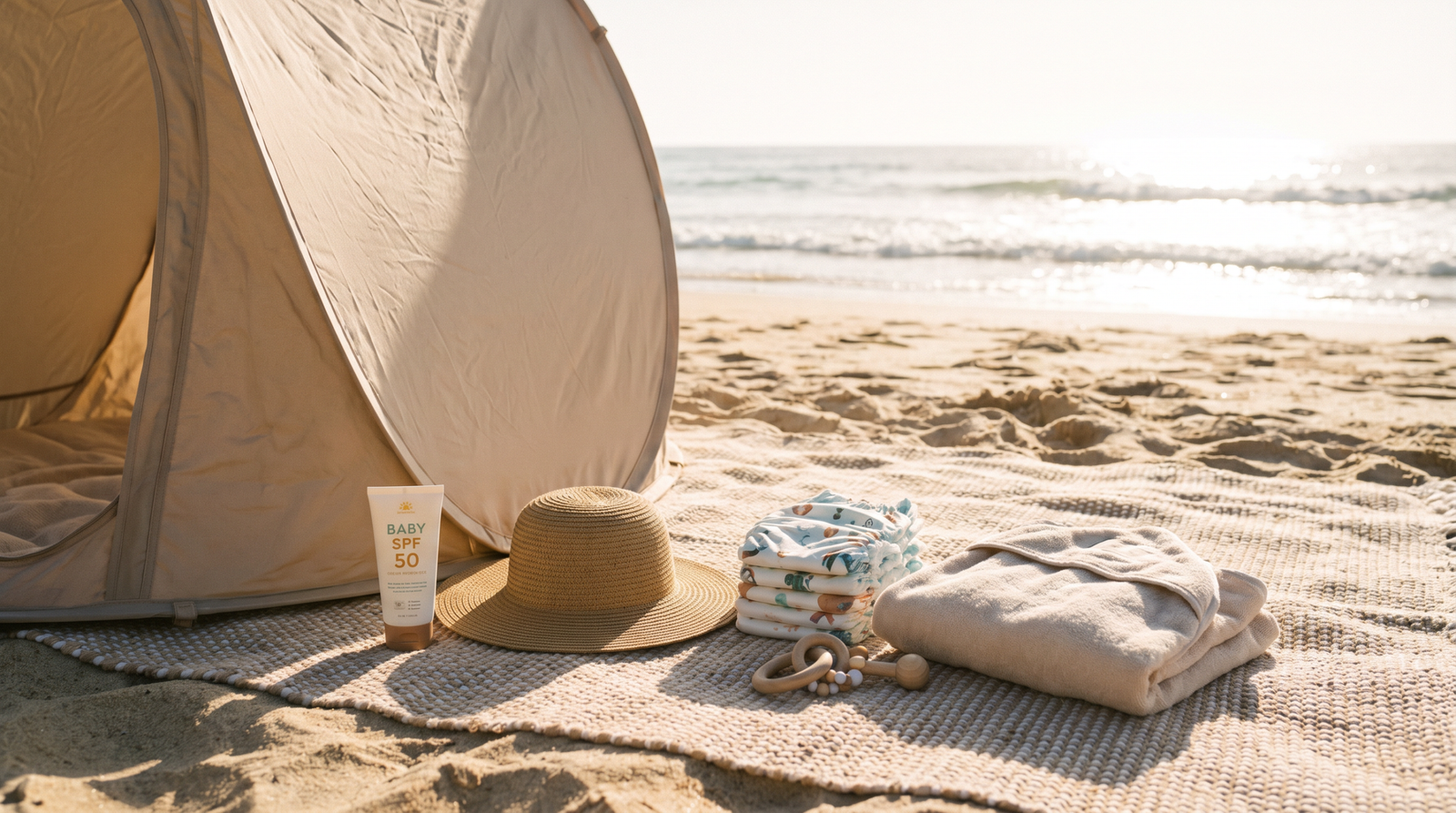
Shade is the single most important item on any beach essentials for newborn checklist, because the AAP is clear that babies under six months should be kept out of direct sunlight entirely, not just slathered in lotion. A pop-up tent, beach umbrella, or UPF-rated canopy gives you a controlled spot where your baby isn’t squinting into glare or absorbing UV rays reflected off sand and water. Without it, you’re stuck timing your whole visit around nap schedules and shadows that move faster than you’d think.
Why it matters for newborns
Newborn skin is thinner and produces less melanin than adult skin, so it burns faster and with less sun exposure than most parents expect. Reflected light off sand and water adds UV exposure even when your baby is sitting in what looks like shade from an umbrella angled the wrong way. A proper shelter blocks both direct and reflected rays, not just overhead sun.
Pediatrician safety tips
Our review board flags two mistakes constantly: shelters with mesh sides so loose that midday sun slips through, and tents pitched too close to the waterline where incoming tides create both a drowning risk and a shade gap as the sun moves.
Shade isn’t optional for a newborn at the beach, it’s the baseline safety requirement everything else builds on.
What to look for when buying
Not every tent labeled
2. Sun-protective clothing and hats
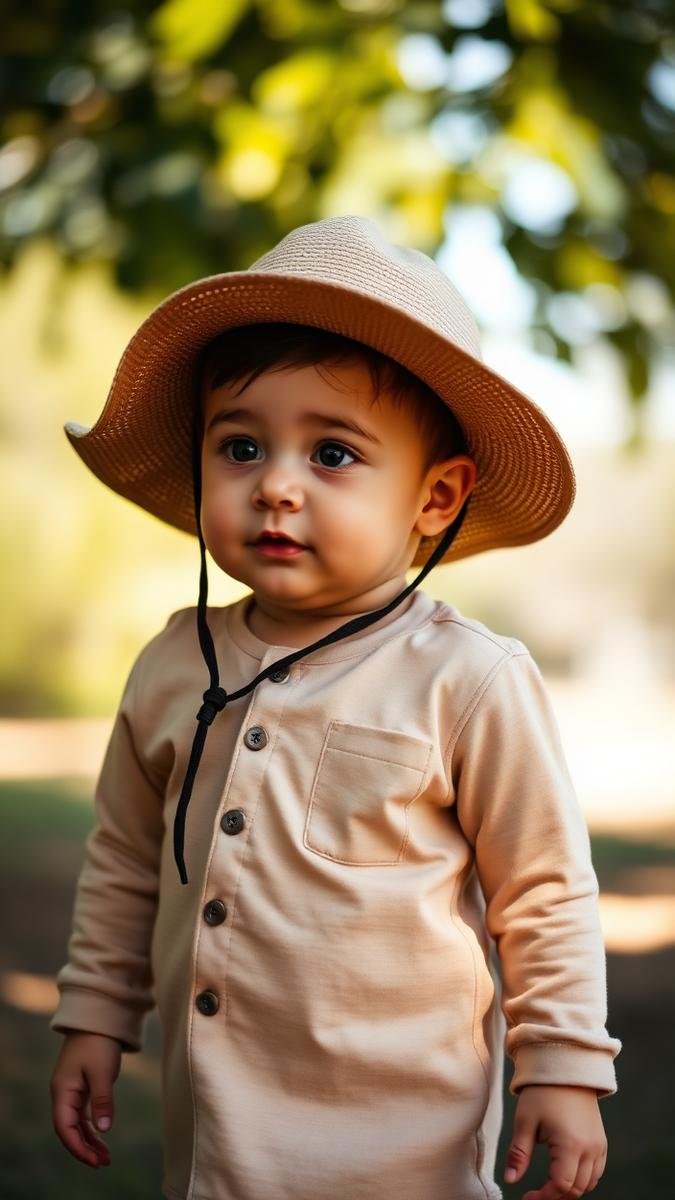
Even with a solid shelter, your baby needs a second layer of defense for the moments she’s out from under it, whether that’s a walk to the water’s edge or a diaper change on a blanket. UPF-rated swimwear and a wide-brim hat cover the skin that lotion alone can’t protect reliably on a newborn. Think of clothing as your primary sunblock and sunscreen as the backup, not the other way around.
Why it matters for newborns
Babies under six months shouldn’t wear sunscreen on more than small exposed patches, per AAP guidance, which makes physical coverage the main line of defense. A long-sleeve rash guard and brimmed hat block a far larger surface area than any cream, and they don’t wash off in the water or rub off on a towel.
Pediatrician safety tips
Our reviewers point to necklines and cuffs as the usual failure points. Loose sleeves ride up, brims flop into the eyes, and chin straps left too tight leave marks on delicate skin.
A UPF 50+ outfit and a secured hat do more real protection work than a bottle of sunscreen ever will on a newborn.
What to look for when buying
Check for:
- UPF 50+ fabric rating, not just "sun protective" wording
- A brim wide enough to shade the neck, not just the eyes
- Soft, adjustable chin strap with no hard clasps
- Breathable, quick-dry fabric to prevent overheating
How to use it at the beach
Dress your baby before you leave the car, since fighting a squirming newborn into a swim shirt on hot sand wastes time and patience. Keep the hat on anytime she’s outside the shelter, even for a five-minute photo near the water.
3. Swim diapers and changing supplies
A regular diaper turns into a heavy, waterlogged mess the second it touches ocean or pool water, so swim diapers are non-negotiable for any beach trip with a newborn. They’re built to hold in solids without absorbing gallons of water, which keeps your baby comfortable and keeps the water around other beachgoers sanitary. Pack more than you think you’ll need, since newborns go through diaper changes far more often than older babies.
Why it matters for newborns
Newborns have little bladder or bowel control, and heat plus extra fluids often mean more frequent changes than at home. A wet, sandy regular diaper against a newborn’s skin for even twenty minutes can trigger irritation or a rash faster than most parents expect, especially on skin that’s already adjusting to sun and salt exposure.
Pediatrician safety tips
Our review board recommends changing a swim diaper the moment you’re out of the water, not waiting until you notice a leak. Sand trapped against wet skin is a common cause of chafing our pediatricians see after beach trips.
Change the swim diaper as soon as your baby’s out of the water, waiting only invites a rash.
What to look for when buying
Look for:
- Snug, no-gap leg openings that still allow airflow
- Reusable options with a waterproof outer layer, if you want to cut down on trash
- A travel changing pad with a wipeable, waterproof surface
- Fragrance-free wipes and a barrier cream for sensitive newborn skin
How to use it at the beach
Set up your changing station under the shelter, not directly on open sand, to keep grit out of every fold of skin. Bring a small mesh bag for dirty diapers so you’re not carrying odor and moisture through the rest of your bag.
4. Feeding and hydration essentials
Heat, wind, and extra activity mean your newborn needs feeding on a tighter schedule at the beach than at home, whether you’re breastfeeding or using formula. A shaded, comfortable spot to nurse or bottle-feed, plus a way to keep milk or water cold, rounds out your beach essentials for newborn trips more than most parents plan for.
Why it matters for newborns
Babies under six months can’t tell you they’re overheated or thirsty, and heat speeds up fluid loss even in a baby who isn’t sweating visibly. Breastfed newborns should feed on demand, often more frequently in hot weather, while formula-fed babies may need extra ounces to offset moisture lost to sun and wind.
Pediatrician safety tips
Our review board warns against giving plain water to babies under six months, since it can dilute their sodium levels. Stick to breast milk or formula for hydration.
A newborn’s hydration at the beach comes from milk, not water, no matter how hot the day gets.
What to look for when buying
Prioritize:
- An insulated bottle bag or small cooler rated for several hours
- A nursing cover or shaded pop-up for privacy and sun protection while feeding
- Pre-measured formula packs or pre-portioned milk bags for easy prep
- A reusable water bottle for yourself, since caregiver hydration affects milk supply
How to use it at the beach
Feed under your shelter, both for shade and to avoid sand contaminating bottles or nipples. Offer feeds more often than usual and watch for early hunger or heat cues rather than waiting for a scheduled time.
5. Comfort and transport gear for sandy days
Getting a newborn safely from car to sand and back again takes more than a diaper bag slung over your shoulder. A baby carrier, a lightweight stroller with real sand-worthy wheels, and a firm, sand-resistant mat round out your beach essentials for newborn packing list. Without the right gear, you’ll spend half your visit wrestling a stroller through soft sand or holding a squirming baby with no safe place to set her down.
Why it matters for newborns
Newborns need consistent head and neck support, and standard umbrella strollers with narrow wheels bog down fast on loose sand. Carriers keep your baby upright and close to your body heat, which helps her regulate temperature, while a supportive mat keeps her off hot or uneven ground where sand can reach 100°F or higher on a sunny afternoon.
Pediatrician safety tips
Our review board recommends checking a carrier’s hip and head support before every trip, since heat and moisture can loosen straps that felt snug at home.
A firm mat and a well-fitted carrier protect your newborn from surfaces you’d never let her touch barefoot yourself.
What to look for when buying
Look for:
- All-terrain or fat-tire stroller wheels built for sand
- A carrier with adjustable, padded head support for newborns
- A washable, waterproof mat with a non-slip underside
- Lightweight materials, since you’ll likely carry gear one-handed
How to use it at the beach
Switch to the carrier once the stroller hits soft sand, and lay the mat under your shelter as a stable base for feeding, changing, or naps.
Making baby’s first beach day a success
Packing well for a newborn’s first beach trip comes down to five priorities: shade, sun-protective clothing, swim diapers, feeding supplies, and gear that gets you across the sand without a fight. Skip any one of these and you’re improvising in the moment, usually while your baby is overheated, hungry, or covered in sand you can’t rinse off fast enough. Nail them, and you get an actual afternoon at the water instead of a stressful errand.
Quality matters as much as the checklist itself. A tent with gaps, a hat with a floppy brim, or a stroller that stalls in soft sand will undo good planning fast. If you want product picks that have already passed a pediatric safety review rather than just good marketing photos, that’s exactly what we build at ChildBloom. Browse our baby gear reviews before your next trip and pack with confidence, not guesswork.
Authoritative Resources
Frequently Asked Questions
When can I take my newborn to the beach?
Most pediatricians recommend waiting until your baby is at least 6 months old before taking them to the beach. Newborns cannot regulate their body temperature well and are at higher risk for sunburn and heat-related issues.
What sun protection is safe for newborns?
For babies under 6 months, avoid direct sun exposure and use protective clothing, hats, and shade. After 6 months, use baby-safe mineral sunscreen (zinc oxide or titanium dioxide) with SPF 30 or higher. Reapply every 2 hours.
What should I pack for a beach trip with a newborn?
Essential items include: UV-protective swimwear, wide-brimmed hat, baby-safe sunscreen (6+ months), portable shade tent or umbrella, plenty of formula/breast milk, diapers, wipes, change of clothes, and a thermometer to monitor for overheating.
How do I keep my newborn cool at the beach?
Use a beach tent or umbrella for shade, dress baby in lightweight light-colored clothing, keep them hydrated with frequent feedings, avoid peak sun hours (10am-4pm), and watch for signs of overheating like flushed skin or fussiness.
Disclaimer: This article is for general informational purposes only and is not a substitute for professional medical advice. Always consult your pediatrician.