Baby Sunscreen When to Apply: Safe SPF Options Guide 2026
Medically reviewed by Dr. Ahmad Raza, MD (Pediatrics) — ChildBloom Medical Review Panel. Last updated: August 4, 2026.
Editorial & affiliate disclosure: our guidance is written and reviewed by clinicians. ChildBloom may earn a commission from qualifying purchases made through links on this page, which never changes what our pediatric reviewers recommend.
Looking for clear answers about baby sunscreen when to apply? This pediatrician-reviewed guide covers what matters, what to skip, the safety checks that count, and exactly when to involve your doctor — based on current AAP, CDC and CPSC guidance on baby sunscreen when to apply.
Quick pediatrician summary: baby sunscreen when to apply
Short answer: A pediatrician explains baby sunscreen when to apply: gentle routines, ingredients to avoid, product picks and the skin signs that need a doctor.
Introduction
Protecting your baby’s skin from the sun is one of the most important things you can do as a parent. But knowing when to apply baby sunscreen — and which type is safe — can feel confusing. Many parents wonder: can I put sunscreen on my newborn? What SPF level works best?
Here is the key fact. Pediatricians recommend waiting until a baby is at least 6 months old before applying sunscreen. Before that age, shade, clothing, and hats are your best tools. After 6 months, a mineral-based sunscreen becomes a safe and effective option.
This guide explains baby sunscreen when to apply, what SPF to choose, and how to protect your infant from sun damage at every stage. Also read our guide on baby diaper rash prevention for complete skin care. Recommendations come from the American Academy of Pediatrics (AAP) and the American Academy of Dermatology (AAD).
Let’s keep your baby safe in the sun.
Table of Contents
- When Can Babies Start Wearing Sunscreen?
- Sun Protection for Babies Under 6 Months
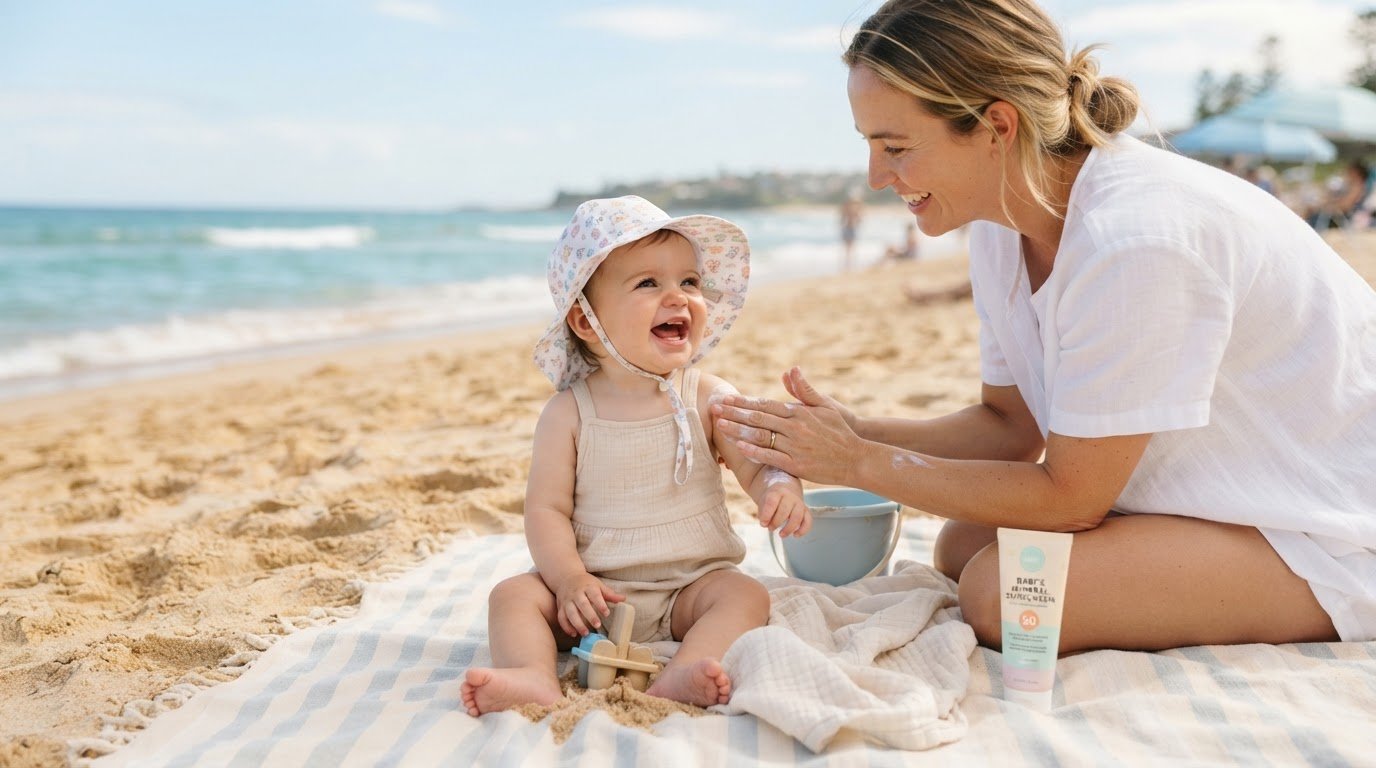
- How to Apply Baby Sunscreen Safely
- Mineral vs. Chemical Sunscreen: Which Is Safer?
- Best Sunscreen Ingredients for Babies
- When to Apply Baby Sunscreen During the Day
- Sun Safety Tips Beyond Sunscreen
- Common Sunscreen Myths for Babies
- Key Takeaways
- Frequently Asked Questions
- When to Call the Pediatrician
- Bottom Line
- References
When Can Babies Start Wearing Sunscreen?
The American Academy of Pediatrics (AAP) and the American Academy of Dermatology (AAD) agree on one point: babies younger than 6 months should not wear sunscreen. Their skin is too thin and absorbent, which means chemicals in sunscreen can enter the bloodstream more easily.
After 6 months, sunscreen becomes a safe and important part of sun protection.
Quick Answer: Baby sunscreen when to apply? Wait until your baby is 6 months old. Before that, use shade, clothing, and hats for sun protection.
Sun Protection for Babies Under 6 Months
Since sunscreen is not recommended for young infants, you need other strategies to protect their skin.
Best Sun Protection for Babies Under 6 Months
- Keep your baby in the shade. Use a stroller canopy, umbrella, or tree shade whenever you are outdoors.
- Dress your baby in sun-protective clothing. Lightweight, long-sleeved shirts and pants block UV rays. Look for clothing with a UPF rating.
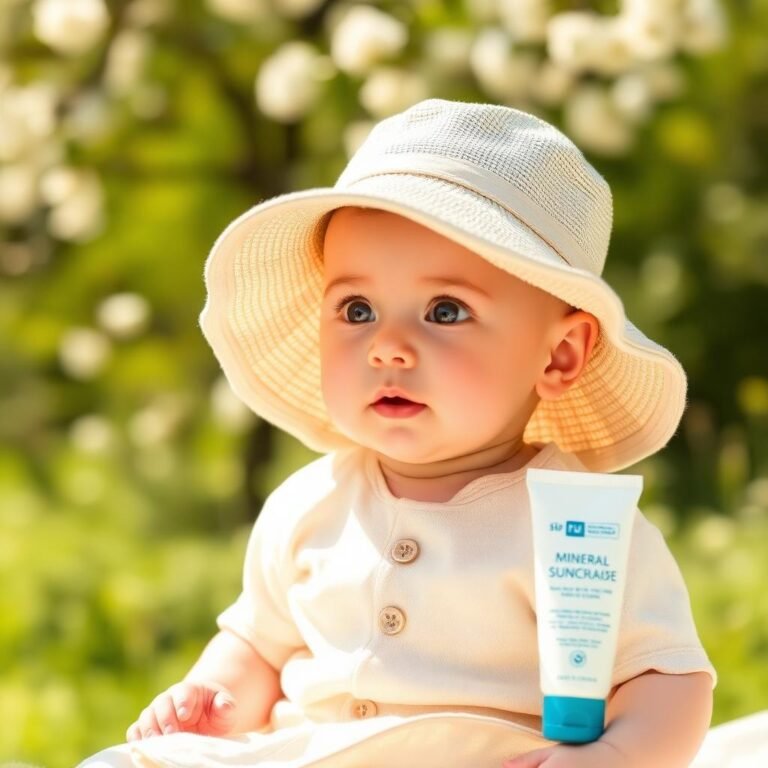
- Use a wide-brim hat. A hat that covers the face, ears, and neck protects the most vulnerable areas.
- Avoid peak sun hours. UV rays are strongest between 10 a.m. and 4 p.m. Plan outdoor activities before or after this window.
- Use a stroller sunshade. Many strollers come with built-in canopies. Add a clip-on shade for extra coverage.
Why Babies Under 6 Months Are More at Risk
Baby skin is about 20% to 30% thinner than adult skin. This makes it more vulnerable to UV damage. Even a brief sunburn in infancy increases the risk of skin cancer later in life. Take sun protection seriously from day one.
How to Apply Baby Sunscreen Safely
Once your baby turns 6 months, sunscreen becomes part of your outdoor routine. Here is how to apply it correctly.
Step-by-Step Application
- Choose a mineral-based sunscreen. Look for zinc oxide or titanium dioxide as the active ingredients.
- Use SPF 30 or higher. SPF 30 blocks about 97% of UVB rays. Higher SPFs offer slightly more protection but no product blocks 100%.
- Apply 15 minutes before going outside. Sunscreen needs time to bind to the skin.
- Cover all exposed areas. Don’t forget the face, ears, neck, hands, and tops of feet.
- Use enough sunscreen. Most parents under-apply. Use about 1 ounce (a shot glass full) to cover your baby’s body.
- Reapply every 2 hours. More often if your baby is swimming or sweating heavily.
- Wash off sunscreen at the end of the day. Use gentle baby wash and warm water.
Areas Parents Often Miss
- Ears (especially the tops)
- Back of the neck
- Backs of the hands
- Tops of the feet
- Scalp (if hair is thin)
- Around the eyes (use a gentle mineral sunscreen)
Mineral vs. Chemical Sunscreen: Which Is Safer?
Not all sunscreens are the same for babies. The two main types are mineral and chemical.
Comparison
| Feature | Mineral Sunscreen | Chemical Sunscreen |
|---|---|---|
| Active ingredients | Zinc oxide, titanium dioxide | Avobenzone, octinoxate, oxybenzone |
| How it works | Sits on skin, reflects UV rays | Absorbs into skin, converts UV to heat |
| Onset of protection | Works immediately | Needs 15–20 minutes to activate |
| Skin absorption | Minimal to none | Absorbs into the skin |
| Suitable for babies 6+ months | Yes — recommended | Less preferred for babies |
| Suitable for sensitive skin | Yes — gentle | May cause irritation |
| White cast | May leave a white tint | No white cast |
What Experts Recommend
The AAP and AAD both recommend mineral sunscreen for babies. Mineral sunscreens sit on the surface of the skin and reflect UV rays. They do not absorb into the skin and are less likely to cause irritation.
Chemical sunscreens use ingredients like oxybenzone and octinoxate, which some studies suggest may disrupt hormones. While the risk is low in occasional use, mineral sunscreen remains the safer choice for babies.
Best Sunscreen Ingredients for Babies
When shopping for baby sunscreen, check the label for these ingredients.
Look For
- Zinc oxide — Broad-spectrum protection against UVA and UVB rays.
- Titanium dioxide — Also provides broad-spectrum protection.
- “Broad-spectrum” label — Means it protects against both UVA and UVB.
- “SPF 30 or higher” — Minimum recommended level for babies.
- “Fragrance-free” — Reduces risk of skin irritation.
- “Water-resistant” — Good for active babies and swimming (check for 40 or 80-minute rating).
Avoid These Ingredients
- Oxybenzone — Chemical filter with potential hormone-disrupting effects.
- Octinoxate — Chemical filter that may irritate sensitive skin.
- Retinyl palmitate (Vitamin A) — May increase sun sensitivity.
- Added fragrances — Can irritate baby skin.
- Spray sunscreen — Easy to inhale and difficult to apply evenly. Stick with lotions or sticks.
When to Apply Baby Sunscreen During the Day
Timing matters. Here is when to apply baby sunscreen throughout the day.
Daily Sunscreen Schedule
- Morning (before 10 a.m.): Apply sunscreen if going outside, even on cloudy days. UV rays pass through clouds.
- Midday (10 a.m.–4 p.m.): Reapply sunscreen every 2 hours. Limit outdoor time during these hours when possible.
- Late afternoon (after 4 p.m.): Reapply if still outside. UV levels drop but do not disappear.
- After swimming or sweating: Reapply immediately, even if the sunscreen is labeled “water-resistant.”
- Cloudy days: UV rays still reach the ground on overcast days. Apply sunscreen if spending extended time outdoors.
Remember: Up to 80% of UV rays can pass through clouds. Sunscreen is not just for sunny days.
Sun Safety Tips Beyond Sunscreen
Sunscreen alone does not fully protect your baby. Use a combination of strategies.
Complete Sun Safety Checklist
- Seek shade. Stay in shaded areas whenever possible.
- Wear protective clothing. UPF-rated clothing offers reliable UV protection.
- Use a wide-brim hat. Covers the face, ears, and neck.
- Wear UV-blocking sunglasses. Protect your baby’s eyes from UV damage.
- Plan around peak UV hours. Avoid being outdoors between 10 a.m. and 4 p.m. when possible.
- Watch for reflections. Water, sand, and snow reflect UV rays and increase exposure.
- Stay hydrated. Offer breast milk, formula, or water (after 6 months) frequently.
- Watch for signs of overheating. Excessive sweating, flushed skin, or irritability may mean your baby is too hot.
Common Sunscreen Myths for Babies
Let’s clear up some common misconceptions.
Myth 1: “Babies need sunscreen every day, even indoors.”
Sunscreen is needed only when UV exposure is expected. If your baby is indoors away from direct sunlight through windows, sunscreen is not necessary.
Myth 2: “Higher SPF means much better protection.”
SPF 30 blocks 97% of UVB rays. SPF 50 blocks about 98%. The difference is small. What matters more is applying enough and reapplying regularly.
Myth 3: “Darker skin does not need sunscreen.”
All skin types can burn and develop skin damage from UV exposure. Sunscreen is important for babies of all skin tones.
Myth 4: “Sunscreen causes vitamin D deficiency in babies.”
Babies get vitamin D primarily from breast milk or fortified formula, not from sun exposure. The AAP recommends vitamin D supplements for breastfed babies regardless of sun exposure.
Myth 5: “A little sun exposure is good for babies.”
Even small amounts of unprotected sun exposure can damage baby skin. The risks of skin cancer later in life outweigh any perceived benefit.
Key Takeaways
- Baby sunscreen when to apply? Wait until 6 months of age.
- Before 6 months, use shade, clothing, and hats for protection.
- After 6 months, choose a mineral-based sunscreen with SPF 30 or higher.
- Apply sunscreen 15 minutes before going outside.
- Reapply every 2 hours, or after swimming or heavy sweating.
- Avoid spray sunscreens and chemical filters like oxybenzone.
- Use sun protection even on cloudy days.
- Combine sunscreen with shade, UPF clothing, and hats.
- Avoid peak sun hours between 10 a.m. and 4 p.m.
- Sunscreen is important for babies of all skin tones.
Frequently Asked Questions
1. When can I first apply sunscreen on my baby?
You can start applying baby sunscreen at 6 months of age. Before that, rely on shade, clothing, and hats for sun protection.
2. What type of sunscreen is safest for babies?
Mineral sunscreen with zinc oxide or titanium dioxide is the safest option. Choose SPF 30 or higher, broad-spectrum, fragrance-free, and water-resistant.
3. Can I use my own sunscreen on my baby?
Adult sunscreen is not recommended for babies. Adult formulas may contain chemical filters, fragrances, or other ingredients too harsh for baby skin. Always choose a baby-specific mineral sunscreen.
4. How often should I reapply baby sunscreen?
Reapply every 2 hours, or immediately after swimming or heavy sweating. Check the label for the water-resistance rating (40 or 80 minutes).
5. Is spray sunscreen safe for babies?
No. Spray sunscreen can be inhaled and is hard to apply evenly. Pediatricians recommend lotion or stick sunscreens for babies.
6. Do I need sunscreen on cloudy days?
Yes. Up to 80% of UV rays pass through clouds. Apply sunscreen any time your baby is outdoors for an extended period.
7. Can my baby get vitamin D without sun exposure?
Yes. Breastfed babies need a vitamin D supplement (400 IU daily) from birth, as recommended by the AAP. Formula-fed babies get vitamin D from fortified formula.
8. What should I do if my baby gets a sunburn?
Move your baby to shade immediately. Apply cool (not cold) compresses to the affected area. Offer extra breast milk or formula. If the burn is severe — blistering, fever, or lethargy — call your pediatrician right away.
When to Call the Pediatrician
Contact your baby’s doctor if you notice:
- Any sunburn on a baby under 6 months of age
- Blistering or peeling skin after sun exposure
- Fever, chills, or lethargy after being in the sun
- Signs of dehydration — dry mouth, fewer wet diapers, or no tears when crying
- Rash or irritation after applying sunscreen
- A sunburn that covers a large area of the body
- Signs of heat exhaustion — excessive sweating, pale skin, or rapid breathing
For severe sunburn with blistering or signs of heat stroke, call 911 immediately.
Bottom Line
Knowing baby sunscreen when to apply is simple: wait until 6 months of age. Before that, use shade, clothing, and hats. After 6 months, choose a mineral-based sunscreen with SPF 30 or higher, apply it 15 minutes before going outside, and reapply every 2 hours.
Sun protection is a daily habit that protects your baby now and for life. Combine sunscreen with shade and protective clothing for the best defense against UV damage.
References
- American Academy of Pediatrics. “Sun Safety for Children.” HealthyChildren.org. https://www.healthychildren.org/English/safety-prevention/at-play/Pages/Sun-Safety.aspx
- American Academy of Dermatology. “How to Protect Children from Sun Damage.” https://www.aad.org/public/everyday-care/sun-protection/protect-skin/sun-protection-children
- Centers for Disease Control and Prevention. “Sun Safety.” https://www.cdc.gov/cancer/skin/basic_info/sun-safety.htm
- U.S. Food and Drug Administration. “Sunscreen: How to Help Protect Skin from the Sun.” https://www.fda.gov/drugs/understanding-over-counter-medicines/sunscreen-how-help-protect-skin-sun
- World Health Organization. “Ultraviolet Radiation and the INTERSUN Programme.” https://www.who.int/health-topics/ultraviolet-radiation
- Council on Environmental Health, AAP. “Ultraviolet: A Special Hazard for Children.” Pediatrics. 2019.
Medical Disclaimer
Medical Disclaimer: This article provides general educational information only and does not replace professional medical advice. Always consult your pediatrician or a dermatologist before applying new products to your baby’s skin. If your baby experiences a severe sunburn with blistering, fever, or lethargy, seek emergency medical care immediately.
Common mistakes parents make with baby sunscreen when to apply
- Assuming a higher price means a safer or better-performing option — certification and correct fit matter far more.
- Skipping the instruction manual, weight limits and product registration, which is how recall notices reach you.
- Changing several things at once, so you cannot tell what actually helped your baby.
- Relying on advice from social media instead of your pediatrician when something feels off.
Related pediatrician-reviewed reading
- Baby sunscreen age
- The Pediatrician's Guide to Baby Bathing
- Best Baby Bath Tub
- Baby Bath Temperature
- baby bath & skincare hub
References & further reading
Medical disclaimer: this article is for general education and does not replace individual medical advice. Always follow your own pediatrician’s guidance for your child.