Newborn Only Sleeps When Held: 6 Safe, Proven Fixes
Newborn Only Sleeps When Held: 6 Fixes That Actually Work
Exhaustion plagues the vast majority of new parents during their baby’s first month. If your newborn only sleeps when held, nights can quickly turn into an exhausting endurance test. This guide offers six clear, safety-first tactics to guide your infant toward resting in their own space.
Understanding infant biology lets parents work alongside natural instincts instead of battling them. When a newborn only sleeps when held, specific physiological needs are driving this contact-only preference. Introducing subtle adjustments step by step helps your baby feel secure in their bassinet.

Contact sleep provides deep comfort but can leave parents exhausted.
The Science Behind Contact Sleep
Leaving the womb is a sudden, jarring shift for an infant. Inside the uterus, babies enjoy constant warmth, continuous rocking, and tight physical boundaries. This sensory environment explains why a newborn only sleeps when held during those first weeks of life.
Cold, flat mattresses feel alien to a fragile nervous system. The womb was a noisy, warm chamber vibrating with maternal heartbeats and digestive rhythms. A silent, stationary crib can startle a baby, triggering an instinctual alarm.
The Moro reflex is a survival response that fires when an infant feels a sensation of falling. This involuntary twitch often explains why a newborn only sleeps when held, as they startle awake the moment they touch a flat surface. Their arms flail, their pulse quickens, and deep rest instantly vanishes.
Your warm embrace physically restricts their flailing limbs to quiet this startle response. Babies also rely heavily on smell and sound to gauge safety. Your skin scent and rhythmic heartbeat serve as natural stabilizers for their nervous system.
The Biological Mechanics of Infant Sleep Cycles
Infant sleep structures differ completely from adult sleep patterns. Babies spend roughly fifty percent of their rest in light, active sleep, similar to rapid eye movement sleep. During these active phases, infants twitch, flutter their eyelids, and startle awake at the slightest sound.
Adults spend only a fifth of their night in this fragile phase. It takes about twenty minutes for a newborn to transition from active sleep into quiet, deep sleep. This deeper phase brings steady breathing, still limbs, and relaxed muscles.
| Sleep Phase | Duration / Percentage | Physical Indicators | Transfer Success Rate |
|---|---|---|---|
| Active Sleep | ~50% of cycle | Fluttering eyelids, twitching, light breathing | Very Low (triggers waking) |
| Quiet Sleep | ~50% of cycle | Regular breathing, limp limbs, no movement | Very High (ideal transfer window) |
Moving your baby during active sleep almost always causes them to wake up immediately. Immature circadian rhythms also complicate early sleep patterns. Babies do not generate their own melatonin in significant amounts until eight to twelve weeks of age.
They depend on maternal hormones delivered via breastmilk and prenatal storage. This absence of an internal biological clock makes their sleep scattered and erratic during the first trimester of life. Recognizing these limitations helps parents set realistic goals.
Six Solutions for Contact Sleep Challenges
1. Recreate the Womb Environment with Safe Swaddling
Swaddling mirrors the tight pressure of the uterus and dampens the startle reflex. When a newborn only sleeps when held, a secure swaddling technique offers a reliable way to mimic these physical boundaries. Keep the wrap snug across the chest but loose around the hips to avoid hip issues.
Pediatric guidelines recommend stopping swaddling the moment your baby tries to roll. This milestone typically arrives around two months, though some active infants roll earlier. A breathable cotton or muslin swaddle helps regulate their body temperature.
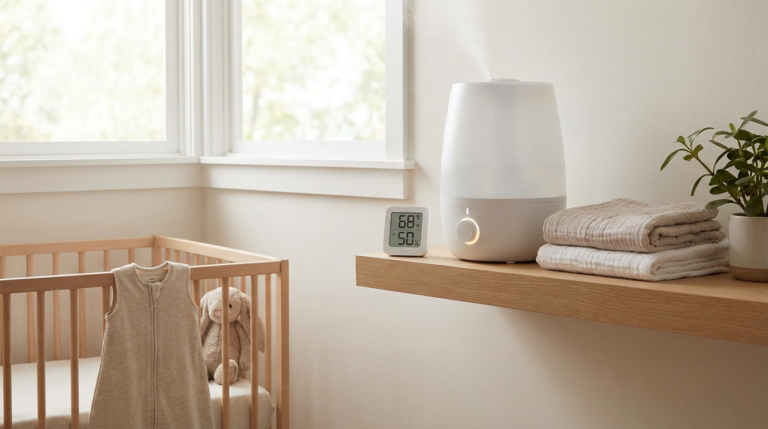
Keep the room temperature between sixty-eight and seventy-two degrees Fahrenheit. Overheating represents a serious safety hazard for resting infants. Check the back of their neck for sweat to monitor their warmth.
2. Use the 20-Minute Transfer Rule
Timing the transition to the crib is vital for success. Wait at least twenty minutes after your infant nods off before trying to lay them down. You can verify they have slipped into deep sleep by using the limp-limb test.
Lift their arm gently and let it drop back down. If it falls limp without resistance, they have entered deep sleep. This window of deep rest offers your best chance for a smooth transfer.
Moving them during light sleep almost guarantees an immediate wake-up. Waiting those initial twenty minutes saves hours of resettlement later. Steady adherence to this timeline lets their nervous system calm down before they are moved.
3. Preheat the Sleep Surface Safely
Laying a baby onto a cold crib sheet alerts them to the environmental shift. This thermal shock is a major reason why a newborn only sleeps when held and wakes within minutes of being laid down. Warming the mattress beforehand counteracts this sudden chill.

Preheating the crib sheet prevents the sudden temperature shock of a cold mattress.
Rest a warm water bottle or heating pad on the sheet for ten minutes before bedtime. Remove the heat source completely before placing your baby in the crib. Always test the sheet with your wrist to ensure it is warm, not hot.
This temperature shift prevents the shock of leaving a warm body for a cold mattress. Gentle warmth mimics your body heat. This approach works exceptionally well for infants highly sensitive to physical changes.
4. Use Continuous White Noise and Olfactory Cues
Sensory consistency helps keep babies asleep once they touch the crib. Continuous white noise masks household sounds that might startle your infant. Keep the sound machine at least seven feet away and set the volume below fifty decibels.
Scent associations can also ease the transition to the mattress. Keep the sheet against your skin for a few hours before putting it on the crib mattress. Your familiar scent reassures their sensitive smell receptors.
This scent method sends a subconscious signal of safety. Combining familiar sounds and smells reduces their sense of isolation. It bridges the gap between your arms and independent sleep.
5. Master the Feet-First Landing Technique
Lowering a baby head-first triggers the sensation of falling and fires the Moro reflex. Parents frustrated because their newborn only sleeps when held can use a feet-first landing method to bypass this startle response. Place their feet on the mattress first, then slowly lower their bottom.
Lower their torso next, and finally lay their head down gently. Leave your hands resting lightly on their chest and forehead for a full minute. This physical touch reassures them they are still secure during the move.
Slowly slide your hands away one at a time once the infant settles. Sudden movements during this step can undo your hard work. This gentle approach respects the baby’s vestibular system.
6. Establish a Consistent, Low-Stimulation Pre-Sleep Routine
A predictable bedtime routine signals to their developing brain that sleep is near. Keep evening activities simple, quiet, and structured. Dim the lights and quiet the household thirty minutes before sleep.
A warm bath, gentle massage, and feeding ease your infant into a relaxed state. Keeping this routine identical every day builds strong sleep associations. This predictability prepares them for sleep.
Avoid high-stimulation activities or bright screens during this wind-down window. Lowering cortisol levels encourages natural melatonin release. Regular repetition is the key to long-term sleep progress.
Safe Sleep Environments Versus Co-Sleeping Risks
A safe sleep environment is vital to protect babies from Sudden Infant Death Syndrome. Medical experts advise placing infants on a flat, firm mattress in their own crib. The sleep surface must remain completely bare of blankets, pillows, and toys.
Falling asleep on soft surfaces like couches or armchairs carries a high risk of suffocation. Sharing a couch with an infant increases sleep-related danger sixty-seven fold. Room-sharing is recommended for the first six months, while bed-sharing should be avoided.
Keeping a bassinet next to your bed allows close proximity for night feedings. This setup supports bonding while keeping a secure physical boundary. Safety must always take precedence over convenience.
Managing Parental Exhaustion and Shift Sleeping
Caring for an infant who rejects the crib can quickly cause parental burnout. Caregivers must value their own rest to look after their baby safely. Splitting the night into shifts ensures both parents get consecutive hours of sleep.
One partner can watch the baby from eight at night until two in the morning. The other partner then takes over from two until eight. This schedule guarantees each adult gets at least six hours of quiet rest.
Single parents can seek help from family or postpartum support workers to build a similar rotation. Severe sleep loss impairs judgment and slows physical reaction times. Caring for your own health directly protects your newborn’s safety.
A Checklist for Crib Transitions
Guiding your baby to independent sleep is a gradual journey involving environmental factors. This quick checklist ensures you meet all safety and sensory conditions before trying a transfer.
- The mattress is firm, flat, and bare of any soft bedding.
- The room temperature registers between sixty-eight and seventy-two degrees Fahrenheit.
- The white noise machine is running at a safe limit of fifty decibels.
- The sheet is preheated safely and the warming pad is fully removed.
- Your baby has been in a deep sleep phase for at least twenty minutes.
- The transfer is made feet-first to prevent triggering the Moro reflex.
Using these steps lowers the likelihood of a failed transfer. This routine removes the nightly guesswork. Predictable routines build trust and comfort for your infant.
Closing Thoughts
Moving away from contact sleep demands patience, routine, and gradual changes to their sensory environment. Though it is draining when a newborn only sleeps when held, these small physical adjustments ease the transition over time. Focus on mimicking the womb, timing the sleep cycles, and keeping safety at the forefront.
Every small step marks progress toward healthy rest for your household. Sticking to the routine remains your most powerful tool in establishing these habits. Stay committed to the process, keep the sleeping space safe, and protect your sanity with shift sleep.