How to Treat Baby Eczema Naturally
Medically reviewed by Dr. Ahmad Raza, MD (Pediatrics) — ChildBloom Medical Review Panel. Last updated: August 03, 2026.
Editorial & affiliate disclosure: our guidance is written and reviewed by clinicians. ChildBloom may earn a commission from qualifying purchases made through links on this page, which never changes what our pediatric reviewers recommend.
If you are searching for answers about how to treat baby eczema naturally, you are in the right place. This pediatrician-reviewed guide explains what is normal, what the likely causes are, the red flags that mean you should call your doctor, and what you can safely do at home — all based on current AAP, CDC and NIH guidance on how to treat baby eczema naturally.
How to Treat Baby Eczema Naturally: A Pediatrician’s Complete Guide
Few things are harder for parents than watching their baby struggle with itchy, inflamed, uncomfortable skin. Baby eczema (atopic dermatitis) affects about 1 in 5 children, and the relentless itch-scratch cycle can disrupt sleep, feeding, and daily life for the whole family.
The good news: most baby eczema can be managed effectively with natural, gentle approaches — no harsh medications required. This pediatrician-reviewed guide covers evidence-based natural treatments, daily skincare routines, trigger identification, and when prescription treatments become necessary.
What Is Baby Eczema?
Eczema is not simply dry skin. It’s a complex inflammatory condition involving a defective skin barrier, immune system overactivity, and often an underlying genetic predisposition (related to the filaggrin gene). This means the skin can’t hold moisture effectively and is more vulnerable to irritants, allergens, and bacteria.
In babies, eczema typically appears first on the cheeks, forehead, and scalp, then may spread to the elbows, knees, and trunk. The hallmark signs are:
- Red, dry, scaly patches
- Rough or leathery skin
- Intense itching (pruritus)
- Weeping or crusting if scratched
- Worse at night and in dry environments
The “Soak and Seal” Method: The Foundation of Eczema Care
This is the single most important technique for managing baby eczema naturally. Studies show it reduces flare severity by up to 40% when done consistently.
Step-by-Step:
- Soak — Give your baby a lukewarm bath (not hot) for 5–10 minutes daily. Bath water should be comfortable to your wrist — around 85–90°F. Add colloidal oatmeal (Aveeno, or grind plain oatmeal into a fine powder) to soothe inflammation.
- Pat dry gently — Do not rub. Leave the skin slightly damp, not completely dry.
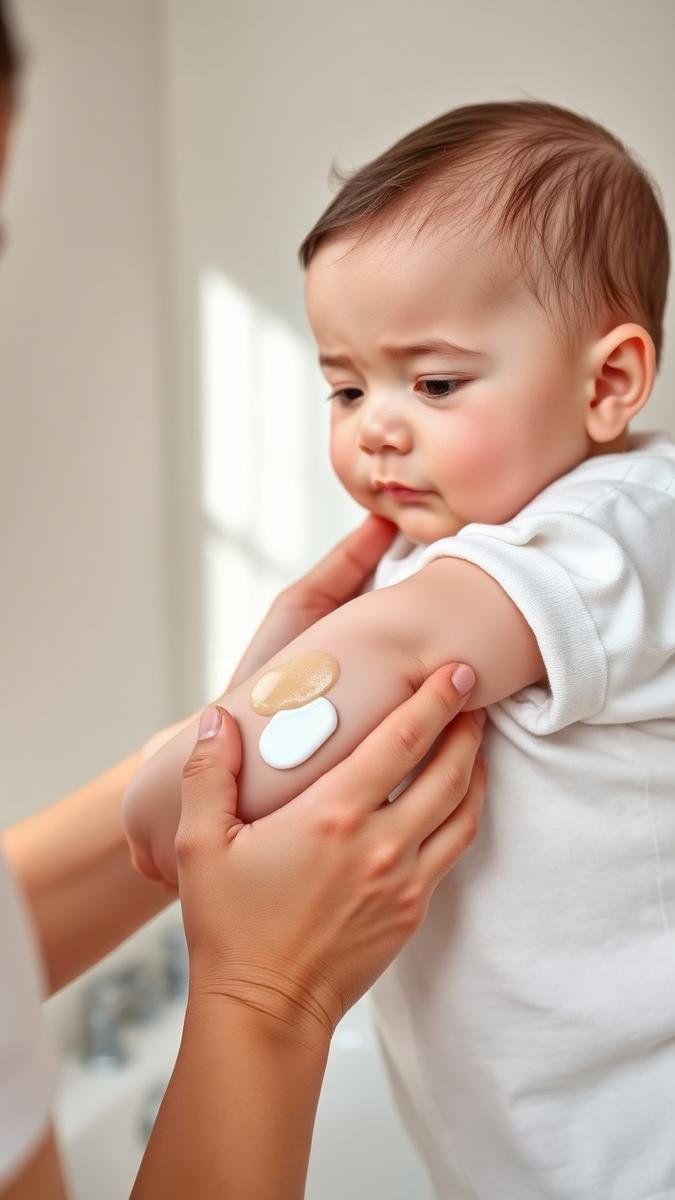
- Seal within 3 minutes — Apply a thick, fragrance-free moisturizer to lock in moisture before it evaporates. This 3-minute window is critical.
💡 Pediatrician’s Tip: Many parents skip the bath, thinking it dries out skin. Actually, daily lukewarm baths hydrate the skin — if you apply moisturizer immediately afterward. The “soak and seal” approach is backed by strong evidence.
Best Natural Moisturizers for Baby Eczema
Not all moisturizers are created equal for eczema-prone skin. Look for products that are:
- Fragrance-free and dye-free — “unscented” is not the same as fragrance-free
- Thick cream or ointment consistency — lotions (which contain more water) are less effective
- Ceramide-rich — ceramides are naturally occurring lipids that repair the skin barrier
Top pediatrician-recommended options:
- Vanicream Moisturizing Cream
- Cetaphil Restoraderm Eczema Calming Body Wash
- Cerave Baby Cream
- Aquaphor Baby Healing Ointment
- Eucerin Baby Eczema Relief
- Tubby Todd All-Over Ointment
- Coconut oil (only if no tree-nut allergy)
Natural Anti-Inflammatory Options
Colloidal Oatmeal Baths
Finely ground oatmeal has natural anti-inflammatory and antioxidant properties. Use 1 cup of colloidal oatmeal in a lukewarm bath, soak for 10 minutes, and pat dry gently.
Coconut Oil
Virgin coconut oil contains lauric acid with antimicrobial properties. Apply a thin layer to affected areas after bathing. Caution: avoid if your baby has a confirmed tree-nut or coconut allergy.
Petroleum Jelly
While not “natural” in the plant-based sense, petroleum jelly is remarkably safe, hypoallergenic, and one of the most effective barrier protectors for eczema-prone skin.
Identify and Eliminate Triggers
Eczema flares are often triggered by environmental factors. The most common triggers include:
| Trigger Type | Examples | What to Do |
|---|---|---|
| Irritants | Harsh soaps, bubble bath, fragrances, fabric softeners | Use mild, fragrance-free cleansers; skip bubble bath entirely |
| Allergens | Dust mites, pet dander, pollen, mold | Vacuum weekly, use dust-mite covers, bathe pets frequently |
| Food triggers | Eggs, cow’s milk, soy, wheat, peanuts | Only restrict if a specific food allergy is confirmed |
| Climate | Dry air (winter), overheating, sweating | Use a humidifier (40–50%), dress in breathable cotton layers |
| Fabrics | Wool, polyester, rough seams | Dress baby in 100% cotton or bamboo; avoid wool |
When Natural Treatments Aren’t Enough
If consistent natural approaches aren’t controlling your baby’s eczema after 2–3 weeks, it’s time to involve your pediatrician. Medical treatments don’t mean you failed — they’re part of a stepwise approach:
- Mild potency topical steroids (hydrocortisone 1% or 2.5%) — safe for short-term use on active flares
- Topical calcineurin inhibitors (tacrolimus/pimecrolimus) — steroid-free options for sensitive areas
- Wet wrap therapy — applying moisturizer, then wrapping with damp gauze for severe flares
- Antibiotics — if secondary bacterial infection (staph) is present
Bathing and Skincare Routine
Consistency is everything with eczema. Here’s a daily routine to follow:
Morning: Apply moisturizer to damp skin after face-washing. Apply sunscreen (zinc-based) to exposed areas.
Midday: Reapply moisturizer as needed to dry patches.
Evening bath: Lukewarm bath with colloidal oatmeal. Pat dry. Apply moisturizer within 3 minutes.
Before bed: Apply a thicker layer of moisturizer. Apply steroid cream only to active red patches (if prescribed).
Eczema-Friendly Laundry
- Use fragrance-free, dye-free laundry detergent (Tide Free & Gentle, All Free Clear, Seventh Generation Free & Clear)
- Skip fabric softener and dryer sheets entirely
- Double-rinse cycle to remove all detergent residue
- Wash new clothes 2–3 times before first wear
Does Eczema Mean Food Allergies?
Not necessarily — but there is a connection. About 30% of children with moderate-to-severe eczema have a concurrent food allergy. The condition is called “atopic march”: eczema → food allergy → allergic rhinitis → asthma.
However, routine food allergy testing is not recommended for babies with mild eczema. Your pediatrician will recommend testing if:
- Eczema is severe despite good skincare
- There’s a clear reaction to a specific food
- Baby has had an immediate allergic reaction (hives, swelling, difficulty breathing)
When to Call Your Pediatrician
- Eczema is not improving after 2–3 weeks of consistent care
- Skin shows signs of infection: honey-colored crusting, oozing, spreading redness, fever
- Baby seems unusually uncomfortable or is losing sleep
- Areas of skin are cracking and bleeding
- You notice poor weight gain alongside severe eczema
Building a Complete Eczema Management Plan
Managing baby eczema effectively requires a comprehensive approach that addresses the skin barrier defect, the inflammatory response, and environmental triggers simultaneously. Think of it as a three-legged stool where each leg supports the others. The first leg is the skincare routine with daily soak-and-seal baths and frequent moisturizer application. The second leg is trigger avoidance, identifying and removing the environmental, dietary, and clothing factors that cause flares. The third leg is medical management when needed, including prescription anti-inflammatory treatments for active flares. A successful eczema management plan also includes planning for seasonal changes. Winter’s dry air and indoor heating can worsen eczema by stripping moisture from the skin, requiring more aggressive moisturizing and the use of a humidifier set to 40 to 50 percent humidity. Summer heat and sweat can also trigger flares, requiring lighter clothing, more frequent cool baths, and prompt removal of sweaty clothes. Spring and fall bring seasonal allergens like pollen and mold that can trigger eczema in susceptible babies, so keeping windows closed during high pollen days and using air purifiers may help.
Eczema and Sleep Disruption
The itch-scratch cycle is most destructive at night when babies cannot consciously control their scratching. The inflammatory chemicals released during eczema flares follow a circadian rhythm, with higher levels of the itch-causing cytokine interleukin-31 at night. This natural increase in itch signaling combined with the lack of distraction during sleep makes nighttime the most challenging period for eczema management. To protect sleep, establish a consistent bedtime routine that includes the soak-and-seal bath, immediate moisturizer application, and then loose-fitting cotton pajamas. Keep your baby’s fingernails short and filed smooth to minimize damage from scratching. Cotton mittens or scratch sleeves can help for younger babies who cannot remove them. Consider using wet wrap therapy for severe flares, where a layer of moisturizer is applied and covered with a damp layer of clothing or gauze, followed by a dry layer. Wet wraps can dramatically reduce itching and improve sleep during severe flares, but should be used under your pediatrician’s guidance. Antihistamines like cetirizine or diphenhydramine may help with nighttime itching in some babies, though their effectiveness for eczema-related itch is variable and they should only be used after discussion with your pediatrician.
Eczema and the Immune System
Eczema is not simply dry skin but a condition rooted in immune system dysfunction. The skin of babies with eczema has an impaired barrier due to a deficiency in filaggrin, a protein that helps skin cells form a tight barrier against the outside world. This deficiency is genetic and can be identified through testing. Without adequate filaggrin, the skin cannot hold moisture effectively and allows irritants, allergens, and bacteria to penetrate more easily. When these substances enter the skin, the immune system mounts an inflammatory response that causes the redness, heat, and itching characteristic of eczema. This immune response involves Th2 cells and the release of cytokines including interleukin-4, interleukin-13, and interleukin-31. Understanding this immune basis explains why simply moisturizing is not enough for many babies with eczema and why anti-inflammatory treatments are sometimes necessary. It also explains why babies with eczema are at higher risk for developing other allergic conditions like food allergies, asthma, and allergic rhinitis in what doctors call the atopic march. Managing eczema effectively in infancy may reduce the risk or severity of these subsequent conditions, though research on this is still ongoing.
Frequently Asked Questions
What is the best natural baby eczema treatment?
Daily lukewarm “soak and seal” baths, thick fragrance-free moisturizer applied 2-3 times a day, colloidal oatmeal baths, and removing common irritants like fragranced detergents.
Can I use coconut oil on baby eczema?
Many parents find virgin coconut oil soothing, but avoid it if there’s any tree-nut or coconut allergy history. Petroleum jelly and ceramide creams are safer first-line choices.
Will my baby outgrow eczema?
Yes — about 60% of children with infant eczema see significant improvement by age 5, though some have flares into adulthood.
How often should I bathe my baby with eczema?
Daily. Contrary to old advice, daily lukewarm baths hydrate the skin when followed by immediate moisturizing.
Can breast milk help baby eczema?
Some parents report improvement with topical breast milk application. While evidence is limited, it’s safe to try as a complementary approach alongside your regular skincare routine.
Eczema and the Emotional Impact on Families
Managing a baby with moderate to severe eczema takes a significant emotional toll on families. The relentless cycle of itching, scratching, sleepless nights, and application of treatments can leave parents exhausted and discouraged. Studies show that parents of children with eczema experience higher rates of stress, anxiety, and sleep deprivation comparable to parents of children with other chronic medical conditions. It is important to acknowledge these feelings and seek support. Connect with other parents through eczema support groups, ask your pediatrician for resources, and consider speaking with a mental health professional if eczema-related stress is affecting your daily life. Remember that eczema is not your fault. It is a genetic condition involving the skin barrier and immune system, not a result of anything you are doing wrong as a parent. Most children outgrow or significantly improve by school age, and new treatments are constantly being developed. The daily work you put into managing your baby’s eczema now lays the foundation for healthier skin in the future.
Working With Your Pediatrician for Optimal Care
Effective eczema management requires a partnership between parents and the pediatrician. Before each visit, take photos of your baby’s skin at its worst and at its best to show the range of severity. Keep a symptom diary noting when flares happen, what treatments were used, and what seemed to trigger each flare. Bring your current moisturizers and products to the visit so your pediatrician can evaluate their ingredients. Be honest about what treatments you can realistically maintain. If a four-times-daily moisturizer schedule is not working for your family, your pediatrician can help you find a sustainable alternative. If you are concerned about using topical steroids, discuss this openly. Your pediatrician can explain why appropriate steroid use is safe and effective, and can help you understand the difference between responsible short-term use and overuse. If your baby’s eczema is not improving after consistent treatment, ask about referral to a pediatric dermatologist. These specialists have additional training in complex skin conditions and can offer treatments like phototherapy, systemic medications, or the newer biologic medications like dupilumab that are approved for children as young as 6 months.
Medical Disclaimer
This article is for educational purposes and does not replace professional medical advice. Consult your pediatrician before starting any new treatment regimen for your baby’s eczema.
📖 More from the Pediatrician’s Corner Hub: your complete pediatrician-reviewed guide to your baby’s first year — milestones, feeding, sleep, vaccines, common illnesses, and more
Clinical Pearl: What the Research Actually Says
One of the most valuable skills a parent can develop is the ability to evaluate health information critically. In the age of social media and parenting influencers, misinformation about child health spreads faster than evidence-based guidance. When you encounter a new parenting recommendation — whether about sleep, feeding, development, or safety — ask yourself three questions: Who is making this recommendation and what are their credentials? Is the recommendation supported by peer-reviewed research or is it based on anecdote and tradition? Does the recommendation align with guidance from major medical organizations like the American Academy of Pediatrics, the Centers for Disease Control and Prevention, or the World Health Organization? If a recommendation contradicts established medical guidance, it should be viewed with skepticism, regardless of how compelling the testimonial may be. When in doubt, bring what you have read or heard to your pediatrician. We are trained to help you separate evidence from anecdote and to make decisions that are right for your individual child.
How to Treat Baby Eczema Naturally: quick pediatrician summary
Most of the time this is a normal newborn or infant variation that settles on its own, and the job of a parent is to know the small number of red flags that change the plan. Watch feeding, breathing, alertness and wet diapers — those four tell you more than the symptom itself. Call your pediatrician the same day for fever in a baby under 3 months, laboured or fast breathing, refusal to feed, fewer wet diapers, unusual floppiness or sleepiness, or a symptom that is clearly getting worse rather than better.
Common mistakes parents make
- Treating a single measurement or one bad day as a trend instead of watching the pattern over several days.
- Trying several remedies at once, so it becomes impossible to tell what helped.
- Waiting for a convenient time to call when a red flag is already present — feeding, breathing and alertness changes are always worth a same-day call.
- Following advice from an unsourced social post rather than your own pediatrician, who knows your child’s history and growth curve.
Related guides from our pediatric team
- When to Worry About a Baby Cough: Pediatrician’s Guide
- Baby Flat Head: Will It Go Away? Complete Guide to Plagiocephaly
- Why Is My Baby Fussy? 12 Common Reasons and When to Worry
- Best Baby Carrier 2026: Top Wraps, Slings & Structured Picks Tested
- More expert answers in Pediatrician’s Corner
References and further reading
- AAP HealthyChildren: symptoms & when to call the doctor
- CDC child health & development
- NIH MedlinePlus infant and newborn care
Medical disclaimer
This article is for general education and is not a substitute for individual medical advice, diagnosis or treatment. Every child is different — talk to your own pediatrician about your baby, and seek urgent care for breathing difficulty, poor feeding, dehydration, unusual sleepiness, fever in an infant under 3 months, or any sudden change in your child’s condition.