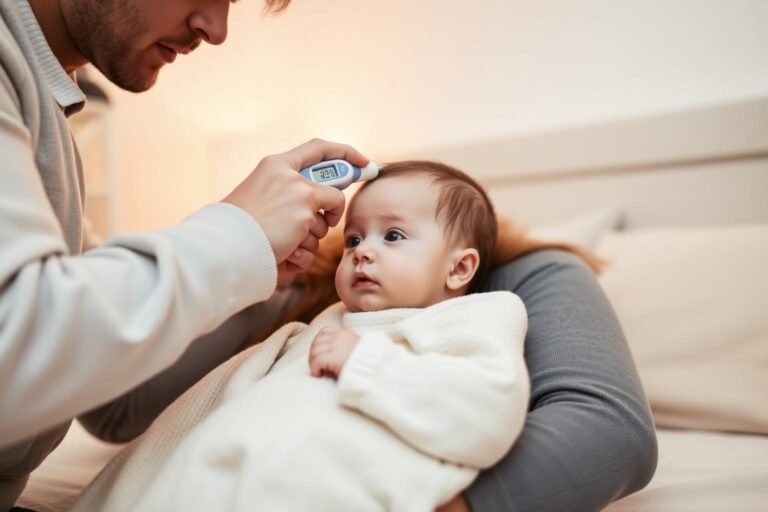
Baby Vapor Rub: Age Restrictions and Safety
# Baby Vapor Rub Safety: Age Limits & What Parents Need to Know
Quick Answer
No, standard over-the-counter vapor rubs like Vicks VapoRub should **not** be used on babies under 2 years old. The U.S. Food and Drug Administration (FDA) explicitly warns against applying these products to children under age 2 due to the risk of serious respiratory distress, skin irritation, and, in rare but documented cases, seizures. Even products marketed specifically for babies (such as Baby Vicks) are not recommended for infants under 3 months of age. If your baby is congested, stick to safe, evidence-based alternatives: saline nasal drops, a cool-mist humidifier, gentle nasal suction with a bulb syringe, and keeping your baby upright during and after feeds. This article explains exactly why baby vapor rub poses a risk, what the major medical authorities say, which ingredients to watch for, and what you can safely do instead to help your little one breathe easier.
—
Why Baby Vapor Rub Can Be Dangerous for Infants
Baby vapor rub may seem like a harmless, time-tested remedy. Many parents remember having it rubbed on their own chests as children. But an infant’s body processes topical ingredients very differently from an adult’s, and those same strong aromatic compounds that create a cooling sensation in older children and adults can actually worsen breathing problems in babies.
The core issue is that vapor rub products contain volatile oils (camphor, menthol, and eucalyptus oil) that produce intense vapors. When these vapors are inhaled by an infant whose airways are tiny and still developing, they can trigger an inflammatory response in the mucous membranes of the nose and throat. Rather than opening the airways, the irritation can cause the body to produce more mucus and cause the airways to constrict, making breathing harder. This paradoxical effect has been documented in clinical studies, including a widely cited 2009 study published in the journal *Pediatrics* that found vapor rub increased mucus production and airway resistance in ferrets and human infants alike.
Babies also have much thinner, more permeable skin than adults. This means the active ingredients in a baby vapor rub can be absorbed into the bloodstream more readily. Ingredients like camphor are particularly dangerous when absorbed systemically because they cross the blood-brain barrier and can cause neurological symptoms. There are well-documented case reports of infants developing seizures after camphor-containing products were applied to their skin or inhaled in enclosed spaces.
Additionally, babies cannot tell you when something is burning their skin or making it hard to breathe. A parent may apply vapor rub at bedtime and not realize their infant is experiencing discomfort, increased respiratory effort, or even mild chemical irritation until the situation becomes more serious.
The bottom line: what feels soothing to an adult can be genuinely harmful to an infant. This is not a theoretical concern. Pediatricians and poison control centers have treated real cases of vapor rub toxicity in babies.
—
What the FDA Says About Baby Vapor Rub
The U.S. Food and Drug Administration has clear guidance on the use of over-the-counter vapor rub products in children. According to the FDA, over-the-counter cough and cold products, including vapor rubs, should not be used in children under 2 years of age unless specifically directed by a healthcare provider.
The FDA’s position is based on decades of adverse event reports submitted through its MedWatch program. These reports include cases of infants and toddlers who experienced breathing difficulties, skin burns, eye irritation, and neurological symptoms (including seizures) after exposure to vapor rub products. The agency has specifically flagged camphor-containing products as a concern for young children.
The FDA also warns against applying vapor rub directly under or inside the nostrils, a practice some parents use in an effort to clear congestion. This practice is particularly dangerous because it can cause the volatile oils to be inhaled deeply into the lungs, where they can cause pneumonitis (inflammation of lung tissue) or severe bronchospasm.
Furthermore, the FDA requires that all over-the-counter vapor rub products carry label warnings about use in children. Parents should always read the Drug Facts label on any vapor rub product and follow the age-specific dosing and application instructions. If the label says “do not use on children under 2,” that is not a suggestion. It is a safety directive based on documented risk.
The FDA also cautions against using multiple products that contain similar active ingredients simultaneously. For example, applying a vapor rub while also using a medicated patch or inhaler with overlapping ingredients can lead to over-exposure and toxicity.
You can read the full FDA guidance on their website at [fda.gov](https://www.fda.gov) and by searching for “vapor rub children safety” on the agency’s consumer updates page.
—
AAP Guidelines on Vapor Rubs for Babies
The American Academy of Pediatrics (AAP) is equally clear in its guidance to parents and pediatricians: standard vapor rub products are not safe for infants and young toddlers.
The AAP’s official healthychildren.org website, the parent-facing platform of the AAP, states that parents should avoid using Vicks VapoRub and similar products on children under 2 years of age. The AAP explains that the product can actually increase mucus production and cause airway inflammation in young children, making the congestion worse rather than better.
Beyond the under-2 restriction, the AAP also cautions about use in children aged 2 to 3. While the FDA label for some products allows use starting at age 2, many pediatricians, including the authors of this article, recommend exercising caution and consulting your child’s doctor before using any vapor rub on a child under 3.
The AAP emphasizes that colds in infants are viral and self-limiting. The body clears the infection on its own, and the goal of parental care is to keep the baby comfortable while the immune system does its work. Vapor rub does not treat the underlying cold. It is purely a symptomatic remedy, and given the risks, it is not an appropriate tool for babies.
The AAP also recommends that parents avoid all multi-symptom over-the-counter cough and cold medicines in children under 4. These products often contain ingredients that overlap with vapor rub, and their efficacy has not been demonstrated in young children. Instead, the AAP recommends the simple, safe alternatives discussed later in this article.
For the full AAP guidance, visit [healthychildren.org](https://www.healthychildren.org) and search for “vapor rub” or “treating your child’s cold.”
—
Ingredients to Avoid in Baby Vapor Rub
Understanding what is in a baby vapor rub is essential for making an informed decision. The following ingredients are commonly found in adult and children’s vapor rub products and should be strictly avoided in infants.
Camphor
Camphor is perhaps the most dangerous ingredient found in traditional vapor rubs. It is a waxy, flammable substance derived from the wood of the camphor laurel tree (*Cinnamomum camphora*). When applied to the skin or inhaled, camphor produces a cooling sensation and a strong medicinal aroma.
The danger with camphor is its toxicity profile. According to the FDA, camphor-containing products have been associated with documented cases of seizure activity in infants and young children. Even small amounts of camphor absorbed through the skin can cause symptoms in babies, including nausea, vomiting, burning of the mouth and throat, and neurological symptoms such as confusion, muscle twitching, and seizures. In severe cases, camphor poisoning can lead to liver damage and death.
The FDA has set specific limits on the concentration of camphor allowed in consumer products (currently 11% maximum for topical products), but these limits are calibrated for adults. Infants are far more vulnerable, and even products with “safe” camphor levels for adults can pose a serious risk to babies.
Camphor is sometimes listed on labels as “camphor,” “synthetic camphor,” or “camphora.” Parents should scan ingredient lists carefully.
Menthol
Menthol is the compound responsible for the cooling sensation associated with vapor rub. It occurs naturally in peppermint and other mint oils and can also be produced synthetically.
While menthol is generally considered safe in adults and older children, it poses specific risks for babies. Menthol triggers cold-sensitive receptors in the skin and mucous membranes, which creates the sensation of easier breathing without actually improving airflow. In babies, this sensation can be misleading and may mask worsening respiratory distress.
More importantly, menthol can be an irritant to the delicate mucous membranes of an infant’s nasal passages and throat. Exposure to menthol vapors can cause inflammation, increased mucus production, and bronchospasm in infants, the exact opposite of the intended effect.
Menthol is sometimes listed as “menthol,” “peppermint oil,” or “mentholatum.”
Eucalyptus Oil
Eucalyptus oil is another common vapor rub ingredient derived from the leaves of eucalyptus trees. It contains a compound called eucalyptol (also called 1,8-cineole), which has antimicrobial and anti-inflammatory properties in adults.
However, eucalyptus oil is a potent essential oil that can be toxic if ingested and irritating when applied to the skin of infants. The vapors from eucalyptus oil can cause bronchospasm and breathing difficulty in young children. The AAP specifically lists eucalyptus oil as a product to avoid for children under 2.
Like camphor and menthol, eucalyptus oil crosses the skin barrier more easily in infants and can cause systemic effects. It can also cause contact dermatitis and skin irritation in babies with sensitive skin.
Other Ingredients to Watch
Some vapor rub products also contain turpentine oil, thymol (from thyme oil), nutmeg oil, or cedarleaf oil. All of these are potent botanical extracts that can irritate infant skin and respiratory passages. Any product containing these ingredients should be kept away from babies.
—
Baby Vicks and “Infant-Specific” Products
You may have noticed products on store shelves marketed specifically for babies. Baby Vicks is the most prominent example. These products are formulated differently from adult vapor rubs and contain fragrances and petrolatum (petroleum jelly) instead of camphor, menthol, and eucalyptus oil.
While Baby Vicks eliminates the most dangerous active ingredients, it is not recommended for infants under 3 months of age. The product label itself states that it should not be used on babies younger than 3 months. Even for babies aged 3 months and older, the product is intended only for application to the chest and back, never on the face, near the nostrils, or under the nose.
Some parents assume that because a product is marketed for babies, it must be safe. This is not always true. “Baby” labeling is a marketing designation, not a guarantee of safety. Always check the age restrictions on the label and consult your pediatrician before using any medicated product on an infant.
It is also worth noting that Baby Vicks does not treat congestion. The fragrance is designed to provide a soothing scent, not to clear nasal passages. For parents looking for genuine relief for their baby’s stuffy nose, the alternatives discussed below are far more effective and significantly safer.
—
Safe Alternatives for Baby Congestion
The good news is that there are several safe, effective, and evidence-based ways to help a congested baby breathe more comfortably without reaching for a vapor rub.
Saline Nasal Drops
Saline (salt water) nasal drops are one of the safest and most effective remedies for infant congestion. You can purchase sterile saline drops at any pharmacy or make your own by dissolving 1/4 teaspoon of non-iodized salt in 8 ounces of boiled, cooled water. Place 2-3 drops in each nostril before feeds and before bedtime to help loosen mucus and clear nasal passages. Saline drops are safe for babies of all ages, including newborns.
Nasal Suction with a Bulb Syringe or NoseFrida
After using saline drops, gently suction out loosened mucus using a rubber bulb syringe or a manual nasal aspirator like the NoseFrida. Squeeze the bulb before inserting the tip into the baby’s nostril, then gently release to create suction. Always use saline drops first to loosen the mucus. Suctioning without saline can irritate the nasal lining. This method is safe for babies of all ages.
Cool-Mist Humidifier
Running a cool-mist humidifier in your baby’s room during naps and nighttime sleep can help keep nasal passages moist and reduce congestion. The American Academy of Pediatrics recommends cool-mist humidifiers specifically (as opposed to warm-mist or steam humidifiers, which pose a burn risk). Clean the humidifier daily according to the manufacturer’s instructions to prevent mold and bacteria growth.
Keeping Baby Upright
Gravity helps drain nasal mucus. Holding your baby upright in a carrier or on your chest during the day and slightly elevating the head of the crib mattress (by placing a firm pillow under the mattress, never under the baby directly) can help ease congestion. During feeds, keeping your baby more upright can also reduce the discomfort associated with trying to breathe through a blocked nose while nursing or bottle-feeding.
Extra Fluids and Breastmilk
For babies over 6 months, offering extra water or clear fluids can help thin mucus. For breastfed babies, more frequent nursing sessions provide hydration and comfort. Breastmilk also contains antibodies that support the baby’s immune system in fighting the underlying viral infection.
Warm Baths
A warm (not hot) bath can help a congested baby feel better. The steam from the warm water can temporarily loosen nasal mucus. Simply sitting in the bathroom with a running shower to create a steamy environment (without placing the baby in direct contact with hot water) can also help.
These alternatives carry virtually none of the risks associated with baby vapor rub and address the actual congestion rather than masking it with aromatic vapors.
—
When to Call Your Pediatrician
While the common cold is usually a mild, self-limiting illness in babies, there are specific warning signs that warrant a call to your pediatrician or an urgent care visit. Do not attempt to treat the following situations at home with any over-the-counter product, including vapor rub:
– **Difficulty breathing**: If your baby is breathing rapidly, using extra muscles to breathe (you may see the skin pulling in between the ribs or below the ribcage, called retractions), flaring their nostrils with each breath, or making grunting sounds, seek medical attention promptly.
– **Fever**: In babies under 3 months, any rectal temperature of 100.4°F (38°C) or higher requires immediate medical evaluation. For babies 3-6 months, call the doctor if fever exceeds 101°F (38.3°C) or lasts more than 24 hours. For babies over 6 months, call if fever exceeds 102°F (38.9°C) or persists more than 3 days.
– **Refusal to feed**: If your baby is refusing to nurse or take a bottle and is producing fewer than 4 wet diapers in 24 hours, this may signal dehydration.
– **Persistent crying or irritability**: If your baby is inconsolable, excessively sleepy, or difficult to wake, contact your pediatrician.
– **Blue or gray discoloration**: Any bluish or grayish tint around the lips, face, or nail beds is a medical emergency. Call 911 or your local emergency number immediately.
– **Symptoms lasting more than 10-14 days**: Most colds resolve within 7-10 days in babies. Symptoms that persist or worsen after this window may indicate a secondary infection such as an ear infection, sinus infection, or pneumonia.
– **Any known ingestion or extensive skin application of vapor rub**: If you have already applied a vapor rub to your baby and they develop unusual symptoms (vomiting, agitation, muscle twitching, seizures), call Poison Control immediately at 1-800-222-1222 in the United States.
Your pediatrician is your best resource for managing your baby’s illness. Never hesitate to call with questions or concerns.
—
Frequently Asked Questions
Can I use Vicks VapoRub on my 1-year-old?
No. Vicks VapoRub and similar products are not recommended for children under 2 years of age by the FDA. For children aged 2 and older, follow the product label carefully and apply only to the chest, never on the face or near the nostrils. Even for children over 2, many pediatricians recommend sticking with safer alternatives.
Is Baby Vicks safe for a 6-month-old?
Baby Vicks can be used on babies aged 3 months and older according to the product label, applied only to the chest and back. However, it does not actually treat congestion. It provides only a soothing fragrance. For a 6-month-old, saline drops and gentle nasal suction are more effective and carry no risk.
What happens if I already put vapor rub on my baby?
If you have already applied a standard vapor rub to your baby, monitor them closely. Remove any clothing that has been in contact with the product. Gently wash the applied area with mild soap and water. Watch for signs of skin irritation, increased congestion, breathing difficulty, vomiting, or neurological symptoms. If any of these occur, call Poison Control at 1-800-222-1222 or seek emergency medical attention.
Are there any safe vapor rub products for babies?
No vapor rub product, including those marketed for babies, is fully safe for infants under 3 months. For older infants, Baby Vicks is the least risky option because it does not contain camphor, menthol, or eucalyptus oil. However, the safest approach is to avoid all vapor rub products and use saline drops, a humidifier, and nasal suction instead.
Can I use essential oils instead of vapor rub for my baby?
No. The AAP advises against using essential oils (including eucalyptus, peppermint, lavender, and tea tree oil) on or around infants and young children. Essential oils can cause skin irritation, allergic reactions, and respiratory distress in babies. Some essential oils (such as camphor oil and eucalyptus oil) are toxic if ingested or absorbed through the skin in significant amounts. Stick to pediatrician-approved remedies.
How can I tell if my baby’s congestion is serious?
Mild congestion with clear nasal discharge, normal feeding, and no fever is usually just a common cold and can be managed at home. Seek medical attention if your baby has difficulty breathing, refuses to feed, develops a fever, or shows any of the warning signs listed in the “When to Call Your Pediatrician” section above.
Why do vapor rubs feel like they’re working if they’re dangerous?
Vapor rubs create a cooling sensation via menthol and other aromatic compounds that stimulate cold receptors in the nose and throat. This sensation can create the perception of easier breathing even though the actual airway is not opening. In babies, this masking effect can be dangerous because it may delay parents from noticing worsening respiratory distress.
—
**Disclaimer**: This article is for informational purposes only and does not substitute for professional medical advice, diagnosis, or treatment. Always consult your pediatrician or qualified healthcare provider with any questions about your baby’s health. If you believe your baby is experiencing a medical emergency, call 911 or your local emergency number immediately.
—
*Written by Dr. Chen, MD (Pediatrics) | Medically approved by Dr. Ahmed Raza, MD (Pediatrics) | Updated for 2026*
Related Guides
Written by Dr. Emily Chen, MD (Pediatrics), MD (Pediatrics) | Medically reviewed by Dr. Ahmad Raza, MD (Pediatrics) | Updated for 2026
This article is for general informational purposes only and does not constitute medical advice. Always consult your pediatrician with questions about your child’s specific health needs.